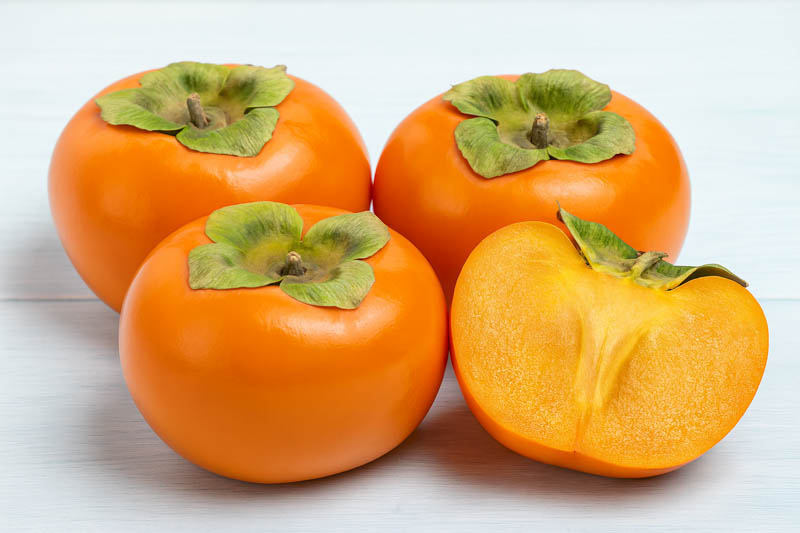
Kaki
Meet the fruit that turns sweater weather into celebration. The Japanese persimmon, Diospyros kaki, arrives when other fruits bow out, hanging like tiny lanterns on graceful, leafless branches. It is equal parts edible treasure and living sculpture for your garden.
Why gardeners adore Kaki: it is adaptable, handsome, and generous. Trees flower discreetly in spring, then spend summer quietly building those fiery orbs you will slice, spoon, dry, or bake once chilly days roll in.
Two flavor personalities: Non-astringent types are sweet when firm, while astringent types must ripen to a jelly-soft state to lose their tannic pucker.
Snack-ready favorite: Fuyu is crisp and sliceable, perfect for salads, lunchboxes, and cheese boards.
Compact and cold friendly: Jiro stays tidier, bears reliably, and handles cool snaps with grace.
Dessert royalty: Acorn-shaped Hachiya is bitter when firm but becomes custardy, spoon-soft, and cake-ready when fully ripe.
Honeyed connoisseur pick: Slender Saijo means the very best one in Japanese and tastes like it once silky-soft.
Native cousin: For cold-winter charm and caramel notes, look to the resilient American species Diospyros virginiana, which often sweetens further after a light frost.
Growing made easy: Kaki thrives in full sun, prefers well-drained soil, and becomes drought-tolerant after establishment. Most fruit ripens from late fall into early winter, delivering brightness just when your palate needs it most.
Good for you: Persimmons bring fiber, vitamins, and antioxidants to the table. Explore the wellness perks here: persimmon health benefits.
Kitchen chameleon: Eat firm types fresh, dehydrate slices for travel-friendly snacks, or blend soft types into smoothies, breads, and puddings. Ready to compare textures and uses side by side? Start here: Fuyu, Hachiya, Saijo and more.