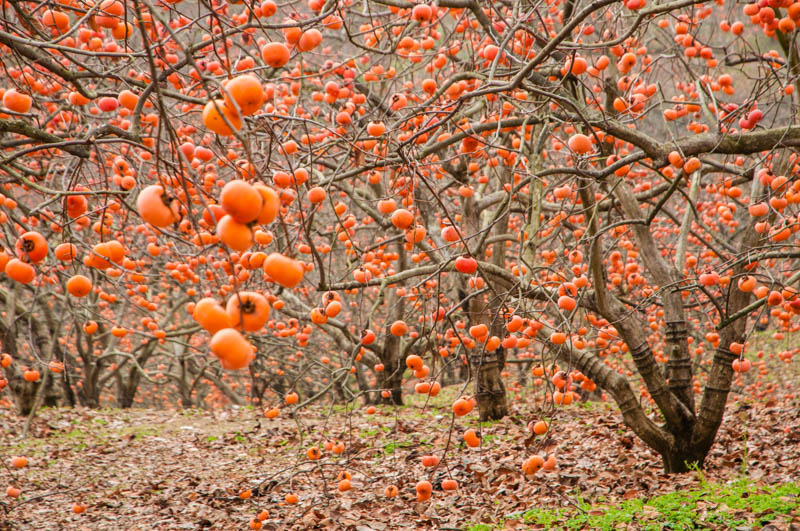
Japanese Persimmon
Meet autumn’s glow-up fruit: the Japanese persimmon, Diospyros kaki. This elegant, deciduous tree wears glossy leaves in summer, then suddenly decorates itself with lantern-bright fruit just as other plants wind down—like holiday ornaments nature put up early.
Persimmons have two personalities. Non-astringent types are sweet when firm; astringent types start mouth-puckering, then turn syrupy-sweet once jelly-soft. Translation: some you slice for snacks, others you wait on (patience pays!).
Craving crisp? Bite into Fuyu like an apple—no peeling required. It stays sliceable even as it sweetens, so it’s a star on cheese boards and in salads. For compact yards and reliable crops, many growers favor Jiro, known for tidy form and cool-weather toughness.
Dessert people, gather ‘round: acorn-shaped Hachiya is the pudding queen. Wait until it feels like a water balloon; inside is custardy, spoonable bliss for quick breads, cookies, and classic persimmon pudding. Slender, honey-sweet Saijo (“the very best one”) also shines once fully soft.
Fun ripening trick: to speed up astringent types, tuck them in a paper bag with a ripe apple or banana. Ethylene does the matchmaking; your persimmon says “yes” in a few days.
Curious about the rugged cousin? The native American persimmon, Diospyros virginiana, thrives in colder climates and can taste like caramel when perfectly ripe—proof that persimmons are a global family with local flair.
They’re easygoing in the garden: full sun, well-drained soil, modest water once established. The fruit arrives late fall into winter, bringing a burst of sunshine right when you crave it, along with fiber, vitamins, and antioxidants—peek the perks here: persimmon health benefits.
Ready to pick your favorite? Compare textures, flavors, and best uses—from crisp snackers to spoon-soft bakers—using this handy guide: Fuyu, Hachiya, Saijo and more. Plant one for fiery foliage, easy care, and a harvest that tastes like sunshine in sweater weather.