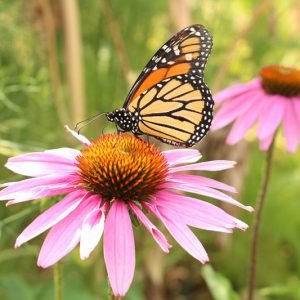
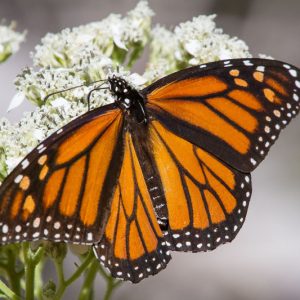
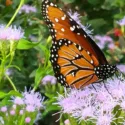
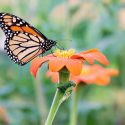
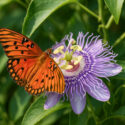
Plant Kansas natives that monarch butterflies crave. Start with butterfly milkweed and spider milkweed, then layer coneflowers, blazing stars, pitcher sage, goldenrods, sunflowers, and aromatic aster. Group plants in sunny drifts, skip pesticides, and keep blooms from March through October.
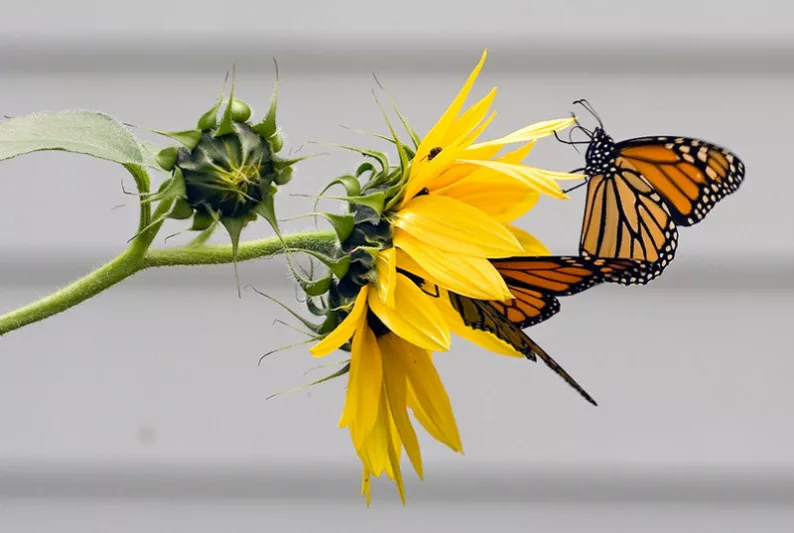


Kansas sits in the center lane of the Southern Plains monarch flyway. From the High Plains and Smoky Hills to the Flint Hills tallgrass and wooded eastern edges, monarch butterflies pass overhead from March into May, then again from mid summer through fall. Every one of those butterflies is running on nectar, and your landscape can be a reliable fuel stop.
By leaning on tough native plants from the Xerces Society Monarch Nectar Plants – Southern Plains guide, you can support migration and local breeding while keeping your garden beautiful, resilient, and water wise. For an even bigger pollinator palette, see Great Pollinator Plants for Kansas or browse Kansas natives.
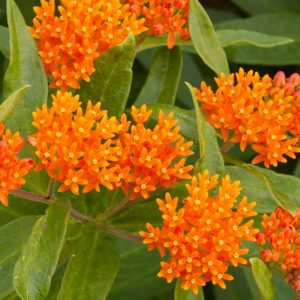
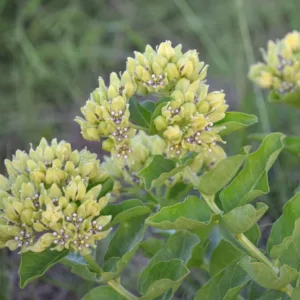
Milkweed is monarch nursery habitat. In Kansas, regionally native milkweeds are the right choice for eggs and caterpillars, and many are stellar nectar plants too. Smart starters include:
Every species below comes straight from the Xerces Southern Plains guide and performs in Kansas when site matched. Mix at least 8 to 12 species across seasons, repeat your favorites in clumps, and you will have a living fuel station that also attracts native bees, swallowtails, queens, and songbirds.
| Genus | Asclepias |
|---|---|
| Native Plants | Kansas, Midwest, United States |
| Attracts | Birds, Butterflies, Hummingbirds |
| Toxic to Humans | No known toxicity |
| Toxic to Cats | No known toxicity |
| Toxic to Dogs | No known toxicity |
| Toxic to Horses | No known toxicity |
To turn this list into real habitat, think like a traveling butterfly. Monarchs want big color blocks they can see in flight, safe sunny places to warm up, and flowers that never run out during their migration windows. You can deliver all of that with simple, flexible design moves that work from small yards to acreages and school or park plantings.
Pair these nectar plants with regionally native milkweeds such as butterfly milkweed and spider milkweed, and avoid tropical milkweed that can interfere with migration and increase disease pressure.
Just as important, keep pesticides out of your monarch habitat. Systemic products and many contact sprays can contaminate leaves and nectar, harming both caterpillars and adults. Ask nurseries for plants grown without systemic insecticides and rely on hand picking and pruning for any pest issues.
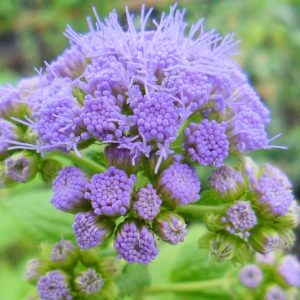
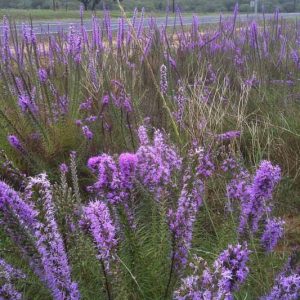
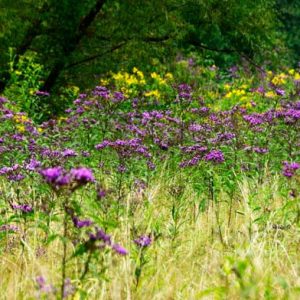
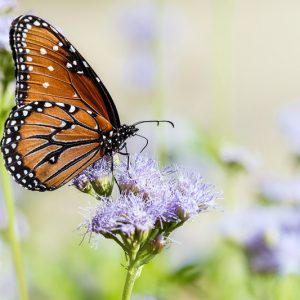
Start small if you like: a single sunny bed with butterfly milkweed, blue mistflower, cusp blazing star, gray goldenrod, and aromatic aster can turn an ordinary lawn into a monarch magnet within one season. As plants mature and spread, expand the patch, tuck in Maximilian sunflower and ironweed, and link your habitat with neighbors, schools, and parks. Every Kansas block that blooms with these Southern Plains natives becomes another bright bead on the monarch migration necklace.
Ready to broaden your habitat beyond monarchs while still feeding them well. Explore these resources:
They are regionally native flowers, shrubs, and a few small trees that provide sugar rich nectar for adult monarch butterflies during spring breeding and the late summer to fall migration across Kansas.
March to May and again July to October. Plan for continuous bloom across those windows so there is never a food gap.
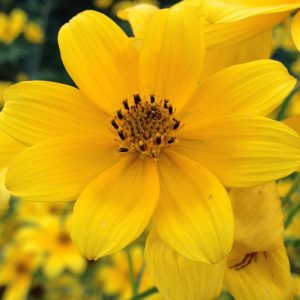
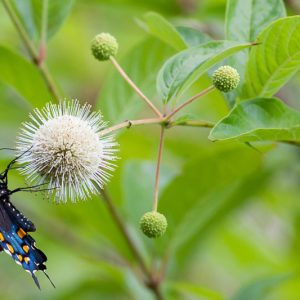
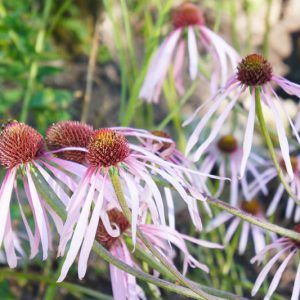
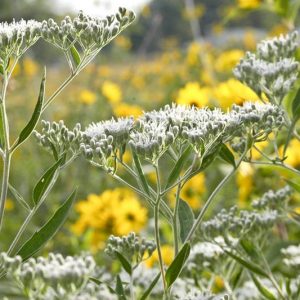
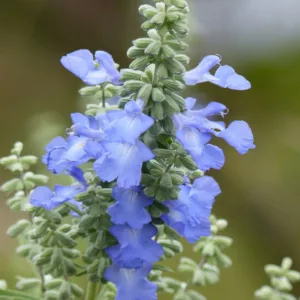
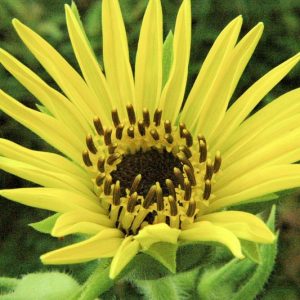
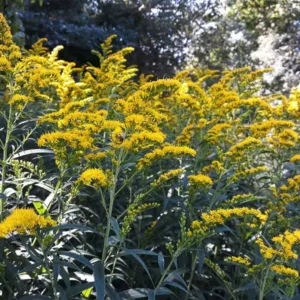
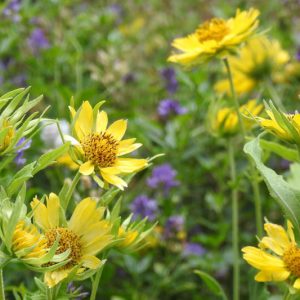
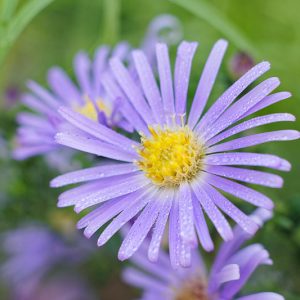
Butterfly milkweed (Asclepias tuberosa), spider milkweed (Asclepias viridis), narrow leaved purple coneflower (Echinacea angustifolia), pale purple coneflower (Echinacea pallida), Indian blanket style fall fuel like Maximilian sunflower (Helianthus maximiliani), cusp blazing star (Liatris punctata var. mucronata), pitcher sage (Salvia azurea), gray and stiff goldenrod (Solidago nemoralis, Oligoneuron rigidum), aromatic aster (Symphyotrichum oblongifolium), Baldwin’s ironweed (Vernonia baldwinii), frostweed and golden crownbeard (Verbesina virginica, V. encelioides), late white thoroughwort (Eupatorium serotinum). Use buttonbush (Cephalanthus occidentalis) and blue mistflower (Conoclinium coelestinum) in moist spots.
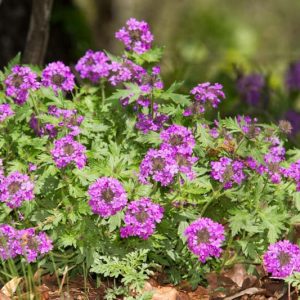
Butterfly milkweed, spider milkweed, narrow leaved and pale purple coneflower, Dakota mock vervain, cusp blazing star, pitcher sage, stiff goldenrod, gray goldenrod, Maximilian sunflower, Baldwin’s ironweed, compassplant, tall thistle, aromatic aster, golden crownbeard, frostweed, late thoroughwort. In wetter edges add blue mistflower, buttonbush, and golden Alexanders. In western or drier areas, lean on butterfly milkweed, cusp blazing star, gray goldenrod, aromatic aster, and Maximilian sunflower.
For adult fuel, nectar plants are essential. For raising the next generation, you also need native milkweed. In Kansas, butterfly milkweed and spider milkweed are prime options to include with your nectar mix.
Skip it. Tropical milkweed (Asclepias curassavica) can encourage off season breeding and raise disease risk. Choose native milkweeds that fit local climate and migration timing.
Early season: narrow leaved coneflower, pale purple coneflower, butterfly milkweed, golden Alexanders.
Mid season: spider milkweed, blue mistflower in moist sites, pitcher sage, Baldwin’s ironweed, cusp blazing star.
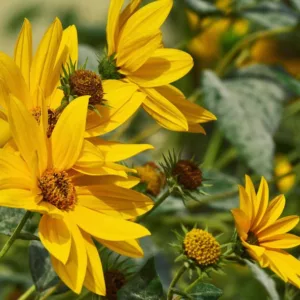
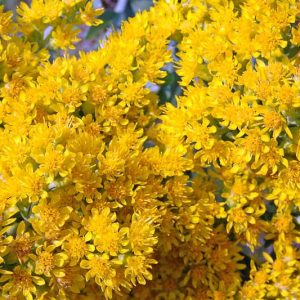
Late season: Maximilian sunflower, gray goldenrod, stiff goldenrod, downy ragged goldenrod where it occurs, frostweed, golden crownbeard, aromatic aster, late thoroughwort.
Plant in clumps of 5 to 7 or more of each species, repeat clusters across the bed, and keep most choices in full sun. Put low spreaders up front, mid height coneflowers and mistflowers in the middle, and tall anchors like compassplant, ironweed, Maximilian sunflower, and goldenrods at the back.
Many listed species are built for it once established. Butterfly milkweed, narrow leaved and pale purple coneflower, cusp blazing star, pitcher sage, gray goldenrod, aromatic aster, golden crownbeard, and Maximilian sunflower are standouts. Water deeply the first year, then lighten up.
Yes. Deep pots with drainage work for butterfly milkweed, coneflowers, pitcher sage, aromatic aster, and even blue mistflower if you can keep it evenly moist. Group several containers together to create a stronger nectar signal.
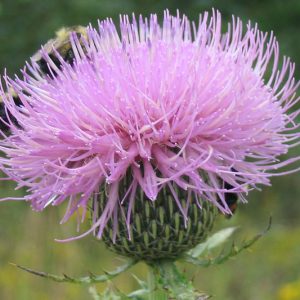
No. Native tall thistle (Cirsium altissimum) and native goldenrods like gray or stiff goldenrod are premier fall nectar sources and wildlife allies. They are different from invasive or noxious thistles and do not trigger most people’s pollen allergies the way wind pollinated weeds do.
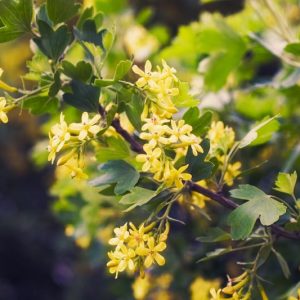
Golden currant (Ribes aureum) for early flowers and fruit, buttonbush for mid to late season nectar in wet edges. These provide cover, nesting sites, and season bridging nectar that flower beds alone may not supply.
Use a simple border, a mowed edge, or a path to frame wilder drifts. Repeat a few key species and colors. Mix textures, then leave seed heads on some plants for birds while deadheading others to extend bloom.
Updated: November 2025 • Reviewed by Gardenia Editors
Nic McPhee, Flickr
| Genus | Asclepias |
|---|---|
| Native Plants | Kansas, Midwest, United States |
| Attracts | Birds, Butterflies, Hummingbirds |
| Toxic to Humans | No known toxicity |
| Toxic to Cats | No known toxicity |
| Toxic to Dogs | No known toxicity |
| Toxic to Horses | No known toxicity |
Create a membership account to save your garden designs and to view them on any device.
Becoming a contributing member of Gardenia is easy and can be done in just a few minutes. If you provide us with your name, email address and the payment of a modest $25 annual membership fee, you will become a full member, enabling you to design and save up to 25 of your garden design ideas.
Join now and start creating your dream garden!
Create a membership account to save your garden designs and to view them on any device.
Becoming a contributing member of Gardenia is easy and can be done in just a few minutes. If you provide us with your name, email address and the payment of a modest $25 annual membership fee, you will become a full member, enabling you to design and save up to 25 of your garden design ideas.
Join now and start creating your dream garden!