Common Buttonbush, Buttonbush, Button Bush, Globe-Flowered Bush, Honeybells, Little Snowballs, Swamp Globeflower, White Pond-Dogwood, Button Willow, Cephalanthus occidentalis var. californicus, Cephalanthus occidentalis var. pubescens
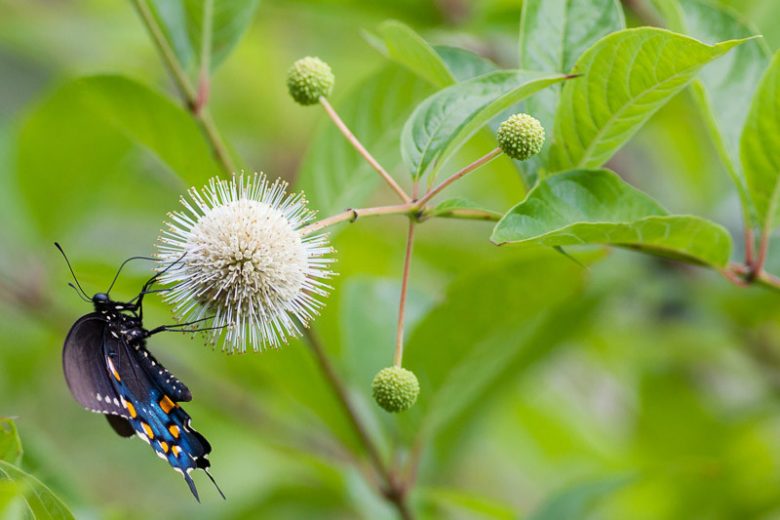
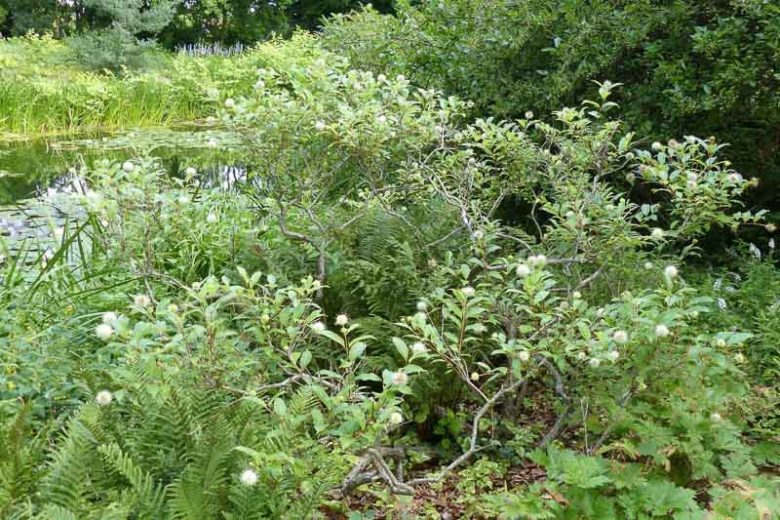


If you are looking for a dramatic native shrub that thrives in wet soil, feeds pollinators, and adds real character to ponds, streams, and rain gardens, Cephalanthus occidentalis, commonly called Buttonbush, is hard to beat. This multi stemmed, deciduous shrub produces globe shaped flower heads that look like tiny satellites – or pin cushions – packed with creamy white tubular blossoms buzzing with butterflies, bees, and hummingbirds.
Buttonbush is made for moist to wet ground. It naturally grows along pond edges, in swamps, floodplains, and low spots where other shrubs struggle. Give it full sun to light shade and consistently moist, humusy, neutral to acidic soil, and it will reward you with fragrant flowers from early summer into early fall, striking button-like seed heads in winter, and a constant parade of wildlife.
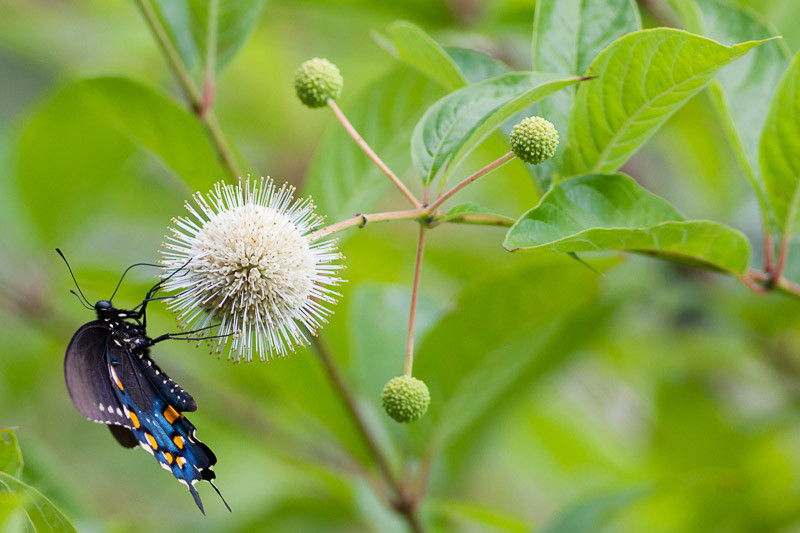
Summary: Multi stemmed, deciduous native shrub with an open to rounded habit, glossy green leaves, and unique, spherical flower heads that resemble pin cushions and attract a wide range of pollinators.
Use: Pond and stream banks, rain gardens, wet low spots, naturalized areas, wildlife gardens, native plantings, restoration projects, and large borders where soil stays moist.
Highlight: Long lasting summer bloom, distinctive button-like seed heads that persist into winter, and exceptional value for butterflies, bees, hummingbirds, and waterfowl.
Note: Best in consistently moist to wet soil. Tolerates shallow standing water and periodic flooding but struggles in dry sites.
| Botanical Name | Cephalanthus occidentalis |
|---|---|
| Family | Madder family (Rubiaceae) |
| Common Names | Buttonbush, common buttonbush, button willow, buck brush, honey bells |
| Native Range | Broadly native to North America – from eastern Canada through most of the eastern and southern United States, extending west into the Great Plains – with related forms in Cuba, Mexico. |
| Plant Type and Habit | Deciduous shrub with a multi stemmed, open to rounded habit, often forming a loose thicket over time in ideal conditions. |
| Hardiness (approx. USDA) | Generally hardy in about USDA Zones 5 to 9. Performs especially well in regions with moist soils, warm summers, and cold to mild winters. |
| Size | Typically grows 5 to 12 ft. tall (150 to 360 cm) and 4 to 8 ft. wide (120 to 240 cm), though older plants in rich, wet soils can be even larger. |
| Sun and Exposure | Full sun to light shade. Best flowering and densest growth occur in full sun. Flowering is reduced in too much shade. |
| Soil | Prefers moist to wet, humusy soils that are neutral to acidic. Tolerates heavy soils and periodic flooding and can grow in up to about 18 in. (45 cm) of standing water. Not suitable for very dry sites. |
| Seasonal Interest | Fragrant spherical flower heads from early summer to early fall, followed by hard, button-like seed clusters that often persist into winter, plus glossy green foliage in the growing season. |
| Primary Uses | Rain gardens, wetland and pond edges, stream banks, bog gardens, native and wildlife gardens, wet beds and borders, and erosion control on moist slopes. |
Cephalanthus occidentalis is a medium to large deciduous shrub known for its distinctive globe shaped flower heads and love of wet ground. It typically forms a loose, rounded mass of branches clothed in oval to elliptic, glossy bright green leaves up to about 6 in. long (15 cm).
From early summer into early fall, Buttonbush produces round flower clusters about 1.5 in. across (4 cm), each one made up of dozens of tiny, creamy white tubular flowers. Long projecting styles give each sphere a spiky, pin cushion look that is both unusual and charming. The flowers are mildly fragrant and rich in nectar.
As the season advances, these flower balls develop into hard, button-like seed heads that turn tan to brown and often persist well into winter. Combined with the branching framework, they give Buttonbush excellent off season interest.
Buttonbush is a widely distributed North American native. It occurs from southern Canada through the eastern and southern United States and westward into parts of the Great Plains, with related forms or close relatives in Cuba and Mexico.
In the wild, you will find it in swamps, wet thickets, floodplains, pond margins, roadside ditches, marshy fields, and riparian zones. It is naturally adapted to soils that are saturated for at least part of the year, which is why it is such a reliable performer in rain gardens and wet landscapes.
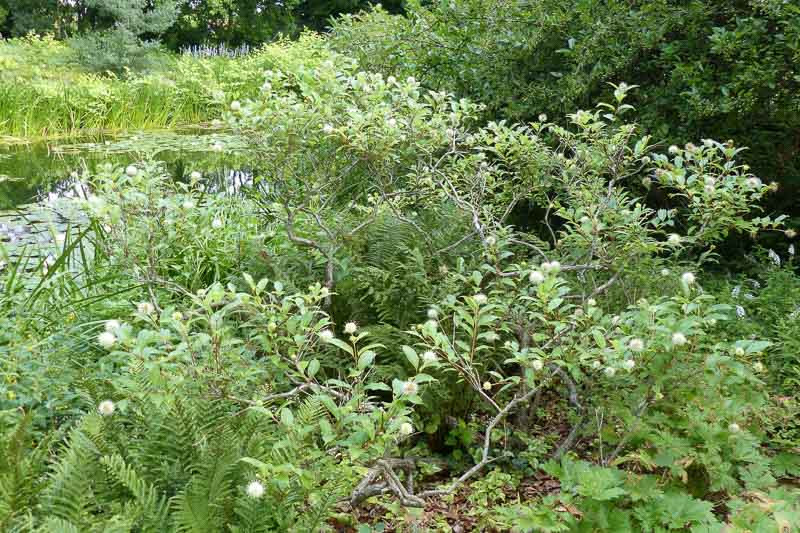
Plant Type and Habit: Buttonbush is a multi stemmed shrub with an open, rounded to irregular habit. Over time it can form a thicket, especially in consistently wet, fertile soils.
Typical plants grow 5 to 12 ft. tall and 4 to 8 ft. wide, though in ideal conditions they may reach small tree size. Growth is moderate, and young plants may elongate quickly before filling in with side branches. It responds well to pruning, which can be used to keep it denser and more compact if needed.
The flowers, 1.5 inches across (4 cm), are the main attraction. Each spherical head is composed of many tiny, creamy white tubular florets arranged around the ball. The long styles protruding from the surface give the impression of a sea urchin or a tiny exploding firework.
Buttonbush typically blooms from early summer through early fall, with peak flowering often in mid summer. On a well grown shrub, hundreds of flower heads can cover the plant, creating a soft hum of visiting bees, butterflies, and hummingbirds. After flowering, the heads mature into decorative seed balls that persist for months.
The foliage consists of simple, glossy green leaves, 6 inches long (15 cm), arranged opposite each other or in whorls of three along the stems. They create a lush backdrop for the flowers and offer a nice contrast to more finely textured perennials and grasses.
In autumn, foliage may take on yellow or greenish yellow tones, especially in colder climates or bright light. The bare winter silhouette, highlighted by the persistent button-like seed heads, adds structure and subtle texture to wetland plantings and naturalistic gardens.
Most sources list Buttonbush as hardy in about USDA Hardiness Zones 5 to 9, meaning it tolerates cold winters in much of North America as long as its roots stay moist. Best Pollinator Plants for Gardens in Hardiness Zone 7
It is well suited to regions with cold winters and wet soils, as well as warmer, humid climates where water is abundant. In very dry or arid areas, it can be more challenging to grow unless irrigation or naturally wet conditions are available.
You can use Buttonbush in many landscape situations where moisture is available:
Buttonbush is a superb plant for bees, butterflies, moths, and hummingbirds. The nectar rich tubular flowers offer generous rewards, making the shrub hum with activity during bloom.
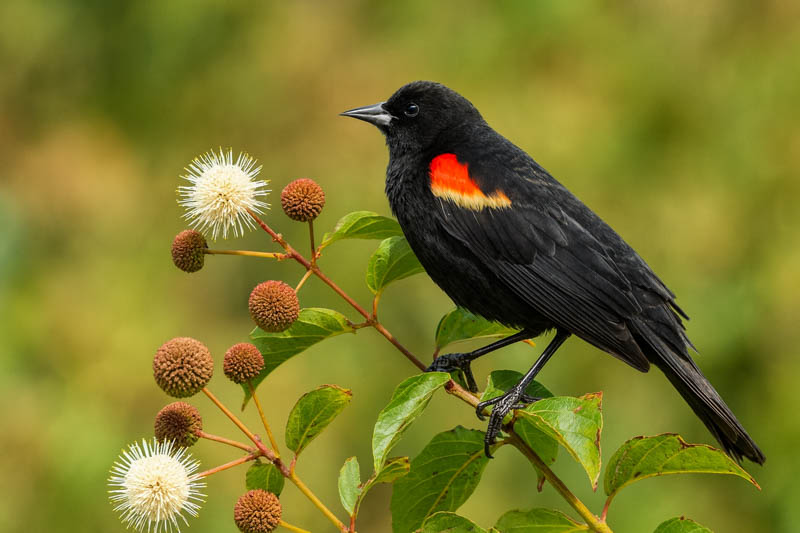
The spherical seed heads are eaten by many waterfowl and songbirds. Dense branches provide cover and nesting sites, especially for species that prefer wetland edges. Buttonbush is also a known host for certain sphinx moth caterpillars, adding another layer of ecological value.
Buttonbush foliage is moderately browsed by deer in some regions, although it is often considered less palatable than many other shrubs. Rabbits may nibble young shoots, especially in winter or early spring if other food sources are limited. Protection for new plantings may be helpful where browsing pressure is high.
Unlike many ornamental shrubs, Buttonbush is not especially drought-tolerant. It performs best where soil is consistently moist to wet and will decline if allowed to dry out repeatedly.
If you also garden in hot, dry spots, consider combining Buttonbush in your landscape with tough, low water plants elsewhere. For example, for dry areas you might explore sun loving salvias in resources like Top Salvia Varieties for a Thriving Xeriscape.
Buttonbush contains toxic glycosides and related compounds in its leaves and other tissues that can be toxic if ingested in quantity by livestock, pets, or people. Symptoms reported in animals include vomiting, weakness, and neurological signs. It is generally considered of low risk in gardens because the foliage is bitter and seldom eaten, but you should still use caution.
To be safe, discourage children and pets from chewing on the plant and avoid planting it where grazing animals have regular access. If ingestion is suspected, contact a veterinarian or poison control center for guidance.
As a North American native shrub, Buttonbush is not usually considered invasive within its natural range. It can spread slowly by seed or suckering in ideal conditions, especially in wet soils, but it typically remains localized and is more often used in restoration projects than removed.
As always, check local guidance if you live outside its native range and remove unwanted seedlings if they appear where they are not needed.
The key reasons to grow Buttonbush include its unique ornamental appeal, long flowering season, high wildlife value, and ability to thrive in wet soils. Few shrubs combine such unusual flowers with such strong ecological benefits in challenging, soggy sites.
If you enjoy gardening with plants that support wildlife and offer multiple seasons of interest, Buttonbush pairs wonderfully with other native shrubs, grasses, and perennials.
Buttonbush prefers:
It is not a good choice for very dry, sandy soil unless irrigation can provide consistent moisture. In drier landscapes, place it in low spots or near water features where moisture naturally collects.

Buttonbush is generally low maintenance once established, especially in the right site.
Buttonbush can be propagated both vegetatively and by seed.
Buttonbush is generally a robust, trouble free shrub when grown in appropriate conditions, with no serious pest or disease issues reported in most gardens.
Although pests are rarely a major problem, you may occasionally see generalist insects such as aphids or scale insects on new shoots. These can often be managed with a strong jet of water or, if needed, an application of insecticidal soap or neem oil.
Because Buttonbush is usually planted in wetter areas, keep an eye out for pests that thrive in lush, moist environments, but in most cases the plant outgrows minor issues with no intervention.
Root rot and crown issues: In normal gardens, overwatering can cause root problems. However, Buttonbush is adapted to saturated soils, so root rot is less of a concern than for most shrubs, provided water is clean and the site is not compacted and stagnant.
Powdery mildew or leaf spots may occasionally appear in humid conditions with poor air circulation, but they are usually cosmetic only. Thinning crowded stems and avoiding unnecessary overhead irrigation will help.
Poor growth or sparse flowering: Often due to too little moisture or too much shade. Move the plant to a wetter, sunnier site if possible or adjust watering.
Chlorotic leaves: Pale, yellowish foliage can indicate nutrient deficiency or soil that is too alkaline. Top dress with compost or use a fertilizer formulated for acid loving plants if needed.
Dieback in dry soils: Buttonbush is intolerant of prolonged drought. In very dry summers, especially on upland sites, stems may die back if water is not supplied. Deep, regular watering and thicker mulching can help prevent this.
Buttonbush (Cephalanthus occidentalis) is a medium to large, multi-stemmed deciduous shrub or small tree with glossy green leaves and distinctive spherical flower clusters made up of tiny white tubular blossoms. It naturally grows in wetlands, swamps, and along ponds and streams across much of North America.
Buttonbush is native to most of eastern and central North America, from southern Canada through the eastern and southern United States and into parts of the Great Plains. It is characteristic of swamps, marshes, floodplains, and other wetland and riparian habitats.
In gardens and the wild, buttonbush typically grows about 5–12 feet tall and 4–8 feet wide, though in ideal wet sites it can occasionally reach 15–20 feet and become tree-like. It is considered a fast-growing shrub in moist conditions and can reach several feet tall within a few years.
Buttonbush thrives in full sun to light shade and prefers moist to wet, humus-rich soils that are neutral to slightly acidic. It is especially well adapted to shorelines, swamps, rain gardens, and low spots that stay damp and will even grow in shallow standing water once established.
No. Buttonbush is sensitive to drought and does not perform well in dry soil. It may survive short dry spells in average garden soil with irrigation, but repeated or prolonged drying typically leads to stress, dieback, or plant loss. It does best where soil moisture is consistently available.
Most references place common buttonbush in approximately USDA Zones 5–9, meaning it can handle cold winters in much of the northern U.S. while also thriving in warmer, humid regions where moisture is abundant.
Yes. Buttonbush is one of the classic shrubs recommended for rain gardens, stormwater swales, and the shallow margins of ponds, lakes, and streams because it thrives in periodically flooded, saturated soils and helps stabilize banks while supporting wildlife.
Buttonbush is outstanding for wildlife. Its nectar-rich, fragrant flower spheres attract bees, butterflies, moths, and hummingbirds all summer, while the persistent nutlet-like seeds are eaten by ducks, other waterfowl, and songbirds. Dense branching provides cover and nesting habitat for birds and small animals.
Yes. Leaves and other parts of buttonbush contain toxic glycosides and related compounds (such as cephalanthin) that can harm livestock, pets, and humans if ingested. Reported symptoms include vomiting, convulsions, paralysis, and other neurological signs. The foliage is generally unpalatable, so poisoning usually occurs only under starvation or unusual circumstances, but the plant should still be considered toxic.
Buttonbush is often described as moderately deer resistant: its foliage is toxic and generally unpalatable, so deer tend to browse it less than many other shrubs, though light browsing on young growth can still occur in some areas.
Buttonbush is usually considered relatively trouble free. Extension and native plant sources report no serious, recurring pest or disease issues, especially when the shrub is planted in appropriate moist conditions with adequate sun. Occasional minor leaf spots or cosmetic issues can appear but rarely threaten plant health.
Buttonbush responds well to pruning. Light shaping or thinning can be done in late winter or early spring to control size, remove dead wood, and encourage denser growth. Older shrubs that have become leggy can be rejuvenated by cutting stems back hard near the base; the plant typically resprouts vigorously from the crown. You can also “limb up” lower branches to create a small tree form.
Buttonbush is considered moderately long-lived. Some extension sources note that it can live for several decades and occasionally up to around 50 years in favorable wet sites, especially when periodically rejuvenated by pruning and kept in appropriate light and moisture conditions.
Updated: December 2025 • Reviewed by Gardenia Editors
| Hardiness |
5 - 9 |
|---|---|
| Plant Type | Shrubs |
| Plant Family | Rubiaceae |
| Common names | Buttonbush |
| Exposure | Full Sun, Partial Sun |
| Season of Interest | Summer (Early, Mid, Late), Fall |
| Height | 5' - 12' (150cm - 3.7m) |
| Spread | 4' - 8' (120cm - 240cm) |
| Spacing | 72" - 96" (180cm - 240cm) |
| Maintenance | Low |
| Water Needs | Average, High |
| Soil Type | Clay, Loam, Sand |
| Soil pH | Acid, Neutral |
| Soil Drainage | Moist but Well-Drained, Moisture Retentive |
| Characteristics | Fragrant, Showy, Fruit & Berries |
| Native Plants | California, United States, Northeast, Pennsylvania, Rhode Island, Vermont, Connecticut, Delaware, Maine, Massachusetts, Maryland, New Hampshire, New Jersey, New York, Illinois, Indiana, Iowa, Kansas, Michigan, Midwest, Minnesota, Missouri, Nebraska, Ohio, Wisconsin, Southeast, Louisiana, Mississippi, North Carolina, South Carolina, Tennessee, Virginia, West Virginia, Alabama, Arkansas, Florida, Georgia, Kentucky, Southwest, Texas, Arizona, Oklahoma |
| Tolerances | Wet Soil, Heat, Fire, Erosion |
| Attracts | Bees, Butterflies, Hummingbirds |
| Garden Uses | Beds And Borders, Bog Gardens, Ponds And Streams, Rain Gardens |
| Garden Styles | Informal and Cottage |
| Toxic to Humans | Low severity |
| Toxic to Cats | No known toxicity |
| Toxic to Dogs | No known toxicity |
| Toxic to Horses | No known toxicity |


| Hardiness |
5 - 9 |
|---|---|
| Plant Type | Shrubs |
| Plant Family | Rubiaceae |
| Common names | Buttonbush |
| Exposure | Full Sun, Partial Sun |
| Season of Interest | Summer (Early, Mid, Late), Fall |
| Height | 5' - 12' (150cm - 3.7m) |
| Spread | 4' - 8' (120cm - 240cm) |
| Spacing | 72" - 96" (180cm - 240cm) |
| Maintenance | Low |
| Water Needs | Average, High |
| Soil Type | Clay, Loam, Sand |
| Soil pH | Acid, Neutral |
| Soil Drainage | Moist but Well-Drained, Moisture Retentive |
| Characteristics | Fragrant, Showy, Fruit & Berries |
| Native Plants | California, United States, Northeast, Pennsylvania, Rhode Island, Vermont, Connecticut, Delaware, Maine, Massachusetts, Maryland, New Hampshire, New Jersey, New York, Illinois, Indiana, Iowa, Kansas, Michigan, Midwest, Minnesota, Missouri, Nebraska, Ohio, Wisconsin, Southeast, Louisiana, Mississippi, North Carolina, South Carolina, Tennessee, Virginia, West Virginia, Alabama, Arkansas, Florida, Georgia, Kentucky, Southwest, Texas, Arizona, Oklahoma |
| Tolerances | Wet Soil, Heat, Fire, Erosion |
| Attracts | Bees, Butterflies, Hummingbirds |
| Garden Uses | Beds And Borders, Bog Gardens, Ponds And Streams, Rain Gardens |
| Garden Styles | Informal and Cottage |
| Toxic to Humans | Low severity |
| Toxic to Cats | No known toxicity |
| Toxic to Dogs | No known toxicity |
| Toxic to Horses | No known toxicity |
How many Cephalanthus occidentalis (Buttonbush) do I need for my garden?
| Plant | Quantity | |
|---|---|---|
| Cephalanthus occidentalis (Buttonbush) | N/A | Buy Plants |
Create a membership account to save your garden designs and to view them on any device.
Becoming a contributing member of Gardenia is easy and can be done in just a few minutes. If you provide us with your name, email address and the payment of a modest $25 annual membership fee, you will become a full member, enabling you to design and save up to 25 of your garden design ideas.
Join now and start creating your dream garden!
Create a membership account to save your garden designs and to view them on any device.
Becoming a contributing member of Gardenia is easy and can be done in just a few minutes. If you provide us with your name, email address and the payment of a modest $25 annual membership fee, you will become a full member, enabling you to design and save up to 25 of your garden design ideas.
Join now and start creating your dream garden!