Orange Coneflower, Black-eyed Susan, Brown-eyed Susan, Perennial Black-eyed Susan, Coneflower
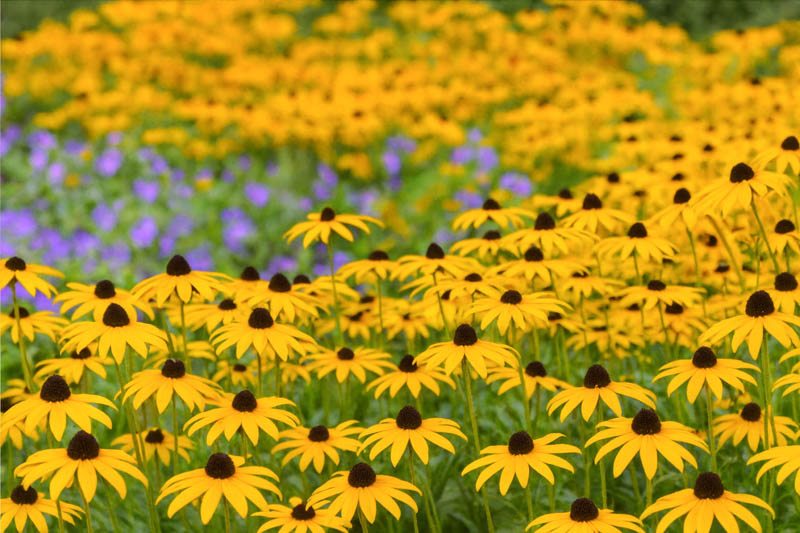


Want that classic black eyed Susan look, but with more staying power, better drought tolerance, and flowers for weeks on end? Meet Rudbeckia fulgida, often called orange coneflower, shining black eyed Susan, or perennial black eyed Susan. This hardworking native perennial wildflower throws out masses of golden yellow, daisy like blooms from mid summer into fall, shrugging off heat, humidity, clay, and even periods of drought once established. It is a staple of pollinator gardens, prairie borders, and low maintenance landscapes across much of the United States.
Summary: Upright, clump forming herbaceous perennial native to eastern and central North America. Masses of golden yellow, black eyed daisy flowers from midsummer into fall.
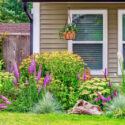
Use: Pollinator gardens, cottage gardens, prairie and meadow plantings, perennial borders, naturalized drifts, and low maintenance public landscapes.
Highlight: Prolific display of bright yellow daisy like flowers with dark cones, long bloom season, excellent cut flowers, and winter seed heads for birds.
Note: Very easy care, drought tolerant, and deer resistant once established. Can spread by rhizomes and self seeding to form cheerful masses in good soil.
| Botanical Name | Rudbeckia fulgida Aiton |
|---|---|
| Family | Asteraceae (aster or daisy family) |
| Common Names | Orange coneflower, shining black eyed Susan, perennial black eyed Susan, black eyed Susan, coneflower |
| Native Range | Eastern and central United States and parts of eastern Canada, in meadows, open woods, bottomlands, and calcareous slopes. |
| Plant Type and Habit | Herbaceous perennial wildflower, upright and clump forming, spreading slowly by short rhizomes and self seeding to form colonies. |
| Hardiness (USDA) | Typically Zones 3 to 9, depending on variety and cultivar. |
| Size | Usually 2 to 3 ft tall and 1.5 to 2.5 ft wide, depending on selection. Many popular cultivars, like Goldsturm, fall in this size range. |
| Sun and Exposure | Full sun for best flowering and sturdy stems, tolerates light or partial shade especially in hot climates. |
| Soil | Prefers moist, well drained, average garden soil but tolerates clay, loam, and even relatively dry soil once established. Adaptable to a wide range of pH. |
| Seasonal Interest | Masses of golden yellow blooms with dark centers from mid summer into fall, followed by seed heads that stand through winter and feed birds. |
| Primary Uses | Pollinator and wildlife gardens, prairie and meadow plantings, perennial borders, cottage gardens, mixed naturalized drifts, cut flower gardens, and mass plantings in low maintenance landscapes. |
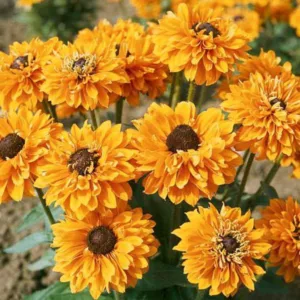
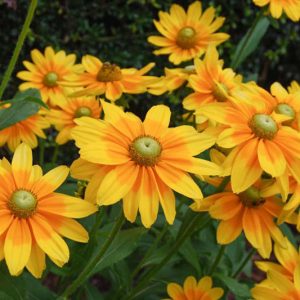
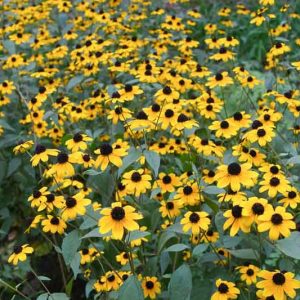
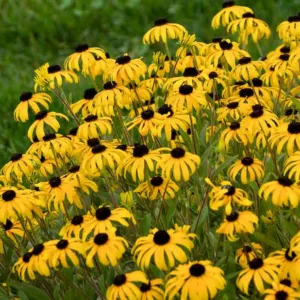
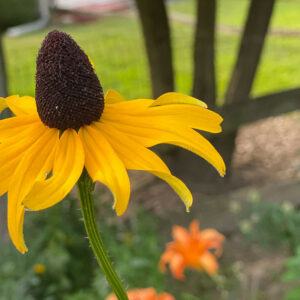
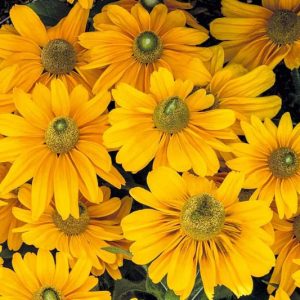
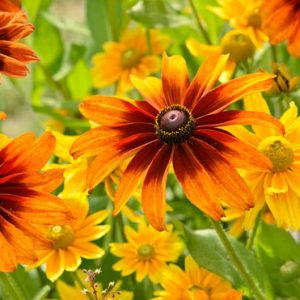
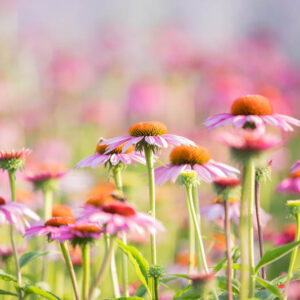
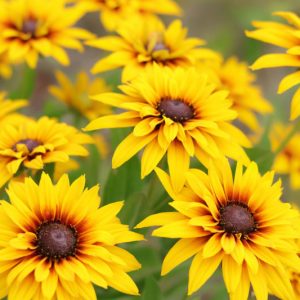
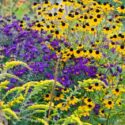
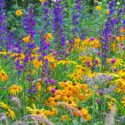
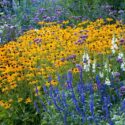
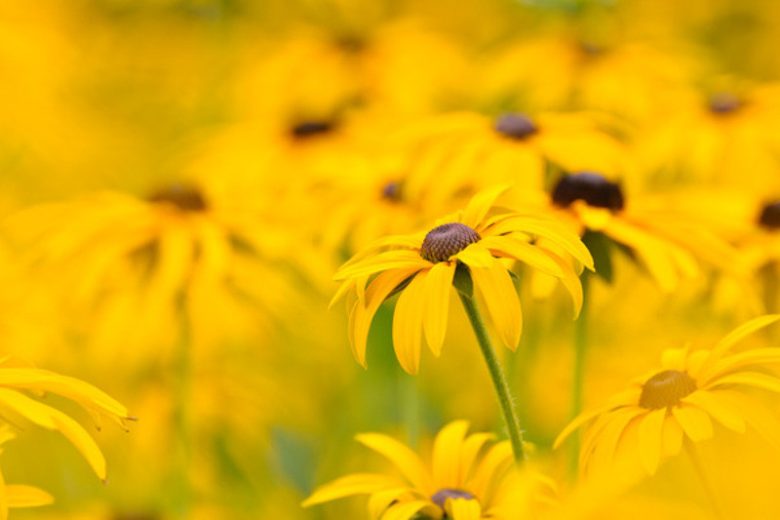
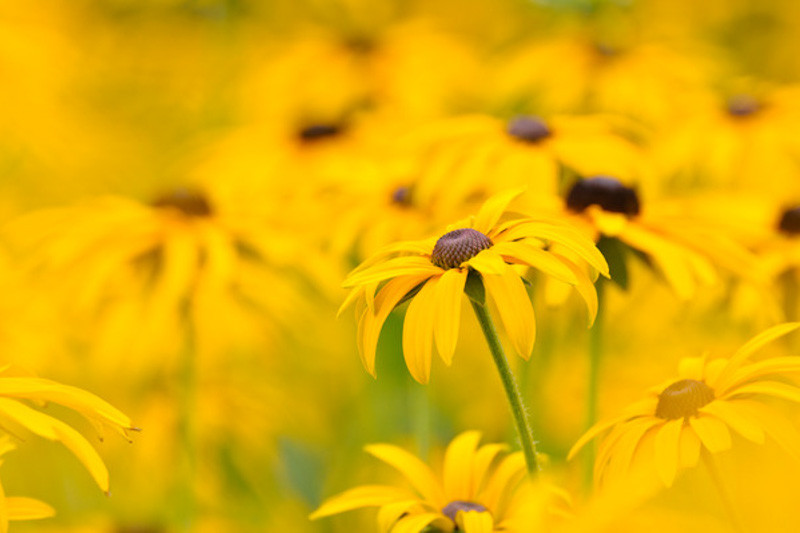
Rudbeckia fulgida is a clump forming herbaceous perennial with strong, upright stems and coarse, dark green leaves. In bloom, it is all about sun soaked color. Plants carry dozens of bright yellow, daisy like flowers with a dark, domed cone, giving that classic black eyed Susan look but on a long lived perennial framework.
The species name “fulgida” means “shining” or “glistening”, a nod to the way its petals catch the light. Whether you are planting a prairie inspired border or just want a no fuss splash of yellow near the mailbox, orange coneflower delivers cheerful, dependable bloom.
Orange coneflower is native to much of the eastern and central United States, with its range stretching from the Midwest and Great Lakes through parts of the Southeast and into Texas and Oklahoma, and into eastern Canada in Ontario and Quebec. In the wild, it grows in:
This broad native range explains why Rudbeckia fulgida adapts so easily to many garden soils and climates across North America.
Most forms of Rudbeckia fulgida grow 2 to 3 ft tall and 1.5 to 2.5 ft wide, with tidy clumps that slowly expand. Plants spread by short rhizomes and self seeding, especially in open soil, so a few starter plants can gradually knit into a generous patch. Growth rate is moderate to fast in average garden soil with sun and moisture.
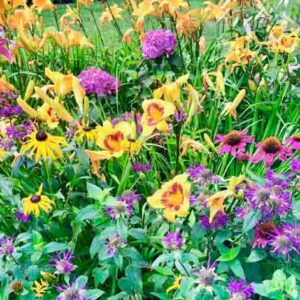
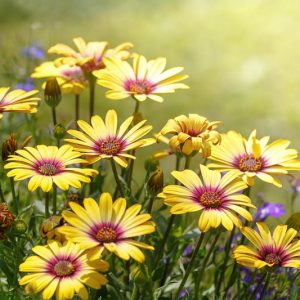
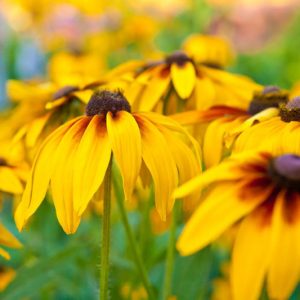
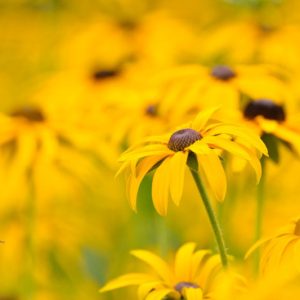
The flowers of orange coneflower are its signature feature. From midsummer into fall, plants produce a long succession of blooms, 2-3 inches (5-7 cm) in diameter, each with golden yellow rays surrounding a chocolate brown or purple black cone. Many cultivars, such as Rudbeckia fulgida var. sullivantii Goldsturm, are famous for their heavy bloom and strong color. Discover 50 Vibrant Fall Flowers Perfect for Your Autumn Garden.
After flowering, the cones dry into sturdy seed heads that stand through winter. Finches and other songbirds love these seeds and will visit regularly if you leave some stems standing. The silhouettes also add texture to winter borders.
Leaves are usually medium to deep green, coarse, and slightly hairy, with an oblong to lance shaped outline. The foliage forms a solid base that sets off the flower display and blends well with grasses and finer textured perennials. The slightly rough leaves also help deter casual deer browsing.
Rudbeckia fulgida is hardy in roughly USDA Zones 3 to 9, depending on variety. It tolerates cold winters, hot summers, humidity, and a range of rainfall patterns, which is one reason it is so widely used in landscapes and public plantings. Once established, it handles heat and short dry periods well, especially in full sun and average soil.
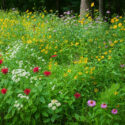
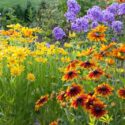
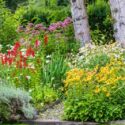
This species is incredibly versatile in design. You can use orange coneflower in many ways:
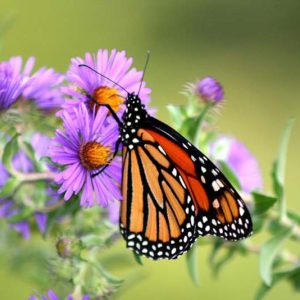
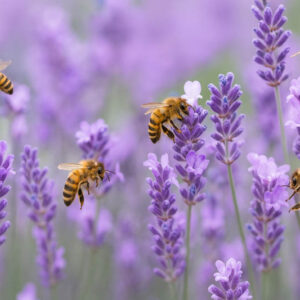
Orange coneflower is a star in pollinator and wildlife gardens. The daisy like flowers provide nectar and pollen for native bees, honeybees, butterflies, and other beneficial insects. Later, the ripened seed heads are a favorite of goldfinches and other seed eating birds. Because it blooms for such a long time, it helps bridge the gap between early summer and fall nectar sources.
Rudbeckia fulgida is often listed as deer resistant, thanks in part to its coarse, slightly hairy foliage. In many gardens, deer browse other plants first. That said, hungry deer may still sample new growth. Rabbits may nibble young plants more readily, especially in spring, so some protection can help until clumps are established.
Once established, Rudbeckia fulgida offers reliable drought-tolerance. It prefers consistent moisture but bounces back quickly after short dry spells, especially in full sun and average soil. Deep, occasional watering is better than frequent light drinks, helping roots grow down and keeping plants blooming well through hot, dry summer weather.
Orange coneflower is not commonly listed as highly toxic to people or pets in major plant toxicity references. As with most ornamentals, it is best treated as non edible. Casual skin contact during normal gardening is fine, but children and pets should not be encouraged to chew leaves or stems. If significant ingestion ever occurs, consult a medical or veterinary professional.
Within its native and adapted range, Rudbeckia fulgida is generally considered well behaved. It can spread by rhizomes and self seeding, especially in rich soil and irrigated beds, but it does not behave like a truly invasive, ecosystem disrupting plant. Seedlings are easy to thin or transplant. In small, tightly controlled beds, occasional editing keeps clumps where you want them.
Rudbeckia fulgida comes in a range of compact, floriferous cultivars that all share the classic black-eyed Susan charm but differ in size, habit, and garden uses. Whether you need a front-of-border dwarf, a mid-border workhorse, or a disease-resistant star for public plantings, there is a selection to match your space and style.
| Variety | Habit & Size | Bloom Time | Highlights |
|---|---|---|---|
| Rudbeckia fulgida ‘Little Goldstar’ | Compact, clump-forming dwarf; about 14–16 in. tall and wide (35–40 cm). | Midsummer to early fall. | Incredibly floriferous dwarf with starburst golden-yellow flowers and dark cones; over 80 blooms per plant possible. Ideal for the front of the border, edging, and containers; low maintenance, disease resistant, and drought tolerant. |
| Rudbeckia fulgida var. deamii | Clump-forming, upright perennial; about 2–3 ft tall and 1–2 ft wide (60–90 cm x 30–60 cm). | Late summer to mid-fall. | Award-winning selection with rich golden-yellow, 3 in. flowers and prominent chocolate cones. Vigorous, pest resistant, and excellent for the middle of late-summer borders, prairies, and meadows. |
| Rudbeckia fulgida var. speciosa | Clump-forming, erect perennial; about 2–3 ft tall and 18–24 in. wide (60–90 cm x 45–60 cm). | Mid-summer to early fall. | Showy orange-yellow, 3–4 in. blooms that cover the foliage in season. Strong, vigorous, pest and drought tolerant; RHS Award of Garden Merit. Great for borders, cottage gardens, and naturalistic plantings. |
| Rudbeckia fulgida var. sullivantii ‘Goldsturm’ | Long-lived, clump-forming perennial; about 2–3 ft tall and 18–24 in. wide (60–90 cm x 45–60 cm), often forming colonies. | Midsummer to early fall. | Classic, proven workhorse with masses of rich golden-yellow, 3–4 in. flowers and dark brown cones. RHS Award of Garden Merit and Perennial Plant of the Year (1999). Reliable in tough conditions and superb in drifts. |
| Rudbeckia fulgida ‘Viette’s Little Suzy’ | Compact, dwarf clump; about 12–18 in. tall and 9–12 in. wide (30–45 cm x 22–30 cm). | Midsummer to early fall. | Petite, free-blooming black-eyed Susan ideal for the front of the border and containers. Bright yellow flowers with dark centers, good cut flower performance, drought tolerant, and generally deer and rabbit resistant. |
| Rudbeckia fulgida ‘American Gold Rush’ | Compact, clump-forming perennial; about 18–24 in. tall and wide (45–60 cm). | Mid-summer to early fall. | Golden-yellow 2 in. daisies on branching stems with excellent resistance to Septoria leaf spot, thanks to thinner, hairier foliage. All-America Selections Perennial Award winner; drought tolerant and outstanding for sunny borders and mass plantings. |
Plant Rudbeckia fulgida in full sun whenever possible. Six or more hours of direct sun per day will give the fullest bloom and strongest stems. In hot climates, light afternoon shade is fine, but too much shade can reduce flowering and make plants lean.
Orange coneflower is not fussy about soil, as long as drainage is decent.
Very rich soil can make plants larger and more aggressive, so do not over amend beds if you want tidy clumps.
Water needs are moderate:
A deep soak now and then is better than frequent, shallow sprinkling, which encourages weak surface roots.
Rudbeckia does best in average soil without heavy feeding. Too much fertilizer, especially high nitrogen products, can cause lanky, floppy growth and reduce flowering.
Mulch helps conserve moisture and keep soil temperatures even.
You can manage orange coneflower in two main ways:
In late winter, cut old stems back to a few inches above the ground just before new growth emerges.
Clumps can be divided every 3 to 4 years if they become crowded or flower less in the center.
Rudbeckia fulgida also self seeds modestly. You can leave seedlings where they land, thin them, or transplant them to new spots when small.
In the right site, orange coneflower is usually a low maintenance, trouble free perennial. It has good resistance to many common pests and diseases, but a few issues can pop up, especially in very humid conditions or crowded beds.
Rudbeckia fulgida, often called orange coneflower or shining black-eyed Susan, is a clump-forming perennial wildflower in the daisy family. It produces masses of golden-yellow, daisy-like flowers with dark centers from midsummer into fall and is widely used in borders, prairies, and pollinator gardens across much of North America.
Rudbeckia fulgida is a true herbaceous perennial. The foliage dies back to the ground in winter and returns from the root system each spring. This distinguishes it from some black-eyed Susans sold as annuals or short-lived perennials, such as Rudbeckia hirta, which may not persist for many years in the same way.
Most forms of Rudbeckia fulgida grow about 2 to 3 feet tall and 1.5 to 2.5 feet wide, forming upright, bushy clumps. Individual heights vary slightly by cultivar, but many popular selections, including ‘Goldsturm’, are sized for the middle of a mixed border or prairie-style planting.
Rudbeckia fulgida is generally hardy in USDA Zones 3 to 9, depending on the specific variety or cultivar. It tolerates cold winters and hot summers, which is one reason it is widely used in public landscapes, home gardens, and naturalized plantings across a broad geographic range.
Rudbeckia fulgida performs best in full sun, with at least six hours of direct light per day, which promotes sturdy stems and maximum flowering. It will tolerate light or partial shade, especially in hot climates, but plants in too much shade tend to bloom less and may lean toward available light.
Orange coneflower prefers moist, well-drained, average garden soil but is highly adaptable. It tolerates clay, loam, and even somewhat gravelly or dry soils once established. It accepts a wide pH range from slightly acidic to slightly alkaline, which makes it easy to integrate into many existing beds and borders.
Once established, Rudbeckia fulgida offers reliable drought tolerance for a perennial that also appreciates moisture. It prefers consistent moisture for best flowering, but it usually handles short dry spells without serious stress, especially in full sun and average soil. Deep, occasional watering is more effective than frequent, shallow irrigation.
Yes. Rudbeckia fulgida is highly valued in pollinator and wildlife gardens. The long-lasting, daisy-like blooms provide nectar and pollen for bees, butterflies, and other beneficial insects throughout midsummer and fall. When the flowers fade, the dark cones ripen into seed heads that are eaten by finches and other small birds.
Rudbeckia fulgida is commonly described as deer resistant rather than deer proof. Its coarse, slightly hairy foliage is not a favorite browse for deer in many areas, so they tend to choose other plants first. However, very hungry deer may still sample young shoots or tender growth, especially in spring.
Rudbeckia fulgida is a long-lived, clump-forming perennial with relatively uniform golden-yellow petals and a dark cone, while Rudbeckia hirta is often grown as an annual or short-lived perennial and includes many seed strains with larger, more variable flowers and different color patterns. In general, R. fulgida offers more persistence and a neater, colony-forming habit.
Updated: November 2025 • Reviewed by Gardenia Editors
| Hardiness |
3 - 9 |
|---|---|
| Heat Zones |
1 - 9 |
| Climate Zones | 1, 1A, 1B, 2, 2A, 2B, 3, 3A, 3B, 4, 5, 6, 7, 8, 9, 10, 11, 12, 13, 14, 15, 16, 17, 18, 19, 20, 21, 22, 23, 24 |
| Plant Type | Perennials |
| Plant Family | Asteraceae |
| Genus | Rudbeckia |
| Exposure | Full Sun, Partial Sun |
| Season of Interest | Summer (Mid, Late), Fall |
| Height | 2' - 3' (60cm - 90cm) |
| Spread | 1' - 2' (30cm - 60cm) |
| Maintenance | Low |
| Water Needs | Average |
| Soil Type | Clay, Loam, Sand |
| Soil pH | Acid, Alkaline, Neutral |
| Soil Drainage | Moist but Well-Drained |
| Characteristics | Dried Arrangements, Cut Flowers, Showy |
| Native Plants | United States, Pennsylvania, Connecticut, Delaware, Massachusetts, Maryland, New Jersey, New York, Northeast, Midwest, Southeast, Southwest, Illinois, Indiana, Michigan, Missouri, Ohio, Wisconsin, Mississippi, North Carolina, South Carolina, Tennessee, West Virginia, Alabama, Arkansas, Florida, Georgia, Kentucky, Texas, Oklahoma |
| Tolerances | Drought, Deer, Rabbit, Dry Soil, Rocky Soil, Clay Soil, Heat, Fire |
| Attracts | Bees, Butterflies, Birds |
| Toxic to Humans | No known toxicity |
| Toxic to Cats | No known toxicity |
| Toxic to Dogs | No known toxicity |
| Toxic to Horses | No known toxicity |


| Hardiness |
3 - 9 |
|---|---|
| Heat Zones |
1 - 9 |
| Climate Zones | 1, 1A, 1B, 2, 2A, 2B, 3, 3A, 3B, 4, 5, 6, 7, 8, 9, 10, 11, 12, 13, 14, 15, 16, 17, 18, 19, 20, 21, 22, 23, 24 |
| Plant Type | Perennials |
| Plant Family | Asteraceae |
| Genus | Rudbeckia |
| Exposure | Full Sun, Partial Sun |
| Season of Interest | Summer (Mid, Late), Fall |
| Height | 2' - 3' (60cm - 90cm) |
| Spread | 1' - 2' (30cm - 60cm) |
| Maintenance | Low |
| Water Needs | Average |
| Soil Type | Clay, Loam, Sand |
| Soil pH | Acid, Alkaline, Neutral |
| Soil Drainage | Moist but Well-Drained |
| Characteristics | Dried Arrangements, Cut Flowers, Showy |
| Native Plants | United States, Pennsylvania, Connecticut, Delaware, Massachusetts, Maryland, New Jersey, New York, Northeast, Midwest, Southeast, Southwest, Illinois, Indiana, Michigan, Missouri, Ohio, Wisconsin, Mississippi, North Carolina, South Carolina, Tennessee, West Virginia, Alabama, Arkansas, Florida, Georgia, Kentucky, Texas, Oklahoma |
| Tolerances | Drought, Deer, Rabbit, Dry Soil, Rocky Soil, Clay Soil, Heat, Fire |
| Attracts | Bees, Butterflies, Birds |
| Toxic to Humans | No known toxicity |
| Toxic to Cats | No known toxicity |
| Toxic to Dogs | No known toxicity |
| Toxic to Horses | No known toxicity |
How many Rudbeckia fulgida (Black-Eyed Susan) do I need for my garden?
| Plant | Quantity | |
|---|---|---|
| Rudbeckia fulgida (Black-Eyed Susan) | N/A | Buy Plants |
Create a membership account to save your garden designs and to view them on any device.
Becoming a contributing member of Gardenia is easy and can be done in just a few minutes. If you provide us with your name, email address and the payment of a modest $25 annual membership fee, you will become a full member, enabling you to design and save up to 25 of your garden design ideas.
Join now and start creating your dream garden!
Create a membership account to save your garden designs and to view them on any device.
Becoming a contributing member of Gardenia is easy and can be done in just a few minutes. If you provide us with your name, email address and the payment of a modest $25 annual membership fee, you will become a full member, enabling you to design and save up to 25 of your garden design ideas.
Join now and start creating your dream garden!