Littleleaf Sumac, Little-leaf Sumac, Desert Sumac, Scrub Sumac, Correosa, Agritos, Small-leaf Sumac, Desert Sumach
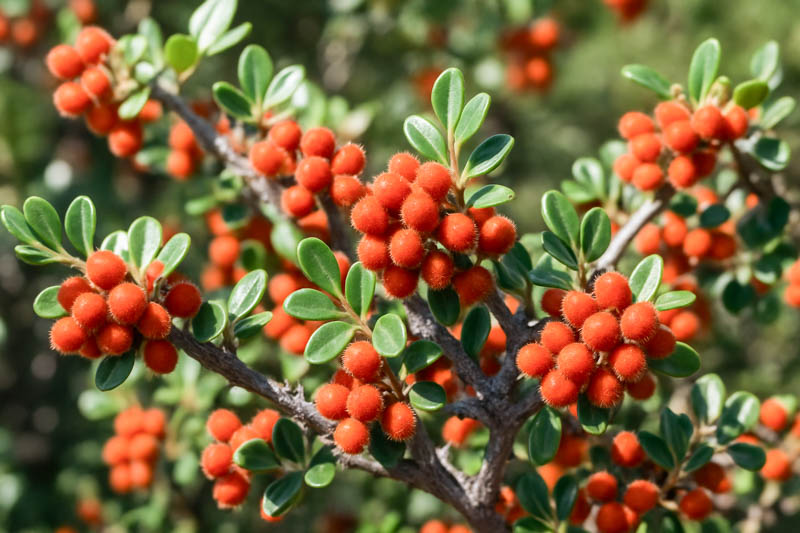


If you need a shrub that can take blazing sun, rocky soil, wind, and long dry spells without flinching, Rhus microphylla is a strong contender. Known as littleleaf sumac or desert sumac, this native Southwestern shrub brings fine textured foliage, bright red berries, and warm fall color to banks, hillsides, and xeriscapes across Texas and the desert Southwest.
Summary: Tough, fine textured native sumac for dry slopes, rocky ground, and wildlife friendly plantings in Texas and the desert Southwest.
Use: Bank stabilizer, wildlife and bird gardens, native hedgerows, roadside and ranch plantings, xeric mixed borders, and restoration sites.
Highlight: Clusters of bright red, fuzzy fruits that birds relish, plus warm orange to red fall color on a drought hardy shrub.
Note: A rugged replacement for thirsty nonnative shrubs on hot, dry, windy sites.
| Botanical Name | Rhus microphylla Engelm. ex A. Gray |
|---|---|
| Family | Anacardiaceae (sumac and cashew family) |
| Common Names | Littleleaf sumac, little leaf sumac, desert sumac, small leaf sumac |
| Native Range | Southwestern United States and northern Mexico, especially Arizona, New Mexico, and Texas, on dry slopes, canyons, mesas, and limestone hills. |
| Plant Type and Habit | Deciduous shrub or small multi stemmed tree with rounded, often thicket forming habit |
| Hardiness (USDA) | Typically Zones 6 to 9 in well drained sites |
| Size | Usually 4 to 8 ft tall and 8 to 20 ft wide; smaller with regular pruning |
| Sun and Exposure | Full sun for best form, fruit, and fall color; tolerates very light shade |
| Soil | Prefers rocky, gravelly, or sandy soils, including limestone and calcareous clays, with good drainage |
| Seasonal Interest | Discreet spring flowers, red fuzzy fruits, and orange to red fall foliage |
| Primary Uses | Slope stabilization, wildlife and bird habitat, wind tolerant screens, native shrub borders, roadside and restoration plantings |
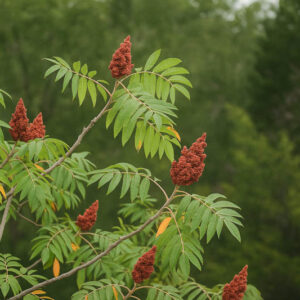
Littleleaf sumac is a fine textured native shrub that looks as if it grew out of the rocks themselves. Multiple stems rise from the base and age into a sculptural framework with gray brown bark. The small, compound leaves are divided into several narrow leaflets, so the plant reads as airy and ferny even though it thrives in harsh, desert like conditions.
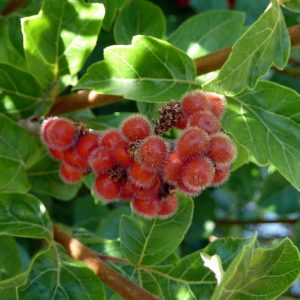
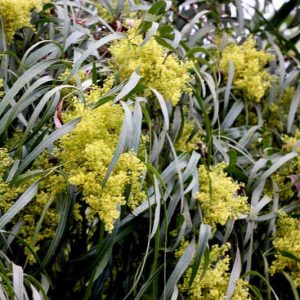
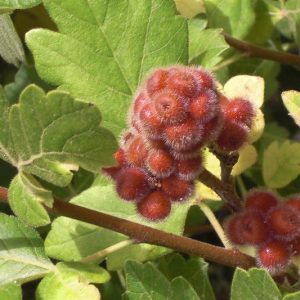
In spring, the twigs are sprinkled with small yellowish green flower clusters. On female plants, these give way to clusters of red, fuzzy berries that catch the light and stand out against the foliage. Birds quickly learn to patrol the shrubs as the fruit ripens.
Rhus microphylla is native to the Southwestern United States and northern Mexico. In the U.S. it is mostly found in Arizona, New Mexico, and Texas, where it occupies dry slopes, canyons, rocky hills, and limestone outcrops. Southward it follows similar arid and semi arid habitats into north and central Mexico.
This background on sun baked, rocky terrain is exactly why littleleaf sumac is so reliable in xeric gardens, ranch landscapes, and low water urban plantings that mimic its natural home.
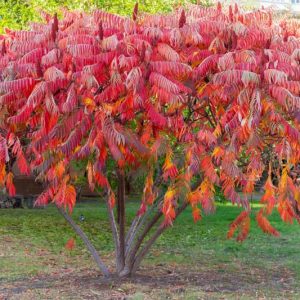
In gardens, littleleaf sumac typically matures around 4 to 8 ft tall and 8 to 20 ft wide. Growth is moderate: fast enough to fill a space within a few seasons, but not so vigorous that it needs constant taming.
The plant often produces multiple stems from the base and may slowly form a loose thicket. With selective pruning, you can emphasize a rounded shrub form or lift the lowest branches and create a small, multi trunked tree for added character.
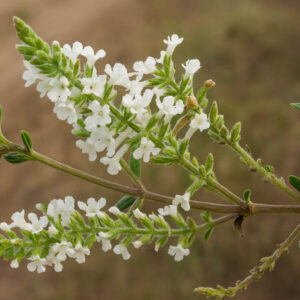
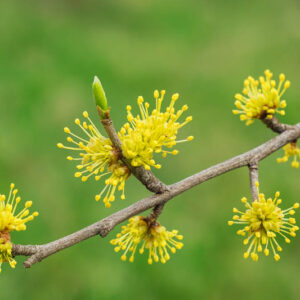
Flowers appear in early to mid spring as small, yellowish green clusters along the twigs. They are subtle from across the yard but valuable to early pollinators.
Later in the season, fertilized flowers develop into dense clusters of red, hairy drupes. These fruits add color in late summer and fall and often remain on the branches into early winter unless wildlife removes them first.
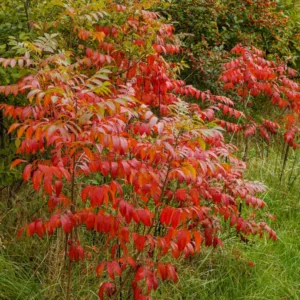
Each leaf of littleleaf sumac is composed of several tiny, narrow leaflets that give the shrub its delicate texture and its name. Summer color ranges from medium to gray green. In cool autumn weather, foliage often turns shades of orange, copper, or red, especially at higher elevations or in colder parts of its range.
The open canopy allows light to reach the ground, so it combines well with warm season bunchgrasses, desert perennials, and low succulents planted beneath and around it.
Littleleaf sumac is adapted to warm, dry regions with cold tolerant winters. It is typically listed for USDA Zones 6 to 9, performing best in climates with quick draining soils and hot summers.
It behaves as a fully deciduous shrub, shedding leaves in fall and leafing out again in spring. Extended periods of saturated soil or muggy, wet summers are harder on this shrub than heat or drought.
There are many ways to put this hardworking shrub to use:
Littleleaf sumac is a reliable ally in wildlife gardens. Spring flowers offer nectar and pollen to native bees and other insects. The red berries serve as food for songbirds and small mammals, often right when they need extra fuel in late summer and fall.
The many stemmed structure creates cover and potential nesting sites. When grouped with other native shrubs and grasses, it becomes part of a resilient, wildlife friendly plant community.
In rangelands, littleleaf sumac may be sampled by browsing animals but is generally not a favored forage. Its small, somewhat resinous foliage helps limit heavy grazing.
In home landscapes with deer, expect occasional nibbling on tender growth. Protect young plants with temporary cages until they have enough size and stems to shrug off light browsing.
Drought resistance is one of littleleaf sumacs best traits. In nature it inhabits dry, rocky, desert like sites with limited and irregular rainfall. Once established, it can ride out extended dry periods with little or no supplemental irrigation. Best Drought-Tolerant Texas Plants for Truly Stunning Xeriscapes
Deep, regular watering during the first one to two growing seasons helps build a strong root system. After that, most plants can subsist primarily on natural rainfall in Southwest climates, with extra water reserved for severe drought.
Littleleaf sumac is used as an ornamental, habitat, and restoration shrub, not as a routine food plant. Like other sumacs, the fruit has traditional uses in some regions, but those rely on proper identification and local knowledge.
Within its home range, Rhus microphylla is considered a well behaved native. It can sucker and slowly form patches, especially on open slopes, but it is not regarded as invasive. In small gardens, simply remove unwanted shoots to keep the plant where you want it.
For best performance, plant littleleaf sumac in full sun, aiming for at least six hours of direct light each day. It tolerates bright, very light shade, but heavy shade reduces fruiting and can make the plant more open and leggy.
Good drainage matters more than rich soil. Littleleaf sumac thrives in:
On heavy clay that holds water, plant on a low mound or raised berm and incorporate some coarse material into the top layer so water moves through the root zone.
A simple watering approach is enough:
Littleleaf sumac is not a heavy feeder. In average garden soil it often needs no fertilizer at all.
Mulch helps new plants through their first summers and suppresses weeds. Apply a 2 to 3 inch layer of shredded bark, native wood chips, crushed gravel, or decomposed granite.
Keep mulch a couple of inches back from the stems so the base of the plant can dry quickly after rain.
Littleleaf sumac can be managed as a dense shrub or a small multi trunked tree.
Collect seed when fruits are fully ripe and dry. Clean and sow in pots or flats filled with a well drained mix. Like many sumacs, seed often benefits from scarification or cold stratification to break dormancy; check local native plant resources for specific recommendations.
In the landscape, littleleaf sumac may produce root suckers that can sometimes be dug with a portion of root and moved while dormant. Semi hardwood cuttings taken during the growing season may also root under the right conditions, though success varies. For most gardeners, buying container grown plants from a native focused nursery is the most reliable option.
When matched with the right conditions, littleleaf sumac is largely trouble free.
Rhus microphylla, commonly called littleleaf sumac or desert sumac, is a deciduous native shrub in the sumac family. It forms a many stemmed, fine textured mound or small tree with tiny compound leaves, yellowish spring flowers, and clusters of red, fuzzy fruits that attract birds and wildlife in dry, rocky landscapes.
Littleleaf sumac is native to the Southwestern United States and northern Mexico. In the U.S. it occurs mainly in Arizona, New Mexico, and Texas, usually on dry slopes, rocky hills, canyon sides, and desert foothills. Southward it extends into arid and semi arid regions of north and central Mexico.
In home landscapes, Rhus microphylla usually grows about 6 to 12 ft tall and 6 to 10 ft wide, forming a rounded, many stemmed shrub. With selective pruning it can be kept in the 4 to 6 ft range or trained into a small multi trunked tree in larger spaces.
Littleleaf sumac thrives in full sun and well drained soil. It is very tolerant of rocky, gravelly, or sandy soils, including limestone and calcareous clays. Once established it prefers low to moderate water and fits perfectly into xeriscapes, dry slopes, and native shrub borders in warm, dry climates.
Yes. Rhus microphylla is naturally drought tolerant once established. It evolved on dry hillsides and rocky slopes with limited rainfall, so it is adapted to irregular moisture and high heat. Deep watering during the first season or two builds strong roots, after which the shrub usually needs irrigation only during prolonged drought.
Littleleaf sumac is excellent for wildlife. Its flowers feed small pollinators, and its clusters of red fruits are eaten by birds and small mammals. The dense, twiggy growth offers cover and nesting sites, making it a valuable component of native hedgerows, bird gardens, and restoration plantings.
Yes. In the right climate, littleleaf sumac is a forgiving native shrub. Provide full sun, drainage, and modest water during establishment, and it will mostly take care of itself. For gardeners in hot, dry regions, it is an easy way to add structure, wildlife value, and fall color with very low maintenance.
Updated: November 2025 • Reviewed by Gardenia Editors
| Hardiness |
6 - 9 |
|---|---|
| Plant Type | Shrubs |
| Plant Family | Anacardiaceae |
| Genus | Rhus |
| Common names | Sumac |
| Exposure | Full Sun, Partial Sun |
| Season of Interest | Spring (Early, Mid), Summer (Late), Fall, Winter |
| Height | 4' - 8' (120cm - 240cm) |
| Spread | 8' - 20' (240cm - 6.1m) |
| Maintenance | Low |
| Water Needs | Low |
| Soil Type | Clay, Loam, Sand |
| Soil pH | Acid, Alkaline, Neutral |
| Soil Drainage | Well-Drained |
| Characteristics | Showy, Fruit & Berries |
| Native Plants | United States, Southwest, Texas, Arizona, New Mexico, Oklahoma |
| Tolerances | Drought, Dry Soil, Rocky Soil |
| Attracts | Bees, Birds |
| Garden Uses | Banks And Slopes, Beds And Borders, Hedges And Screens |
| Garden Styles | Informal and Cottage |
| Toxic to Humans | No known toxicity |
| Toxic to Cats | No known toxicity |
| Toxic to Dogs | No known toxicity |
| Toxic to Horses | No known toxicity |


| Hardiness |
6 - 9 |
|---|---|
| Plant Type | Shrubs |
| Plant Family | Anacardiaceae |
| Genus | Rhus |
| Common names | Sumac |
| Exposure | Full Sun, Partial Sun |
| Season of Interest | Spring (Early, Mid), Summer (Late), Fall, Winter |
| Height | 4' - 8' (120cm - 240cm) |
| Spread | 8' - 20' (240cm - 6.1m) |
| Maintenance | Low |
| Water Needs | Low |
| Soil Type | Clay, Loam, Sand |
| Soil pH | Acid, Alkaline, Neutral |
| Soil Drainage | Well-Drained |
| Characteristics | Showy, Fruit & Berries |
| Native Plants | United States, Southwest, Texas, Arizona, New Mexico, Oklahoma |
| Tolerances | Drought, Dry Soil, Rocky Soil |
| Attracts | Bees, Birds |
| Garden Uses | Banks And Slopes, Beds And Borders, Hedges And Screens |
| Garden Styles | Informal and Cottage |
| Toxic to Humans | No known toxicity |
| Toxic to Cats | No known toxicity |
| Toxic to Dogs | No known toxicity |
| Toxic to Horses | No known toxicity |
How many Rhus microphylla (Littleleaf Sumac) do I need for my garden?
| Plant | Quantity | |
|---|---|---|
| Rhus microphylla (Littleleaf Sumac) | N/A | Buy Plants |
Create a membership account to save your garden designs and to view them on any device.
Becoming a contributing member of Gardenia is easy and can be done in just a few minutes. If you provide us with your name, email address and the payment of a modest $25 annual membership fee, you will become a full member, enabling you to design and save up to 25 of your garden design ideas.
Join now and start creating your dream garden!
Create a membership account to save your garden designs and to view them on any device.
Becoming a contributing member of Gardenia is easy and can be done in just a few minutes. If you provide us with your name, email address and the payment of a modest $25 annual membership fee, you will become a full member, enabling you to design and save up to 25 of your garden design ideas.
Join now and start creating your dream garden!