Prairie Flameleaf Sumac, Flameleaf Sumac, Prairie Sumac, Texan Sumac, Texas Sumac, Prairie Shining Sumac, Lance-leaf Sumac, Lance-leaved Sumac, Limestone Sumac, Western Sumac, Dwarf Sumac, Tree Sumac, Rhus copallinum var. lanceolata, Rhus copallina lanceolata, Rhus copallinum lanceolata, Schmaltzia lanceolata
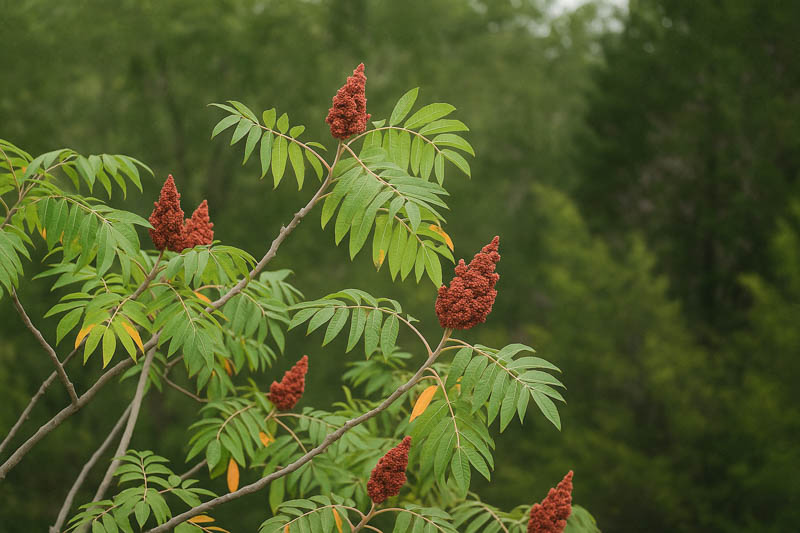


Need bold fall color, wildlife value, and serious drought tolerance in one tough native plant? Meet Rhus lanceolata, better known as flameleaf sumac, prairie flameleaf sumac, prairie sumac, or Texas sumac. This thicket forming native shrub or small tree lights up hillsides with vivid orange red foliage, showy seed clusters, and loose, airy branching that still looks elegant in the wildest conditions.
Rhus lanceolata care is simple: give this drought tolerant native sumac full sun, well drained soil, and room to spread, water it well in the first year, and then mostly get out of the way. Flameleaf sumac thrives on rocky limestone slopes, thin urban soils, and prairie edges from Oklahoma and Texas into New Mexico and northern Mexico, making it an ideal choice for xeriscapes, wildlife hedgerows, erosion control on slopes, screens, and fall color groves in hot, dry regions.
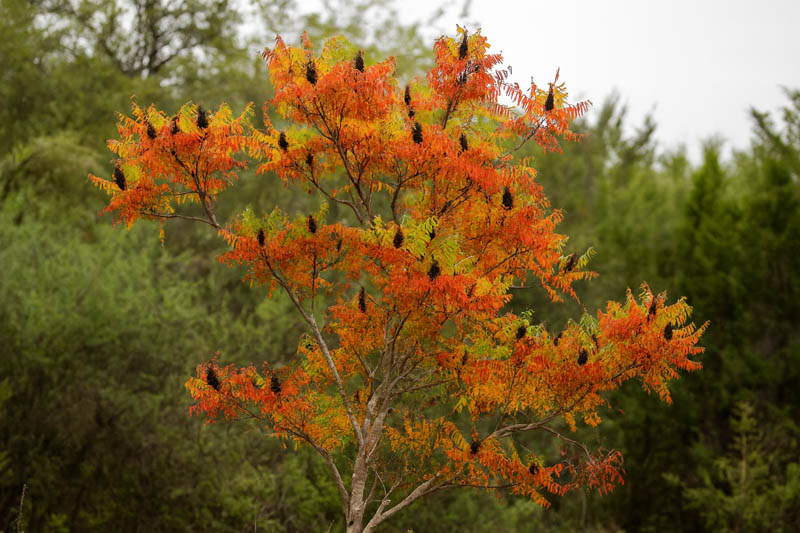
Summary: Thicket forming native shrub or small tree with shiny green compound leaves that turn brilliant orange red in fall, topped with showy clusters of fuzzy red fruit.
Use: Xeriscapes, wildlife hedges, screening, erosion control, slope stabilization, fall color accents, restoration projects, prairie and savanna plantings.
Highlight: Extremely heat and drought tolerant, thrives in rocky, alkaline soils, and provides multi season interest plus high wildlife value with fruit that feeds birds through fall and winter.
Note: Fast growing, low maintenance, and tolerant of poor soils, but spreads by suckers to form colonies, so give it room or be ready to thin stems where you want a more formal look.
| Botanical Name | Rhus lanceolata (A. Gray) Britton |
|---|---|
| Family | Anacardiaceae (sumac or cashew family) |
| Common Names | Flameleaf sumac, prairie flameleaf sumac, prairie sumac, Texas sumac, lance leaf sumac, tree sumac, limestone sumac |
| Native Range | Native to the southwestern United States and northern Mexico, especially southern Oklahoma, central, north, and west Texas, New Mexico, and into Coahuila, Nuevo León, and Tamaulipas. Typically found on rocky limestone hillsides, grasslands, roadsides, and open woodlands. |
| Plant Type and Habit | Deciduous shrub or small tree, often multi trunked and thicket forming via underground rhizomes. Loose, rounded crown with upright to spreading branches. |
| Hardiness (USDA) | Generally listed in about USDA Zones 6 to 8, with some sources noting performance in Zone 5 in well drained, sunny sites. |
| Size | Typically 12 to 20 feet tall and 10 to 20 feet wide, occasionally to about 25 to 30 feet in ideal conditions. |
| Sun and Exposure | Full sun for best fall color and fruiting; tolerates part sun or dappled shade but with somewhat looser growth. |
| Soil | Prefers well drained, rocky, limestone or calcareous soils. Tolerates sandy, loamy, clay, and very poor soils as long as they are not chronically wet; thrives in alkaline soils. |
| Seasonal Interest | Late spring to summer clusters of creamy white flowers, followed by fuzzy red fruit that often persist into winter, and spectacular orange to scarlet red fall foliage. Twisting trunks and branches add winter character. |
| Primary Uses | Native screen or hedge, wildlife habitat, erosion control on slopes, highway and reclamation plantings, fall color specimen, mixed shrub borders, prairie and savanna restorations, xeriscape backgrounds. |
Rhus lanceolata is a medium sized, deciduous native shrub or small tree with an open, spreading habit. It typically grows 12 to 20 feet tall with a loose, rounded crown and one or several trunks, though older wild specimens in prime sites can reach 25 to 30 feet.
The leaves are pinnately compound, usually with 13 to 17 narrow leaflets arranged along a winged central stalk. Each leaflet is lance shaped, shiny green on top and paler beneath, giving the whole canopy a soft, textured look in summer.
Flameleaf sumac is native to the southwestern United States and northern Mexico, most common from southern Oklahoma through central, north, and west Texas into New Mexico and southward into central Mexico. You will often see Rhus lanceolata scattered along rocky limestone hillsides, prairie breaks, grasslands, fencerows, and roadsides, especially in Central and West Texas where its fall color can light up whole slopes.
That wild range explains its toughness: if your site looks hot, dry, rocky, and unforgiving, there is a good chance flameleaf sumac will feel at home.
Rhus lanceolata grows at a moderate to fast rate, especially in the first decade. It is rhizomatous, meaning it sends up new stems from underground roots around the original plant. Over time these stems can create a small colony or thicket. In a large native planting, that colony effect is a bonus: you get massed fall color, dense cover for wildlife, and excellent erosion control. In more formal landscapes, simply remove or mow off suckers where you want to keep edges crisp.
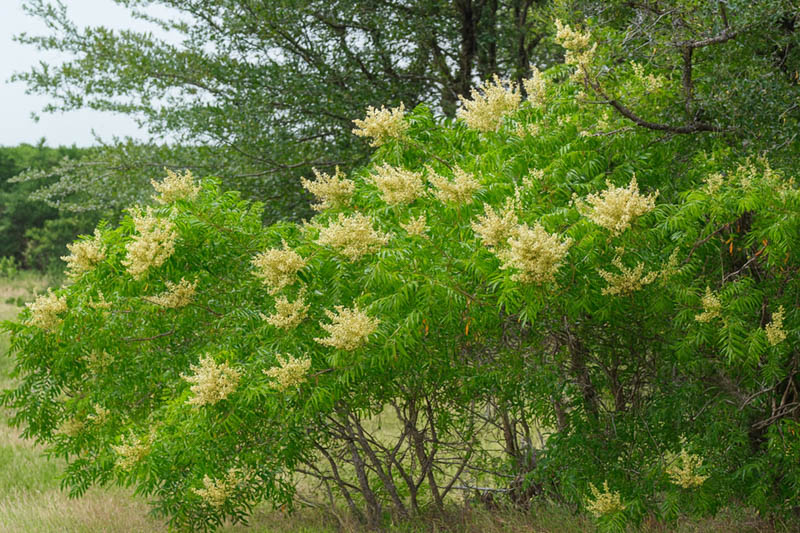
In late spring to summer, Rhus lanceolata produces upright clusters (panicles) of small, creamy white to yellowish flowers at the branch tips. These flower clusters can be 6 to 10 inches long and wide, and while the individual blooms are tiny, the overall effect is quite showy, especially against dark green foliage.
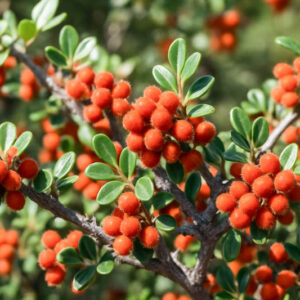
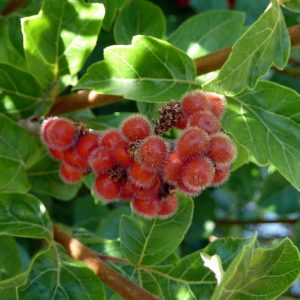
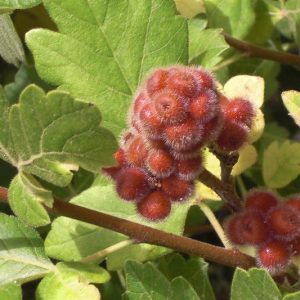
The flowers are followed by dense, cone shaped clusters of hairy red drupes (fruit). These fuzzy, tart fruit ripen in late summer to fall and often persist well into winter, where they add color and feed birds. In the wild, sumac fruit are a crucial late season food source for many species.
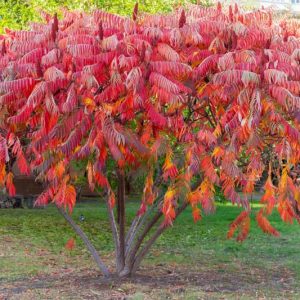
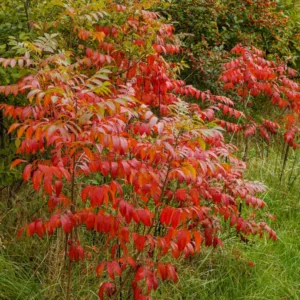
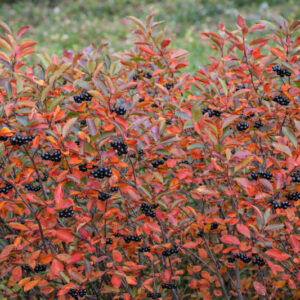
Summer foliage is an even, glossy medium green, with each compound leaf giving a soft, ferny appearance. The real magic, though, comes in autumn. As nights cool, flameleaf sumac lives up to its name, with leaves turning brilliant shades of orange, scarlet, and sometimes golden yellow. In regions where fall color can be hit or miss, Rhus lanceolata is one of the most reliable native plants for intense red fall color, especially in Central Texas and similar climates.
Most horticultural sources list Rhus lanceolata as hardy from about USDA Zone 6 into Zone 8, with some nurseries successfully growing it in Zone 5 in well drained sites.
You can use this native sumac in many ways:
Flameleaf sumac is a workhorse in wildlife friendly landscapes:
Deer browse the foliage to some extent, and many references note that both foliage and fruit are used by wildlife without significant problems. As a member of the sumac and cashew family, leaves and stems contain tannins and other compounds, so they are generally not considered edible for people or pets in the ornamental garden sense, even though related sumacs have a long history of traditional uses. When in doubt, treat Rhus lanceolata as an ornamental, not a snack, and discourage pets or children from chewing on twigs or fruit.
It is extremely tolerant of heat and drought once established and is widely recommended for low water landscapes and Texas SmartScape style plantings. Best Drought-Tolerant Texas Plants for Truly Stunning Xeriscapes
Flameleaf sumac (Rhus lanceolata) is not invasive in its native range, but it does spread by root suckers, forming loose thickets over time. In large or natural areas this is a benefit; in small yards, simply mow or cut unwanted shoots at the edges to keep it contained if needed.
Overall, Rhus lanceolata care comes down to three basics: full sun, well drained soil, and moderate water during establishment.
Flameleaf sumac is remarkably adaptable as long as drainage is good.
Flameleaf sumac maintenance is easy and mostly about guiding its natural form:
Rhus lanceolata is easy to propagate where it is native and appropriate to plant.
In suitable sites, Rhus lanceolata is typically trouble free and valued precisely because it shrugs off many problems that bother fussier shrubs.
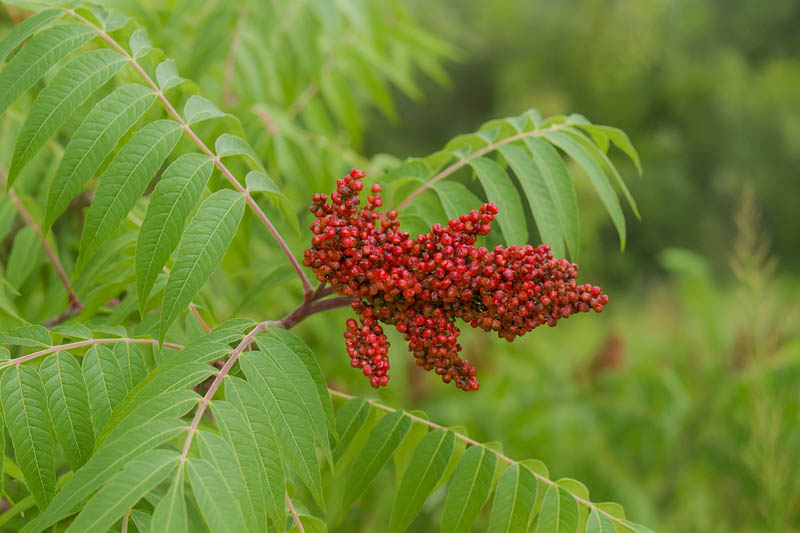
Flameleaf sumac (Rhus lanceolata) is a deciduous native shrub or small tree from the sumac/cashew family (Anacardiaceae). It typically grows 12–20 feet tall, forms loose colonies from underground rhizomes, and is prized for its brilliant orange-red fall foliage and showy clusters of fuzzy red fruit
Rhus lanceolata is native to the south-western United States and northern Mexico. In the U.S. it is primarily native to Texas, Oklahoma, and New Mexico, with populations extending into northern Mexico, especially on rocky limestone hillsides, grasslands, and open woodlands. It extends south into Mexican states like Coahuila, Nuevo León, and Tamaulipas
In landscapes, flameleaf sumac usually reaches about 12–18 feet tall and 10–20 feet wide, though older specimens can reach 25–30 feet in ideal conditions. It often develops multiple trunks and a loose, spreading crown, giving it the look of a small ornamental tree or a large, informal shrub.
Yes. Drought tolerance is one of the main reasons Rhus lanceolata is recommended for xeriscapes and low-water landscapes. Once established, it is extremely heat and drought tolerant and typically needs little or no supplemental irrigation except during prolonged, severe drought.
The pinnate leaves of flameleaf sumac turn vivid shades of orange, red, and sometimes yellow in autumn, often coloring entire hillsides in its native range. At the same time, cone-shaped clusters of fuzzy red fruit persist at the tips of branches, adding even more color and texture into fall and early winter.
Rhus lanceolata spreads naturally by root suckers, forming clumps or thickets over time. In its native range this is a feature, not a flaw, because it stabilizes slopes and creates wildlife habitat. In smaller yards you may need to regularly remove or mow off suckers at the edges to keep the plant within its intended space. It is not generally considered invasive when planted within its natural region.
Flameleaf sumac is a moderate to fast grower. Young plants can put on noticeable height and spread within just a few seasons, especially in full sun and well-drained soil. Many references describe it as fast growing and emphasize how quickly it can establish a screen or thicket on challenging sites.
Updated: November 2025
Key sources for horticultural details include plant profiles from the Lady Bird Johnson Wildflower Center, Texas SmartScape, state native plant societies, nursery listings, and university extension fact sheets for Rhus lanceolata.
| Hardiness |
6 - 8 |
|---|---|
| Plant Type | Shrubs, Trees |
| Plant Family | Anacardiaceae |
| Genus | Rhus |
| Common names | Sumac |
| Exposure | Full Sun, Partial Sun |
| Season of Interest | Spring (Early, Mid, Late), Summer (Early, Mid, Late), Fall |
| Height | 12' - 20' (3.7m - 6.1m) |
| Spread | 10' - 20' (3m - 6.1m) |
| Spacing | 96" - 144" (240cm - 3.7m) |
| Maintenance | Low |
| Water Needs | Low |
| Soil Type | Clay, Loam, Sand |
| Soil pH | Acid, Alkaline, Neutral |
| Soil Drainage | Well-Drained |
| Characteristics | Showy, Fruit & Berries |
| Native Plants | United States, Southwest, Texas, Arizona, New Mexico, Oklahoma |
| Tolerances | Drought |
| Attracts | Birds |
| Garden Uses | Banks And Slopes, Beds And Borders, Hedges And Screens |
| Garden Styles | Informal and Cottage, Prairie and Meadow |
| Toxic to Humans | No known toxicity |
| Toxic to Cats | No known toxicity |
| Toxic to Dogs | No known toxicity |
| Toxic to Horses | No known toxicity |


| Hardiness |
6 - 8 |
|---|---|
| Plant Type | Shrubs, Trees |
| Plant Family | Anacardiaceae |
| Genus | Rhus |
| Common names | Sumac |
| Exposure | Full Sun, Partial Sun |
| Season of Interest | Spring (Early, Mid, Late), Summer (Early, Mid, Late), Fall |
| Height | 12' - 20' (3.7m - 6.1m) |
| Spread | 10' - 20' (3m - 6.1m) |
| Spacing | 96" - 144" (240cm - 3.7m) |
| Maintenance | Low |
| Water Needs | Low |
| Soil Type | Clay, Loam, Sand |
| Soil pH | Acid, Alkaline, Neutral |
| Soil Drainage | Well-Drained |
| Characteristics | Showy, Fruit & Berries |
| Native Plants | United States, Southwest, Texas, Arizona, New Mexico, Oklahoma |
| Tolerances | Drought |
| Attracts | Birds |
| Garden Uses | Banks And Slopes, Beds And Borders, Hedges And Screens |
| Garden Styles | Informal and Cottage, Prairie and Meadow |
| Toxic to Humans | No known toxicity |
| Toxic to Cats | No known toxicity |
| Toxic to Dogs | No known toxicity |
| Toxic to Horses | No known toxicity |
How many Rhus lanceolata (Flameleaf Sumac) do I need for my garden?
| Plant | Quantity | |
|---|---|---|
| Rhus lanceolata (Flameleaf Sumac) | N/A | Buy Plants |
Create a membership account to save your garden designs and to view them on any device.
Becoming a contributing member of Gardenia is easy and can be done in just a few minutes. If you provide us with your name, email address and the payment of a modest $25 annual membership fee, you will become a full member, enabling you to design and save up to 25 of your garden design ideas.
Join now and start creating your dream garden!
Create a membership account to save your garden designs and to view them on any device.
Becoming a contributing member of Gardenia is easy and can be done in just a few minutes. If you provide us with your name, email address and the payment of a modest $25 annual membership fee, you will become a full member, enabling you to design and save up to 25 of your garden design ideas.
Join now and start creating your dream garden!