Aloysia gratissima: Whitebrush, Beebrush, Bee Brush, Texas Whitebrush, Aloysia lycioides, Lippia lycioides
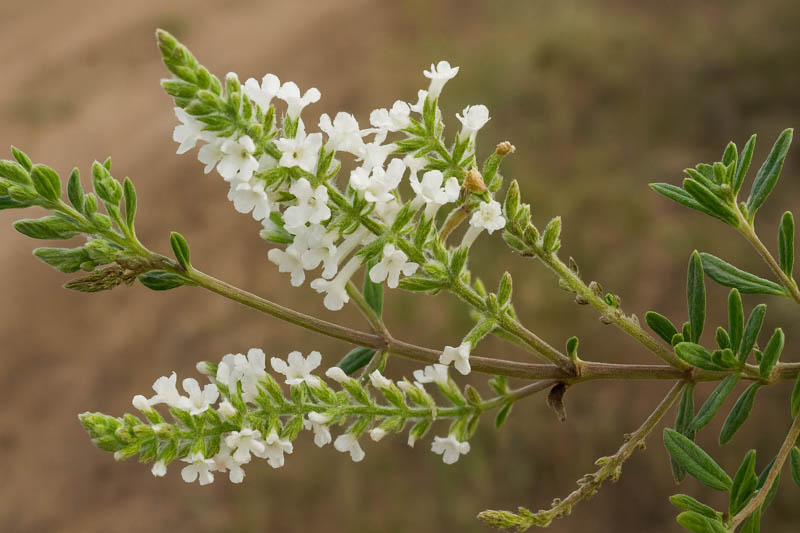


If you love plants that perfume the whole garden after a summer rain, Aloysia gratissima is one to know. Often called whitebrush, beebrush, or jazminillo, this native shrub covers itself in tiny vanilla scented white flowers that draw clouds of bees, night flying moths, and other pollinators, all on a tough, drought tolerant frame that feels right at home in hot, dry, rocky landscapes across Texas, the Southwest, and similar warm regions.
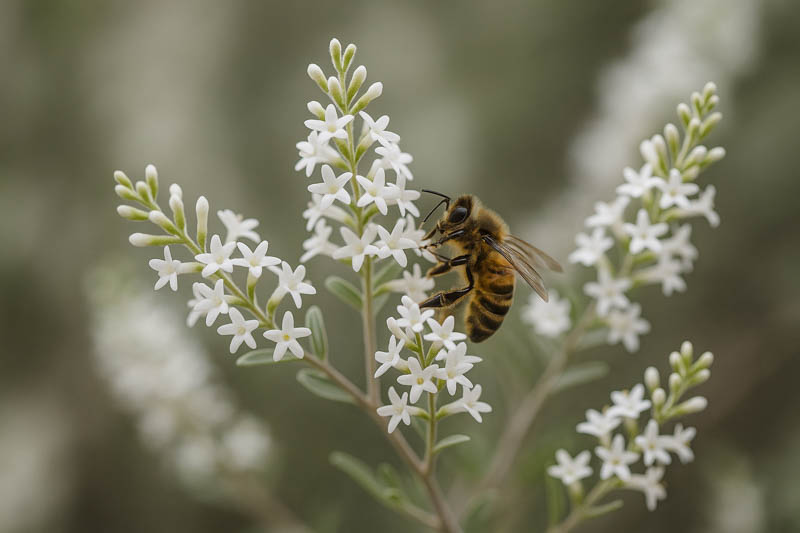
Summary: Fragrant, wildlife friendly native shrub for Texas, the Southwest, and warm dry regions, with white blooms that appear in waves from spring to fall.
Use: Informal screens, native hedgerows, pollinator and night moth gardens, ranch and roadside plantings, dry slopes, and low water mixed borders.
Highlight: Masses of sweet vanilla scented white flowers after warm rains, alive with bees and butterflies, on a durable, drought tolerant shrub.
Note: A rugged, fragrant alternative to thirsty jasmine and privet in hot, dry landscapes; use with care around grazing livestock.
| Botanical Name | Aloysia gratissima (Gillies and Hook.) Troncoso |
|---|---|
| Family | Verbenaceae (verbena family) |
| Common Names | Whitebrush, beebrush, bee brush, jazminillo, common beebush, Rio Grande beebrush |
| Native Range | Southwestern United States and northern Mexico, especially Texas and southern New Mexico, with disjunct populations in South America from Uruguay and northern Argentina into Paraguay and southern Brazil. |
| Plant Type and Habit | Multi stemmed deciduous to semi evergreen shrub with upright, arching, often thicket forming habit |
| Hardiness (USDA) | Generally Zones 7 to 10 in well drained sites, with best performance in warm, dry climates |
| Size | Usually 6 to 12 ft tall and 6 to 8 ft wide, sometimes larger in ideal conditions |
| Sun and Exposure | Full sun to light shade; fullest bloom and densest growth in sun |
| Soil | Tolerates thin, rocky, sandy, or clay soils if drainage is reasonable; thrives on dry limestone slopes and gravelly hillsides |
| Seasonal Interest | Showy fragrant white flower spikes from spring through fall, often triggered by warm rains; fine textured foliage and open, airy winter outline |
| Primary Uses | Native shrub borders, bee and butterfly gardens, screens, ranch roadsides, dry slopes, wildlife plantings, and fragrant night gardens |
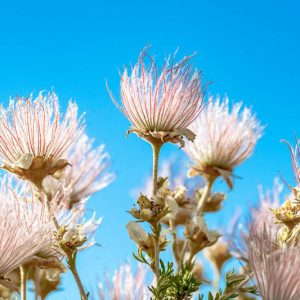
Whitebrush is a fragrant native shrub known as much for the smell of its flowers as for their appearance. It forms an upright, often arching plant with many slender grayish stems and small green leaves. When in bloom, the tips of the branches are covered in slender spikes of tiny white flowers that release a strong vanilla and honey scent, especially in warm, humid air after summer rain.
The shrub has an informal, slightly rangy look that fits naturally into native shrublands, fence lines, and dry washes. In a garden setting, that loose structure reads as relaxed and wild in the best way, especially when paired with native grasses and other dryland shrubs.
Aloysia gratissima is native from Texas and southern New Mexico south into Mexico, and further south into parts of Uruguay, northern Argentina, Paraguay, and southern Brazil. In the United States, it is most often seen on dry hillsides, rocky outcrops, limestone bluffs, and sandy washes in central, south, and west Texas, with scattered populations in the desert Southwest.
This background among rocks, thin soils, and intense sun is what makes whitebrush such a natural fit for xeric gardens, ranch landscapes, and low water urban plantings in similar climates.
In landscapes, whitebrush typically grows 6 to 12 ft tall and 6 to 8 ft wide, forming a many branched shrub that can stand alone or mass into loose thickets along fencerows and draws. Growth is generally moderate, quick enough to fill a space in a few seasons without turning into a fast moving nuisance.
The branching structure is naturally upright to arching. In open sites with good light, the plant tends to be more compact. In partial shade or very rich soil, stems may stretch and lean, which can be corrected with periodic pruning.
The flowers are the reason many gardeners plant whitebrush. From spring into fall, often after warm rains, the shrub produces dense, slender spikes of tiny tubular white flowers at the ends of young shoots. Individual blooms are small, but the sheer number of flower spikes gives the plant a soft white cast during bloom.
The fragrance is famously strong. On still evenings, the vanilla like scent can carry across a yard, attracting clouds of bees by day and night flying moths after dark. In native rangelands, beebrush bloom is one of the classic cues that honey producers and wildlife watchers look forward to each year. Texas Fragrant Plants: Top Picks for Yards, Patios, and Porches
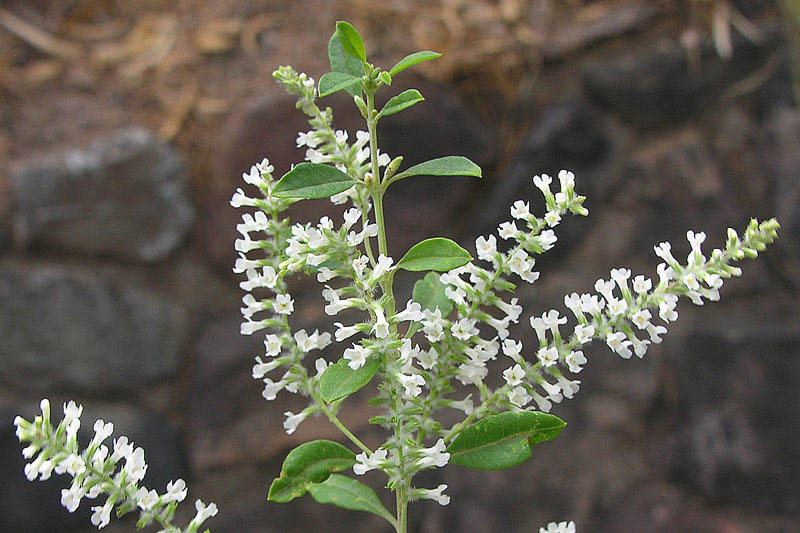
Whitebrush foliage is small, narrow, and somewhat sparse, letting plenty of light reach the ground. Leaves are typically about one quarter to one inch long, pale beneath, and slightly toothed on older stems, with smoother edges on flowering branches.
The fine texture keeps the shrub from feeling visually heavy. It works well with coarse leaved agaves and yuccas, as well as with mid sized bunchgrasses that appreciate some dappled shade on their crowns.
Whitebrush is adapted to warm temperate and subtropical climates. Most garden references place it around USDA Zones 7 to 10, with the shrub most reliable in Zones 8 and 9 where winters are relatively mild and summers are hot and dry.
In cold winters, the plant may behave as deciduous, dropping most or all of its leaves and sometimes losing the tips of stems. In very warm locations, it can be nearly evergreen, holding foliage until burned off by a hard frost.
You can fit whitebrush into many landscape roles where fragrance and toughness are both essential:
Whitebrush is a powerhouse in wildlife and pollinator gardens. The flower spikes are rich in nectar, feeding native bees, honeybees, butterflies, and nocturnal moths for many months of the year. In some areas, monarchs and other migrating butterflies rest and feed in whitebrush stands during their journeys.
The twiggy structure provides cover for small birds and other wildlife, especially when planted in groups. Birds will also pick at the small seeds and use the shrub as a perch when foraging in mixed shrub and grassland plantings.
In rangelands, whitebrush may be browsed in light amounts, but it is not considered a preferred forage. Some sources note that the plant can be toxic to certain livestock when eaten in quantity, particularly under drought conditions when other forage is scarce, so it is wise to avoid encouraging dense stands inside heavily grazed pastures.
In home landscapes with deer pressure, whitebrush often experiences some browsing on tender new growth but usually survives once established. Temporary cages around young plants will help them reach a size where occasional nibbling is not a problem.
Drought tolerance is one of whitebrushs strongest traits. In the wild it is most often found on dry slopes, outcrops, and thin, stony soils where rainfall is sporadic. Once the root system is developed, the plant handles long dry spells with minimal supplemental water.
In the garden, a regular deep watering schedule during the first one to two growing seasons will help establish deep roots. After that, whitebrush usually needs water only during extreme or prolonged drought, especially in urban sites with reflected heat.
Whitebrush is grown as an ornamental, habitat, and restoration shrub, not as a human food plant. It has a long history of traditional use in parts of South America as a medicinal and aromatic shrub, but those uses depend on local knowledge and careful preparation rather than casual nibbling.
Within its native and regionally appropriate range, Aloysia gratissima is considered a well behaved native. It can seed into open ground and may form dense patches in very favorable sites, but it is not considered an invasive pest in its home region. In small gardens, unwanted volunteers can be removed while young.
For best flowering and fragrance, plant whitebrush in full sun. Aim for at least six hours of direct light each day. Light or dappled shade is acceptable, especially in very hot climates, but heavy shade will reduce bloom and lead to more open, sparse growth.
Whitebrush is very flexible about soil texture but does appreciate drainage. It thrives in:
If you garden on heavy clay that holds water for days after a storm, plant on a low mound or raised berm, and consider mixing in coarse gravel or expanded aggregate in the top layer to keep the root zone from staying saturated. Native Plants That Truly Thrive in Texas Clay Soils
A simple watering plan keeps whitebrush happy:
As a native shrub adapted to lean soils, whitebrush is not a heavy feeder. Too much fertilizer can push tall, weak growth at the expense of flowering.
Mulch helps new plants through their first summers and reduces weed pressure. Apply a 2 to 3 inch layer of shredded bark, native wood chips, or gravel around the base of the shrub.
Keep mulch an inch or two back from the stems so the crown can dry quickly after rain or irrigation.
Whitebrush responds well to pruning and can be kept smaller than its maximum size if space is limited.
Whitebrush can be propagated from seed collected after the flowering season, once fruits ripen and dry. Sow in pots or seed flats filled with a well drained mix, cover lightly, and keep the medium just moist until germination. Seedlings can be pricked out into individual pots and grown on until large enough to handle field conditions.
Nurseries often use semi ripe cuttings taken during the growing season. Home gardeners can experiment with cuttings rooted in a sharp draining medium under bright, indirect light. For most native gardens, however, purchasing container grown plants from a regionally focused nursery is the simplest route.
Whitebrush is generally a low maintenance, trouble free shrub when given sun and drainage.
Most issues can be prevented by matching whitebrush with the sunny, dry conditions it prefers, and avoiding heavy, wet soils.
Aloysia gratissima, commonly called whitebrush or beebrush, is a fragrant native shrub in the verbena family. It grows as a many stemmed, upright shrub with small leaves and spikes of tiny white, vanilla scented flowers that attract bees, butterflies, and moths from spring through fall in warm, dry climates.
Whitebrush is native to the Southwestern United States and northern Mexico, especially across Texas and southern New Mexico, and southward into parts of South America including Uruguay and northern Argentina. It typically grows on dry hillsides, rocky outcrops, bluffs, and sandy washes in sunny exposures.
In gardens, Aloysia gratissima usually reaches 6 to 12 ft tall and 6 to 8 ft wide, forming an airy, multi stemmed shrub. With regular pruning it can be kept in the 4 to 6 ft range for smaller spaces, or allowed to reach full height for screens and native hedgerows.
Whitebrush thrives in full sun and well drained soil. It is very tolerant of rocky, sandy, or thin limestone soils and handles neutral to alkaline pH with ease. Once established it prefers low to moderate water and excels in xeriscapes, native shrub borders, and dry slopes.
Yes. Aloysia gratissima is naturally drought tolerant once established. It evolved in dry upland habitats, so it is adapted to irregular rainfall and high heat. Deep watering during the first one or two seasons helps build strong roots, after which the shrub needs supplemental water only during prolonged drought.
Whitebrush is excellent for wildlife. Its long season of white, nectar rich flowers draws bees, butterflies, and night flying moths. The twiggy structure offers cover for small birds, and seeds provide minor food value. When planted with other natives, it helps support a diverse, resilient habitat planting.
Whitebrush is grown as an ornamental and habitat shrub, not as an edible. Some sources note that it can be toxic to certain livestock when grazed heavily, especially under drought stress, so it should not be encouraged inside intensively grazed pastures. In typical home landscapes, it is mainly a concern only for grazing animals, not casual contact.
Yes. In the right climate, whitebrush is a very forgiving native shrub. Give it sun, drainage, and modest water during establishment, and it will take care of itself with minimal pruning. For gardeners in hot, dry regions, it is one of the easiest ways to add fragrance and pollinator value with very low maintenance.
Updated: November 2025 – Reviewed for Texas, Southwest, and dry climate native plant gardens
| Hardiness |
7 - 10 |
|---|---|
| Plant Type | Shrubs |
| Plant Family | Verbenaceae |
| Exposure | Full Sun |
| Season of Interest | Spring (Early, Mid, Late), Summer (Early, Mid, Late), Fall |
| Height | 6' - 12' (180cm - 3.7m) |
| Spread | 6' - 8' (180cm - 240cm) |
| Spacing | 72" - 96" (180cm - 240cm) |
| Maintenance | Low |
| Water Needs | Low |
| Soil Type | Clay, Loam, Sand |
| Soil pH | Acid, Alkaline, Neutral |
| Soil Drainage | Well-Drained |
| Characteristics | Showy, Fragrant |
| Native Plants | United States, Southwest, Texas, Arizona, New Mexico |
| Tolerances | Drought, Dry Soil, Rocky Soil |
| Attracts | Bees, Butterflies |
| Garden Uses | Beds And Borders |
| Garden Styles | Informal and Cottage |
| Toxic to Humans | No known toxicity |
| Toxic to Cats | No known toxicity |
| Toxic to Dogs | No known toxicity |
| Toxic to Horses | No known toxicity |


| Hardiness |
7 - 10 |
|---|---|
| Plant Type | Shrubs |
| Plant Family | Verbenaceae |
| Exposure | Full Sun |
| Season of Interest | Spring (Early, Mid, Late), Summer (Early, Mid, Late), Fall |
| Height | 6' - 12' (180cm - 3.7m) |
| Spread | 6' - 8' (180cm - 240cm) |
| Spacing | 72" - 96" (180cm - 240cm) |
| Maintenance | Low |
| Water Needs | Low |
| Soil Type | Clay, Loam, Sand |
| Soil pH | Acid, Alkaline, Neutral |
| Soil Drainage | Well-Drained |
| Characteristics | Showy, Fragrant |
| Native Plants | United States, Southwest, Texas, Arizona, New Mexico |
| Tolerances | Drought, Dry Soil, Rocky Soil |
| Attracts | Bees, Butterflies |
| Garden Uses | Beds And Borders |
| Garden Styles | Informal and Cottage |
| Toxic to Humans | No known toxicity |
| Toxic to Cats | No known toxicity |
| Toxic to Dogs | No known toxicity |
| Toxic to Horses | No known toxicity |
How many Aloysia gratissima (Whitebrush) do I need for my garden?
| Plant | Quantity | |
|---|---|---|
| Aloysia gratissima (Whitebrush) | N/A | Buy Plants |
Create a membership account to save your garden designs and to view them on any device.
Becoming a contributing member of Gardenia is easy and can be done in just a few minutes. If you provide us with your name, email address and the payment of a modest $25 annual membership fee, you will become a full member, enabling you to design and save up to 25 of your garden design ideas.
Join now and start creating your dream garden!
Create a membership account to save your garden designs and to view them on any device.
Becoming a contributing member of Gardenia is easy and can be done in just a few minutes. If you provide us with your name, email address and the payment of a modest $25 annual membership fee, you will become a full member, enabling you to design and save up to 25 of your garden design ideas.
Join now and start creating your dream garden!