Scarlet Beebalm, Oswego Tea, Red Bergamot, Bergamot, Bee Balm, Bee Balm Tea Plant, Fragrant Balm, Hare Mint, Indian Feathers, Indian Plume, Lad's Love, Low Balm, Mountain Mint, Robin-Run-Around, Rose Balm, Sweet Bergamot, Monarda kalmiana, Monarda coccinea, Monarda oswegoensis
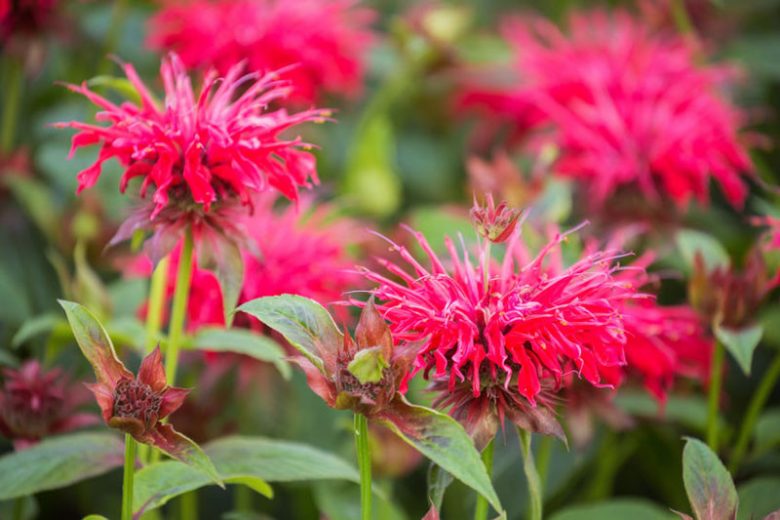
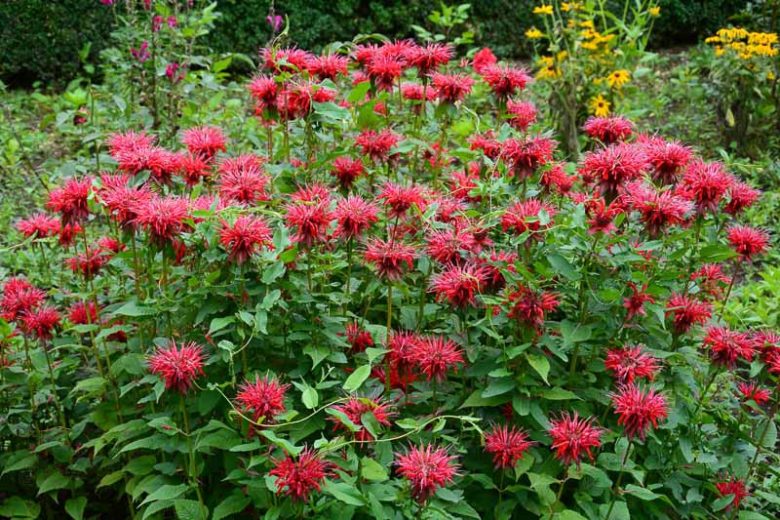
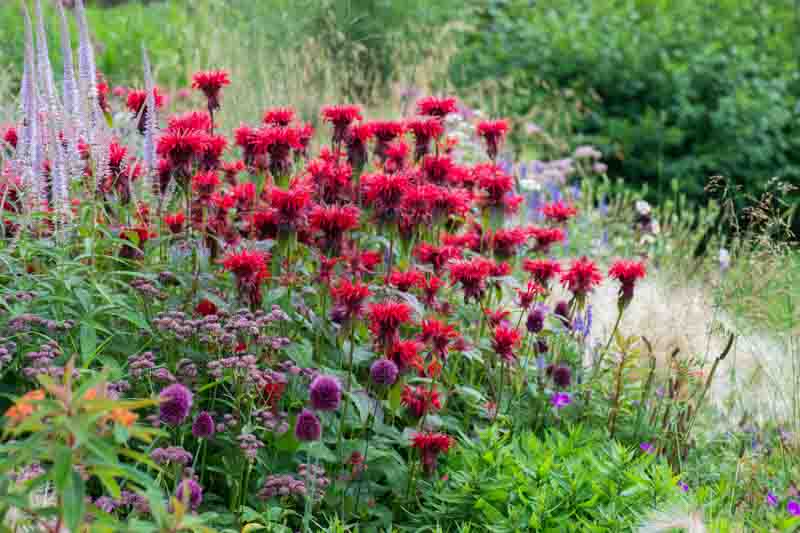
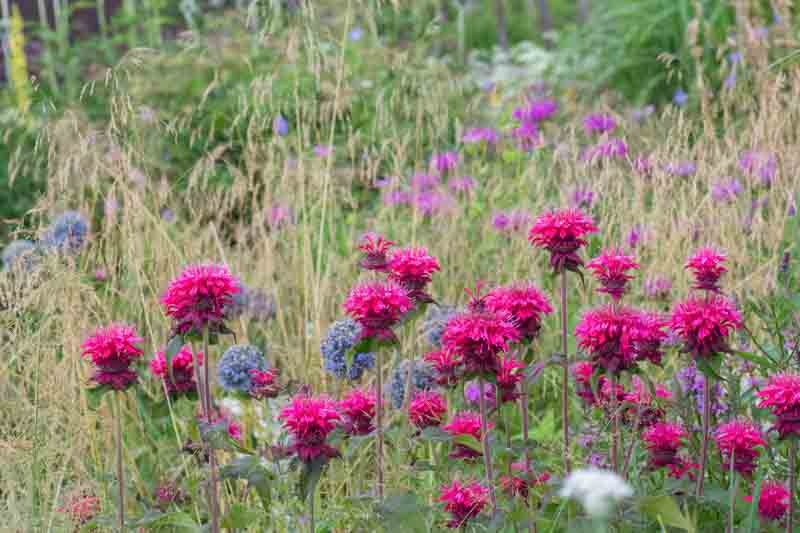


If you are dreaming of a pollinator magnet that explodes with scarlet-red blooms, fills the garden with a refreshing minty fragrance, and thrives in moist soil, Monarda didyma, commonly known as Scarlet Bee Balm, is a standout choice. This clump-forming perennial offers a long season of color, deliciously aromatic foliage, and incredible value for bees, butterflies, and hummingbirds.
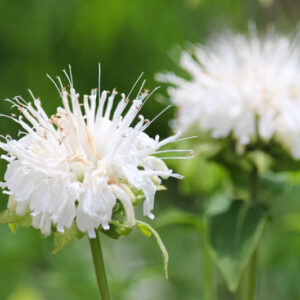
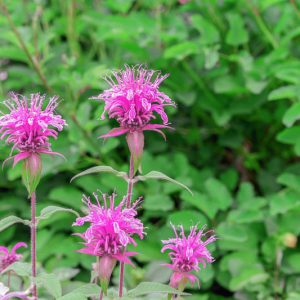
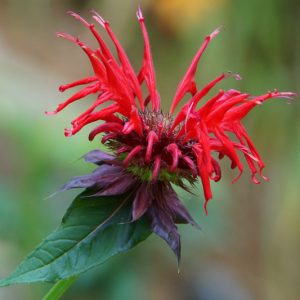
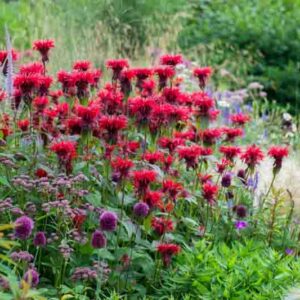
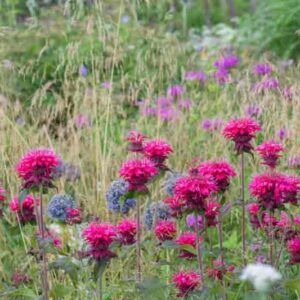
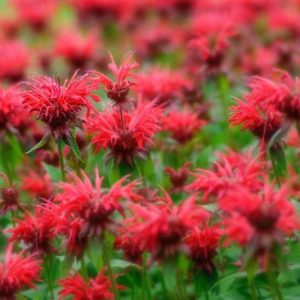
Bee Balm produces dazzling, two-lipped flowers in dense, globular heads, about 3-4 in. across (7-10 cm), perched on a whorl of decorative, red-tinged bracts. The bold, crown-like blooms stand above deep green, lance-shaped leaves, 3-6 in. long (7-15 cm), that release a fragrant, minty aroma when brushed or crushed. Native to eastern North America, Monarda didyma shines in perennial borders, cottage gardens, prairies, meadows, herb gardens, and along ponds or streams where the soil stays evenly moist.
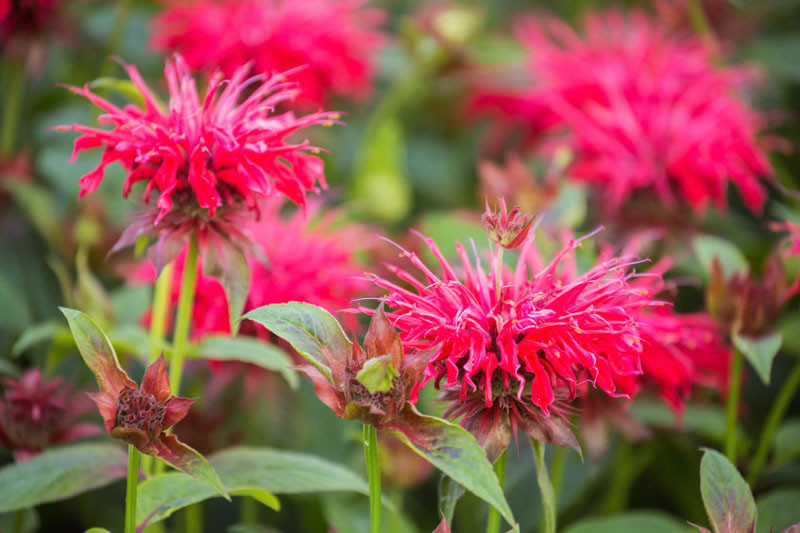
Summary: Clump-forming native perennial with upright stems, showy scarlet-red flower heads, and mint-fragrant foliage. Spreads by rhizomes and self-seeding to form colorful colonies.
Use: Perennial borders, cottage gardens, prairies, meadows, herb gardens, wildlife-friendly plantings, streambanks, and pond edges.
Highlight: Long-lasting bloom from late spring to mid fall, edible flowers and leaves, and outstanding value for bees, butterflies, and hummingbirds.
Note: Enjoys moist, humus-rich soil and appreciates good air circulation to minimize powdery mildew.
| Botanical Name | Monarda didyma |
|---|---|
| Family | Mint family (Lamiaceae), which also includes culinary herbs such as lavender, rosemary, basil, sage, and oregano. |
| Common Names | Scarlet Bee Balm, Oswego Tea, Red Bergamot |
| Native Range | Native to eastern North America – found in moist woods, thickets, bottomlands, and along stream banks. |
| Plant Type and Habit | Herbaceous perennial, upright and clump-forming, spreading by rhizomes to form colonies. |
| Hardiness (approx. USDA) | Generally hardy in USDA Zones 4 to 9. |
| Size | Grows about 2 to 4 ft. tall (60 to 120 cm) and 2 to 3 ft. wide (60 to 90 cm). |
| Sun and Exposure | Full sun is best for strong flowering and sturdy stems, but afternoon shade is helpful in hot summer areas. |
| Soil | Prefers moderately fertile, humus-rich, moist but well-drained soil. Protect from excessive winter wet and do not allow it to dry out completely in summer. |
| Seasonal Interest | Scarlet-red flowers from late spring to mid fall, fragrant foliage, and continuous pollinator activity throughout the growing season. |
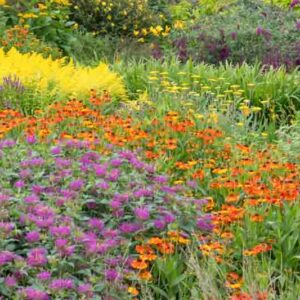
| Primary Uses | Informal borders, meadows, prairies, cottage gardens, herb gardens, wildlife gardens, and edges of ponds or streams. Excellent for massing or as an accent plant. Great cut flower. |
Monarda didyma is a clump-forming herbaceous perennial known for its distinctive, crown-like flower heads and aromatic foliage. The upright stems are clothed with deep green, lance-shaped leaves that are delightfully fragrant and can be enjoyed in salads or simply by brushing past them.
In late spring through mid fall, Scarlet Bee Balm produces two-lipped, scarlet-red flowers in dense, globular terminal heads, 3-4 in. across (7-10 cm). These sit atop a whorl of colorful bracts that enhance the effect, giving the plant a festive, firework-like presence in the border. Flowers and leaves are edible.
This species is native to eastern North America, where it occurs naturally in thickets, moist woods, bottomlands, and along stream banks. As a native, it blends beautifully into naturalistic plantings and supports local pollinators and wildlife.
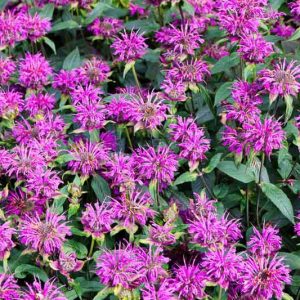
Bee Balm typically grows 2-4 ft. tall (60-120 cm) and 2-3 ft. wide (60-90 cm). It spreads by rhizomes and self-seeding to form colonies, making it ideal for mass plantings, meadows, and mixed borders. Every 3 years or so, clumps benefit from division to maintain vigor and control spread.
Blooming for about 8 weeks from late spring into mid fall, Bee Balm is a long-lasting source of color and nectar. The vibrant scarlet blossoms are highly attractive to pollinators and also make excellent cut flowers for arrangements.
The foliage consists of lance-shaped, deep green leaves, 3-6 in. long (7-15 cm), which are pleasantly aromatic. The leaves can be used fresh or dried in teas and culinary recipes. The strong, upright stems and colorful flowers ensure Bee Balm remains a focal point from early summer through the end of its bloom season.
Scarlet Bee Balm is hardy in about USDA Zones 4 to 9, making it adaptable to a wide range of climates where adequate moisture is available. It appreciates cold winters and moderate to warm summers, especially where humidity is balanced with good air flow.
You can use Monarda didyma in many ways:
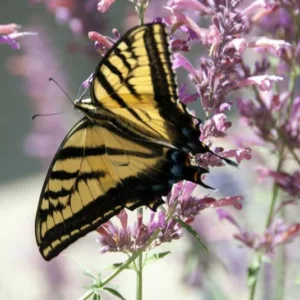
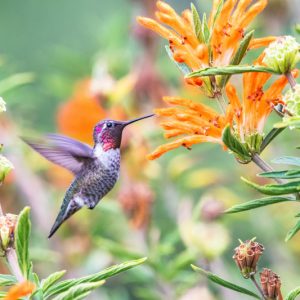
Bee Balm is a top-tier plant for bees, butterflies, and hummingbirds. Its tubular flowers are rich in nectar, inviting constant activity. It is frequently recommended in resources such as:
The aromatic foliage makes Monarda didyma generally deer and rabbit resistant. While hungry animals may occasionally sample new growth, it is far less palatable than many other perennials. For more insights on browsing, browse deer-resistant plants and
rabbit issues.
Bee Balm prefers moist soil and is not especially drought tolerant. Short dry periods are tolerated once plants are established, but repeated drought stress can reduce flowering and encourage disease. If you also garden in particularly dry or xeric spots, consider pairing Bee Balm with drought-tolerant plants like ornamental salvias highlighted in Top Salvia Varieties for a Thriving Xeriscape.
Bee Balm is generally regarded as safe and non-toxic to humans and is often used as a culinary and herbal plant. As with all ornamentals, discourage pets or children from chewing large amounts of foliage, but it is not known as a serious toxic hazard and is widely grown in family gardens.
Within its native range, Monarda didyma is not considered invasive, though it can spread vigorously in well-prepared beds. Regular division and thinning of rhizomes will keep clumps where you want them. Removing unwanted seedlings is usually all that is required for control.
Key reasons to grow Scarlet Bee Balm include its:
Bee Balm prefers:
Bee Balm is generally resilient, but occasional pests such as aphids or scale insects may appear on tender growth. These can typically be managed by spraying plants with a strong jet of water or, if necessary, using insecticidal soap or neem oil.
The main concern with Bee Balm is powdery mildew, especially in humid conditions with poor air circulation.
Excessive winter wet can lead to root rot or crown problems, so good drainage is important even though the plant likes moisture.
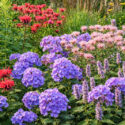
If you love the look and pollinator power of Scarlet Bee Balm but want different sizes or colors, there are several outstanding cultivars to explore. Many offer compact habits, vibrant shades, and improved resistance to common problems like powdery mildew.
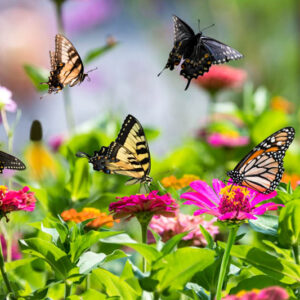
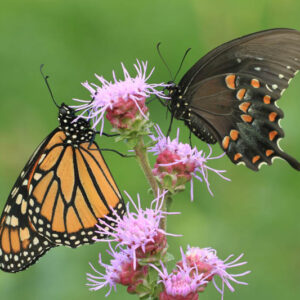
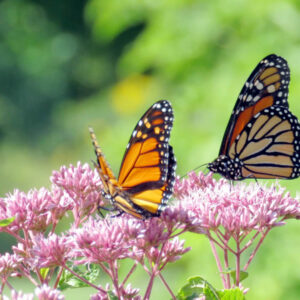
Yes. Scarlet Bee Balm is one of the top pollinator perennials, attracting hummingbirds, native bees, honeybees, butterflies, and moths. Its tubular flowers offer abundant nectar over a long bloom season.
Bee Balm spreads by shallow rhizomes and can form expanding colonies. It is not invasive but benefits from dividing every 2 to 3 years to keep growth dense and controlled.
Provide strong air circulation, plant in full sun, avoid overhead watering, and divide crowded clumps regularly. Choosing mildew-resistant cultivars also helps.
Yes. Both its leaves and flowers are edible. They have a minty, citrus-like flavor and are used in teas, salads, desserts, and garnishes. Historically, the leaves were brewed as “Oswego Tea.”
Bee Balm is generally deer and rabbit resistant due to its aromatic foliage, though hungry animals may sample new shoots.
Full sun, moist but well drained soil, and moderate fertility. Afternoon shade benefits plants in hot climates.
Yes. Removing spent blooms encourages additional flowering and prevents self-seeding.
Updated: December 2025 • Reviewed by Gardenia Editors
| Hardiness |
4 - 9 |
|---|---|
| Heat Zones |
1 - 9 |
| Climate Zones | 1, 1A, 1B, 2, 2A, 2B, 3, 3A, 3B, 4, 5, 6, 7, 8, 9, 10, 11, 14, 15, 16, 17, A2, A3 |
| Plant Type | Herbs, Perennials |
| Plant Family | Lamiaceae |
| Genus | Monarda |
| Common names | Bee Balm, Scarlet Beebalm |
| Exposure | Full Sun, Partial Sun |
| Season of Interest | Spring (Late), Summer (Early, Mid, Late), Fall |
| Height | 2' - 4' (60cm - 120cm) |
| Spread | 2' - 3' (60cm - 90cm) |
| Spacing | 36" (90cm) |
| Maintenance | Average |
| Water Needs | Average, High |
| Soil Type | Clay, Loam |
| Soil pH | Acid, Alkaline, Neutral |
| Soil Drainage | Moist but Well-Drained |
| Characteristics | Cut Flowers, Fragrant, Showy |
| Native Plants | United States, Pennsylvania, Rhode Island, Vermont, Connecticut, Delaware, Maine, Massachusetts, Maryland, New Hampshire, New Jersey, New York, Northeast, Midwest, Southeast, Illinois, Indiana, Michigan, Ohio, Wisconsin, North Carolina, South Carolina, Tennessee, Virginia, West Virginia, Georgia, Kentucky |
| Tolerances | Deer, Rabbit, Clay Soil, Wet Soil, Heat, Black Walnut |
| Attracts | Bees, Birds, Butterflies, Hummingbirds |
| Garden Uses | Beds And Borders, Ponds And Streams, Rain Gardens |
| Garden Styles | Informal and Cottage, Prairie and Meadow |
| Toxic to Humans | No known toxicity |
| Toxic to Cats | No known toxicity |
| Toxic to Dogs | No known toxicity |
| Toxic to Horses | No known toxicity |


| Hardiness |
4 - 9 |
|---|---|
| Heat Zones |
1 - 9 |
| Climate Zones | 1, 1A, 1B, 2, 2A, 2B, 3, 3A, 3B, 4, 5, 6, 7, 8, 9, 10, 11, 14, 15, 16, 17, A2, A3 |
| Plant Type | Herbs, Perennials |
| Plant Family | Lamiaceae |
| Genus | Monarda |
| Common names | Bee Balm, Scarlet Beebalm |
| Exposure | Full Sun, Partial Sun |
| Season of Interest | Spring (Late), Summer (Early, Mid, Late), Fall |
| Height | 2' - 4' (60cm - 120cm) |
| Spread | 2' - 3' (60cm - 90cm) |
| Spacing | 36" (90cm) |
| Maintenance | Average |
| Water Needs | Average, High |
| Soil Type | Clay, Loam |
| Soil pH | Acid, Alkaline, Neutral |
| Soil Drainage | Moist but Well-Drained |
| Characteristics | Cut Flowers, Fragrant, Showy |
| Native Plants | United States, Pennsylvania, Rhode Island, Vermont, Connecticut, Delaware, Maine, Massachusetts, Maryland, New Hampshire, New Jersey, New York, Northeast, Midwest, Southeast, Illinois, Indiana, Michigan, Ohio, Wisconsin, North Carolina, South Carolina, Tennessee, Virginia, West Virginia, Georgia, Kentucky |
| Tolerances | Deer, Rabbit, Clay Soil, Wet Soil, Heat, Black Walnut |
| Attracts | Bees, Birds, Butterflies, Hummingbirds |
| Garden Uses | Beds And Borders, Ponds And Streams, Rain Gardens |
| Garden Styles | Informal and Cottage, Prairie and Meadow |
| Toxic to Humans | No known toxicity |
| Toxic to Cats | No known toxicity |
| Toxic to Dogs | No known toxicity |
| Toxic to Horses | No known toxicity |
How many Monarda didyma (Scarlet Bee Balm) do I need for my garden?
| Plant | Quantity | |
|---|---|---|
| Monarda didyma (Scarlet Bee Balm) | N/A | Buy Plants |
Create a membership account to save your garden designs and to view them on any device.
Becoming a contributing member of Gardenia is easy and can be done in just a few minutes. If you provide us with your name, email address and the payment of a modest $25 annual membership fee, you will become a full member, enabling you to design and save up to 25 of your garden design ideas.
Join now and start creating your dream garden!
Create a membership account to save your garden designs and to view them on any device.
Becoming a contributing member of Gardenia is easy and can be done in just a few minutes. If you provide us with your name, email address and the payment of a modest $25 annual membership fee, you will become a full member, enabling you to design and save up to 25 of your garden design ideas.
Join now and start creating your dream garden!