Blazing Star, Dense Blazing Star, Marsh Blazing Star, Gayfeather, Prairie Gayfeather, Button Snakewort
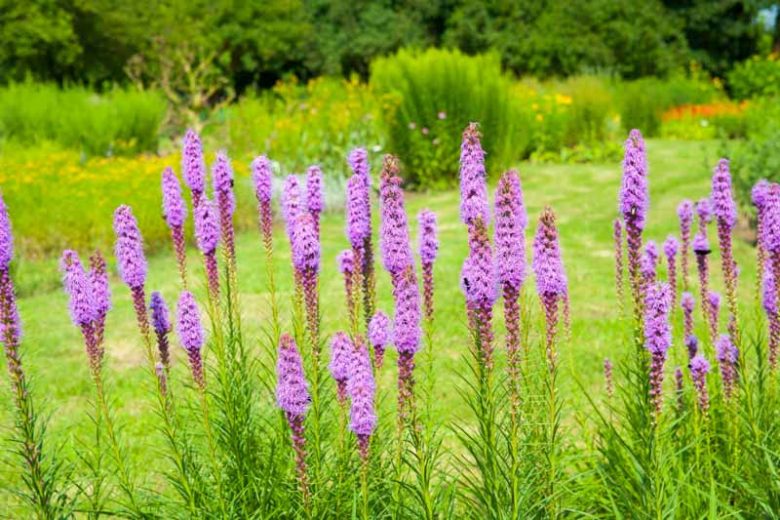
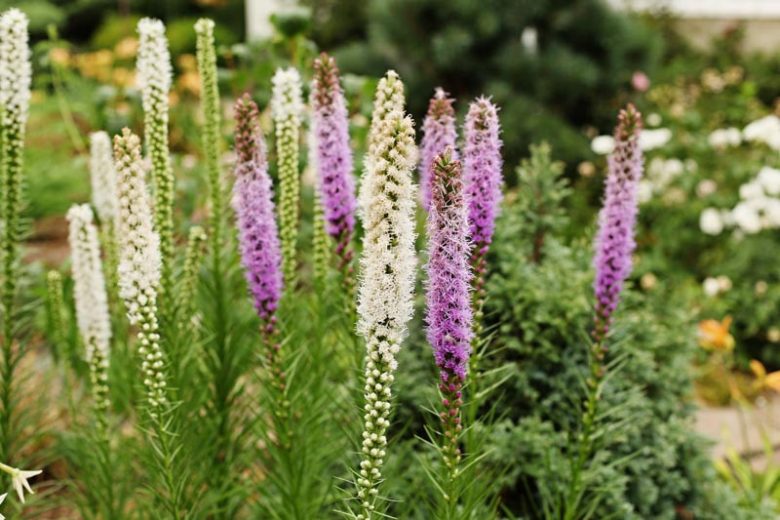


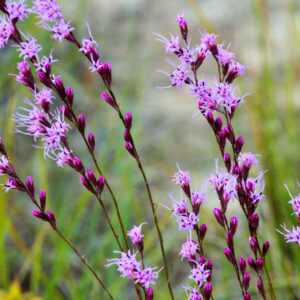
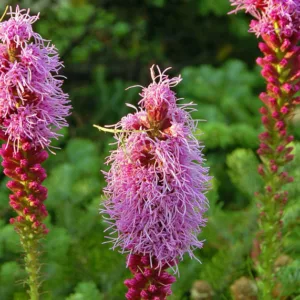
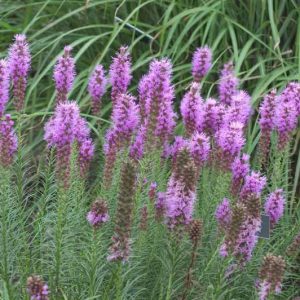
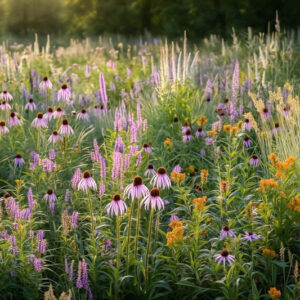
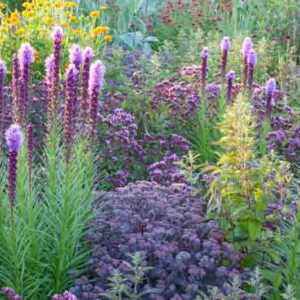
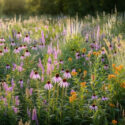
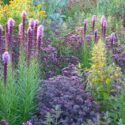
Liatris spicata, commonly called blazing star or gayfeather, is one of those perennials that instantly makes a border feel more alive. Tall, fluffy, vertical flower spikes rise out of narrow, grass-like foliage and line up in neat ranks, like purple wands glowing above the garden. The flower heads open from the top of the spike downward, creating a quirky, eye catching look and a long bloom window from mid summer into fall.
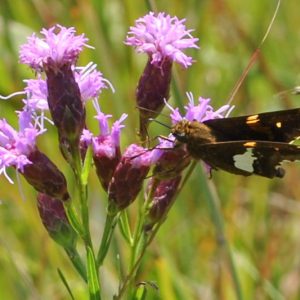
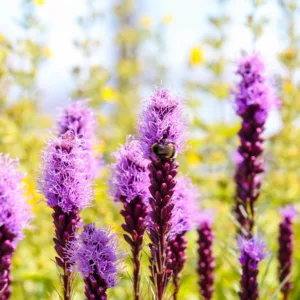
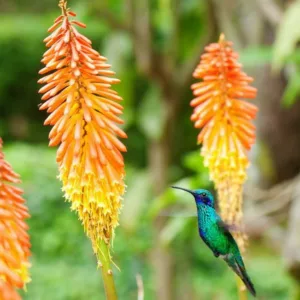
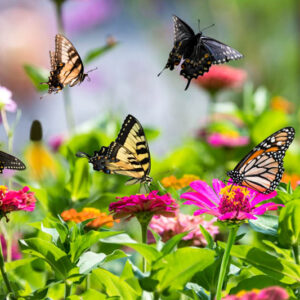
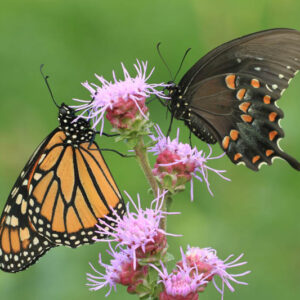
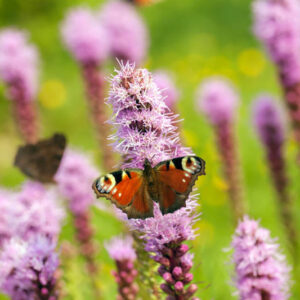
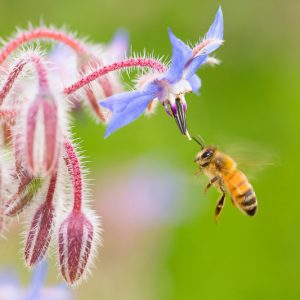
Each spike is packed with button shaped flowers in shades of purple, rosy red, or white that resemble tiny blazing stars – hence the common name. These nectar rich blooms are magnets for bees, butterflies, and hummingbirds, turning any sunny bed into a buzzing pollinator party. When flowering is over, the seedheads continue the show while also providing winter bird food.
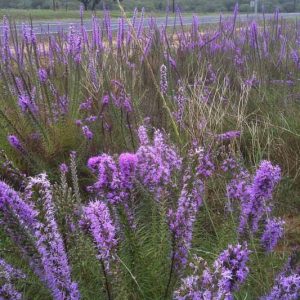
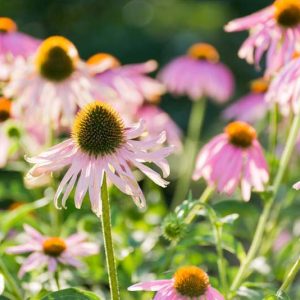
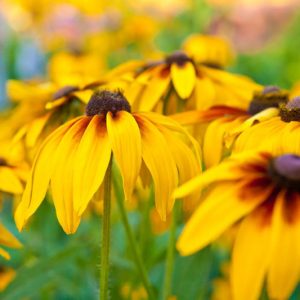
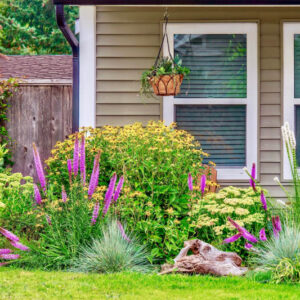
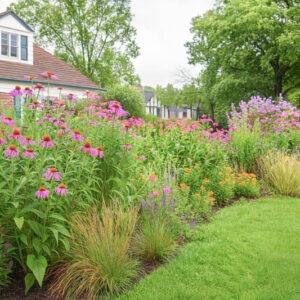
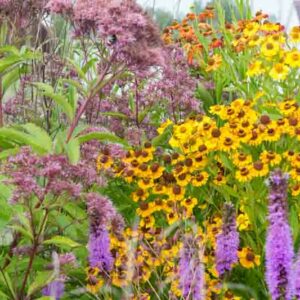
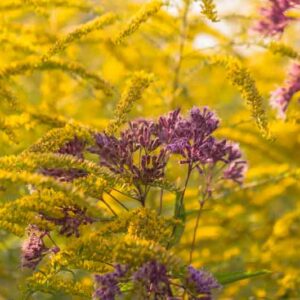
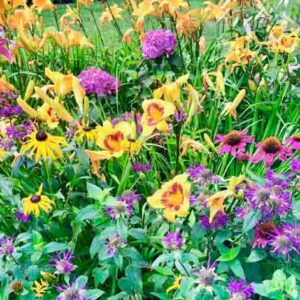
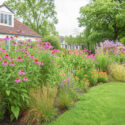
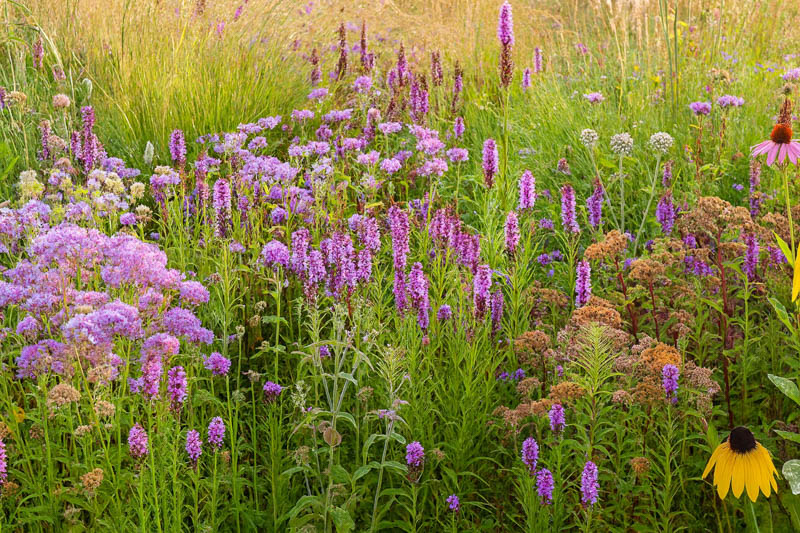
The finely textured, grass-like foliage looks fresh all season and often takes on bronze tones in fall. Tough, low maintenance, and deer resistant, Liatris spicata is ideal for perennial borders, prairie style plantings, meadows, and wildflower gardens. It is especially striking when combined with the warm golds of black eyed Susans and the bold purple blooms of coneflowers.
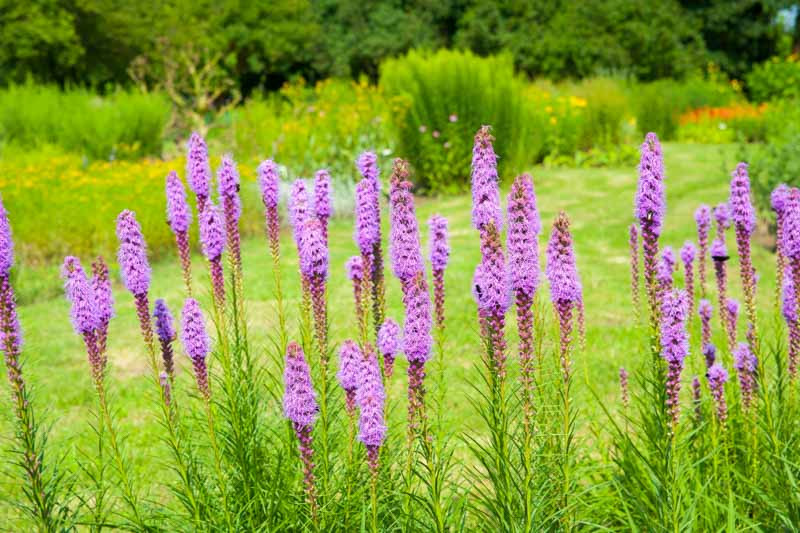
Summary: Clump forming upright perennial with dense spikes of fluffy, purple to white flowers that open from top to bottom over several weeks in mid to late summer, above narrow, grass-like leaves.
Use: Perfect for sunny borders, prairie and meadow plantings, wildflower gardens, pollinator gardens, and cutting gardens where strong vertical accents are needed.
Highlight: Extremely pollinator friendly, deer resistant, and easy to grow, thriving in full sun and a wide range of soils, including poor and dry once established.
Note: A classic companion for black eyed Susans and coneflowers and a staple in full sun wildflower mixes and summer wildflower designs.
| Botanical Name | Liatris spicata |
|---|---|
| Family | Asteraceae (aster or daisy family) |
| Common Names | Blazing star, gayfeather, dense blazing star, button snakeroot |
| Native Range | Native to the eastern United States, where it grows in moist prairies, meadows, and open wetlands. |
| Plant Type and Habit | Herbaceous perennial forming upright clumps from corm-like roots, with vertical flowering spikes rising above narrow foliage. |
| Hardiness (USDA) | Typically hardy in USDA Zones 3 to 9. |
| Size | Grows about 2 to 4 ft tall (60 to 120 cm) and 12 to 18 in wide (30 to 45 cm). |
| Sun and Exposure | Full sun is best for strong stems and abundant flower spikes, though light afternoon shade can be tolerated in very hot climates. |
| Soil | Prefers moderately fertile, moist, well drained soil, but once established can handle poor, dry, and even rocky soils. Avoid heavy, waterlogged clay where corms may rot in winter. |
| Seasonal Interest | Showy flowers in mid to late summer, attractive seedheads in fall, and bronzed foliage in autumn. |
| Primary Uses | Excellent for sunny borders, prairie and meadow plantings, native plantings, wildlife gardens, and cut flower gardens, as well as dried flower arrangements and wildflower mixes featured in full sun wildflower guides and summer wildflower collections. |
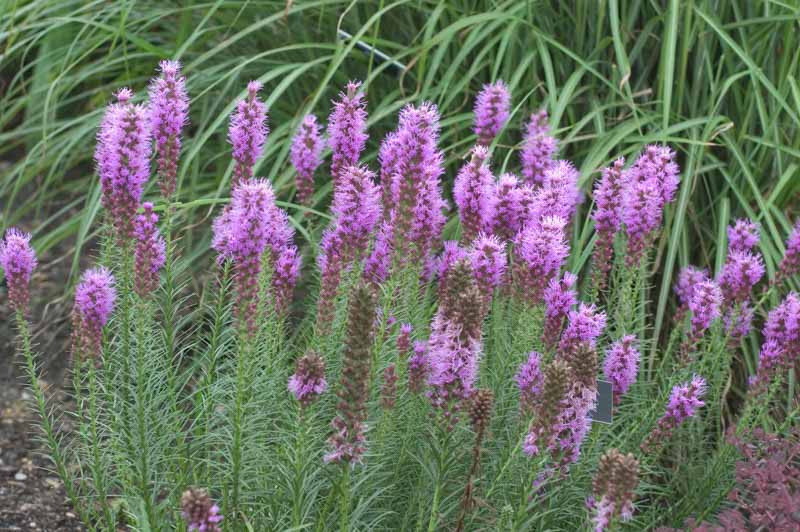
Liatris spicata is a clump forming perennial that grows from corm-like bases planted just below the soil surface. From this base, narrow, grass-like leaves emerge in spring and form a tidy, vertical tuft. Soon after, stiff flower stalks shoot up, each topped with a densely packed bottlebrush of tiny florets in purple, rosy magenta, or white.
The flowers open from the top of the spike downward, which is the opposite of many other spiky perennials. This unusual flowering pattern keeps the plants looking fresh for four weeks or more as new blooms continue to open down the stem. When the show is over, the dried seedheads remain attractive and can be left standing to add structure and wildlife value well into winter.
Blazing star is native to the eastern United States, where it naturally occurs in:
This native heritage makes Liatris spicata an excellent addition to ecologically minded gardens, especially when combined with the native wildflower mixes highlighted in full sun wildflower guides and the colorful mixes in summer wildflower collections.
Liatris spicata has a moderate growth rate. In its first year, it focuses on establishing a root system and a small tuft of foliage. In subsequent years, the clump thickens and sends up more flower spikes, making the display increasingly impressive.
The flowers and seedheads of blazing star provide multi season interest.
The nectar rich flowers are invaluable in pollinator gardens. You will often see bees, butterflies, and even hummingbirds working up and down the spikes throughout the day.
Liatris spicata is a durable perennial that handles cold winters and warm summers with ease.
Liatris spicata is a star when it comes to supporting beneficial wildlife.
Blazing star is generally regarded as deer resistant. While very hungry deer may sample many plants, Liatris spicata is usually not at the top of their menu, which makes it a reliable choice in deer visited landscapes.
Once established in the right soil, Liatris spicata is surprisingly tolerant of dry periods.
Liatris spicata is not commonly listed as highly toxic, but like many ornamental plants it is best treated as non edible. Discourage pets and children from chewing on the foliage or seedheads and enjoy blazing star for its ornamental and wildlife value.
Blazing star is usually a well behaved garden perennial. It forms clumps that slowly enlarge but does not spread aggressively by runners. In rich, moist soils it can seed lightly, but unwanted seedlings are easy to remove. It is generally considered non invasive and an excellent choice for native and naturalistic plantings.
Successful blazing star care comes down to sun, drainage, and modest watering.
Liatris spicata is generally a trouble free, low maintenance perennial.
Liatris spicata is a herbaceous perennial wildflower in the Asteraceae (aster or daisy) family. It grows from corm-like underground structures and produces upright spikes of small purple to white flowers above narrow, grasslike foliage.
Most forms of Liatris spicata grow about 2 to 4 feet tall (roughly 60–120 cm) and 9 to 18 inches wide (about 20–45 cm), depending on cultivar and growing conditions. Taller flower spikes may reach up to 5 feet in rich soil.
Liatris spicata is native to the eastern and parts of the central United States, especially moist prairies and meadows from Wisconsin and Michigan south to Florida, and west to Louisiana and at least parts of eastern Texas. It is also native to Ontario and Québec in Canada.
Liatris spicata grows best in full sun and prefers moderately fertile, moist but well-drained soil. It tolerates average to poor soils, including some clay, once established. Good drainage is critical, especially in winter, because the corms can rot in heavy, waterlogged ground. Water regularly the first year; after that, it’s fairly drought tolerant.
Yes. The dense spikes of small flowers are rich in nectar and pollen and attract bees, butterflies, and other pollinating insects, as well as hummingbirds. After flowering, the seedheads are eaten by songbirds such as finches, making it a strong wildlife plant for sunny gardens and meadow plantings.
Liatris spicata is generally considered deer resistant. While hungry deer may sample almost anything, this species is usually browsed lightly, if at all, compared to many other perennials. Small herbivores may nibble young plants, but established clumps are rarely severely damaged.
Liatris spicata is not regarded as invasive in its native range. It forms clumps that slowly enlarge and may self-seed lightly, but it does not spread aggressively by runners. Unwanted seedlings are easy to remove, and it is commonly recommended for native and naturalistic plantings without invasive concerns.
Liatris spicata can be grown in deep, well-drained containers placed in full sun. Use a high-quality potting mix, avoid waterlogged conditions, and protect containers from sitting in ice-cold, saturated media over winter, which can damage the corms. Container-grown plants may need more frequent watering and occasional division compared with those in the ground.
Lady Bird Johnson Wildflower Center – Native plant information: https://www.wildflower.org
Updated: November 2025 • Reviewed by Gardenia Editors
| Hardiness |
3 - 9 |
|---|---|
| Heat Zones |
1 - 9 |
| Climate Zones | 1, 1A, 1B, 2, 2A, 2B, 3, 3A, 3B, 4, 5, 6, 7, 8, 9, 10, 14, 15, 16, 17, 18, 19, 20, 21, 22, 23, 24, A2, A3 |
| Plant Type | Perennials |
| Plant Family | Compositae |
| Genus | Liatris |
| Common names | Blazing Star, Gayfeather |
| Exposure | Full Sun |
| Season of Interest | Summer (Mid, Late), Fall |
| Height | 2' - 4' (60cm - 120cm) |
| Spread | 9" - 2' (23cm - 60cm) |
| Spacing | 12" - 15" (30cm - 40cm) |
| Maintenance | Low |
| Water Needs | Average |
| Soil Type | Chalk, Clay, Loam, Sand |
| Soil pH | Acid, Alkaline, Neutral |
| Soil Drainage | Moist but Well-Drained |
| Characteristics | Dried Arrangements, Cut Flowers, Showy |
| Native Plants | United States, Pennsylvania, Connecticut, Delaware, Massachusetts, Maryland, New Jersey, New York, Northeast, Midwest, Southeast, Illinois, Indiana, Michigan, Missouri, Ohio, Wisconsin, Louisiana, Mississippi, North Carolina, South Carolina, Tennessee, Virginia, West Virginia, Alabama, Arkansas, Florida, Georgia, Kentucky |
| Tolerances | Drought, Deer, Dry Soil, Heat, Poor Soil, Humidity, Fire |
| Attracts | Bees, Birds, Butterflies, Hummingbirds |
| Garden Uses | Beds And Borders |
| Garden Styles | Informal and Cottage, Prairie and Meadow |
| Toxic to Humans | No known toxicity |
| Toxic to Cats | No known toxicity |
| Toxic to Dogs | No known toxicity |
| Toxic to Horses | No known toxicity |


| Hardiness |
3 - 9 |
|---|---|
| Heat Zones |
1 - 9 |
| Climate Zones | 1, 1A, 1B, 2, 2A, 2B, 3, 3A, 3B, 4, 5, 6, 7, 8, 9, 10, 14, 15, 16, 17, 18, 19, 20, 21, 22, 23, 24, A2, A3 |
| Plant Type | Perennials |
| Plant Family | Compositae |
| Genus | Liatris |
| Common names | Blazing Star, Gayfeather |
| Exposure | Full Sun |
| Season of Interest | Summer (Mid, Late), Fall |
| Height | 2' - 4' (60cm - 120cm) |
| Spread | 9" - 2' (23cm - 60cm) |
| Spacing | 12" - 15" (30cm - 40cm) |
| Maintenance | Low |
| Water Needs | Average |
| Soil Type | Chalk, Clay, Loam, Sand |
| Soil pH | Acid, Alkaline, Neutral |
| Soil Drainage | Moist but Well-Drained |
| Characteristics | Dried Arrangements, Cut Flowers, Showy |
| Native Plants | United States, Pennsylvania, Connecticut, Delaware, Massachusetts, Maryland, New Jersey, New York, Northeast, Midwest, Southeast, Illinois, Indiana, Michigan, Missouri, Ohio, Wisconsin, Louisiana, Mississippi, North Carolina, South Carolina, Tennessee, Virginia, West Virginia, Alabama, Arkansas, Florida, Georgia, Kentucky |
| Tolerances | Drought, Deer, Dry Soil, Heat, Poor Soil, Humidity, Fire |
| Attracts | Bees, Birds, Butterflies, Hummingbirds |
| Garden Uses | Beds And Borders |
| Garden Styles | Informal and Cottage, Prairie and Meadow |
| Toxic to Humans | No known toxicity |
| Toxic to Cats | No known toxicity |
| Toxic to Dogs | No known toxicity |
| Toxic to Horses | No known toxicity |
How many Liatris spicata (Blazing Star) do I need for my garden?
| Plant | Quantity | |
|---|---|---|
| Liatris spicata (Blazing Star) | N/A | Buy Plants |
Create a membership account to save your garden designs and to view them on any device.
Becoming a contributing member of Gardenia is easy and can be done in just a few minutes. If you provide us with your name, email address and the payment of a modest $25 annual membership fee, you will become a full member, enabling you to design and save up to 25 of your garden design ideas.
Join now and start creating your dream garden!
Create a membership account to save your garden designs and to view them on any device.
Becoming a contributing member of Gardenia is easy and can be done in just a few minutes. If you provide us with your name, email address and the payment of a modest $25 annual membership fee, you will become a full member, enabling you to design and save up to 25 of your garden design ideas.
Join now and start creating your dream garden!