South Dakota Growing Zones Guide: Frost Dates, Maps & What to Plant
Gardening in South Dakota might mean a sheltered Sioux Falls backyard, a windswept lot in Aberdeen or Watertown, a prairie garden near Pierre along the Missouri River, raised beds in Rapid City, or a short-season Black Hills plot near Custer, Spearfish, or Lead. South Dakota planting zones range from chilly northern prairie to comparatively mild southern river valleys – each with its own climate quirks, winds, and frost patterns.
This guide will help you understand your South Dakota growing zone using the updated 2023 USDA Plant Hardiness Zone Map, plan around frost dates, and choose the best plants for your corner of the Great Plains.
What Planting Zone Is South Dakota In?
On the 2023 USDA Plant Hardiness Zone Map, South Dakota runs from about zone 4a to zone 5b, based on 30-year averages of the coldest winter temperatures (1991–2020). Colder 4a–4b zones hug the far north and some higher elevations, while milder 5a–5b zones trace the southern tier, Missouri River valley, and select Black Hills foothill pockets. Most home gardens fall between zones 4b and 5a.
- Southeastern Prairie & Sioux Falls Area: Sioux Falls, Yankton, Vermillion, and nearby towns are largely zones 4b–5b, with some of the state’s longest frost-free seasons.
- James River & East-Central Region: Brookings, Huron, Mitchell, and Madison sit mainly in zones 4b–5a, cold in winter but excellent for grains, vegetables, and shelterbelts.
- Northeast & Glacial Lakes: Aberdeen, Watertown, Sisseton, and Milbank fall mostly in zones 4a–4b, with colder winters and frequent spring and fall frosts.
- Central Missouri River Corridor: Pierre, Chamberlain, Mobridge, and surrounding areas are typically zones 4b–5a, with slightly milder winters near the river and open, windy plains just beyond.
- West River & Black Hills: Rapid City, Sturgis, Spearfish, Custer, and Hot Springs range from roughly zones 4a–5b, with warmer foothill pockets but very short seasons at higher elevations.
*Zones summarized from the 2023 USDA hardiness map and South Dakota climate analyses using 1991–2020 climate data.
USDA Hardiness Zone Maps for South Dakota
The updated 2023 USDA Plant Hardiness Zone Map uses modern 30-year climate normals (1991–2020) and improved terrain data, refining zone boundaries across South Dakota’s prairies, river valleys, and the Black Hills. Compared to older maps, much of the state has shifted about a half- to full zone warmer, with new 5a–5b areas in the south and portions of the Hills.
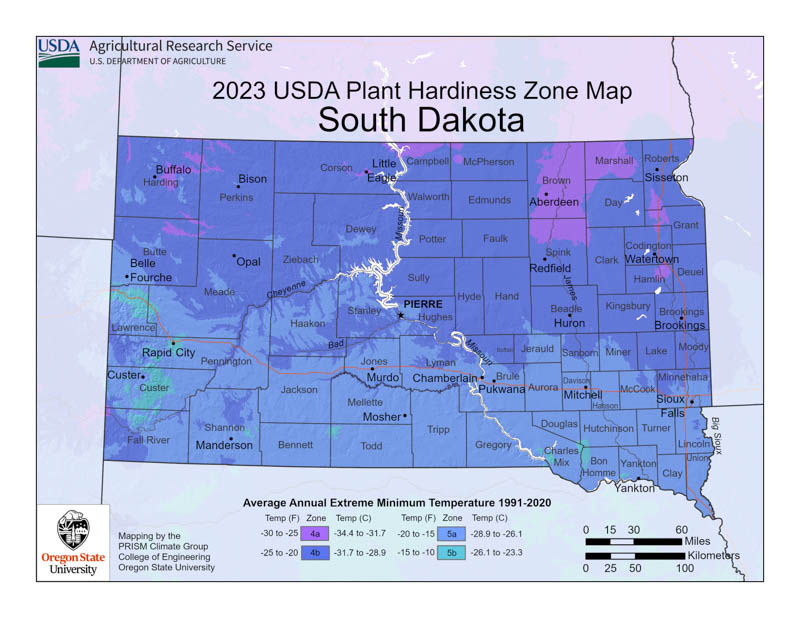
Imagine a South Dakota planting zone map here, with colder blues and purples along the northern tier and higher Black Hills elevations, and warmer greens in southern river valleys and select foothill pockets.
Use the map alongside your ZIP code to pinpoint your South Dakota garden zone. Look up your South Dakota planting zone by ZIP code using the USDA tool, then return here or visit our Plant Finder for plants suited to your exact zone, soil, and exposure.
*According to the USDA and regional climate data groups using 1991–2020 climate normals.
South Dakota Growing Zones by Region
South Dakota’s climate is shaped by latitude, elevation, strong prairie winds, and the influence of the Missouri River and Black Hills. Open plains bring rapid temperature swings, while valleys and sheltered hillsides create microclimates that may differ by a half-zone from nearby fields.
Sioux Falls & Southeastern Prairie (Approx. Zones 4b–5b)
This region includes Sioux Falls, Yankton, Vermillion, Brandon, Harrisburg, and surrounding communities.
- Cold winters but relatively long, warm summers for South Dakota.
- Excellent for corn, soybeans, vegetables, fruit trees, and mixed ornamental landscapes.
- Often windy; soils may be fertile silt loams that benefit from cover crops and mulch.
🔎 Find plants by hardiness zone
James River Valley & East-Central (Approx. Zones 4b–5a)
This region includes Mitchell, Brookings, Huron, Madison, and nearby towns.
- Cold, snowy winters and hot summers with good crop heat.
- Ideal for grain fields, vegetable gardens, and hardy shelterbelts.
- Heavy or compacted soils respond well to raised beds, compost, and cover cropping.
🔎 Find plants by hardiness zone
Northern Prairie & Glacial Lakes (Approx. Zones 4a–4b)
Includes Aberdeen, Watertown, Sisseton, Milbank, and nearby rural areas.
- Colder winters, frequent strong winds, and shorter growing seasons.
- Best for hardy grains, cool-season vegetables, and cold-tolerant ornamentals.
- Spring and fall frosts can arrive early; season extension tools are very helpful.
🔎 Find plants by hardiness zone
Central Missouri River Corridor (Approx. Zones 4b–5a)
Pierre, Chamberlain, Fort Pierre, Mobridge, and small towns along the Missouri River and its breaks.
- Cold winters but relatively warm, sunny growing seasons with periodic drought.
- Good region for warm-season vegetables, shelterbelt trees, and drought-tolerant perennials.
- River bluffs and south-facing slopes create warmer microclimates than open rangeland.
🔎 Find plants by hardiness zone
West River Plains & Black Hills (Approx. Zones 4a–5b)
Rapid City, Spearfish, Sturgis, Custer, Hot Springs, and surrounding ranch country.
- Large daily and seasonal temperature swings; late spring and early fall frosts are common.
- Foothills and southern canyons can be relatively mild; high elevations have very short seasons.
- Drought, wind, and wildlife browsing are major design considerations.
🔎 Find plants by hardiness zone
South Dakota Frost Dates: When to Plant and When to Protect
Frost in South Dakota depends heavily on latitude, elevation, exposure, and wind. A Sioux Falls garden often enjoys a longer, warmer season than an exposed northern prairie homestead or a high-elevation Black Hills site.
Across the state, last spring frosts typically occur from about late April to early June, and first fall frosts generally fall between mid-September and early October. Southeastern and river-valley sites enjoy the longest seasons, while northern prairies and higher Hills elevations have the shortest. Most gardeners see roughly 110–150 frost-free days, with the longest windows in the southeast and shortest in high country.
| Region / City |
Average Last Spring Frost |
Average First Fall Frost |
Approx. Frost-Free Days |
| Sioux Falls (Southeast) |
Early–Mid May |
Late September–Early October |
~135–150 days |
| Mitchell / Huron (East-Central) |
Early–Mid May |
Late September |
~125–140 days |
| Aberdeen (Northeast) |
Mid–Late May |
Late September |
~115–130 days |
| Pierre (Central Missouri River) |
Early–Mid May |
Late September–Early October |
~130–145 days |
| Rapid City & Black Hills Foothills |
Mid–Late May (earlier in warm canyons; later at elevation) |
Mid–Late September |
~110–130 days |
Dates represent averages from South Dakota climate data and frost-date tools; always check local forecasts and ZIP-code frost lookups for exact dates in your microclimate.
Best Plants for South Dakota Planting Zones
Once you know your South Dakota planting zone – whether you garden in a mild Sioux Falls suburb, a windy central prairie, a northern glacial lakes region, or a short-season Black Hills site – you can choose plants that thrive in your climate. Focus on cold-hardy perennials, drought- and wind-tolerant species, and varieties adapted to Great Plains weather swings.
Vegetables for South Dakota Growing Zones
- Cool-season crops (spring & fall statewide; much of the season in north and Hills): lettuce, spinach, arugula, kale, collards, peas, broccoli, cabbage, carrots, beets, turnips, radishes.
- Warm-season crops (after last frost): tomatoes, peppers, summer squash, pumpkins, cucumbers, snap beans, sweet corn, and melons in the warmest river-valley and southern zones.
- Short-season & high-country gardens (colder 4a–4b sites): choose fast-maturing peas, leaf lettuces, baby carrots, radishes, hardy brassicas, and compact tomatoes grown under row covers or low tunnels.
Fruits & Trees for South Dakota Hardiness Zones
- Zones 5a–5b: hardy apples, pears, tart and select sweet cherries, peaches, plums, hardy grapes, and hazelnuts.
- River valleys & warmer pockets: extended-season plantings of tree fruits, wine grapes, and other specialty fruits benefit from slopes and south-facing exposures.
- Colder 4a–4b sites: extra-hardy apples, tart cherries, hardy plums, serviceberries, chokecherries, and elderberries perform well when blossoms are protected from late freezes.
- Small fruits (zones 4–5): strawberries, raspberries, blackberries, blueberries, and currants thrive in well-drained, organic-rich soils with consistent moisture.
Flowers & Ornamentals for South Dakota Garden Zones
- Sun lovers: salvias, yarrow, coneflowers, black-eyed Susan, blanket flower, and hardy daisies for bright, pollinator-friendly beds.
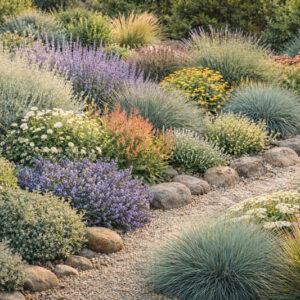
- Reliable perennials: lavender, catmint, ornamental grasses, penstemons, hardy geraniums, and hellebores tolerate wind, cold, and heat.
- Structural plants: prairie-adapted shade trees, conifers, evergreen shrubs, and cold-hardy sedums where drainage is excellent provide year-round structure.
Native Plants for South Dakota Landscapes
South Dakota native plants are adapted to local soils, cold winters, wind, and periodic drought. They support pollinators, birds, and beneficial insects while offering durable, low-maintenance beauty.
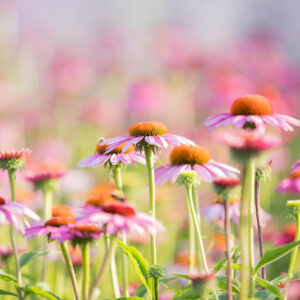
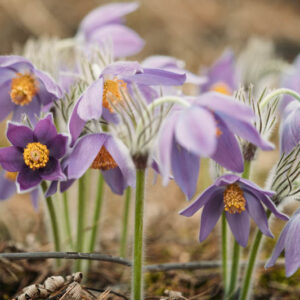
- Native wildflowers: purple coneflower, black-eyed Susan, wild bergamot, milkweeds, asters, lupines, prairie clover, and pasqueflower.
- Native grasses: little bluestem, switchgrass, and prairie dropseed, and sideoats grama for meadows, slopes, and low-mow plantings.
- Native shrubs & trees: serviceberry, chokecherry, American plum, golden currant, bur oak, hackberry, and juniper species suited to your site.
- Moist or riparian areas: blue flag iris, joe-pye weed, swamp milkweed, and native sedges for rain gardens, coulees, and creek banks.
Interactive South Dakota Planting Calendar (General Guide)
Tap a month to see what to plant in South Dakota by zone. Adjust for your frost dates, elevation, slope, and whether you garden in a sheltered town lot, open prairie, or high-country Hills site.
🌾 Zones 5a–5b: Sioux Falls & southern river valleys
🌽 Zones 4b–5a: Central & James River valley
🌲 Zones 4a–4b: Northern prairie & higher Black Hills
January – Planning, Windbreaks & Seed Orders
- Zones 5a–5b: Plan windbreaks and shelterbelts; prune fruit trees on mild days.
- Zones 4b–5a: Focus on planning, tool care, and soil testing.
- Zones 4a–4b: Deep winter—review notes, order seeds, and set up grow lights.
February – Early Starts & Orchard Care
- Zones 5a–5b: Start onions, leeks, and early brassicas indoors; finish fruit-tree pruning.
- Zones 4b–5a: Begin slow-growing flowers and perennials inside.
- Zones 4a–4b: Check winter protection; start hardy perennials and alliums indoors.
March – Cool-Season Kickoff in Milder Areas
- Zones 5a–5b: On thawed, workable soil, sow peas, spinach, and radishes; start potatoes under protection.
- Zones 4b–5a: Continue indoor seed starting; begin hardening off hardy transplants late month if weather allows.
- Zones 4a–4b: Start warm-season crops indoors; sow the first hardy greens under tunnels or cold frames.
April – Main Cool-Season Planting
- Zones 5a–5b: Sow beets, chard, hardy annuals; transplant brassicas, onions, and lettuce under row covers.
- Zones 4b–5a: Direct-sow peas, carrots, radishes; plant potatoes and hardy herbs.
- Zones 4a–4b: Begin bed prep as snow recedes; sow cold-tolerant greens under protection.
May – Warm-Season Planting in Southern & Central South Dakota
- Zones 5a–5b: After last frost, transplant tomatoes, peppers, and squash; sow beans, corn, and sunflowers.
- Zones 4b–5a: Finish cool-season plantings; set out tender crops late month with row-cover backup.
- Zones 4a–4b: Plant peas, potatoes, and brassicas; wait on tomatoes and warm-season crops until very late May or early June.
June – Season in Full Swing
- Zones 5a–5b: Stake tomatoes, mulch beds to conserve moisture, and thin fruit on young trees.
- Zones 4b–5a: Plant remaining warm-season crops after last frost; sow a second round of beans and corn.
- Zones 4a–4b: Transplant tomatoes and peppers into protected spots; choose short-season varieties.
July – Heat, Irrigation & Early Harvests
- All zones: Water deeply and infrequently; monitor for heat stress, hail damage, and windbreak needs.
- South & central: Harvest early greens, peas, and new potatoes; start fall brassicas indoors.
- North & Hills: Continue transplant care; succession sow fast crops like radishes and bush beans.
August – Fall Garden Kickoff
- Zones 5a–5b: Sow carrots, beets, spinach, and turnips for fall; transplant kale and broccoli.
- Zones 4b–5a: Plant fall greens early in the month; keep them watered during hot spells.
- Zones 4a–4b: Focus on harvest and storage; sow quick greens or cover crops where time allows.
September – Frost on the Horizon
- South & river valleys: Harvest tomatoes, peppers, and melons; cover plants for early cold snaps.
- North & Hills: Expect first frosts; pull or cover warm-season crops and focus on roots and greens.
- All zones: Sow cover crops after clearing beds to protect soil.
October – Garlic, Bulbs & Cleanup
- Zones 5a–5b: Plant garlic and spring-flowering bulbs; mulch beds and young trees.
- Zones 4b–5a: Pull frost-killed crops; add compost and mulch.
- Zones 4a–4b: Winterize beds early; protect young trees and shrubs from wind and wildlife.
November – Winter Prep & Late Greens
- Zones 5a–5b: Harvest hardy greens from tunnels; tidy irrigation lines and tools.
- Zones 4b–5a: Finish cleanup and mulching; wrap vulnerable trunks and shrubs.
- Zones 4a–4b: Secure structures for snow and wind; focus on indoor gardening projects.
December – Rest, Reflect & Evergreen Structure
- All zones: Review garden notes, sketch new layouts, and enjoy evergreens, seed heads, and winter birds.
- Colder zones: Embrace seed catalogs, houseplants, and winter sowing projects.
South Dakota Gardening Tips by Zone
South Dakota gardeners face winter cold, spring wind, hail, summer heat, and shifting frost patterns. These tips help you succeed from zones 4a to 5b:
- Know your microclimate. Town lots, river valleys, and south-facing slopes are warmer; open prairie and hilltops are colder and windier.
- Time planting carefully. Wait until after your local last-frost date for warm-season crops, and protect against surprise cold fronts.
- Build your soil. Many prairie soils are fertile but can be heavy or compacted; add compost, mulch, and, where needed, raised beds.
- Water wisely. Summer thunderstorms are hit-or-miss; drip irrigation and mulch help crops through dry spells.
- Plan for wind and hail. Use windbreaks, sturdy stakes, and, where practical, hail cloth or row covers.
- Use season extension. Low tunnels, cold frames, and floating row covers are invaluable in northern and high-elevation zones.
- Choose short-season varieties. For tomatoes, melons, and winter squash, pick cultivars with fewer days to maturity.
- Manage wildlife. Deer, rabbits, grasshoppers, and prairie rodents are common; design with fencing, repellents, and plant choices in mind.
- Lean on native plants. Prairie natives handle drought, wind, and extreme temperatures while feeding pollinators and birds.
Start Growing in Your South Dakota Planting Zone
Now that you understand your South Dakota planting zone, frost dates, and regional climate, you’re ready to choose plants that match your site and build a resilient, beautiful garden. Blend edible crops, native prairie plants, flowering perennials, and shelterbelt trees for a landscape that thrives through all four of South Dakota’s seasons. Curious how South Dakota compares to other states? Visit our national USDA planting zone guide to explore growing zones across the U.S.
Frequently Asked Questions
What USDA planting zones is South Dakota in now that the 2023 map is out?
The 2023 USDA Plant Hardiness Zone Map places most of South Dakota between zones 4a and 5b, based on 1991–2020 winter minimums. Northern prairies and some higher elevations stay in colder 4a–4b, while southern counties, parts of the Missouri River valley, and select Black Hills foothill pockets reach 5a–5b.
What planting zone is Sioux Falls, South Dakota?
Sioux Falls generally falls in zone 4b to 5a on recent hardiness maps. That means average extreme winter lows around –25°F to –15°F. Gardeners can reliably grow hardy perennials, most cool-season vegetables, and many tree fruits, but tender plants still need protection from periodic Arctic outbreaks.
When is the average last frost in South Dakota, and when does fall frost usually return?
In much of southeastern and central South Dakota, the average last spring frost arrives in early to mid-May, while the first fall frost typically comes in late September or early October. Northern prairies and higher Black Hills elevations can see last frosts closer to late May or early June and first frosts in mid-September, leaving a notably shorter growing season.
Can I grow fruit trees in South Dakota’s climate?
Yes. Across zones 4–5, gardeners successfully grow cold-hardy apples, pears, tart cherries, plums, and small fruits like raspberries, currants, and hardy grapes. Choose cultivars rated at least one half-zone colder than your location, plant them in well-drained soil, avoid frost pockets, and protect young trees from winter sunscald, wind, and wildlife browsing.
How do the Black Hills differ from the rest of South Dakota for gardening?
The Black Hills are higher and hillier than the surrounding plains, which creates complex microclimates. Warm, sheltered canyons and south-facing slopes can behave like zone 5a–5b, while ridge tops and high meadows stay closer to 4a with late spring and early fall frosts. Gardeners there rely heavily on wind protection, short-season varieties, and season-extension tools such as row covers and low tunnels.
What vegetables grow best in South Dakota’s short, sometimes dry summers?
Cool-season crops—peas, leafy greens, brassicas, carrots, beets, and radishes—perform very well across the state. For warm-season harvests, pick short-season tomatoes, peppers, bush beans, sweet corn, squash, and melons sized for your zone. Mulch, windbreaks, and drip irrigation help these crops handle hot, dry, and windy periods common on the plains.
How should I adjust gardening advice from older South Dakota zone maps?
Older maps often used cooler baseline data and placed parts of South Dakota in zones as cold as 3b. The 2023 update, built on 1991–2020 data, shifts many locations a half- or full zone warmer. You can experiment with slightly less hardy plants than before, but still plan for occasional colder-than-average winters and protect prized perennials accordingly.
What are the most important design tips for a low-maintenance South Dakota garden?
Start with native prairie plants and hardy shrubs, which handle wind, drought, and temperature extremes with minimal inputs. Improve soil with compost, use deep mulch, set up drip irrigation, and plant in blocks or drifts rather than single specimens. Add windbreaks, deer-resistant species where needed, and choose plants rated reliably hardy for your exact USDA zone.
Data sources: 2023 USDA Plant Hardiness Zone Map (1991–2020 normals), NOAA frost-date climatology.
Updated: December 2025 • Reviewed by Gardenia Editors
While every effort has been made to describe these plants accurately, please keep in mind that height, bloom time, and color may differ in various climates. The description of these plants has been written based on numerous outside resources.