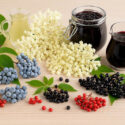
Elder bushes and trees offer two unique harvests: fragrant blossoms in spring and jewel-toned berries in late summer. Knowing when and what to pick helps you maximize flavor, preserve aroma, and keep your pantry full.
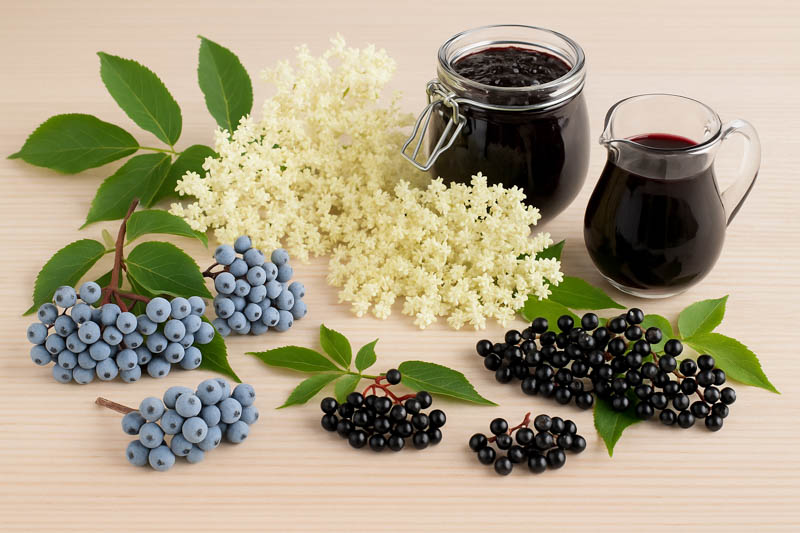


Summary: One shrub, two harvests: perfumed elderflowers (late spring) for cordials and delicate bakes, or richly colored elderberries (late summer) for jams, sauces, shrubs, and wine. Choose based on your kitchen goals—heavy flower picking means fewer berries later.
Safety, in brief: Use culinary elders (Sambucus nigra, S. canadensis, S. cerulea), remove stems/leaves, and simmer berries/juice 10–20 minutes; details below.
| Botanical Focus | Sambucus nigra (European elder), S. canadensis (American elder), S. cerulea (blue elder; syn. S. nigra ssp. caerulea). Avoid red elder (S. racemosa) and dwarf elder (S. ebulus) for home cooking. |
|---|---|
| Season | Flowers: late spring–early summer • Berries: late summer–early fall (often in waves) |
| Best Uses | Flowers: cordial/syrup, liqueur, fritters, infused sugar/vinegar • Berries: jam/jelly, pie blends, sauces, shrubs, wine |
| Flavor | Flowers: honeyed, floral, citrusy • Berries: tart, tannic, berry-dark (loves sugar/acid/spice) |
| Harvest Cues | Flowers: panicles mostly open, creamy-white, fragrant; dry late morning • Berries: clusters uniformly deep purple-black (blue wax on S. cerulea is normal); detach easily |
| Processing & Safety | Flowers: minimal washing; infuse off-heat 12–24 h; strain • Berries: destem (freeze-and-fork), simmer 10–20 min; discard under-ripe green/pink fruit; never eat raw; remove stems/leaves |
| Storage | Flowers: best same day; syrups keep 2–4 weeks (fridge) if bottled hot at ≥60% sugar + lemon/citric acid, or freeze • Berries: refrigerate 1–2 days or freeze; Preserves: use tested canning recipes (proper sugar/acid ratios) from trusted sources; do not improvise processing times. |
| Pairings | Flowers: lemon/lime, strawberry, peach, mint, prosecco, yogurt • Berries: apple/pear, blackberry, orange zest, red wine, clove, cinnamon, game |
| Pollination & Yield | Two compatible elders improve fruit set; heavy flower harvest reduces berry yield; choose a focus each season |
| Foraging & Pruning | Harvest away from roads/sprays; leave plenty for wildlife. Renew-prune in late winter/early spring (remove up to ~⅓ oldest canes; best fruit on two-year-old wood) |
Elder shrubs give you two seasons of delicious possibility: fragrant spring blossoms and deep-purple (or blue-bloomed) clusters later on. The trick is knowing which harvest suits your goals—and exactly when to pick for the best flavor, color, and yield. This friendly guide walks you through the differences, the sweet spots for harvesting, and how to handle each crop with confidence.
Elderflower and elderberry usually refer to three culinary species:
Avoid Sambucus racemosa (red elder) for home cooking (some traditional preparations exist but aren’t recommended for casual foraging), and avoid herbaceous “dwarf elder” (S. ebulus).
| Feature | Elderflowers | Elderberries |
|---|---|---|
| Season | Late spring to early summer | Late summer to early fall (waves) |
| Best uses | Cordials, syrups, liqueurs, fritters, sugar, vinegar, baking aromatics | Jams/jellies, syrups, chutneys, sauces, pies, wine, shrubs |
| Flavor profile | Honeyed, floral, citrusy | Tart, tannic, berry-dark |
| Prep notes | Use same-day for peak aroma; avoid heavy washing | Simmer 10–20 minutes; remove stems; avoid raw consumption |
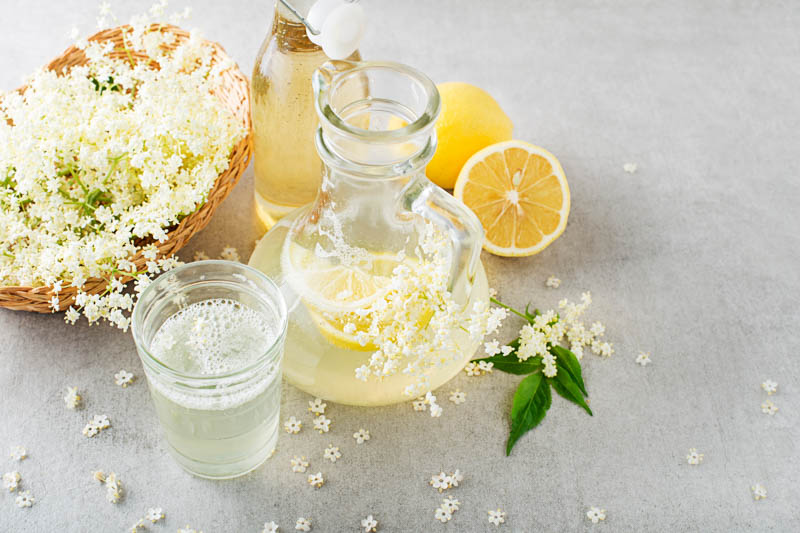
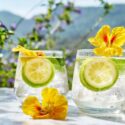
Elderflowers bring bright perfume and a sunny, citrus-adjacent flavor that instantly reads “summer.” They’re brilliant in cordials and syrups (for spritzers, mocktails, and cocktails), as well as delicate bakes. A small bottle of elderflower syrup can turn plain sparkling water into a special-occasion drink.
Best projects: cordial/syrup, panna cotta topping, whipped cream flavoring, elderflower sugar (pulse petals with sugar; dry and sift), infused vinegar, and classic fritters (battered panicles, fried until crisp).
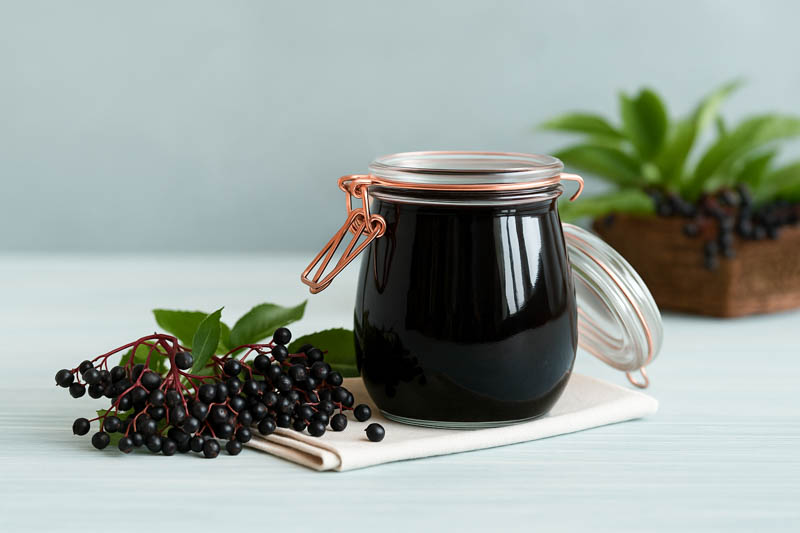
Elderberries swing the other direction: deep color, tartness, and tannins that love sugar and spice. Cooked berries yield glistening jams and sauces that pair beautifully with game, lamb, mushrooms, or aged cheese. They’re also perfect for shrubs (sweet-tart drinking vinegars: fruit + sugar + vinegar, not the plants), reduced syrups, and fruit-forward pies when blended with apples or pears for structure.
Best projects: jam/jelly, pie blends, savory sauces (onions, red wine, a touch of balsamic), shrubs and syrups, wine and cordial-style reductions.
Think of elder as a two-act show. First the blossoms, then the berries. You can harvest both from the same plant, but picking lots of flowers reduces berry yield later. Choose what matters most this year—perfumed drinks now, or heavier berry harvest later.
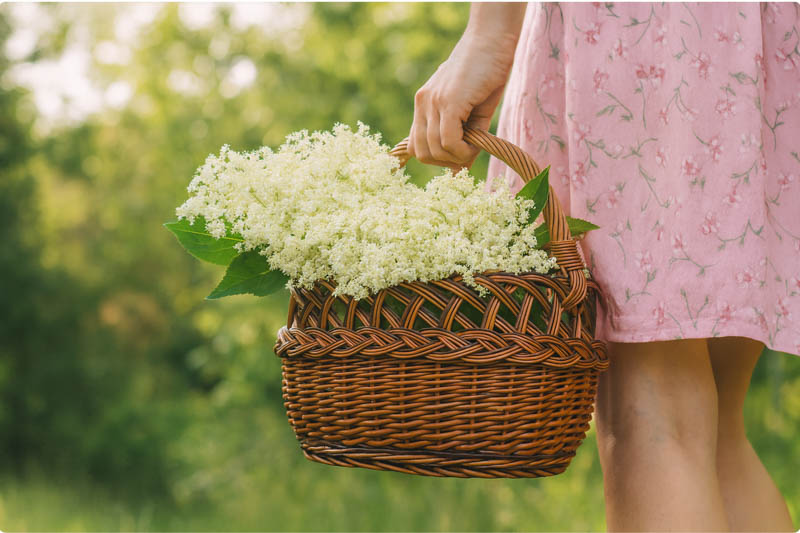
For flowers: snip the panicle close to the branch with clean pruners. Don’t shake (you’ll lose pollen and fragrance). Keep panicles flat in a basket; don’t cram them in a bag.
For berries: cut the whole panicle, drop it into a shallow crate or bowl, and keep the harvest shaded. At home, freeze the clusters for 30–60 minutes—frozen berries strip off the stems with a fork much more easily.
Flavor boosters: a strip of lemon peel, a slice of fresh ginger, or a few strawberries for blush.
Pro tip: blend elderberries with apple, pear, or blackberry for layered flavor and better texture in pies and preserves.
Elders fruit most heavily on two-year-old wood. In late winter/early spring, remove up to about one-third of the oldest canes at the base to encourage vigorous new shoots. Keep light, post-harvest tidy-ups for broken or spent stems only.
Elderflowers pair with: lemon, lime, strawberry, peach, cucumber, mint, basil, sparkling water, prosecco, yogurt, whipped cream, vanilla, white chocolate.
Elderberries pair with: apple, pear, blackberry, blackcurrant, orange zest, red wine, balsamic, clove, cinnamon, star anise, thyme, rosemary, venison, duck, mushrooms, aged cheeses.
Yes—take a light hand with the scissors. Leaving most blossoms ensures a decent berry set. Consider dedicating one shrub to flowers and another to fruit if you can.
Beyond flower/fruit color, the berry cluster shape differs (black/blue elders have flatter clusters; red elder can be more conical). When in doubt, consult a local field guide and avoid red elder for culinary use.
You’ll often get bigger, more consistent harvests with two compatible elders nearby, though some plants will fruit acceptably alone.
Likely too much heat on the flowers, lots of browned florets in the batch, or long exposure to air/light. Infuse off-heat, cover tightly, and strain promptly. Bottle hot at ≥60% sugar with added lemon/citric acid.
They were probably under-ripe or mixed with lots of pink/red berries. Wait for uniform deep color (ignore the blue wax on S. cerulea) and cook thoroughly with sugar and acid to balance tannins.
Updated: September 2025 • Reviewed by Gardenia Editors
| Hardiness |
3 - 9 |
|---|---|
| Plant Type | Shrubs, Trees |
| Plant Family | Adoxaceae |
| Genus | Sambucus |
| Exposure | Full Sun, Partial Sun |
| Season of Interest | Spring (Late), Summer (Early, Mid, Late), Fall |
| Height | 3' - 30' (90cm - 9.1m) |
| Spread | 3' - 30' (90cm - 9.1m) |
| Maintenance | Average |
| Water Needs | Average |
| Soil Type | Chalk, Clay, Loam, Sand |
| Soil pH | Acid, Alkaline, Neutral |
| Soil Drainage | Moist but Well-Drained |
| Characteristics | Fragrant, Showy, Fruit & Berries |
| Tolerances | Clay Soil |
| Attracts | Bees, Butterflies, Birds |
| Landscaping Ideas | Banks And Slopes, Beds And Borders, Hedges And Screens, Rain Gardens |
| Garden Styles | Informal and Cottage |
| Toxic to Humans | No known toxicity |
| Toxic to Cats | No known toxicity |
| Toxic to Dogs | No known toxicity |
| Toxic to Horses | No known toxicity |
| Hardiness |
3 - 9 |
|---|---|
| Plant Type | Shrubs, Trees |
| Plant Family | Adoxaceae |
| Genus | Sambucus |
| Exposure | Full Sun, Partial Sun |
| Season of Interest | Spring (Late), Summer (Early, Mid, Late), Fall |
| Height | 3' - 30' (90cm - 9.1m) |
| Spread | 3' - 30' (90cm - 9.1m) |
| Maintenance | Average |
| Water Needs | Average |
| Soil Type | Chalk, Clay, Loam, Sand |
| Soil pH | Acid, Alkaline, Neutral |
| Soil Drainage | Moist but Well-Drained |
| Characteristics | Fragrant, Showy, Fruit & Berries |
| Tolerances | Clay Soil |
| Attracts | Bees, Butterflies, Birds |
| Landscaping Ideas | Banks And Slopes, Beds And Borders, Hedges And Screens, Rain Gardens |
| Garden Styles | Informal and Cottage |
| Toxic to Humans | No known toxicity |
| Toxic to Cats | No known toxicity |
| Toxic to Dogs | No known toxicity |
| Toxic to Horses | No known toxicity |
Create a membership account to save your garden designs and to view them on any device.
Becoming a contributing member of Gardenia is easy and can be done in just a few minutes. If you provide us with your name, email address and the payment of a modest $25 annual membership fee, you will become a full member, enabling you to design and save up to 25 of your garden design ideas.
Join now and start creating your dream garden!
Create a membership account to save your garden designs and to view them on any device.
Becoming a contributing member of Gardenia is easy and can be done in just a few minutes. If you provide us with your name, email address and the payment of a modest $25 annual membership fee, you will become a full member, enabling you to design and save up to 25 of your garden design ideas.
Join now and start creating your dream garden!