Southern Shield Fern, Kunth's Maiden Fern, Abundant Maiden Fern, Southern Wood Fern, River Fern, Widespread Maiden Fern, Southern Maiden Fern, Blue Maiden Fern
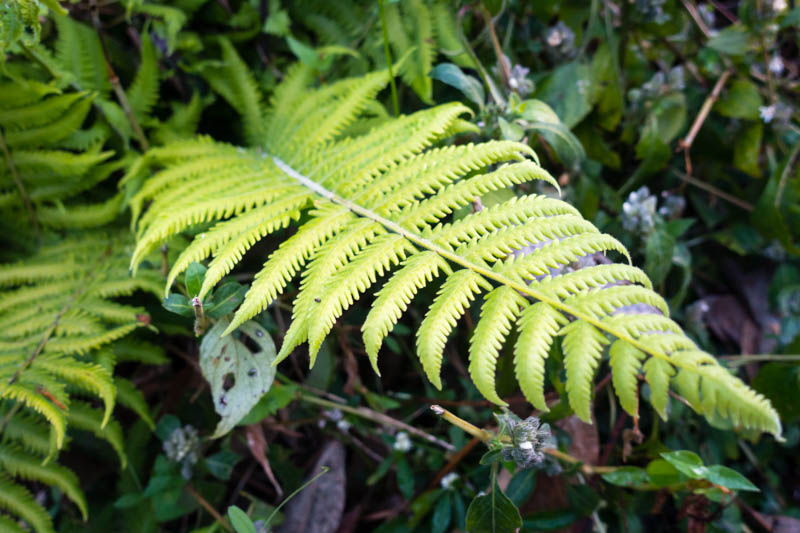


Looking for a lush, dependable shade fern that actually enjoys heat and humidity and does not mind the occasional dry spell? Meet Thelypteris kunthii, often sold as southern shield fern, southern wood fern, river fern, or Kunth’s maiden fern. This adaptable native perennial fern carries long, arching fronds that form an elegant green skirt in shade and part sun.
Thelypteris kunthii care is straightforward: plant it in part shade to shade with average to moist, humus rich soil, give it steady moisture while it settles in, and then enjoy an easy, deer resistant fern that spreads into soft colonies. Southern shield fern is a standout choice for shade borders, fern gardens, rain garden edges, stream banks, woodland paths, and naturalistic plantings across much of the southern and warmer central United States.
Summary: Medium sized native fern with long, arching, bright to medium green fronds that form graceful colonies in shade and part sun.
Use: Shade groundcover, woodland accent, rain garden and pond edge, mass plantings in shade borders, underplanting for trees and shrubs, and naturalistic fern gardens.
Highlight: Thrives in part shade to shade with average to moist soil, tolerates brief drought and even full sun if soil stays moist, and looks cool and fresh through the heat of summer.
Note: Deer resistant, low maintenance, and long lived. Spreads by creeping rhizomes to form soft, natural colonies that provide cover and texture in wildlife friendly gardens.
| Botanical Name | Thelypteris kunthii (Desv.) C.V. Morton (often also listed as Pelazoneuron kunthii) |
|---|---|
| Family | Thelypteridaceae (maiden fern or marsh fern family) |
| Common Names | Southern shield fern, southern wood fern, river fern, Kunth’s maiden fern, abundant maiden fern, widespread maiden fern |
| Native Range | Native to southeastern United States south and west through the Americas, from roughly South Carolina and Florida west to Texas, and on through Mexico, Central America, the Caribbean, and into northern South America, typically in moist forests, hammocks, and stream sides. |
| Plant Type and Habit | Perennial fern, evergreen to semi evergreen in mild climates; medium sized, with arching fronds arising from short to long creeping rhizomes, forming spreading colonies more than tight clumps. |
| Hardiness (USDA) | Zones 7 to 10 |
| Size | Typically 2 to 3 feet tall, sometimes to 4 feet in rich, moist soil, and about 2 to 3 feet wide per plant, with colonies expanding several feet over time. |
| Sun and Exposure | Part shade to full shade is ideal; tolerates filtered sun or morning sun and even full sun if soil stays consistently moist. |
| Soil | Prefers average to moist, well drained, humus rich soil; tolerates loam, clay, or sandy soils and short periods of wetness, and has moderate drought tolerance in shade once established. |
| Seasonal Interest | Fresh green fronds spring through summer, often turning an attractive bronze in fall; evergreen or semi evergreen foliage in warm climates provides long season texture. |
| Primary Uses | Shade groundcover and mass planting fern, woodland border, fern garden backbone, beside paths and patios, underplanting for trees and shrubs, rain garden and pond edge, and naturalistic plantings in moist shade. |
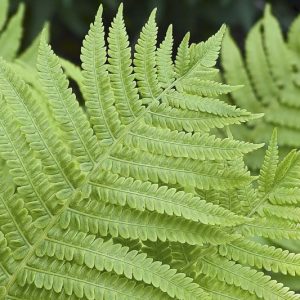
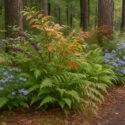
Thelypteris kunthii is a medium sized, colony forming woodland fern with long, arching fronds that create a soft, layered look. The fronds are typically triangular, finely divided, and light to medium green, with a slightly airy texture that moves gently in the breeze.
Rather than making tight clumps, southern shield fern spreads by short to long creeping rhizomes, sending up new fronds here and there to slowly knit together into a natural looking colony. In a few seasons, a small group of plants can expand into a generous drift of ferns that reads as a continuous groundcover in shade.
Southern shield fern is native to a wide swath of the Americas. In the United States, it occurs naturally from about southern North Carolina through Florida and across the Gulf Coast to Texas. Beyond the U.S., Thelypteris kunthii ranges through Mexico, Central America, the Caribbean, and into northern South America where it inhabits warm, humid forests and slopes.
Typical habitats for Thelypteris kunthii include:
This natural range explains why southern shield fern thrives in warm, humid shade with average to moist soil, yet can also cope with brief dry spells once established, especially where the soil is rich in organic matter.
Thelypteris kunthii has a moderate growth rate. It does not race across the garden, but in decent soil and regular moisture it steadily sends up more fronds and extends its rhizomes, thickening into a soft colony over several seasons. Individual plants are usually 2 to 3 feet tall and wide, but a mature patch can spread many feet across.
This habit makes southern shield fern a good choice for gardeners who want a naturalistic groundcover fern that will fill space without becoming aggressively invasive in most garden conditions.
The foliage of Thelypteris kunthii is its main ornamental feature and the reason many gardeners fall in love with this fern:
Massed along a shady path or under trees, the feathery fronds of southern shield fern soften hard edges and provide a classic woodland look that pairs well with bold leaved plants like hostas, cast iron plant, and large leaved native perennials.
Thelypteris kunthii in hardy in USDA Zones 7-10. It is reliably hardy in much of the Southeast and Gulf Coast, and often performs well in sheltered spots farther north when soil is not allowed to dry out completely in winter.
Southern shield fern is especially well adapted to warm, humid climates. It handles summer heat in the Deep South better than many northern ferns, and with consistent moisture can even be grown in sunnier spots than you might expect for a fern.
Because it is shade tolerant, textural, and slowly spreading, Thelypteris kunthii shines in many landscape roles:
While ferns are not nectar plants, Thelypteris kunthii still contributes to a wildlife friendly garden in several ways:
Southern shield fern is widely described as deer resistant and is often listed among reliable deer proof shade plants. Its fronds are usually not high on the menu for deer, making it especially valuable in woodland gardens where browsing pressure is high. Occasional sampling may happen, but damage is typically minor and quickly hidden by new growth.
Despite its natural association with moist woods and hammocks, Thelypteris kunthii is surprisingly adaptable:
Thelypteris kunthii is not commonly listed as toxic to people or pets in major garden references. As with most ornamental ferns, it is best treated as non edible foliage. Normal handling and garden contact are fine, but pets and children should not be encouraged to chew on the fronds.
Within its native and adapted range, southern shield fern is considered well behaved but vigorous. It spreads by rhizomes to form colonies, especially in hospitable, moist, rich soils, but typically does so at a manageable pace in gardens. In designed landscapes, this slow to moderate spread is an advantage, allowing Thelypteris kunthii to fill in as a natural looking fern groundcover without the rampant takeover associated with some non native species.
In everyday gardening terms, Thelypteris kunthii care comes down to three main things: keep the soil reasonably rich and moist, provide shade or part shade, and give it a bit of cleanup once a year.
Plant Thelypteris kunthii where it receives:
Southern shield fern is forgiving but happiest in:
Water expectations shift as plants mature:
Thelypteris kunthii is adapted to woodland soils that are fed by falling leaves, not heavy fertilizer:
Mulch helps southern shield fern, especially while it is getting established:
Thelypteris kunthii maintenance is very simple:
Southern shield fern is easy to propagate if you would like more plants:
Under appropriate conditions, Thelypteris kunthii is typically a low maintenance, trouble free fern:
Updated: November 2025
| Hardiness |
7 - 10 |
|---|---|
| Plant Type | Ferns |
| Plant Family | Thelypteridaceae |
| Common names | Fern |
| Exposure | Partial Sun, Shade |
| Season of Interest | Spring (Mid, Late), Summer (Early, Mid, Late), Fall |
| Height | 2' - 4' (60cm - 120cm) |
| Spread | 2' - 4' (60cm - 120cm) |
| Spacing | 18" - 24" (50cm - 60cm) |
| Maintenance | Low |
| Water Needs | Average |
| Soil Type | Clay, Loam, Sand |
| Soil pH | Acid, Neutral |
| Soil Drainage | Moist but Well-Drained |
| Characteristics | Showy |
| Native Plants | United States, Southeast, Louisiana, Mississippi, North Carolina, South Carolina, Alabama, Arkansas, Florida, Georgia, Southwest, Texas, New Mexico, Oklahoma |
| Tolerances | Deer, Full Shade, Humidity |
| Garden Uses | Beds And Borders, Ground Covers, Patio And Containers, Ponds And Streams, Rain Gardens, Underplanting Roses And Shrubs |
| Garden Styles | Informal and Cottage |
| Toxic to Humans | No known toxicity |
| Toxic to Cats | No known toxicity |
| Toxic to Dogs | No known toxicity |
| Toxic to Horses | No known toxicity |


| Hardiness |
7 - 10 |
|---|---|
| Plant Type | Ferns |
| Plant Family | Thelypteridaceae |
| Common names | Fern |
| Exposure | Partial Sun, Shade |
| Season of Interest | Spring (Mid, Late), Summer (Early, Mid, Late), Fall |
| Height | 2' - 4' (60cm - 120cm) |
| Spread | 2' - 4' (60cm - 120cm) |
| Spacing | 18" - 24" (50cm - 60cm) |
| Maintenance | Low |
| Water Needs | Average |
| Soil Type | Clay, Loam, Sand |
| Soil pH | Acid, Neutral |
| Soil Drainage | Moist but Well-Drained |
| Characteristics | Showy |
| Native Plants | United States, Southeast, Louisiana, Mississippi, North Carolina, South Carolina, Alabama, Arkansas, Florida, Georgia, Southwest, Texas, New Mexico, Oklahoma |
| Tolerances | Deer, Full Shade, Humidity |
| Garden Uses | Beds And Borders, Ground Covers, Patio And Containers, Ponds And Streams, Rain Gardens, Underplanting Roses And Shrubs |
| Garden Styles | Informal and Cottage |
| Toxic to Humans | No known toxicity |
| Toxic to Cats | No known toxicity |
| Toxic to Dogs | No known toxicity |
| Toxic to Horses | No known toxicity |
How many Thelypteris kunthii (Southern Shield Fern) do I need for my garden?
| Plant | Quantity | |
|---|---|---|
| Thelypteris kunthii (Southern Shield Fern) | N/A | Buy Plants |
Create a membership account to save your garden designs and to view them on any device.
Becoming a contributing member of Gardenia is easy and can be done in just a few minutes. If you provide us with your name, email address and the payment of a modest $25 annual membership fee, you will become a full member, enabling you to design and save up to 25 of your garden design ideas.
Join now and start creating your dream garden!
Create a membership account to save your garden designs and to view them on any device.
Becoming a contributing member of Gardenia is easy and can be done in just a few minutes. If you provide us with your name, email address and the payment of a modest $25 annual membership fee, you will become a full member, enabling you to design and save up to 25 of your garden design ideas.
Join now and start creating your dream garden!