Drumstick allium, Bald-Head onion, Drumsticks, Ornamental onion, Round-Headed garlic, Round-Headed leek, Ball-Head onion, Flowering onion, Drumstick allium, Allium descendens
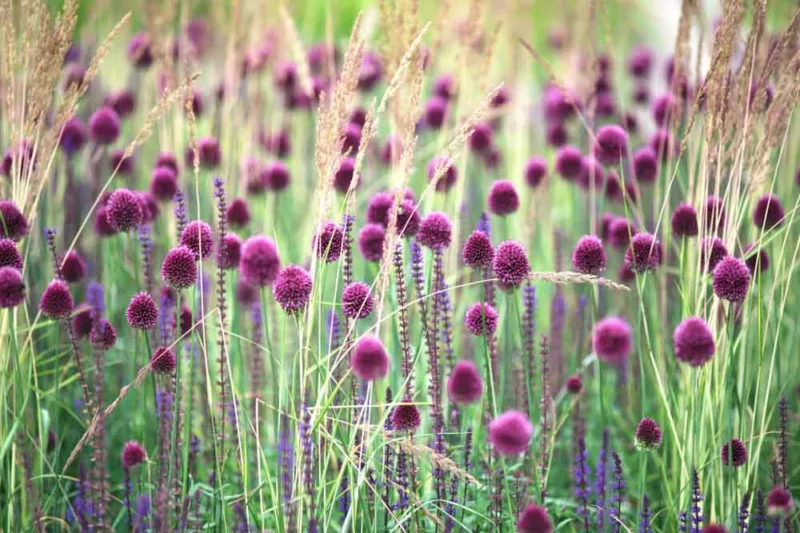
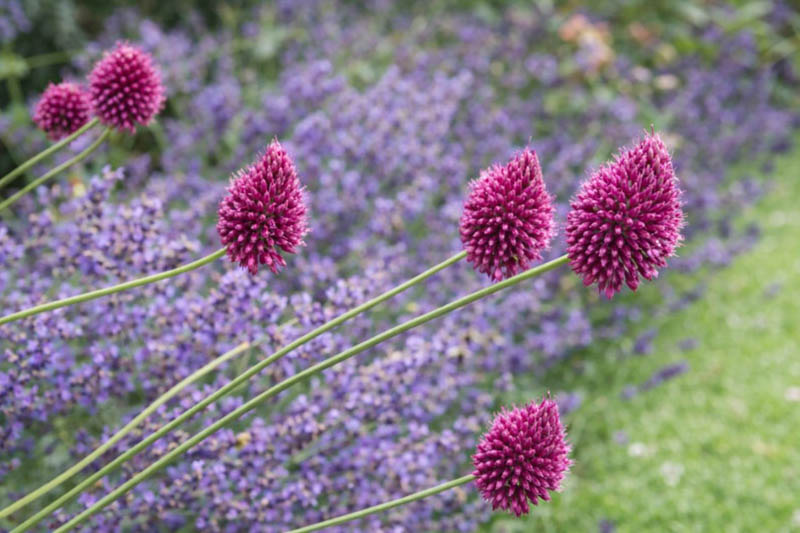
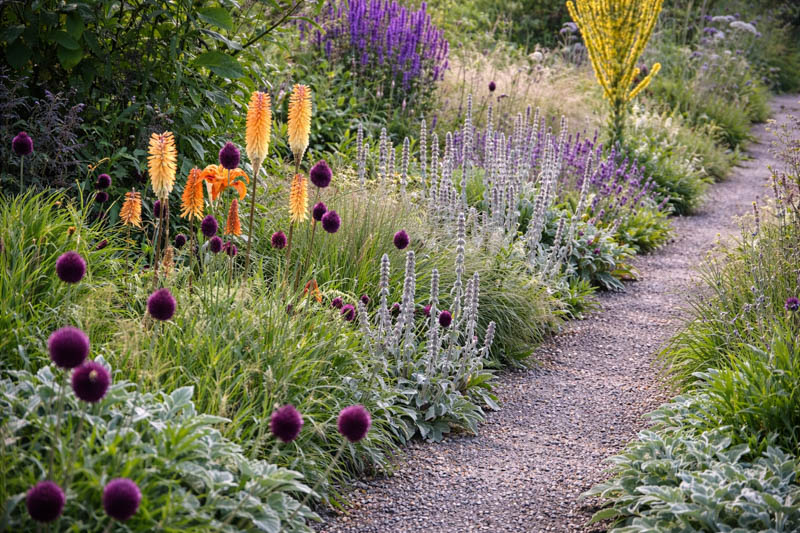
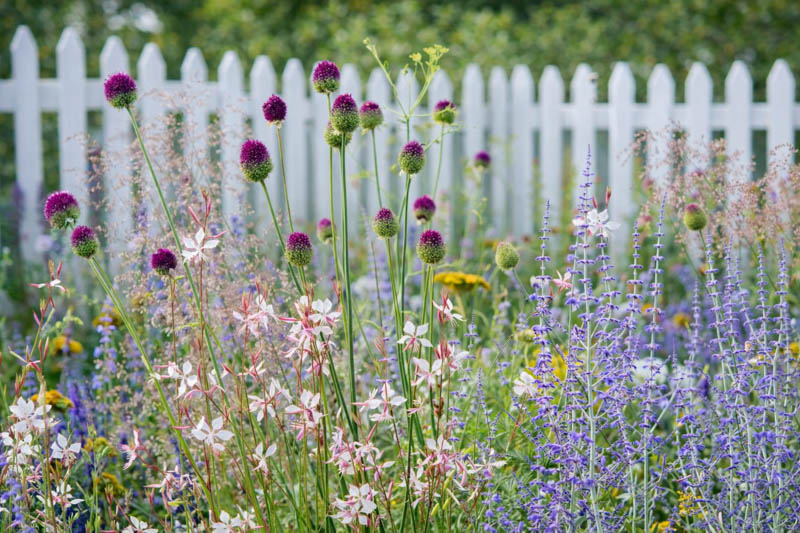


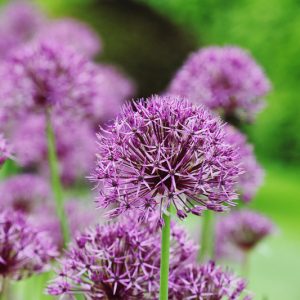
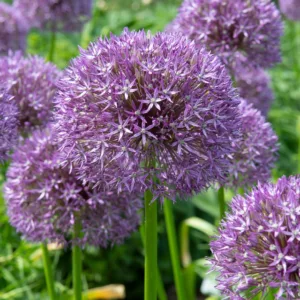
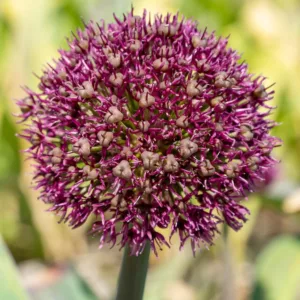
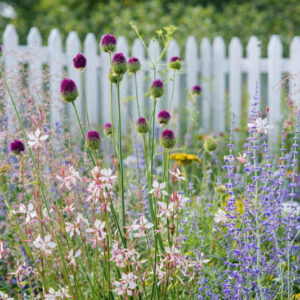
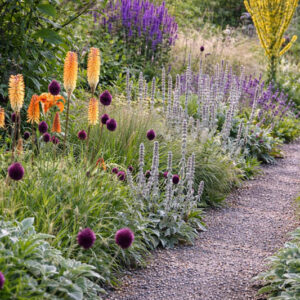
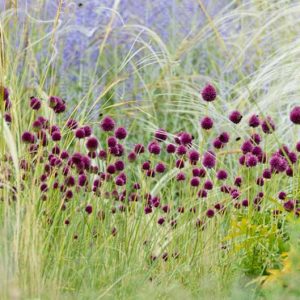
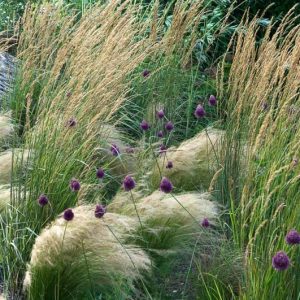
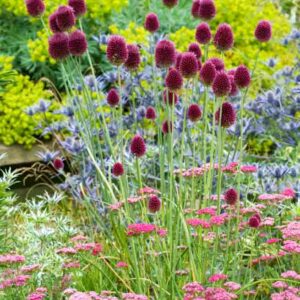
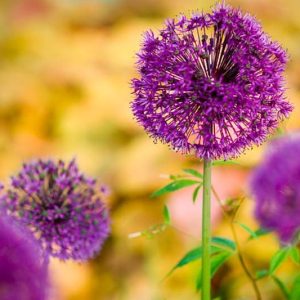
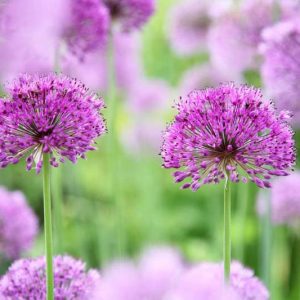
Allium sphaerocephalon, better known as Drumstick Allium, is the kind of plant that makes a border feel instantly more alive. It sends up straight, slender stems topped with dense, egg-shaped flower heads that start out green, then gradually deepen into rich purple as they mature. The effect is subtle up close and dramatic from a distance – especially when you plant enough to create a repeating “beat” through the garden.
Blooming in early summer (and in many climates pushing into mid summer), Drumstick Allium is a bulbous perennial that’s both easy and useful. It thrives in full sun, prefers well-drained soil, and once established it is reliably drought-tolerant. It also draws in bees and butterflies, while being typically ignored by browsing deer.
Summary: A bulbous perennial allium with egg-shaped flower heads that shift from green to purple, blooming from early to mid summer.
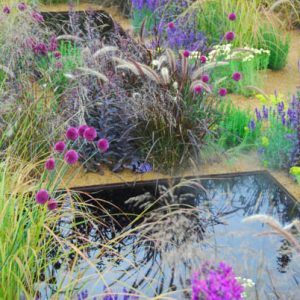
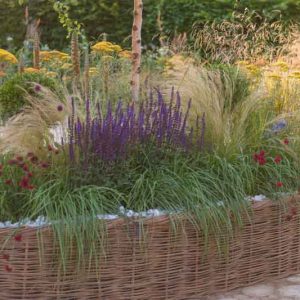
Use: Perfect for beds and borders, cottage gardens, coastal gardens, city gardens, containers, and naturalistic drifts.
Highlight: Excellent cut flower for fresh and dried arrangements, with standout texture and long decorative life.
Note: Best in full sun and dry to medium moisture, well-drained soil. drought-tolerant once established.
| Botanical Name | Allium sphaerocephalon |
|---|---|
| Family | Amaryllis family (Amaryllidaceae) |
| Common Names | Drumstick allium, round-headed leek, ornamental onion |
| Native Range |
Native context: Native throughout Europe to the Caucasus, Iran, and northern Africa. Garden note: In borders, it behaves as a polite naturalizer – returning reliably and slowly building presence when conditions suit it. |
| Plant Type and Habit | Bulbous perennial with upright stems and tight, egg-shaped flower clusters |
| Hardiness (approx. USDA) | Often grown in USDA Zones 4-8 (performance depends heavily on drainage and winter wetness) |
| Height | 20-24 in. (50-60 cm) is typical; can reach up to 36 in. (90 cm) in favorable sites |
| Spread | About 12-18 in. (30-45 cm), forming clumps over time |
| Spacing | About 4-6 in. (10-15 cm) between bulbs (2–3 in. for very dense mass plantings) |
| Sun and Exposure | Best in full sun for straight stems and strong color development |
| Soil | Rich, sandy to gritty, dry to medium moisture, well-drained soils. Add grit when grown in clay soils to improve drainage. |
| Seasonal Interest | Early summer (often June–July; later in cooler climates), often extending into mid summer. |
| Flower Color | Green buds aging to deep purple |
| Foliage Color | Gray-green, narrow, grassy foliage |
| Drought Tolerant | Yes (once established) |
| Nectar – Pollen | Yes |
| Attracts | Bees, butterflies, moths, and other pollinators |
| Deer – Rabbit | Typically deer resistant; often also avoided by rabbits |
| Toxicity | Like many alliums, it can be toxic to dogs and cats if chewed, potentially causing anemia. Plant where pets will not nibble. |
| Invasive Status | Not considered invasive; clumps slowly expand and may self-seed lightly in ideal conditions |
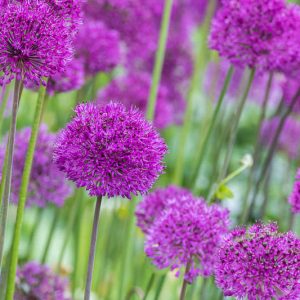
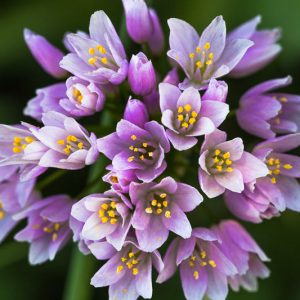
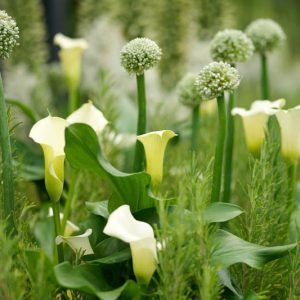
Drumstick Allium is an ornamental onion grown for one main reason: its dense, egg-shaped bloom looks like a little floral drumstick held aloft on a thin stem. Each flower head is a packed cluster of tiny florets. The color show is part of the charm – buds often start green, then steadily deepen to purple, so you can see multiple tones on the same plant as the season moves forward.
Allium sphaerocephalon is native throughout Europe to the Caucasus, Iran, and northern Africa. In garden terms, that background explains its biggest preference: it likes sun and it likes soil that does not stay wet around the bulb.
This is a bulbous perennial. In spring it produces a clump of narrow, grassy foliage, then sends up flowering stems as temperatures warm. In many gardens it reaches 20-24 inches (50-60 cm), and in ideal sites it may stretch taller. Once settled, it naturalizes easily by forming offsets and, occasionally, by light self-seeding – which means you can get a bigger display over time without replanting every year.
Bloom is typically early summer (often June–July; later in cooler climates), with many plantings continuing into mid summer. Expected bloom duration is usually 3-4 weeks. The flower heads hold their shape well, then dry attractively. If you like your garden to look good even after peak bloom, this allium is a strong choice because the seed heads can stay decorative instead of collapsing into mush.
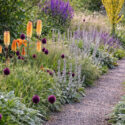
The foliage is narrow and gray-green, and like many ornamental alliums it can start to fade as the plant puts energy into flowering. Instead of fighting that, plan for it. The simplest trick is to thread Drumstick Allium through perennials that leaf out later, so the fading leaves are softly hidden while the flower heads still float above.
It has been awarded the prestigious Award of Garden Merit by the Royal Horticultural Society – a solid clue that it performs well across a range of typical garden conditions.
In practical terms, Drumstick Allium succeeds across a wide range of climates when two needs are met: sun and drainage. If winters in your area are wet, prioritize raised beds, gritty soil, or slope planting so bulbs do not sit in cold moisture.
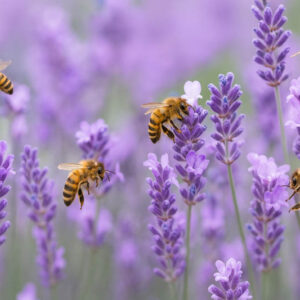
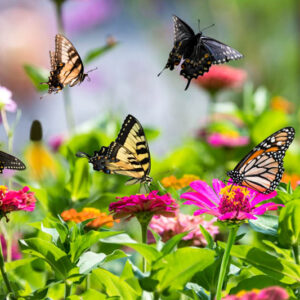
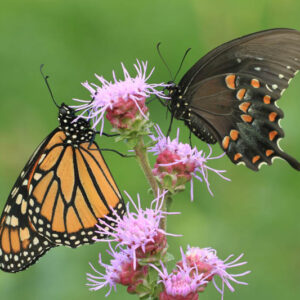
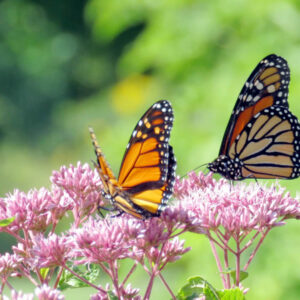
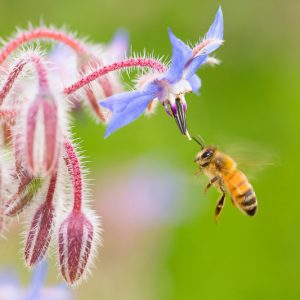
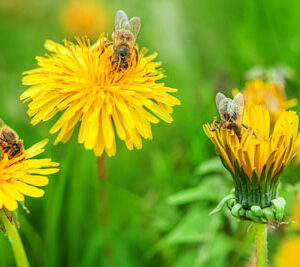
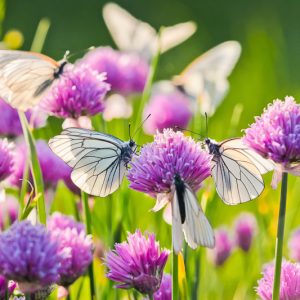
Those packed florets act like a landing pad for small pollinators. Drumstick Allium is known for attracting bees, butterflies, moths, and other beneficial insects. It’s especially helpful because it often blooms in the “bridge” window between spring bulbs and peak summer perennials.
Alliums have that unmistakable onion-scented foliage, which tends to discourage browsing. In most gardens, deer ignore Drumstick Allium and rabbits often leave it alone too. If you want to reinforce that advantage, pair it with other plants commonly considered deer resistant or rabbit-tolerant.
Once established, Drumstick Allium is comfortably drought-tolerant. Translation: it prefers to be slightly dry rather than consistently wet. If you only remember one rule, make it this – good drainage is the difference between a long-lived clump and a disappointing fade-out.
Ornamental alliums are for display, not eating. Many Allium species can cause stomach upset in pets if chewed, and in some cases may contribute to anemia in cats and dogs. Plant it where pets are unlikely to nibble, and treat it as a decorative bulb.
Allium sphaerocephalon is generally not considered invasive in typical garden use. It can naturalize by offsets and may self-seed lightly. If you ever get seedlings where you do not want them, they are easy to lift while small.
Heavy feeding is not needed. A light top-dressing of compost in spring, or a balanced bulb fertilizer, is usually enough. Too much fertilizer can push leafy growth and make the overall effect less tidy.
This is a low-drama bulb. Occasionally, you may see aphids on nearby plants or tender growth. Thrips may cause silvery streaking or distortion on leaves and flower stems. In damp gardens, slugs or snails may chew foliage. Healthy bulbs in well-drained soil are far less likely to struggle.
Allium sphaerocephalon—often called drumstick allium—is a fall-planted ornamental allium grown from a bulb. In early summer it sends up slender, upright stems topped with tight, egg-shaped flower heads. As the flowers open, the heads shift from greenish tones to a rich rose-to-purple look, giving the plant its “drumstick” nickname and a crisp, architectural feel in borders.
Drumstick allium blooms in early summer, usually from June into July depending on your climate and spring temperatures. It’s especially useful because it often flowers after many spring bulbs are finished, filling the gap between late-spring color and peak summer perennials.
In bloom, drumstick allium typically reaches about 2–3 feet tall with narrow, minimal foliage at the base, so it reads as a vertical accent rather than a bulky clump. The overall footprint is modest—think “thin stems and tidy bulbs”—which makes it easy to tuck among perennials without crowding them.
Full sun is best for strong stems and the most vibrant bloom color. It can handle light shade, but too much shade can lead to floppier stems and fewer flowers. If you want the classic straight-up “lollipop on a stick” look, give it plenty of sun.
The biggest requirement is drainage. Drumstick allium performs best in well-drained soil and is very forgiving about soil type as long as water doesn’t sit around the bulb in winter or early spring. If you have heavy clay, improving drainage with grit/compost or planting in a raised area makes a big difference.
Plant the bulbs in fall, when nights cool down but the soil is still workable. Place them in a sunny spot with good drainage, pointy side up, and water in well after planting. Once roots establish, they’re low-maintenance and generally return year after year.
A good rule for alliums is to plant bulbs about 2–3 times as deep as the bulb is tall and space them so the clumps have room to expand. Deeper planting helps stability and can improve performance in climates with freeze/thaw cycles.
It can naturalize over time, forming bigger drifts through bulb offsets and sometimes by seed. If you like a fuller look, let the seedheads mature; if you prefer a tidier border, deadhead after bloom. Either way, it’s typically “polite” rather than aggressively invasive in well-managed beds.
Deadheading is optional. If you want to limit self-seeding, cut the flower heads after bloom. If you enjoy the seedheads for texture or want gentle naturalizing, leave them on. The dried heads also look great in arrangements, so many gardeners harvest them for indoor use.
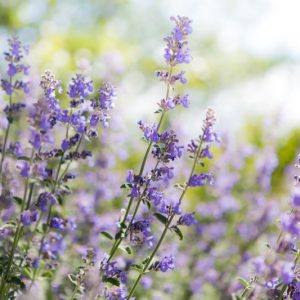
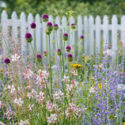
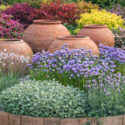
Let the foliage yellow naturally because the leaves feed the bulb for next year’s bloom. The easiest trick is to plant drumstick allium among mounding perennials (like catmint or hardy geranium) so those companions visually hide the fading foliage as summer ramps up.
Even though it’s an “allium,” drumstick allium is typically grown as an ornamental, not as food. If edibility matters to you, stick to culinary alliums and don’t assume ornamental bulbs are safe to eat.
| Hardiness |
4 - 8 |
|---|---|
| Heat Zones |
1 - 11 |
| Climate Zones | 1, 2, 3, 4, 5, 6, 7, 8, 9, 10, 11, 12, 13, 14, 15, 16, 17, 18, 19, 20, 21, 22, 23, 24 |
| Plant Type | Bulbs |
| Plant Family | Amaryllidaceae |
| Genus | Allium |
| Common names | Drumstick Allium, Onion, Ornamental Onion |
| Exposure | Full Sun |
| Season of Interest | Summer (Early, Mid) |
| Height | 2' - 3' (60cm - 90cm) |
| Spread | 1' - 2' (30cm - 60cm) |
| Spacing | 4" - 6" (10cm - 15cm) |
| Depth | 4" (10cm) |
| Maintenance | Low |
| Water Needs | Average |
| Soil Type | Chalk, Clay, Loam, Sand |
| Soil pH | Acid, Alkaline, Neutral |
| Soil Drainage | Moist but Well-Drained, Well-Drained |
| Characteristics | Dried Arrangements, Cut Flowers, Fragrant, Showy, Plant of Merit |
| Tolerances | Drought, Deer, Rabbit, Heat, Dry Soil |
| Attracts | Bees, Butterflies |
| Garden Uses | Beds And Borders, Patio And Containers |
| Garden Styles | City and Courtyard, Coastal Garden, Gravel and Rock Garden, Informal and Cottage |
| Toxic to Humans | Low severity |
| Toxic to Cats | Toxic |
| Toxic to Dogs | Toxic |
| Toxic to Horses | No known toxicity |


| Hardiness |
4 - 8 |
|---|---|
| Heat Zones |
1 - 11 |
| Climate Zones | 1, 2, 3, 4, 5, 6, 7, 8, 9, 10, 11, 12, 13, 14, 15, 16, 17, 18, 19, 20, 21, 22, 23, 24 |
| Plant Type | Bulbs |
| Plant Family | Amaryllidaceae |
| Genus | Allium |
| Common names | Drumstick Allium, Onion, Ornamental Onion |
| Exposure | Full Sun |
| Season of Interest | Summer (Early, Mid) |
| Height | 2' - 3' (60cm - 90cm) |
| Spread | 1' - 2' (30cm - 60cm) |
| Spacing | 4" - 6" (10cm - 15cm) |
| Depth | 4" (10cm) |
| Maintenance | Low |
| Water Needs | Average |
| Soil Type | Chalk, Clay, Loam, Sand |
| Soil pH | Acid, Alkaline, Neutral |
| Soil Drainage | Moist but Well-Drained, Well-Drained |
| Characteristics | Dried Arrangements, Cut Flowers, Fragrant, Showy, Plant of Merit |
| Tolerances | Drought, Deer, Rabbit, Heat, Dry Soil |
| Attracts | Bees, Butterflies |
| Garden Uses | Beds And Borders, Patio And Containers |
| Garden Styles | City and Courtyard, Coastal Garden, Gravel and Rock Garden, Informal and Cottage |
| Toxic to Humans | Low severity |
| Toxic to Cats | Toxic |
| Toxic to Dogs | Toxic |
| Toxic to Horses | No known toxicity |
How many Allium sphaerocephalon (Drumstick Allium) do I need for my garden?
| Plant | Quantity | |
|---|---|---|
| Allium sphaerocephalon (Drumstick Allium) | N/A | Buy Plants |
Create a membership account to save your garden designs and to view them on any device.
Becoming a contributing member of Gardenia is easy and can be done in just a few minutes. If you provide us with your name, email address and the payment of a modest $25 annual membership fee, you will become a full member, enabling you to design and save up to 25 of your garden design ideas.
Join now and start creating your dream garden!
Create a membership account to save your garden designs and to view them on any device.
Becoming a contributing member of Gardenia is easy and can be done in just a few minutes. If you provide us with your name, email address and the payment of a modest $25 annual membership fee, you will become a full member, enabling you to design and save up to 25 of your garden design ideas.
Join now and start creating your dream garden!