Learn monarch butterfly (Danaus plexippus) life cycle, migration routes, and the best plants to help them, from milkweeds to nectar-rich blooms.


The monarch butterfly (Danaus plexippus) is more than a pretty orange insect. It is a long-distance traveler, a milkweed specialist, and a powerful symbol of how gardens can help wildlife. This guide explains who monarchs are, how they live and migrate, what threatens them, and how your planting choices can keep them flying.
Monarchs are native to the Americas and are primarily found across the United States, Mexico, and southern Canada. Distinct eastern and western populations migrate to different overwintering sites. Non migratory or limited migratory populations also occur in parts of Florida, Central America, Australia, New Zealand, the Canary Islands, and parts of Western Europe.
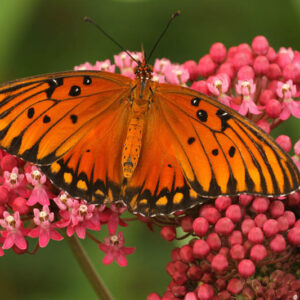
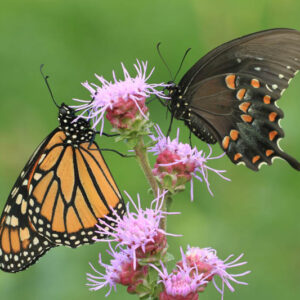
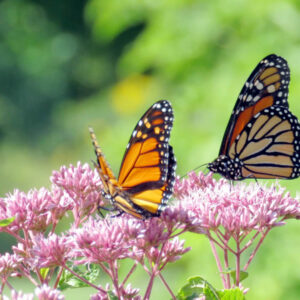
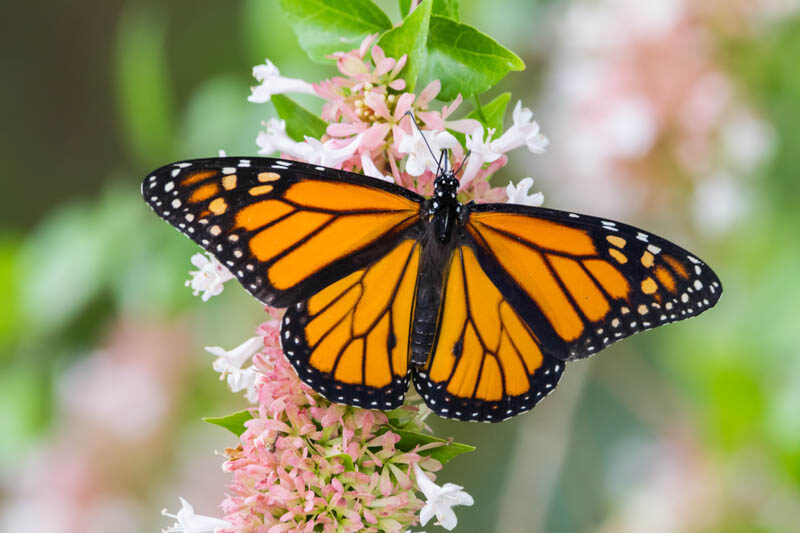
Adult monarchs are easy to recognize. Their bright orange wings are traced with bold black veins and framed by a black border studded with white spots. The underside is paler, which helps them blend in when they rest.
Males have thinner black veins and a black scent spot on each hind wing. Females lack these spots and show thicker, smokier veins. With a wingspan of about 3.5 to 4 inches (9 to 10 cm), monarchs are a strong, graceful presence in gardens and meadows.
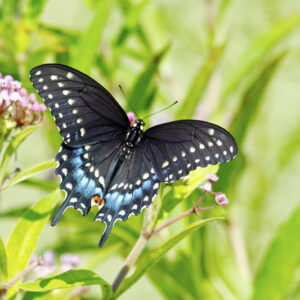
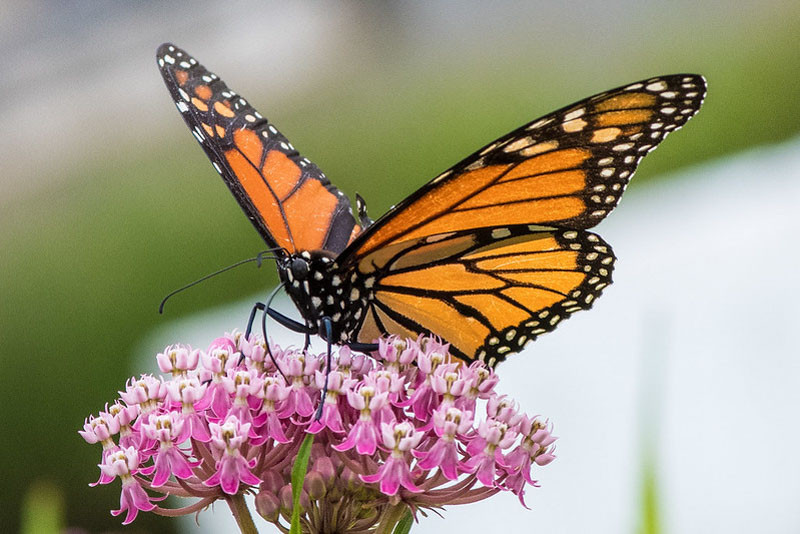 Monarch butterfly on milkweed (Asclepias)
Monarchs see far more than we do. Their compound eyes detect a wide spectrum of colors, including ultraviolet, which helps them spot flowers and orient to the sky. They also use polarized light and the position of the sun as part of an internal compass, supporting both daily foraging and long distance migration.
During the breeding season, males patrol for females, often swooping and gliding around them before pairing. Males use scent scales and physical contact to court, and mating can last for hours.
After mating, females store sperm and lay eggs over many days. They carefully choose young, healthy milkweed plants so their caterpillars have the best chance to survive. Every egg on milkweed is an investment in the next generation and, for some, the next migration.
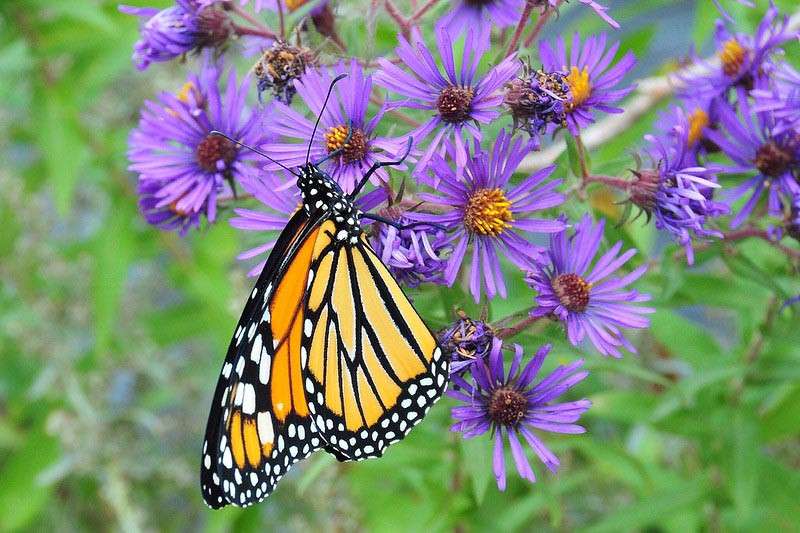
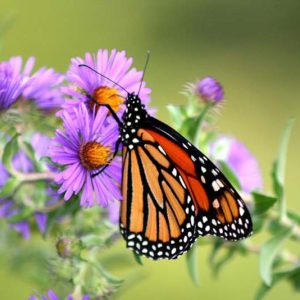
Monarch butterfly on aster
The monarch life cycle includes four stages: egg, larva (caterpillar), pupa (chrysalis), and adult. Warm conditions speed the process; cooler weather slows it.
Egg: Females lay single, pinhead sized eggs on milkweed leaves, usually on new growth. Eggs hatch in about 3 to 5 days.
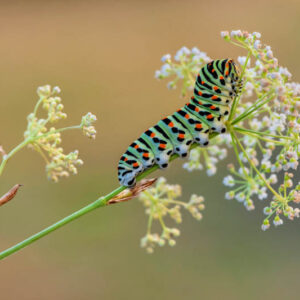
Larva (Caterpillar): The striped caterpillars feed exclusively on milkweed. Over about 9 to 14 days they pass through five instars, shedding skin as they grow rapidly.
Pupa (Chrysalis): The caterpillar forms a jade green chrysalis dotted with gold. Inside, the body reorganizes completely. After about 10 to 14 days the shell darkens and the butterfly emerges.
Adult Butterfly: The fresh adult expands and dries its wings, then begins feeding, mating, or, in late season, preparing for migration. The summer generations live a few weeks; the migratory generation can live several months.
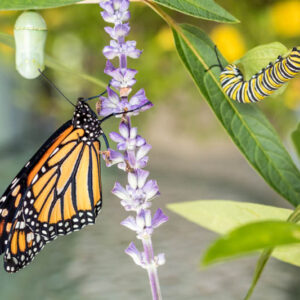
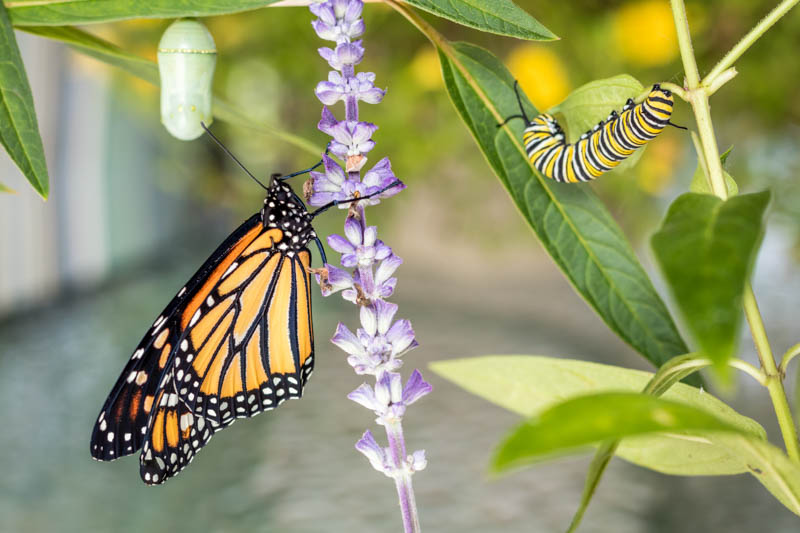 Monarch trinity: chrysalis, caterpillar, and butterfly on milkweed
Monarchs are adaptable, but breeding and overwintering require very specific conditions.
Breeding habitats: Monarchs lay eggs wherever suitable milkweed grows in sunny, open locations, including:
Overwintering habitats:
Stopover sites: During migration monarchs rely on flowering fields, gardens, riparian corridors, and sheltering groves to rest and refuel. Protecting and restoring these nectar rich waypoints is critical.
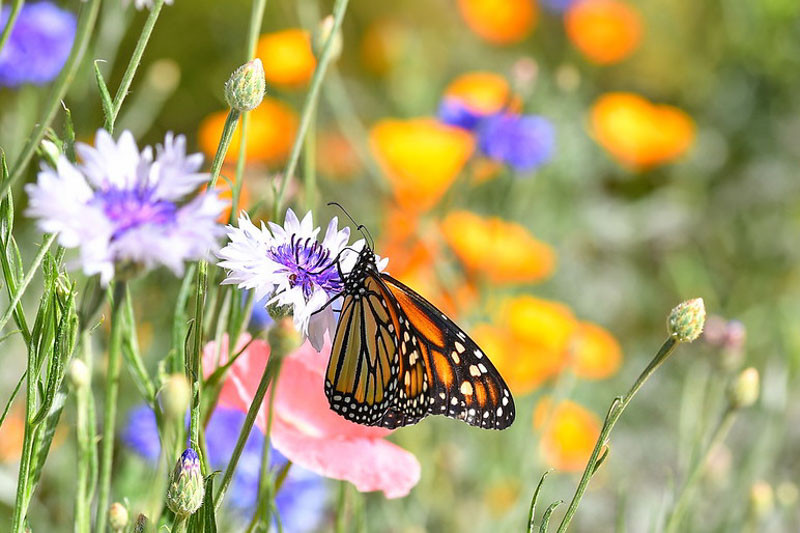
Monarchs have different needs at different stages, and gardens can support all of them.
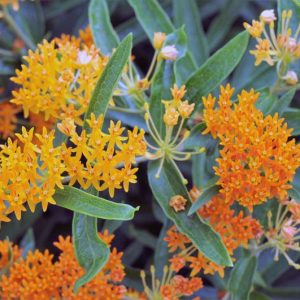
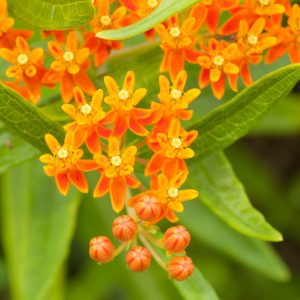
Larvae (Caterpillars): Caterpillars feed only on milkweed plants (Asclepias spp.). Species such as common milkweed, swamp milkweed, and butterfly weed are important where they are native. Milkweed foliage provides both nutrition and protective cardenolides.
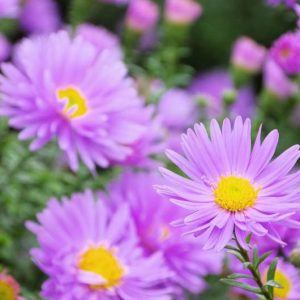
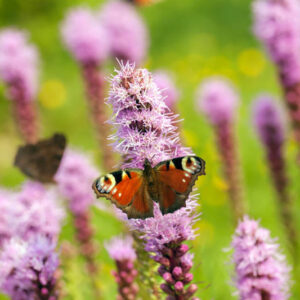
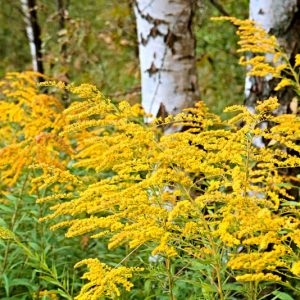
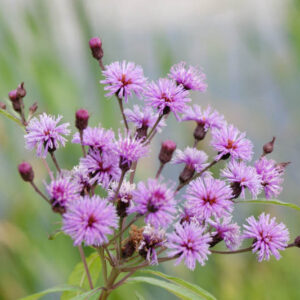
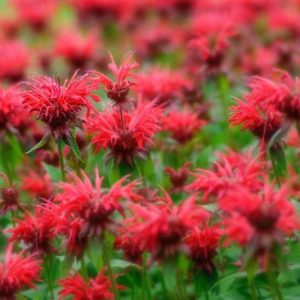
Adult butterflies: Adults drink nectar from a wide range of flowers. Favor native, pesticide free species such as coneflowers (Echinacea), goldenrods (Solidago), asters, blazing stars, joe pye weeds, and native sunflowers. Non invasive ornamentals like zinnias and cosmos can supplement, but natives should anchor the menu.
Monarchs may also sip from tree sap, moist soil, and overripe fruit for extra minerals and sugars, especially during migration.
Pick your state to see native milkweeds + nectar plants that help monarchs thrive where you live.
Importance of Milkweed: Without milkweed, there are no monarch caterpillars. Planting regionally native milkweeds in gardens, schools, parks, and roadsides restores the essential link between monarchs and their only larval host.
Monarch migration is one of the great wildlife stories. Tiny, wind tossed insects connect summer gardens in Canada and the United States with sacred mountain forests in Mexico and coastal groves in California.
Incredible journey:
Navigation and timing:
Energy and thermoregulation:
Overwintering:
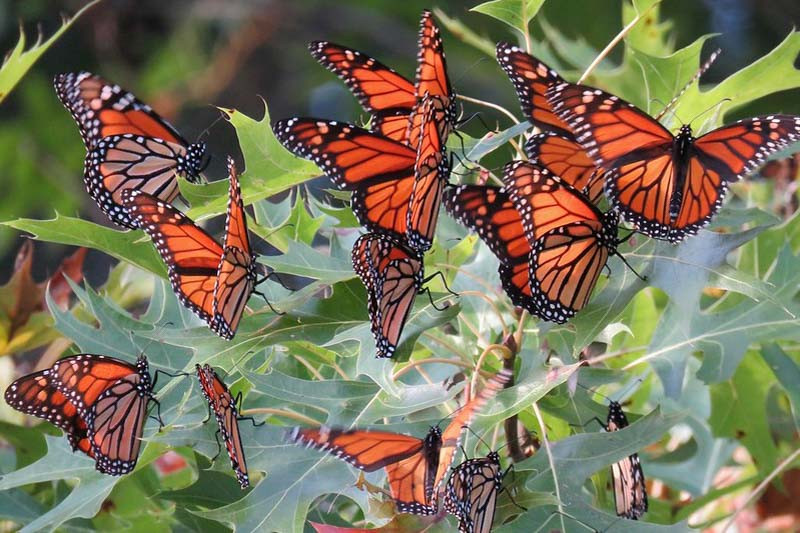
Monarchs are protected to some extent by toxins from milkweed, but many predators and pressures remain.
Predators:
Parasites and disease:
Human related threats:
Bright coloration warns most predators that monarchs taste bad, but it cannot protect them from vanishing habitat. Garden choices, community projects, and conservation efforts now play a major role in their future.
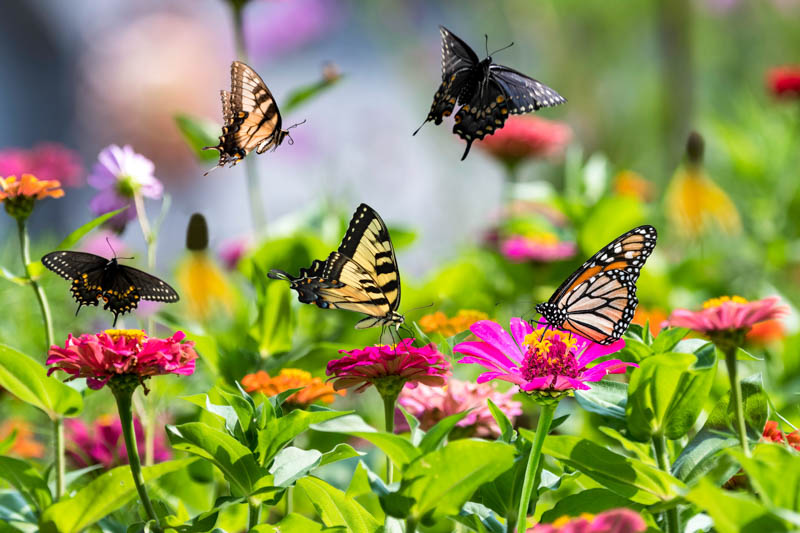
You do not have to live on a migration hotspot to help monarchs. Even a small, thoughtful planting can become a safe refueling station.
Choose species native to your region and match them to your soil and moisture. Plant in sunny clumps so females can easily find them.
Mix early, mid, and late blooming natives. Include coneflowers, asters, goldenrods, blazing stars, joe pye weeds, native sunflowers, and region specific favorites highlighted in our state guides.
Layer in shrubs, tall perennials, and a few quiet corners out of strong wind. Offer a shallow dish with stones or damp sand for safe sipping.
Avoid insecticides, including systemic products, and be cautious even with organic sprays. Monarchs and other beneficial insects are highly sensitive.
Let some seed heads stand, keep a brushy corner, and avoid over tidying. Small changes add up to safer habitat.
By turning your space into a monarch friendly garden, you support a species in trouble, welcome a richer community of pollinators, and add movement and magic to your landscape.
Tip: combine monitoring with habitat. Plant native milkweeds and late season nectar, then log what you see each week.
| Toxic to Humans | No known toxicity |
|---|---|
| Toxic to Cats | No known toxicity |
| Toxic to Dogs | No known toxicity |
| Toxic to Horses | No known toxicity |
What is a monarch butterfly?
The monarch butterfly (Danaus plexippus) is a striking orange-and-black butterfly famous for its long-distance migration across North America.
How long does a monarch butterfly live?
Summer monarchs live about 2–6 weeks, while the special migratory generation can live up to 8 months.
What do monarch caterpillars eat?
They feed exclusively on milkweed (Asclepias species), which provides all the nutrients and toxins they need for defense.
Why is milkweed important for monarchs?
Milkweed is the only host plant where monarchs lay eggs and caterpillars can feed; without it, they cannot reproduce.
When do monarchs migrate?
In fall, monarchs from the northern U.S. and Canada migrate south to Mexico or California; they return north in spring.
Where do monarchs spend the winter?
Eastern monarchs overwinter in the oyamel fir forests of central Mexico, while western monarchs cluster along California’s coast.
Do monarchs migrate in all regions?
Only the eastern and western North American populations migrate; others in places like Florida or Central America are year-round residents.
What plants provide nectar for adult monarchs?
They feed on native wildflowers such as blazing stars, coneflowers, goldenrods, and asters throughout the growing season.
Can I raise monarchs in my backyard?
Yes, but do so naturally — provide milkweed and nectar flowers instead of confining many indoors, which can spread disease.
Should I plant milkweed if I want to attract monarchs?
Absolutely! Choose native species adapted to your region to ensure healthy breeding and migration support.
Which species of milkweed are best for monarchs in my region?
It depends on location — for example, swamp milkweed (A. incarnata) for moist areas and butterfly weed (A. tuberosa) for dry sites.
Is tropical milkweed harmful to monarch migration?
Yes, it can disrupt migration and increase disease. Cut it back each winter or plant native milkweed instead.
Why are monarch populations declining?
Habitat loss, pesticide use, and climate change have reduced milkweed and nectar resources across North America.
How many monarchs survive to adulthood?
Only about 5–10% of eggs make it to adulthood due to predators, parasites, and weather.
What are the stages of the monarch life cycle?
Egg → caterpillar → chrysalis → adult butterfly, a process that takes about 4 weeks in warm weather.
How can I tell a monarch butterfly from a viceroy?
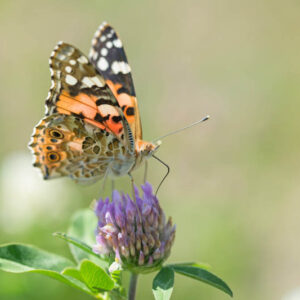
Viceroys are smaller and have a black line across their hind wings; monarchs do not.
Do monarchs have predators?
Yes — birds, wasps, spiders, and ants sometimes prey on monarchs despite their toxic defense.
What diseases affect monarch butterflies?
The OE parasite (Ophryocystis elektroscirrha) is the most common, weakening adults and shortening lifespans.
What parasites do monarchs face?
Tachinid flies and protozoan parasites can attack caterpillars and pupae, reducing survival.
How can gardeners create monarch-friendly habitat?
Plant native milkweed, provide continuous nectar flowers, avoid pesticides, and leave shelter for resting butterflies.
Can monarchs use non-native plants for nectar?
They can, but native flowers provide more reliable, pesticide-free nectar and better ecological benefits.
Do monarchs use any plants besides milkweed for caterpillars?
No – milkweed is the only larval host for monarch caterpillars.
How can I support monarchs during migration?
Provide late-blooming nectar sources like goldenrod and aster to help fuel their long journey.
What is the best time to plant milkweed?
Plant in spring or fall so roots establish before the next growing season.
Does using pesticides harm monarchs?
Yes — even “organic” pesticides can harm caterpillars and adults. Go pesticide-free whenever possible.
How do I know if my milkweed has monarch eggs?
Look for tiny, white, conical eggs on the underside of leaves, often near the top of the plant.
What do monarch eggs look like?
They are small (about the size of a pinhead), creamy white, and ridged vertically.
How long does the monarch caterpillar stage last?
About 10–14 days, depending on temperature and food availability.
What colors of flowers attract monarchs?
Bright orange, yellow, purple, and pink blooms are especially appealing for nectar feeding.
Why do monarchs cluster together in winter?
They huddle for warmth and protection in cool mountain forests or coastal groves.
Do monarch butterflies pollinate plants?
Yes, as they visit flowers for nectar, they transfer pollen and support many wildflower species.
Are there risks to planting milkweed near roads or sidewalks?
Yes — pollution, salt spray, and vehicle turbulence can stress plants and expose caterpillars to toxins.
How does climate change impact monarch migration?
It shifts timing, alters bloom periods, and threatens overwintering forests through heat and drought.
What role do flowering shrubs and trees play for monarchs?
They offer nectar, shade, and wind protection during migration and rest stops.
Can monarchs be bothered by invasive plants?
Yes — invasives crowd out native milkweed and nectar sources monarchs rely on.
What is “Monarch Waystation” certification?
It’s a recognition by Monarch Watch for gardens providing milkweed, nectar plants, and shelter for monarchs.
How does light pollution or lawn lighting affect monarchs?
Artificial light may disrupt rest and orientation during migration.
What’s the difference between eastern and western monarch populations?
Eastern monarchs migrate to Mexico; western ones overwinter along California’s coast — both face population declines.
Updated: November 2025 • Reviewed by Gardenia Editors
| Toxic to Humans | No known toxicity |
|---|---|
| Toxic to Cats | No known toxicity |
| Toxic to Dogs | No known toxicity |
| Toxic to Horses | No known toxicity |
Create a membership account to save your garden designs and to view them on any device.
Becoming a contributing member of Gardenia is easy and can be done in just a few minutes. If you provide us with your name, email address and the payment of a modest $25 annual membership fee, you will become a full member, enabling you to design and save up to 25 of your garden design ideas.
Join now and start creating your dream garden!
Create a membership account to save your garden designs and to view them on any device.
Becoming a contributing member of Gardenia is easy and can be done in just a few minutes. If you provide us with your name, email address and the payment of a modest $25 annual membership fee, you will become a full member, enabling you to design and save up to 25 of your garden design ideas.
Join now and start creating your dream garden!