Agarita, Agarito, Algerita, Laredo Mahonia, Laredo Oregon-grape, Trifoliate Barberry, Wild Currant, Berberis trifoliolata, Berberis trifoliolata var. glauca, Mahonia trifoliolata var. glauca
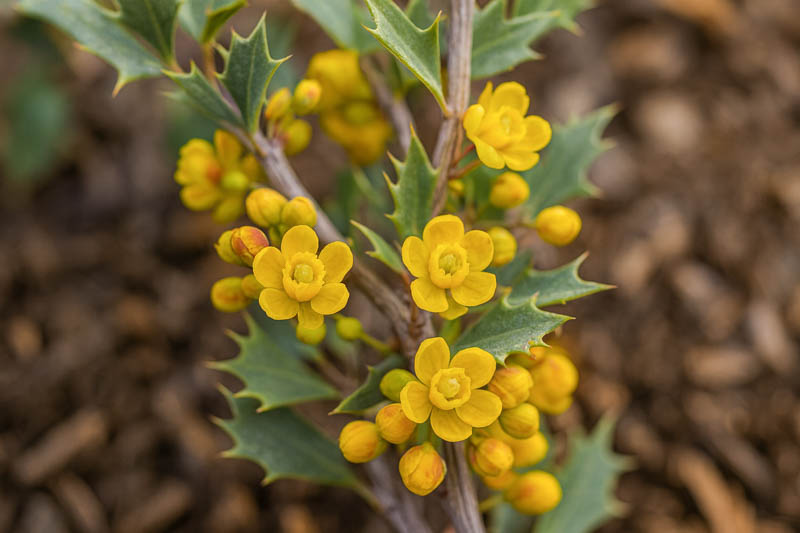
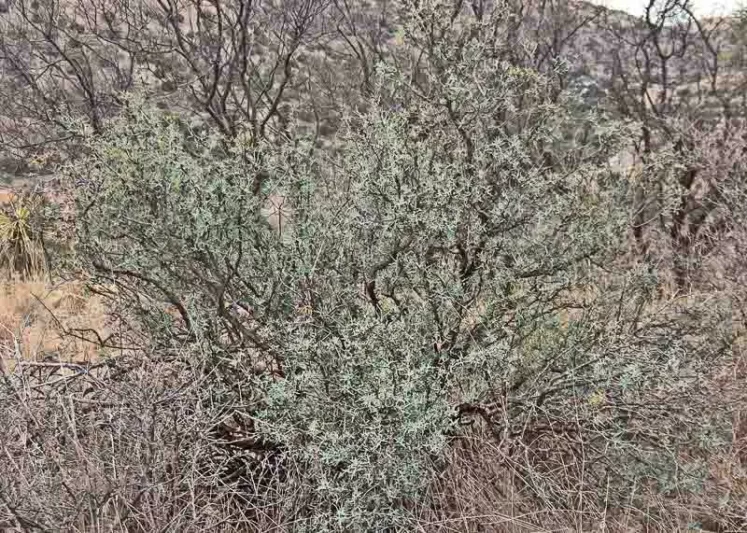


Looking for a native evergreen shrub that laughs at heat, shrugs off drought, and still offers fragrant flowers and edible berries? Meet Mahonia trifoliolata, most often called agarita or agarito. This rugged southwest native shrub forms a rounded mound of stiff, gray green, holly like foliage armed with needle sharp tips. It is one of the best desert shrubs for low water gardens, shelterbelts, and wildlife friendly landscapes in the Southwest.
Mahonia trifoliolata care is refreshingly simple. Plant agarita in full sun to light shade, give it dry to medium, sharply drained soil, and resist the urge to fuss. In early to mid spring, clusters of fragrant yellow flowers appear along the branches, followed by tart, bright red berries that can be used for jams and jellies. Birds, pollinators, and small mammals love this shrub, and its prickly foliage makes an excellent security hedge, barrier planting, and wildlife thicket in arid and semi arid regions.
Summary: Dense, rounded evergreen shrub with rigid, spreading branches, gray green trifoliate leaves with sharp spines, fragrant yellow flowers in spring, and showy red berries that are edible and loved by wildlife.
Use: Security hedge, barrier, bird thicket, desert shrub border, xeriscape foundation plant, slope stabilizer, and native wildlife habitat shrub in hot, dry climates.
Highlight: Heat and drought tolerant, low maintenance, and deer resistant, agarita thrives in full sun and rocky, well drained soils where many other shrubs fail.
Note: The berries are edible and can be turned into agarita jelly, but the spiny leaves mean you will want gloves and a bit of patience at harvest time.
| Botanical Name | Mahonia trifoliolata (syn. Berberis trifoliolata) |
|---|---|
| Family | Berberidaceae (barberry family) |
| Common Names | Agarita, agarito, agrito, currant of Texas, wild currant, wild Oregon grape |
| Native Range | Native to Arizona, New Mexico, and Texas, as well as northern Mexico, typically in rocky hills, limestone outcrops, canyons, and dry prairies. |
| Plant Type and Habit | Evergreen shrub with a dense, rounded habit and rigid, intricately branched stems. Often forms large clumps or thickets via suckers. |
| Hardiness (USDA) | Generally hardy in USDA Zones 7 to 9 |
| Size | Typically 2 to 6 feet tall and 2 to 6 feet wide (60 to 180 cm). Plants can slowly expand beyond their initial footprint by suckering to form thickets. |
| Sun and Exposure | Full sun to light shade. Flowering and berry production are best in full sun. In hotter climates, a touch of afternoon shade is acceptable as long as soil is dry and well drained. |
| Soil | Thrives in dry to medium, sharply drained soils, including rocky, gravelly, sandy, and limestone based soils. Highly adaptable to poor, alkaline soils but dislikes heavy, waterlogged clay. |
| Seasonal Interest | Fragrant, bright yellow, cup shaped flowers in early to mid spring followed by clusters of red, edible berries and year round evergreen foliage with striking blue gray to gray green color. |
| Primary Uses | Desert and xeric shrub borders, defensive and wildlife hedges, foundation plantings, banks and slopes, naturalized thickets, native shrublands, and bird friendly gardens. |
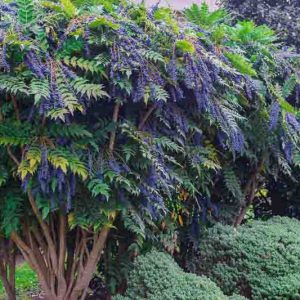
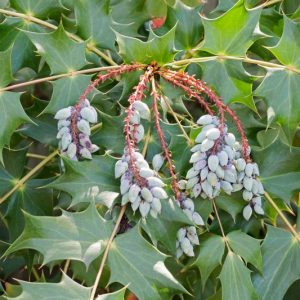
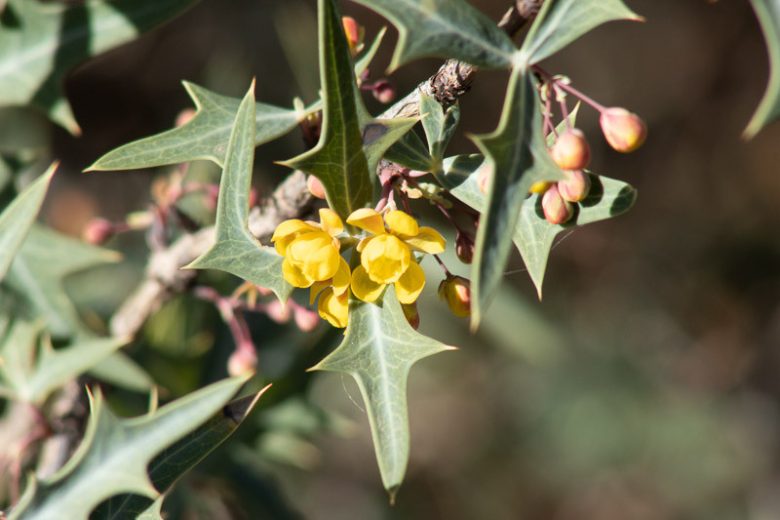
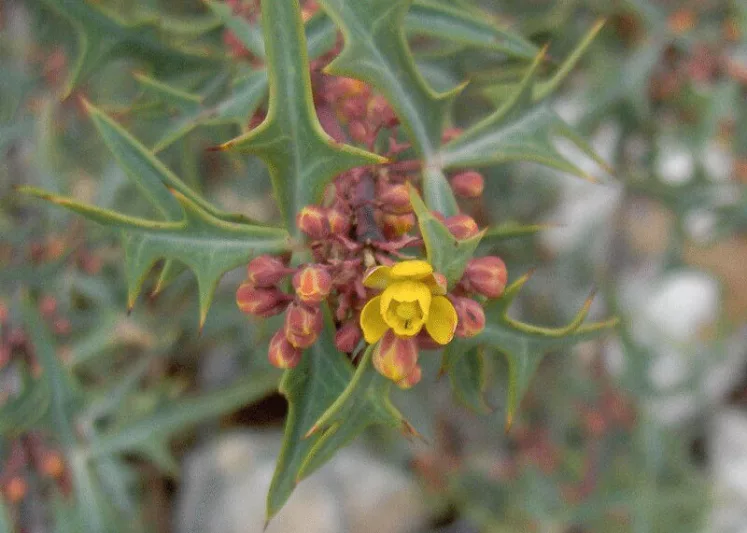
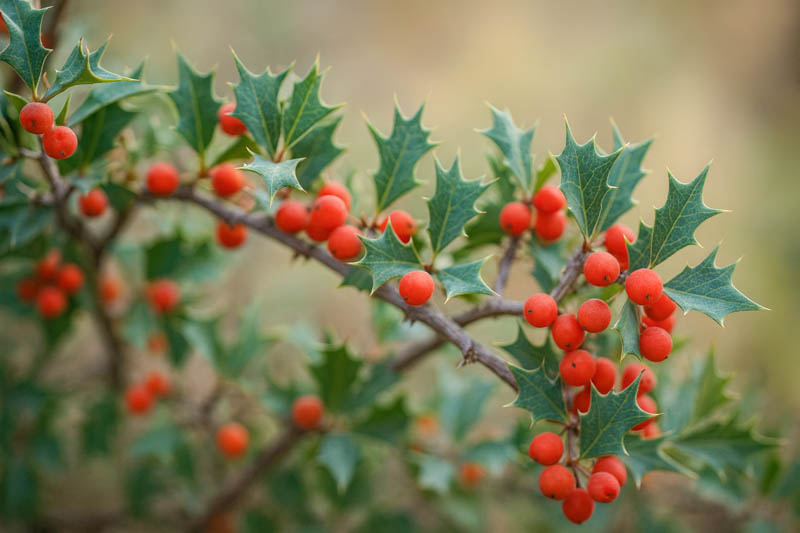
Mahonia trifoliolata is a rounded, evergreen shrub known for its stiff, intricately branching structure and distinctive foliage. The leaves are trifoliate, meaning they are divided into three leaflets, each with sharp, spiny teeth along the margin. The overall effect is reminiscent of a holly shrub, but with a cooler gray green cast that fits perfectly into desert and prairie settings.
Each leaf cluster is about 2 to 4 inches long (5 to 10 cm), presenting as a whorl of tough, holly like leaflets. On older plants, the branching can become wonderfully intricate, creating a dense, twiggy framework that offers excellent shelter for birds and small mammals. This density, combined with the spines, explains why agarita is often used for defensive plantings and privacy hedges in rural and suburban landscapes.
Agarita is native to Arizona, New Mexico, and Texas, extending southward into northern Mexico. In the wild, it is commonly found on:
This rugged native range helps explain why Mahonia trifoliolata is so well suited to drought tolerant Texas gardens, southwestern xeriscapes, and low irrigation landscapes.
Mahonia trifoliolata typically grows at a moderate rate, slowly enlarging into a dense, rounded shrub. While individual plants often stay in the 3 to 5 foot range, they can spread by suckering to form larger thickets over time. This trait is ideal when you want a naturalistic screen or wildlife hedge.
If you prefer a single specimen rather than a colony, remove suckers as they appear. In more natural landscapes, many gardeners allow agarita to form loose colonies that function as bird thickets, windbreaks, and erosion controlling shrub masses.
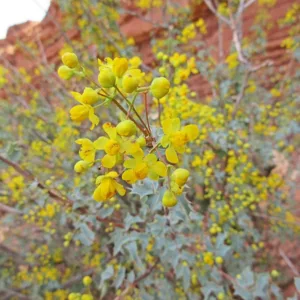
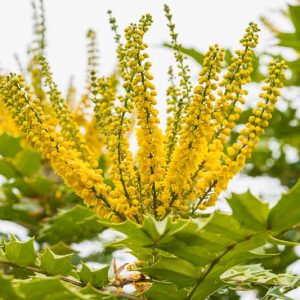
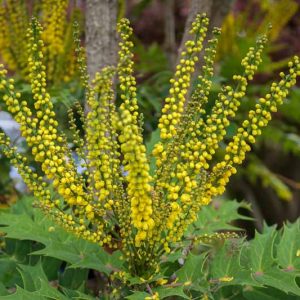
One of agarita’s most charming features is its early spring floral display. In late winter to early spring, before many shrubs have leafed out, Mahonia trifoliolata produces clusters of small, bright yellow, cup shaped flowers tucked along the stems. These flowers are pleasantly fragrant and are visited by early pollinators such as bees and other insects searching for nectar and pollen.
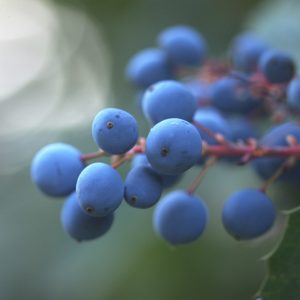
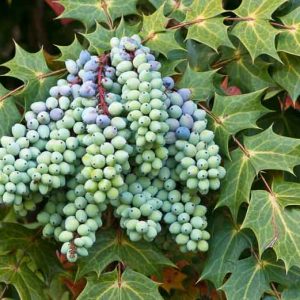
After flowering, the shrub sets round, red berries that ripen from spring into early summer. These fruits are edible and tart and are often used for agarita jelly, jams, and syrups. Songbirds relish the fruit, and the combination of food and cover makes this species extremely valuable in bird friendly landscapes.
The foliage of Mahonia trifoliolata is its year round calling card. Leaves are:
From a design perspective, the combination of cool toned foliage and spiky texture makes agarita a strong accent shrub for desert gardens, rock gardens, and contemporary xeriscapes. It pairs well with soft, fine textured grasses, rounded evergreen mounds, and flowering perennials that can play off its rugged good looks.
Agarita is well adapted to hot summers, low humidity, and alkaline soils. It performs best in climates with dry to moderate rainfall and excellent drainage. It is hardy across much of the southern and central United States where winters are not extreme and soil does not remain wet for long periods.
Because it is both ornamental and practical, Mahonia trifoliolata is one of the most versatile native shrubs for Texas and the Southwest. Use agarita for:
Mahonia trifoliolata is a powerhouse plant for wildlife gardens:
Because agarita thrives with little irrigation or chemical input, it is an excellent choice for low input, bird friendly landscapes.
Agarita is widely considered deer resistant. The combination of tough, spiny leaves and dense branching means it is rarely browsed heavily. In areas with heavy deer pressure, Mahonia trifoliolata can be a valuable structural shrub where many other species are quickly eaten. Best Deer-Resistant Plants for Zone 8
One of the biggest reasons to plant agarita is its exceptional drought tolerance. Once established, it needs little to no supplemental water in most seasons. This makes it perfect for Best Drought-Tolerant Texas Plants for Truly Stunning Xeriscapes style gardens, where conserving water is a priority.
Like many members of the barberry family, Mahonia trifoliolata contains alkaloids in its bark and roots, and it should be treated as an ornamental rather than an edible shrub except for the ripe berries. The fruits are commonly used for jellies and preserves, but other plant parts are not considered edible. As always, supervise children and pets and discourage chewing on non food plant material.
Within its native and adapted range, agarita is generally considered well behaved. It does spread by suckering, especially in favorable conditions, but it does not usually become invasive in managed gardens. In wild or ranch settings, it can form large thickets which are often valued for wildlife and erosion control. If you would rather keep plants in bounds, remove unwanted suckers promptly.
Overall, agarita care comes down to three simple rules: provide full sun, excellent drainage, and minimal summer irrigation.
Plant Mahonia trifoliolata where it receives:
Too much shade can lead to more open, leggy growth and reduced fruiting.
Agarita is highly adaptable but has a few clear preferences:
This makes Mahonia trifoliolata ideal for thin, rocky soils, slopes, and difficult sites where irrigation is limited.
This is a shrub that thrives on neglect:
Mulch can be helpful during the establishment phase but is optional once plants are mature.
Mahonia trifoliolata maintenance is minimal.
In suitable conditions, Mahonia trifoliolata is generally a trouble free, low maintenance shrub.
Mahonia trifoliolata, usually called agarita or agarito, is a native evergreen shrub from Texas, New Mexico, Arizona, and northern Mexico. It forms dense, rounded mounds with gray green trifoliate leaves that have sharp spines, fragrant yellow spring flowers, and red berries. Gardeners grow agarita as a drought tolerant desert shrub for xeriscapes, wildlife hedges, and low maintenance native landscapes.
In the wild, agarita grows on rocky hillsides, dry prairies, canyons, and brushy slopes across central and west Texas, New Mexico, Arizona, and into northern Mexico. It thrives in hot, dry climates with full sun, low to moderate rainfall, and well drained, often limestone based soils. In gardens, agarita performs best in regions with mild winters and hot summers where drought tolerant plants are needed.
A mature agarita shrub typically reaches about 2 to 6 feet tall and wide, though older plants in ideal conditions can become a bit larger. The dense branching and suckering habit mean that individual plants can gradually form thickets. When planning a hedge or screen, allow at least 4 to 6 feet of width per plant so each agarita can reach its natural size.
Agarita is highly drought tolerant once established and is an excellent choice for low water gardens and xeriscapes. During the first growing season, water deeply but infrequently to help the shrub root in. After that, most established agarita shrubs only need supplemental water during prolonged drought or in extremely hot, exposed sites. Overwatering or constantly wet soil can cause more problems than underwatering.
Agarita prefers full sun and sharply drained soil. It tolerates light shade, especially in very hot regions, but flowering and berry production are best with at least six hours of direct sun. The shrub loves rocky, gravelly, sandy, and limestone soils and does well in poor, alkaline ground where many plants fail. Heavy clay that stays wet is the main soil type to avoid for good agarita shrub care.
Yes, ripe agarita berries are edible and are well known for their tart, tangy flavor. The fruits are most often harvested in spring and early summer and used to make agarita jelly, jam, syrup, or juice. Because the shrub has sharp spines, gardeners usually wear gloves and sometimes shake the branches over a sheet or tarp to collect the berries. Only the ripe berries are eaten, not the leaves, stems, or roots.
Agarita is a broadleaf evergreen shrub that keeps its foliage all year in most climates where it is hardy. The trifoliate leaves are gray green to blue green and have a holly like, spiny texture. In late winter and early spring, fragrant yellow flowers appear, followed by red berries, so the plant provides year round interest with evergreen foliage, seasonal blooms, and colorful fruit.
Agarita naturally spreads by suckering and can gradually form clumps or thickets, especially in favorable sites. In its native and adapted range it is not usually considered invasive, but it can occupy a sizeable area if suckers are not managed. In a designed garden, you can keep agarita in bounds by removing unwanted suckers and planting shrubs with enough space. In large native plantings, the ability to form thickets is often considered a benefit for wildlife cover and erosion control.
Agarita typically blooms in late winter to early spring, depending on local climate. The small, bright yellow flowers open along the stems and have a sweet fragrance that attracts early pollinators. Soon after flowering, the shrub sets clusters of green fruit that ripen to red berries from spring into early summer. This early flowering and fruiting period makes agarita especially valuable for wildlife that needs nectar and berries at the start of the growing season.
Agarita is an excellent shrub for wildlife and bird friendly gardens. The fragrant yellow flowers provide nectar and pollen for early pollinators, the red berries feed songbirds and small mammals, and the dense, thorny branching gives birds safe nesting and roosting spots. Because agarita is drought tolerant, long lived, and needs little chemical input, it fits perfectly into sustainable native plantings and habitat gardens.
Updated: November 2025
| Hardiness |
7 - 9 |
|---|---|
| Plant Type | Shrubs |
| Plant Family | Berberidaceae |
| Genus | Mahonia |
| Common names | Agarita, Mahonia |
| Exposure | Full Sun, Partial Sun |
| Season of Interest | Spring (Early, Mid, Late), Summer (Early, Mid, Late), Fall, Winter |
| Height | 2' - 6' (60cm - 180cm) |
| Spread | 2' - 6' (60cm - 180cm) |
| Spacing | 72" (180cm) |
| Maintenance | Low, Average |
| Water Needs | Low, Average |
| Soil Type | Chalk, Clay, Loam, Sand |
| Soil pH | Acid, Alkaline, Neutral |
| Soil Drainage | Well-Drained |
| Characteristics | Fragrant, Showy, Evergreen, Fruit & Berries |
| Native Plants | United States, Southwest, Texas, Arizona, New Mexico |
| Tolerances | Drought, Deer |
| Attracts | Birds |
| Garden Uses | Banks And Slopes, Beds And Borders |
| Garden Styles | Informal and Cottage, Prairie and Meadow |
| Toxic to Humans | No known toxicity |
| Toxic to Cats | No known toxicity |
| Toxic to Dogs | No known toxicity |
| Toxic to Horses | No known toxicity |


| Hardiness |
7 - 9 |
|---|---|
| Plant Type | Shrubs |
| Plant Family | Berberidaceae |
| Genus | Mahonia |
| Common names | Agarita, Mahonia |
| Exposure | Full Sun, Partial Sun |
| Season of Interest | Spring (Early, Mid, Late), Summer (Early, Mid, Late), Fall, Winter |
| Height | 2' - 6' (60cm - 180cm) |
| Spread | 2' - 6' (60cm - 180cm) |
| Spacing | 72" (180cm) |
| Maintenance | Low, Average |
| Water Needs | Low, Average |
| Soil Type | Chalk, Clay, Loam, Sand |
| Soil pH | Acid, Alkaline, Neutral |
| Soil Drainage | Well-Drained |
| Characteristics | Fragrant, Showy, Evergreen, Fruit & Berries |
| Native Plants | United States, Southwest, Texas, Arizona, New Mexico |
| Tolerances | Drought, Deer |
| Attracts | Birds |
| Garden Uses | Banks And Slopes, Beds And Borders |
| Garden Styles | Informal and Cottage, Prairie and Meadow |
| Toxic to Humans | No known toxicity |
| Toxic to Cats | No known toxicity |
| Toxic to Dogs | No known toxicity |
| Toxic to Horses | No known toxicity |
How many Mahonia trifoliolata (Agarita) do I need for my garden?
| Plant | Quantity | |
|---|---|---|
| Mahonia trifoliolata (Agarita) | N/A | Buy Plants |
Create a membership account to save your garden designs and to view them on any device.
Becoming a contributing member of Gardenia is easy and can be done in just a few minutes. If you provide us with your name, email address and the payment of a modest $25 annual membership fee, you will become a full member, enabling you to design and save up to 25 of your garden design ideas.
Join now and start creating your dream garden!
Create a membership account to save your garden designs and to view them on any device.
Becoming a contributing member of Gardenia is easy and can be done in just a few minutes. If you provide us with your name, email address and the payment of a modest $25 annual membership fee, you will become a full member, enabling you to design and save up to 25 of your garden design ideas.
Join now and start creating your dream garden!