Golden Canna, Bandanna Of The Everglades, Bandana Of The Everglades, Yellow Canna, Southern Marsh Canna
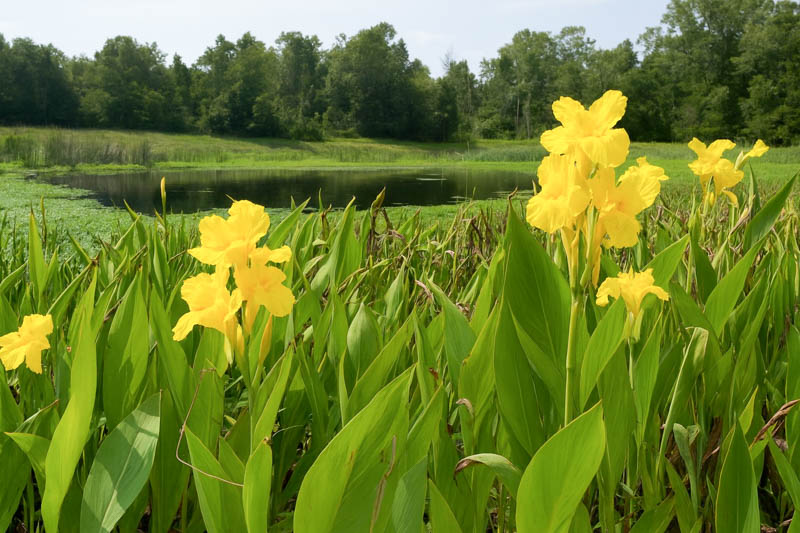


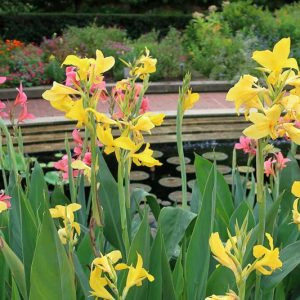
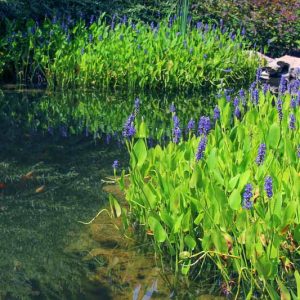
If you want a plant that looks like a tropical canna lily but actually loves having its feet wet, Canna flaccida, the Golden canna, is your new best friend. This rhizomatous perennial thrives right at the water’s edge, filling the margins of ponds, streams, and rain gardens with bold, paddle-shaped leaves and soft, ruffled yellow blooms.
Despite its exotic, marsh-loving look, Canna flaccida care is refreshingly simple. Give it full sun, rich wet soil or shallow water, and a bit of fertilizer in spring, and it will reward you with months of color and lush foliage. It is one of the best aquatic cannas for pond margins, bog gardens, water features, and large containers, especially in warm to mild climates.
Summary: Rhizomatous perennial aquatic canna with upright clumps of broad, tropical foliage and soft yellow flowers, ideal for pond edges and wet sites.
Use: Pond margins, shallow water planting, bog gardens, rain gardens, naturalized wetlands, large containers, water features, tropical and wildlife gardens.
Highlight: Showy yellow canna lily flowers, bold foliage, excellent for wet soil and shallow water, great vertical and textural accent for water gardens and modern landscapes.
Note: A native species in parts of the southeastern United States, often used in ecological plantings and constructed wetlands for water polishing and wildlife value.
| Botanical Name | Canna flaccida Salisb. |
|---|---|
| Family | Cannaceae (canna family) |
| Common Names | Golden canna, Swamp canna, Water canna, Aquatic canna, Yellow canna lily |
| Native Range | Native to the coastal plain of the southeastern United States from South Carolina through Georgia, Florida, Alabama, Mississippi and Louisiana, west to Texas, where it grows along lake shores, ditches, and shallow freshwater habitats. |
| Plant Type and Habit | Herbaceous perennial with upright, clumping growth from fleshy rhizomes. Dies back where frosted and resprouts in spring. |
| Hardiness (approx. USDA) | Typically hardy in about USDA Zones 8 to 11. In colder zones, rhizomes can be lifted and stored frost free for winter or grown as an annual aquatic canna. |
| Size | Usually 3 to 6 ft. tall (90 to 180 cm) and about 3 to 4 ft. wide (90 to 120 cm), forming bold clumps along water edges. |
| Sun and Exposure | Full sun is best for flowering. Tolerates light or dappled shade, especially in hot climates. |
| Soil | Prefers rich, organically improved, constantly moist to wet soil. Thrives in shallow water at the margins of ponds (up to about 4 to 6 in. or 10 to 15 cm deep). |
| Seasonal Interest | Soft yellow flowers from late spring or early summer to fall, plus bold tropical foliage during the warm season. |
| Primary Uses | Pond margins, bog gardens, wet meadows, rain gardens, naturalized shorelines, large containers in water gardens, tropical style beds, wildlife and pollinator gardens. |
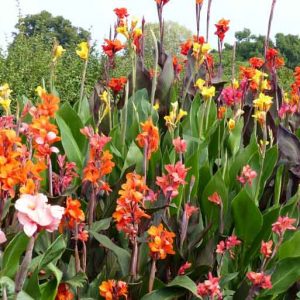
Canna flaccida is a rhizomatous, herbaceous perennial grown for its lush foliage and soft yellow canna lily type flowers. Upright stems emerge from thick underground rhizomes, carrying broad, paddle shaped leaves that immediately give a planting a tropical, water garden feel.
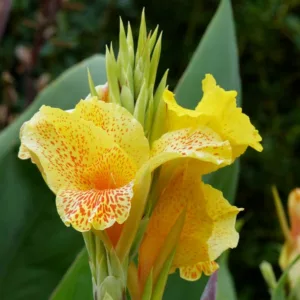
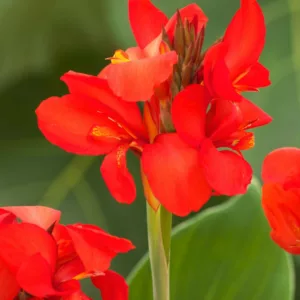
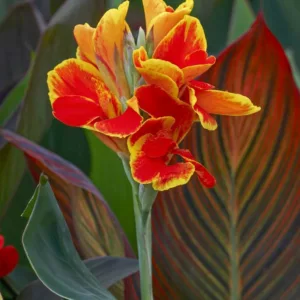
The flowers are typically pale to medium yellow, with slightly ruffled petals that look delicate but stand up well in summer heat. Each flower stalk bears a succession of blooms, so a mature clump of Golden canna can be in color for weeks at a time.
Golden canna is native to the southeastern United States, especially coastal plain wetlands, marshes, and pond edges. You will find it naturally in Florida and neighboring states, where it grows in shallow freshwater, roadside ditches, and seasonally flooded flats.
Because it is native and well adapted to wet sites, Canna flaccida is frequently used in restoration projects, naturalized shorelines, and stormwater ponds, where it provides both beauty and ecological function.
This aquatic canna forms clumping stands from spreading rhizomes. It is vigorous in the right conditions, steadily enlarging to form bold drifts along the water’s edge. In warm regions it can stay leafy for many months, while in cooler climates it dies back after hard frost and returns reliably in spring if rhizomes are protected.
Rhizomes creep slowly in natural soil, but in pond baskets and containers they are easy to manage and divide. Think of Golden canna as a medium sized, well behaved canna lily tailored for wet places.
Bloom time extends from late spring or early summer through fall, depending on climate. The flower spikes rise above the foliage with elegant, soft yellow blooms that glow in morning and evening light.
After flowering, Canna flaccida produces rounded green seed capsules that mature and turn brown. These can be left for a natural look or removed to encourage more flowering. Seeds can be collected for propagation, although rhizome division is quicker.
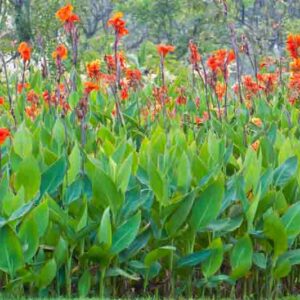
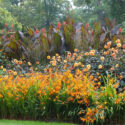
The foliage of Golden canna is one of its best features. Leaves are bright to medium green, broad, and paddle shaped, often 12 to 18 in. (30 to 45 cm) long, creating a lush, architectural effect. Planted en masse, they create a strong vertical accent along water.
In frost free climates the plant may hold foliage almost year round. In cooler regions it is a classic warm season pond plant, emerging in spring and carrying the water garden through late summer with bold texture and repeated bloom.
Canna flaccida is generally hardy in USDA Zones 8 to 11. In the warmer part of its range, rhizomes can overwinter in the ground or in pond margins with no special protection. In colder climates, treat it like other canna lilies: lift rhizomes after frost, store them in a cool, frost free place, and replant in spring once danger of hard frost has passed.
You can use Golden canna in many wet or water adjacent garden settings:
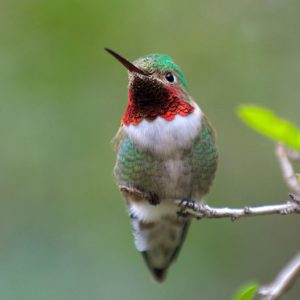
Golden canna is highly valued in wildlife friendly water gardens. The flowers provide nectar for bees, butterflies, and hummingbirds, while dense clumps create cover for frogs, dragonflies, and other pond life. It is a larval host to skipper butterflies.
In ecological landscapes, Canna flaccida is often planted with other native wetland species to create multi layered habitat, stabilize shorelines, and help filter runoff before it enters ponds and streams.
Canna flaccida, Golden canna, is widely listed as an edible species. Extension references, including NC State University, note that all parts are edible: the flowers can be used fresh in salads, the large leaves can wrap foods such as tamales, and the rhizomes are a starchy, canna-like root that may be cooked and eaten.
As with any edible flower or ornamental turned food crop, only harvest from correctly identified plants that have been grown without pesticides not labeled for edible use and handled hygienically. While Golden canna is generally regarded as safe and edible, people with very sensitive systems or plant allergies should try small amounts first.
In its native range, Golden canna can form dense stands in wetlands, which is exactly what many restoration projects want. In home gardens it is usually easy to manage by dividing clumps and removing unwanted rhizomes.
In sensitive natural areas outside its native range, check local guidance before planting any aquatic species. In most garden settings it behaves as a vigorous but manageable aquatic perennial.
Golden canna prefers:
Golden canna is low maintenance once established:
Canna flaccida is easy to propagate:
Golden canna is generally tough and trouble free in the right conditions, but a few issues can appear:

Golden canna is a rhizomatous perennial plant native to wetlands of the southeastern United States. It produces broad green leaves and soft yellow canna-like flowers. It naturally grows in saturated soils, shallow freshwater, and pond margins, making it ideal for water gardens and bog plantings.
It is native to the coastal plain regions of the southeastern United States, especially Florida and the Gulf Coast. In the wild, it grows in marshes, ditches, lake edges, swamps, and shallow freshwater habitats.
Golden canna is hardy in USDA Zones 8–11. In warm climates it overwinters outdoors, even in saturated soil. In colder climates, gardeners typically lift and store the rhizomes to protect them from freezing temperatures.
It typically grows 3-6feet tall and 3-4 feet wide. Size varies with water depth, sunlight, and soil fertility, but it generally remains smaller and more refined than many hybrid garden cannas.
Golden canna thrives in full sun, rich moist to wet soil, and shallow water up to about 4–6 inches deep. It does not tolerate drought and performs best when the soil remains consistently saturated.
Yes. Full sun produces the strongest stems and most abundant blooms. It tolerates light shade, but flowering is reduced and growth becomes softer and more open.
It blooms from late spring or early summer through late summer and often into fall in warm regions. The yellow flowers appear in succession on upright stalks above the foliage.
In its native range, it forms dense stands in wetlands, which is ecologically normal. In gardens it spreads by rhizomes but is easily controlled by division or planting in containers. Outside its native range, gardeners should check local guidance for aquatic plants. In most ornamental ponds and bog gardens it is considered a vigorous but manageable clumping perennial that is easily controlled by division or by growing it in containers.
University of Florida IFAS – Canna flaccida (golden canna)
Lady Bird Johnson Wildflower Center – Canna flaccida
Updated: December 2025
| Hardiness |
8 - 11 |
|---|---|
| Plant Type | Perennials |
| Plant Family | Cannaceae |
| Genus | Canna |
| Common names | Canna, Canna Lily |
| Exposure | Full Sun, Partial Sun |
| Season of Interest | Spring (Late), Summer (Early, Mid, Late), Fall |
| Height | 3' - 6' (90cm - 180cm) |
| Spread | 3' - 4' (90cm - 120cm) |
| Spacing | 36" - 48" (90cm - 120cm) |
| Maintenance | Average |
| Water Needs | Average |
| Soil Type | Clay, Loam, Sand |
| Soil pH | Acid, Alkaline, Neutral |
| Soil Drainage | Moist but Well-Drained |
| Characteristics | Showy |
| Native Plants | United States, Southeast, Louisiana, Mississippi, South Carolina, Alabama, Florida, Georgia, Southwest, Texas |
| Tolerances | Deer, Rabbit, Wet Soil, Humidity |
| Attracts | Bees, Butterflies, Hummingbirds, Birds |
| Garden Uses | Ponds And Streams, Rain Gardens, Water Gardens |
| Toxic to Humans | No known toxicity |
| Toxic to Cats | No known toxicity |
| Toxic to Dogs | No known toxicity |
| Toxic to Horses | No known toxicity |
| Hardiness |
8 - 11 |
|---|---|
| Plant Type | Perennials |
| Plant Family | Cannaceae |
| Genus | Canna |
| Common names | Canna, Canna Lily |
| Exposure | Full Sun, Partial Sun |
| Season of Interest | Spring (Late), Summer (Early, Mid, Late), Fall |
| Height | 3' - 6' (90cm - 180cm) |
| Spread | 3' - 4' (90cm - 120cm) |
| Spacing | 36" - 48" (90cm - 120cm) |
| Maintenance | Average |
| Water Needs | Average |
| Soil Type | Clay, Loam, Sand |
| Soil pH | Acid, Alkaline, Neutral |
| Soil Drainage | Moist but Well-Drained |
| Characteristics | Showy |
| Native Plants | United States, Southeast, Louisiana, Mississippi, South Carolina, Alabama, Florida, Georgia, Southwest, Texas |
| Tolerances | Deer, Rabbit, Wet Soil, Humidity |
| Attracts | Bees, Butterflies, Hummingbirds, Birds |
| Garden Uses | Ponds And Streams, Rain Gardens, Water Gardens |
| Toxic to Humans | No known toxicity |
| Toxic to Cats | No known toxicity |
| Toxic to Dogs | No known toxicity |
| Toxic to Horses | No known toxicity |
How many Canna flaccida (Golden Canna) do I need for my garden?
| Plant | Quantity | |
|---|---|---|
| Canna flaccida (Golden Canna) | N/A | Buy Plants |
Create a membership account to save your garden designs and to view them on any device.
Becoming a contributing member of Gardenia is easy and can be done in just a few minutes. If you provide us with your name, email address and the payment of a modest $25 annual membership fee, you will become a full member, enabling you to design and save up to 25 of your garden design ideas.
Join now and start creating your dream garden!
Create a membership account to save your garden designs and to view them on any device.
Becoming a contributing member of Gardenia is easy and can be done in just a few minutes. If you provide us with your name, email address and the payment of a modest $25 annual membership fee, you will become a full member, enabling you to design and save up to 25 of your garden design ideas.
Join now and start creating your dream garden!