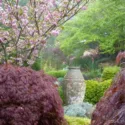
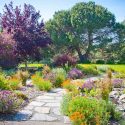
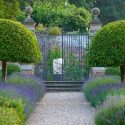
Cherry Plum 'Krauter Vesuvius', Krauter Vesuvius Cherry Plum, Krauter Vesuvius Myrobalan plum
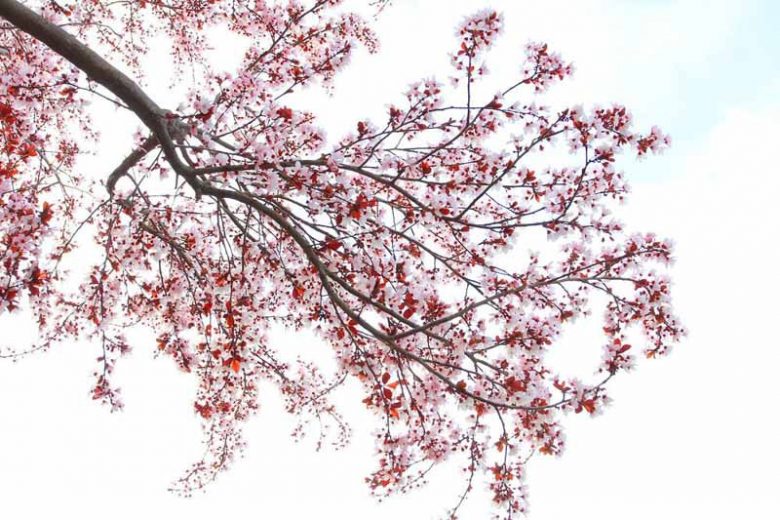


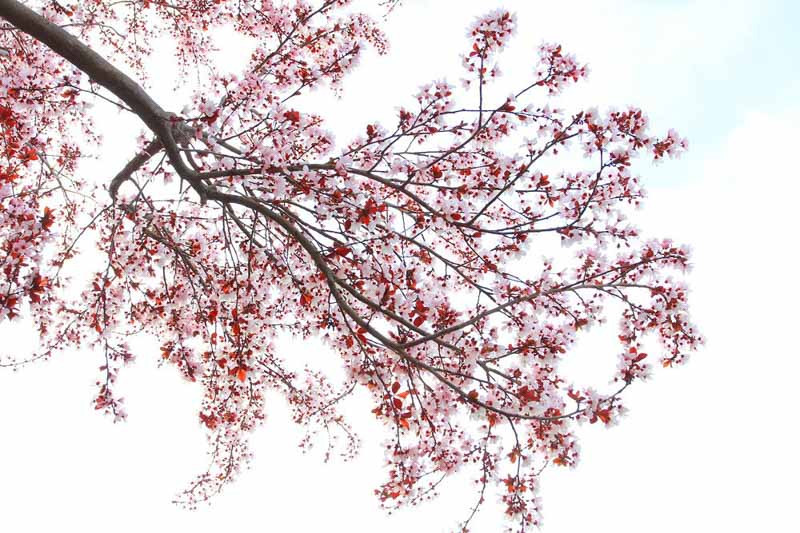
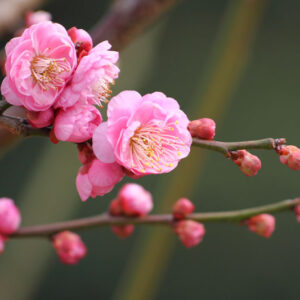
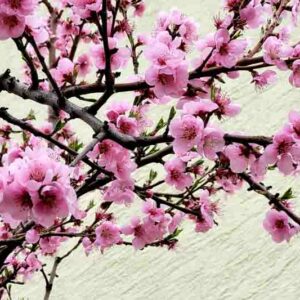
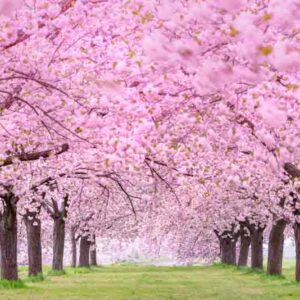
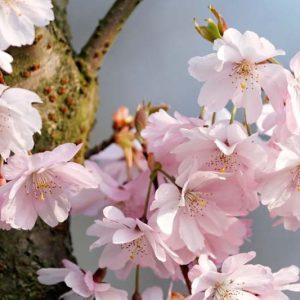
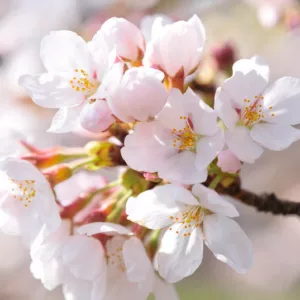
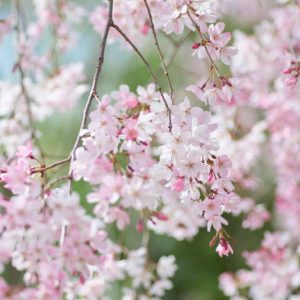
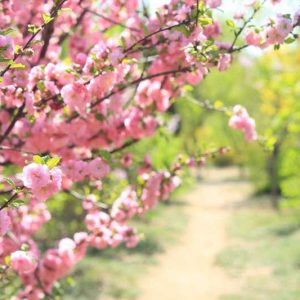
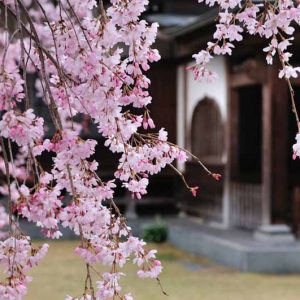
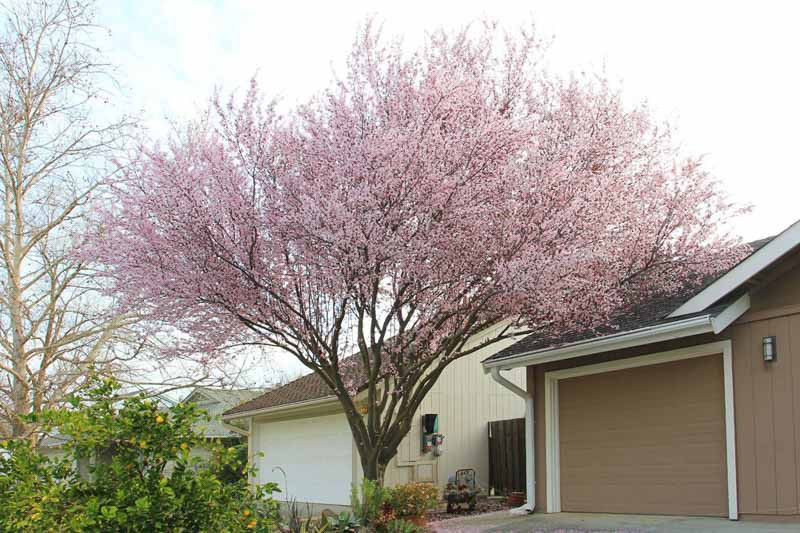
Summary: ‘Krauter Vesuvius’ is the go-to narrow purple-leaf plum for streets, side yards, and small gardens. It flowers in early spring with pale pink blossoms, then carries deep wine-purple foliage through summer.
Also sold as: ‘Krauter’s Vesuvius’
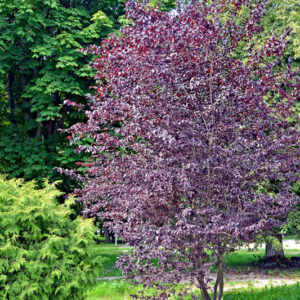
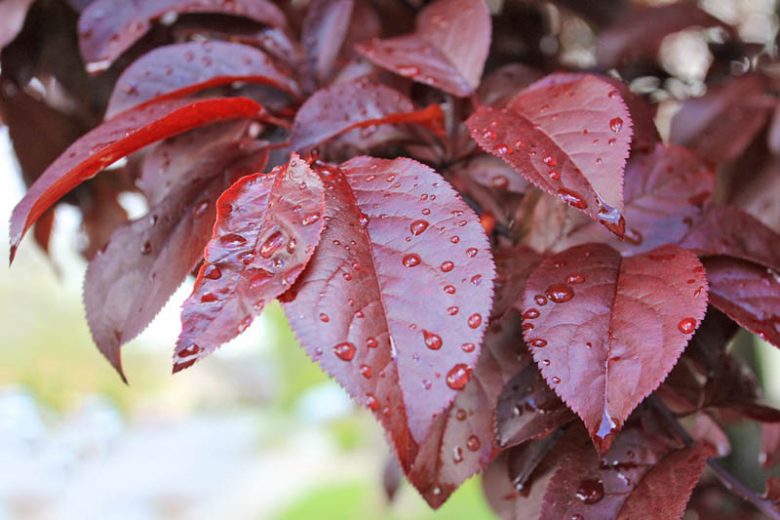
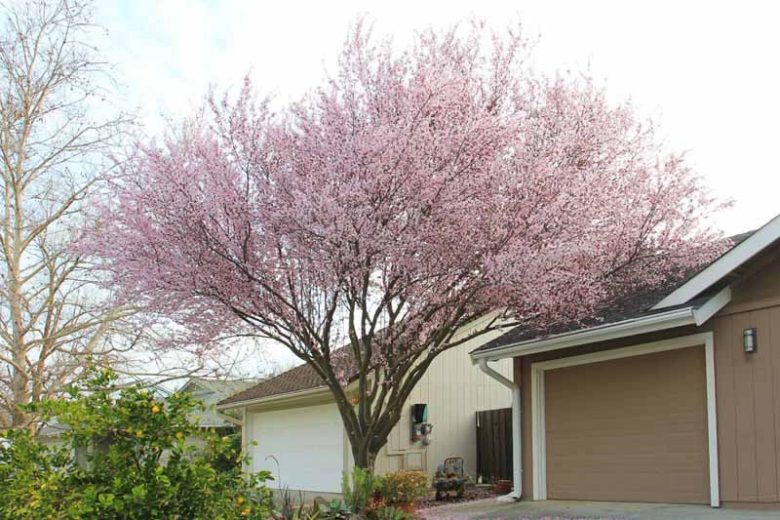
Look: Upright to oval crown with a tidy silhouette. Leaves are saturated burgundy that can read nearly black in strong sun.
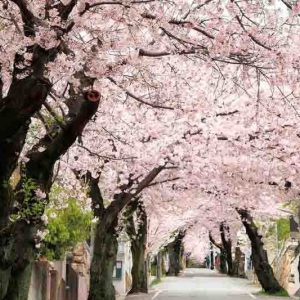
Use: Accent tree, allee, narrow screen, front walkway focal point. Fruit is small and usually light to moderate, good for wildlife and occasional kitchen use.
Vibe: Sophisticated color without demanding space or fussy pruning.
| Botanical Name | Prunus cerasifera ‘Krauter Vesuvius’ |
|---|---|
| Family | Rosaceae |
| Common Names | Krauter Vesuvius plum, Krauter’s Vesuvius, purple leaf plum, flowering plum |
| Plant Type and Habit | Deciduous small tree with upright to oval habit; naturally narrower than many purple plums |
| Hardiness (USDA) | Zones 5 to 8 |
| Size | About 15 to 25 ft tall by 10 to 15 ft wide; often 15 to 20 ft with light yearly pruning |
| Sun and Exposure | Full sun for richest leaf color; tolerates part shade with some midsummer fade |
| Soil | Average, well drained soil. Works in sandy loam to clay if drainage is decent. pH near neutral is fine |
| Bloom and Leaf Color | Early spring pale pink flowers on bare wood; foliage emerges wine-purple and holds color through summer; fragrance is light to faint |
| Fruit | Small red to burgundy plums; usually light to moderate crops; edible and attractive to birds; harvest and clean up drops where self-seeding is a concern |
| Growth Rate and Lifespan | Moderate to fast while young. Landscape life commonly 20 to 30 years with good care |
| Pollination | Often partially self-fruitful; yield and fruit size improve with another cherry plum nearby that overlaps bloom |
| Tolerance | Low to moderate salt tolerance; avoid coastal spray and de-icing splash. Some drought tolerance once established |
| Primary Uses | Specimen, narrow street tree, small allee, mixed border anchor, wildlife value, modest kitchen use |
Think of ‘Krauter Vesuvius’ as the espresso shot of color in a compact package. It wakes the street in early spring with a foam of pale blossoms, then settles into deep burgundy that makes greens look brighter and silvers look sleek. If you have a narrow side yard or a front lawn that needs a single statement, this cherry plum tree delivers personality without hogging space. Keep the basics right and it is forgiving. Sun, drainage, a little shaping, and you get a small tree that shows up early and keeps your garden feeling designed long after spring. Avoid hot, reflective corners without irrigation since leaves can crisp in those microclimates.
Notes: sizes reflect typical landscape outcomes with light annual pruning. Color depth improves in full sun and leaner soils.
| Cultivar | Habit & Size | Leaf Color | Best For | Standout Note |
|---|---|---|---|---|
| Krauter Vesuvius | Upright to oval, about 15–25 ft tall x 10–15 ft wide | Deep, even burgundy | Narrow streets, side yards, allees | Slim profile with reliable color |
| Thundercloud | Rounded, about 15–20 ft x 15–20 ft | Purple through the season | Front yards, lawn specimens | Balanced canopy and soft pink bloom |
| Nigra | Rounded to oval, about 15–20 ft x 15–20 ft | Very dark purple, nearly black in sun | High contrast borders, modern palettes | The inkiest foliage of the group |
| Newport | Rounded, about 15–20 ft x 15–20 ft | Purple with bronze spring flush | Cooler climates with spring chill | Color holds well into late summer |
| Crimson Pointe | Very columnar, about 20–25 ft x 6–8 ft | Deep burgundy | Tight screens, formal lines | True pillar form for ultra narrow spots |
| Pissardii | Rounded to spreading, about 15–25 ft x 15–25 ft | Red purple maturing to deep burgundy | Classic lawns, mixed borders, cottage and traditional schemes | The historic standard for purple foliage in small trees |
‘Krauter Vesuvius’ is spirited and fairly tough, yet it shares the usual challenges of stone fruits. Smart placement and sanitation keep most issues minor.
| Season | Tasks |
|---|---|
| Late winter | Shape lightly, remove crossing wood, top-dress with compost, refresh mulch |
| Spring | Enjoy bloom, watch for aphids, water during dry spells, thin developing fruit if branches overload |
| Early to midsummer | Harvest in waves, net if needed, prune watersprouts after picking |
| Fall | Deep water before winter in dry climates, clean up fallen fruit and leaves |
| Winter | Check stakes, inspect for cankers, plan any structure tweaks for next season |
Fruit on ‘Krauter Vesuvius’ is a bonus rather than the headline. Expect light to occasional moderate crops. The plums are small, tart-sweet, and lovely for a handful of fresh snacks or a quick pan sauce.
A purple-leaf selection of Prunus cerasifera valued for early pink blossom and deep burgundy foliage on a naturally upright, narrow tree.
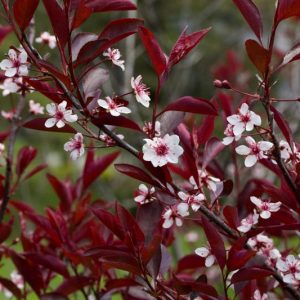
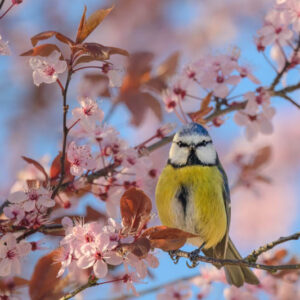
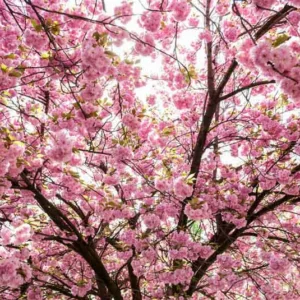
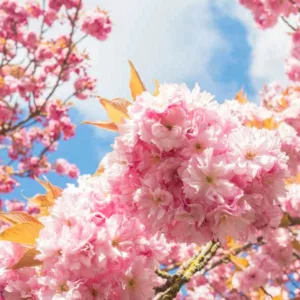
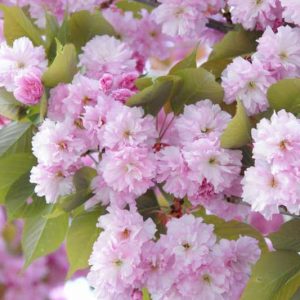
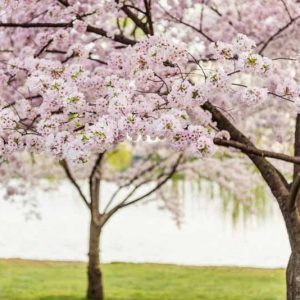
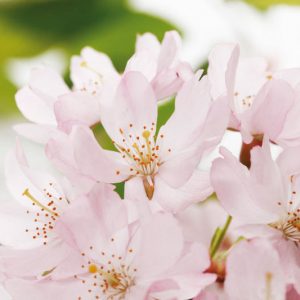
In mid-spring, it produces masses of fragrant pale pink flowers. Leaves emerge deep red, turn dark reddish-purple, and stay vibrant all season.
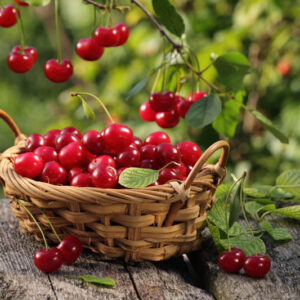
Fruits are small, reddish-purple, and edible. They attract birds and other wildlife but are not typically considered high-quality for human consumption.
Prune lightly in late winter or early spring to maintain shape and remove dead or diseased branches. Minimal pruning required.
Moderately salt-tolerant, somewhat drought-tolerant once established, but regular watering helps young trees
Typically best for landscapes and small gardens; larger root system may not do well long-term in containers
Used as an accent tree, hedge, or specimen in traditional, cottage, and Japanese-inspired gardens.
Plant ‘Krauter Vesuvius’ if you want an early spring sparkle and a grown-up color story that lasts through summer. Give it sun, decent drainage, and a little shaping after blossom. It will pay you back with a refined silhouette, deep foliage that ties a border together, and a reassuring sense that your garden woke up on time and dressed well for the season.
| Hardiness |
5 - 8 |
|---|---|
| Heat Zones |
1 - 8 |
| Climate Zones | 3, 3A, 3B, 4, 5, 6, 7, 8, 9, 10, 11, 12, 13, 14, 15, 16, 17, 18, 19, 20, 21, 22 |
| Plant Type | Trees |
| Plant Family | Rosaceae |
| Genus | Prunus - Flowering Cherry Tree |
| Common names | Cherry Plum, Plum |
| Exposure | Full Sun, Partial Sun |
| Season of Interest | Spring (Mid, Late), Summer (Early, Mid, Late) |
| Height | 15' - 20' (4.6m - 6.1m) |
| Spread | 15' - 20' (4.6m - 6.1m) |
| Maintenance | High |
| Water Needs | Average |
| Soil Type | Chalk, Clay, Loam, Sand |
| Soil pH | Acid, Alkaline, Neutral |
| Soil Drainage | Moist but Well-Drained, Well-Drained |
| Characteristics | Fragrant, Showy, Fruit & Berries |
| Tolerances | Heat |
| Attracts | Bees, Butterflies, Birds |
| Garden Uses | Beds And Borders, Hedges And Screens |
| Garden Styles | City and Courtyard, Informal and Cottage, Japanese Garden, Traditional Garden |
| Toxic to Humans | No known toxicity |
| Toxic to Cats | Toxic |
| Toxic to Dogs | Toxic |
| Toxic to Horses | Toxic |


| Hardiness |
5 - 8 |
|---|---|
| Heat Zones |
1 - 8 |
| Climate Zones | 3, 3A, 3B, 4, 5, 6, 7, 8, 9, 10, 11, 12, 13, 14, 15, 16, 17, 18, 19, 20, 21, 22 |
| Plant Type | Trees |
| Plant Family | Rosaceae |
| Genus | Prunus - Flowering Cherry Tree |
| Common names | Cherry Plum, Plum |
| Exposure | Full Sun, Partial Sun |
| Season of Interest | Spring (Mid, Late), Summer (Early, Mid, Late) |
| Height | 15' - 20' (4.6m - 6.1m) |
| Spread | 15' - 20' (4.6m - 6.1m) |
| Maintenance | High |
| Water Needs | Average |
| Soil Type | Chalk, Clay, Loam, Sand |
| Soil pH | Acid, Alkaline, Neutral |
| Soil Drainage | Moist but Well-Drained, Well-Drained |
| Characteristics | Fragrant, Showy, Fruit & Berries |
| Tolerances | Heat |
| Attracts | Bees, Butterflies, Birds |
| Garden Uses | Beds And Borders, Hedges And Screens |
| Garden Styles | City and Courtyard, Informal and Cottage, Japanese Garden, Traditional Garden |
| Toxic to Humans | No known toxicity |
| Toxic to Cats | Toxic |
| Toxic to Dogs | Toxic |
| Toxic to Horses | Toxic |
How many Prunus cerasifera ‘Krauter Vesuvius’ (Cherry Plum) do I need for my garden?
| Plant | Quantity | |
|---|---|---|
| Prunus cerasifera ‘Krauter Vesuvius’ (Cherry Plum) | N/A | Buy Plants |
Create a membership account to save your garden designs and to view them on any device.
Becoming a contributing member of Gardenia is easy and can be done in just a few minutes. If you provide us with your name, email address and the payment of a modest $25 annual membership fee, you will become a full member, enabling you to design and save up to 25 of your garden design ideas.
Join now and start creating your dream garden!
Create a membership account to save your garden designs and to view them on any device.
Becoming a contributing member of Gardenia is easy and can be done in just a few minutes. If you provide us with your name, email address and the payment of a modest $25 annual membership fee, you will become a full member, enabling you to design and save up to 25 of your garden design ideas.
Join now and start creating your dream garden!