Skeleton-leaf Goldeneye, Skeleton Leaf Goldeneye, Resinbush, Goldeneye, Golden Eye Skeleton Bush
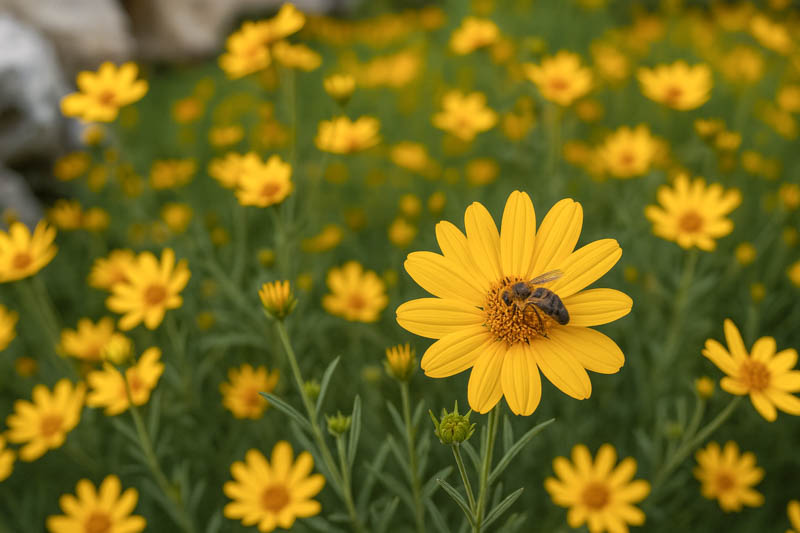
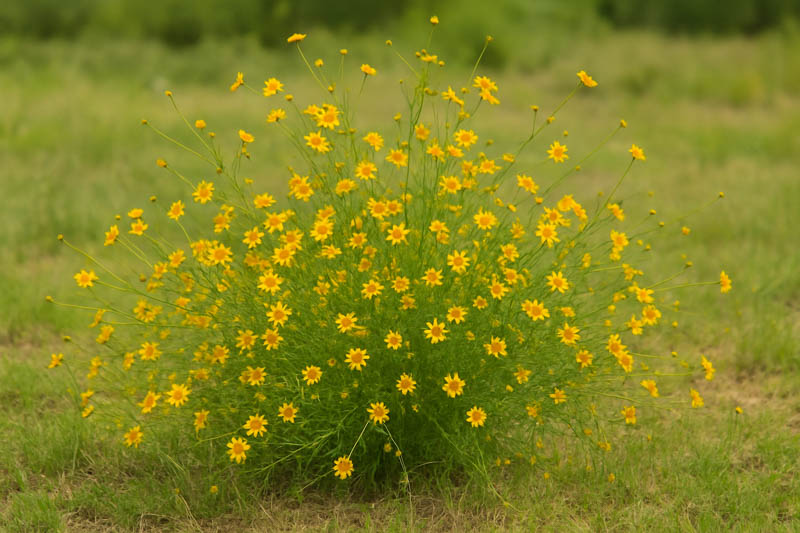


If you love the idea of a bright, low-maintenance landscape that laughs at heat and drought, Viguiera stenoloba is worth serious attention. Often called skeleton-leaf goldeneye, goldeneye daisy, or resinbush, this compact native shrub covers itself in sunny, daisy-like yellow flowers from late spring through fall. It thrives in hot, dry, rocky soils, needs very little water once established, and turns any sunny slope, curb strip, or pollinator border into a long-blooming, wildlife-friendly display.
Summary: Compact, drought-tolerant native shrub for hot, sunny sites, rocky slopes, and low-water pollinator gardens in the southern and southwestern United States.
Use: Xeriscapes, slopes and banks, native meadows, mixed borders, hellstrips, containers, and pollinator strips.
Highlight: Masses of golden-yellow daisy flowers from late spring to fall over fine, evergreen to semi-evergreen foliage.
Note: Needs excellent drainage; ideal for dry, rocky soils but not for poorly drained, constantly wet clay.
| Botanical Name | Viguiera stenoloba |
|---|---|
| Family | Asteraceae (sunflower family) |
| Common Names | Skeleton-leaf goldeneye, skeleton leaf goldeneye, goldeneye daisy, resinbush |
| Native Range | Dry, rocky regions of South and West Texas, New Mexico, and northern Mexico, often on desert or sub-desert slopes, limestone outcrops, and thin, stony soils. |
| Plant Type and Habit | Small, mounded shrub, evergreen to semi-evergreen in mild climates, with woody stems and airy, rounded form. |
| Hardiness (USDA) | Typically Zones 6 to 9; hardy to around -10°F in well-drained soil, evergreen in warmer zones and semi-evergreen where winters are cooler. |
| Size | About 2 to 4 ft tall and 2 to 4 ft wide, forming a rounded, bushy mound when given sun and space. |
| Sun and Exposure | Full sun is best; takes light afternoon shade, especially in very hot regions, as long as soil drains freely. |
| Soil | Thrives in well-drained, rocky or sandy soils, including caliche and limestone; adapts to sand, loam, and clay if drainage is good and watering is light. |
| Seasonal Interest | Bright yellow daisy flowers from late spring or early summer into fall over fine, filament-like foliage that often stays green through winter in mild climates. |
| Primary Uses | Xeric borders, sunny banks and slopes, naturalistic meadows, large-scale groundcovers, roadside plantings, wildlife gardens, and low-water pollinator beds. |
Skeleton-leaf goldeneye is a compact, mounded shrub with slender, thread-like leaves and a naturally rounded silhouette. The foliage is deep green to bluish green, often aromatic and slightly resinous to the touch, giving the plant a distinctive texture even when it is not in bloom.
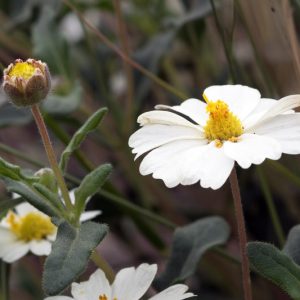
From late spring into fall, woody stems carry a profusion of bright golden-yellow, daisy-shaped flowers. Each bloom is about the size of a quarter, with a sunny yellow center and a ring of ray petals that stand out sharply against the fine foliage. In warm climates, flowering often peaks again in late summer and fall when nights cool slightly.
Viguiera stenoloba is native to South and West Texas, New Mexico, and adjacent parts of northern and central Mexico. It naturally occurs in:
This tough origin explains why skeleton-leaf goldeneye excels in low-water landscapes, hot urban sites, and thin, stony soils where many shrubs struggle. Best Drought-Tolerant Texas Plants for Truly Stunning Xeriscapes
Skeleton-leaf goldeneye grows as a woody, multi-stemmed shrub, forming a rounded mound approximately 2 to 4 ft tall and wide, sometimes to about 4 ft x 4 ft in favored conditions. Growth is generally slow to moderate, concentrating energy into dense branches and a tight outline.
Plants do not usually run or sucker; instead, they expand gradually outward. In friendly sites, you may get some self-sown seedlings, especially where soil is left open and irrigation is light. These are easy to thin or transplant, and skeleton-leaf goldeneye is not typically regarded as aggressive or ecologically invasive.
One of the biggest reasons gardeners plant Viguiera stenoloba is the extended bloom season. Yellow daisy flowers appear from June into fall, often with waves of heavier bloom after rain or supplemental water.
In mild climates, the shrub may carry flowers almost continuously from early summer until frost. In colder zones, plants typically bloom through summer and retreat to a woody framework as nights drop below freezing.
The foliage of skeleton-leaf goldeneye is a major part of its charm. Narrow, filament-like leaves create a fine, feathery texture that reads as soft and airy even in rugged, rock-filled beds. In many regions the leaves remain evergreen, or nearly so, giving you structure and color year-round.
The dark green leaves often contain aromatic resins, which not only add interest but also help discourage deer and other browsing animals. The overall look is a glowing mound of green that sets off the golden flowers and pairs beautifully with bolder foliage nearby.
Viguiera stenoloba is adapted to hot, dry, high-sun climates. It is generally hardy in USDA Zones 6 to 9 when given good drainage, tolerating winter lows around -10°F and summer heat well into the triple digits.
In Zone 8 and warmer, skeleton-leaf goldeneye may behave as a broadleaf evergreen, only thinning slightly in winter. In colder areas of its range, plants often die back partially but re-sprout vigorously in spring from the woody base.
Because it thrives on neglect, skeleton-leaf goldeneye is a go-to choice for:
Skeleton-leaf goldeneye is excellent for pollinator-friendly gardens. Its long bloom season and bright yellow daisies attract:
Used in combination with other native shrubs and perennials, Viguiera stenoloba helps create a resilient, nectar-rich framework for wildlife in hot, dry regions.
Thanks to its resinous, aromatic foliage, skeleton-leaf goldeneye is generally considered deer resistant. Deer may sample new growth occasionally, but they typically move on to more palatable plants once they encounter the strongly flavored leaves.
Rabbit browsing is also usually light, particularly on older, woodier stems. Protect freshly planted shrubs if local browsing pressure is high, then reduce protection as plants mature and toughen.
Viguiera stenoloba is not commonly listed as a highly toxic landscape plant for people or pets. However, as with many ornamental shrubs, it is best treated as non-edible. Always discourage children and pets from chewing on garden plants unless you have confirmed they are safe, and consult your local poison control or veterinarian if ingestion is suspected.
Within its native range, skeleton-leaf goldeneye behaves as a well-mannered, clumping shrub. It may seed lightly into nearby gravel or bare soil, but it is not typically classified as an invasive species and is valued in restoration-style plantings for its durability and wildlife benefits.
If seedlings appear where you do not want them, they are easy to pull or transplant when small.
For best performance, grow Viguiera stenoloba in full sun. It will tolerate light shade, especially in the afternoon, but flowering is heaviest and foliage densest with at least 6 hours of direct sun each day.
Soil drainage is more important than fertility. Skeleton-leaf goldeneye thrives in:
Avoid heavy, compacted clay that stays wet after storms. If you garden in clay, amend generously with coarse grit or decomposed granite, build raised berms, and plant on slight slopes to keep water moving past the roots.
Skeleton-leaf goldeneye is designed for low water use. Once established, it tolerates long dry periods with minimal supplemental irrigation.
This is a light-feeding native shrub. Too much fertilizer can push weak, floppy growth and reduce drought tolerance.
Mulch can help buffer soil temperatures and reduce evaporation, but it should not smother the plant’s crown.
Skeleton-leaf goldeneye is naturally tidy, but a little yearly grooming keeps it looking its best.
Because Viguiera stenoloba forms a woody base rather than discrete clumps, it is not usually divided like herbaceous perennials. Where older plants have multiple stems arising from the base, you may sometimes split off small rooted sections in early spring, but most gardeners rely on seed or cuttings instead.
Skeleton-leaf goldeneye is easy to propagate from seed, and plants often self-sow lightly where conditions suit them.
In the right site, skeleton-leaf goldeneye is remarkably low maintenance and problem free. Most issues arise from poor drainage or overwatering.
Viguiera stenoloba, commonly known as skeleton-leaf goldeneye or goldeneye daisy, is a compact native shrub from South and West Texas, New Mexico, and northern Mexico. It forms a rounded mound of fine, evergreen to semi-evergreen foliage topped with bright yellow daisy-like flowers from late spring through fall, making it ideal for xeric borders, slopes, and pollinator gardens.
Viguiera stenoloba is native to dry, rocky regions of South and West Texas, New Mexico, and adjacent parts of northern and central Mexico. In the wild it grows on thin, stony soils, limestone outcrops, and desert or sub-desert slopes with low to moderate rainfall.
Most plants mature between 2 and 4 feet tall and wide, forming a naturally rounded mound. In very favorable conditions, individual shrubs may reach about 4 feet by 4 feet, especially in warm climates with excellent drainage.
No. Viguiera stenoloba grows as a clumping, mounded shrub and may seed lightly into nearby gravel or open ground, but it is not usually aggressive. Any unwanted seedlings are easy to pull or transplant, and the plant is not generally considered invasive.
Yes. Skeleton-leaf goldeneye offers a long season of nectar and pollen for bees, butterflies, and other beneficial insects. If you leave some seedheads standing, birds also feed on the seeds, making it a strong choice for wildlife-friendly, low-water landscapes.
Once established, Viguiera stenoloba is very drought tolerant and needs only occasional deep watering during extended dry spells. In well-drained soils and hot climates, it performs best with infrequent, deep soaking rather than frequent light irrigation.
You can. Its compact, rounded habit and low water needs make Viguiera stenoloba a good candidate for large containers, sunny courtyards, and narrow beds, provided you use a very well-drained potting mix and avoid overwatering.
Updated: November 2025 • Reviewed by Gardenia Editors
| Hardiness |
6 - 9 |
|---|---|
| Plant Type | Shrubs |
| Plant Family | Asteraceae |
| Exposure | Full Sun |
| Season of Interest | Spring (Late), Summer (Early, Mid, Late), Fall |
| Height | 2' - 4' (60cm - 120cm) |
| Spread | 2' - 4' (60cm - 120cm) |
| Spacing | 24" - 48" (60cm - 120cm) |
| Maintenance | Low |
| Water Needs | Low |
| Soil Type | Clay, Chalk, Loam, Sand |
| Soil pH | Acid, Alkaline, Neutral |
| Soil Drainage | Well-Drained |
| Characteristics | Showy, Semi-Evergreen |
| Native Plants | United States, Southwest, Texas, New Mexico |
| Tolerances | Drought |
| Attracts | Bees, Butterflies |
| Garden Uses | Banks And Slopes, Ground Covers |
| Garden Styles | Gravel and Rock Garden, Informal and Cottage, Prairie and Meadow |
| Toxic to Humans | No known toxicity |
| Toxic to Cats | No known toxicity |
| Toxic to Dogs | No known toxicity |
| Toxic to Horses | No known toxicity |


| Hardiness |
6 - 9 |
|---|---|
| Plant Type | Shrubs |
| Plant Family | Asteraceae |
| Exposure | Full Sun |
| Season of Interest | Spring (Late), Summer (Early, Mid, Late), Fall |
| Height | 2' - 4' (60cm - 120cm) |
| Spread | 2' - 4' (60cm - 120cm) |
| Spacing | 24" - 48" (60cm - 120cm) |
| Maintenance | Low |
| Water Needs | Low |
| Soil Type | Clay, Chalk, Loam, Sand |
| Soil pH | Acid, Alkaline, Neutral |
| Soil Drainage | Well-Drained |
| Characteristics | Showy, Semi-Evergreen |
| Native Plants | United States, Southwest, Texas, New Mexico |
| Tolerances | Drought |
| Attracts | Bees, Butterflies |
| Garden Uses | Banks And Slopes, Ground Covers |
| Garden Styles | Gravel and Rock Garden, Informal and Cottage, Prairie and Meadow |
| Toxic to Humans | No known toxicity |
| Toxic to Cats | No known toxicity |
| Toxic to Dogs | No known toxicity |
| Toxic to Horses | No known toxicity |
How many Viguiera stenoloba (Skeleton-Leaf Goldeneye) do I need for my garden?
| Plant | Quantity | |
|---|---|---|
| Viguiera stenoloba (Skeleton-Leaf Goldeneye) | N/A | Buy Plants |
Create a membership account to save your garden designs and to view them on any device.
Becoming a contributing member of Gardenia is easy and can be done in just a few minutes. If you provide us with your name, email address and the payment of a modest $25 annual membership fee, you will become a full member, enabling you to design and save up to 25 of your garden design ideas.
Join now and start creating your dream garden!
Create a membership account to save your garden designs and to view them on any device.
Becoming a contributing member of Gardenia is easy and can be done in just a few minutes. If you provide us with your name, email address and the payment of a modest $25 annual membership fee, you will become a full member, enabling you to design and save up to 25 of your garden design ideas.
Join now and start creating your dream garden!