Lobed Tickseed, Early Coreopsis, Eared Coreopsis, Ear-Leaved Tickseed, Dwarf Tickseed
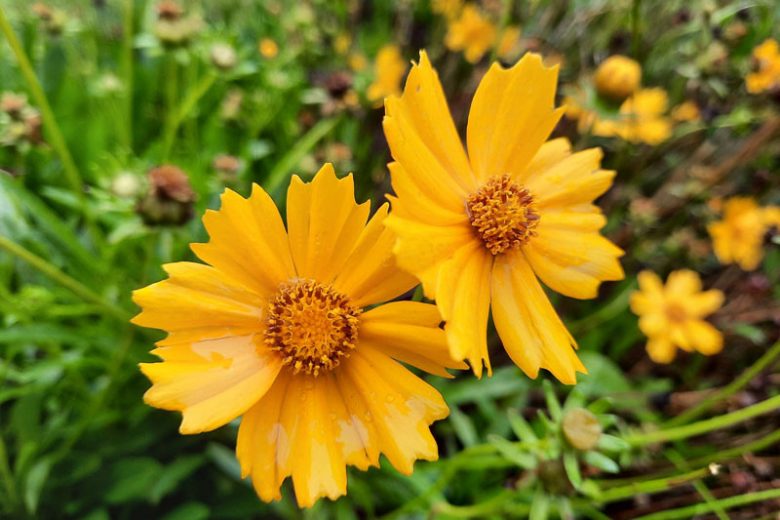


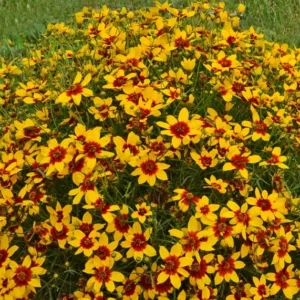
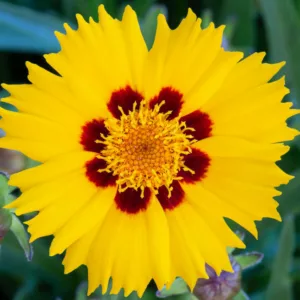
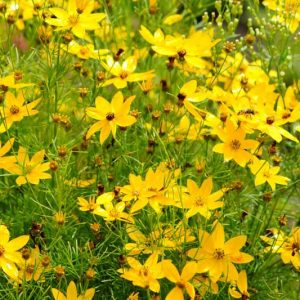
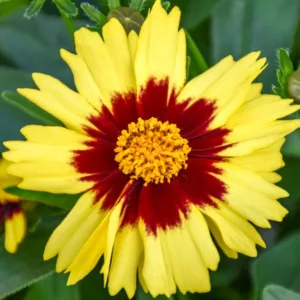
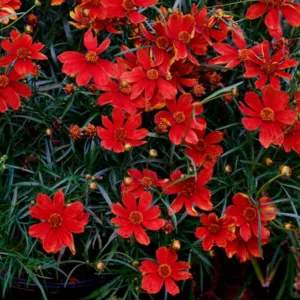
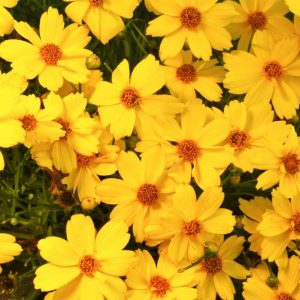
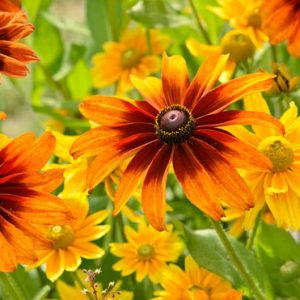
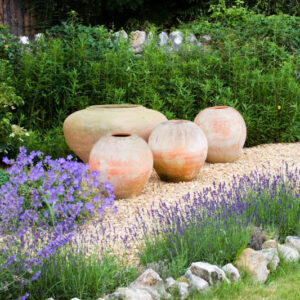
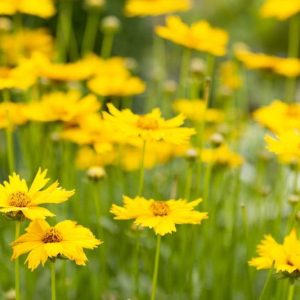
A favorite garden flower in the Southeast, Coreopsis auriculata (Lobed Tickseed) is a compact, stoloniferous, herbaceous perennial forming rosettes of ovate to elliptic, deep green leaves, 3 in. long (7 cm). Densely hairy, the leaves feature a pair of small lateral lobes, which resemble mouse ears, hence the common name. The leafy rosettes persist through most of the winter. Blooming profusely from early spring to early summer, and sporadically until frost, brilliant golden-yellow flowers, 2 in. across (5 cm), rise well above the foliage. They attract butterflies and songbirds eat the seeds. Removing spent flowers regularly will encourage blooming to continue throughout the summer into fall. Tolerant to summer heat and humidity, this dwarf Coreopsis is a popular wildflower. It will slowly spread by underground runners to form an attractive colony. Lobed Tickseed can be used for borders, on slopes, and in rock gardens.
| Hardiness |
4 - 9 |
|---|---|
| Heat Zones |
1 - 9 |
| Climate Zones | 1, 1A, 1B, 2, 2A, 2B, 3, 3A, 3B, 4, 5, 6, 7, 8, 9, 10, 11, 12, 13, 14, 15, 16, 17, 18, 19, 20, 21, 22, 23, 24 |
| Plant Type | Perennials |
| Plant Family | Compositae |
| Genus | Coreopsis |
| Common names | Coreopsis, Tickseed |
| Exposure | Full Sun |
| Season of Interest | Spring (Early, Mid, Late), Summer (Early) |
| Height | 1' - 2' (30cm - 60cm) |
| Spread | 1' - 2' (30cm - 60cm) |
| Spacing | 18" (50cm) |
| Maintenance | Low |
| Water Needs | Low, Average |
| Soil Type | Loam, Sand |
| Soil pH | Acid, Alkaline, Neutral |
| Soil Drainage | Well-Drained |
| Characteristics | Showy |
| Native Plants | United States, Southeast, Louisiana, Mississippi, North Carolina, South Carolina, Tennessee, Virginia, West Virginia, Alabama, Florida, Georgia, Kentucky |
| Tolerances | Deer, Dry Soil, Heat, Humidity, Fire |
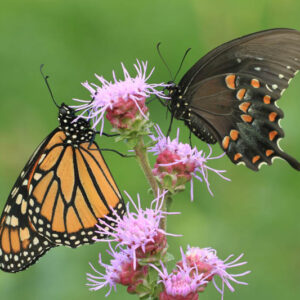
| Attracts | Bees, Birds, Butterflies |
| Garden Uses | Beds And Borders, Edging, Ground Covers |
| Garden Styles | Informal and Cottage, Prairie and Meadow |
| Toxic to Humans | No known toxicity |
| Toxic to Cats | Not toxic |
| Toxic to Dogs | Not toxic |
| Toxic to Horses | Not toxic |


| Hardiness |
4 - 9 |
|---|---|
| Heat Zones |
1 - 9 |
| Climate Zones | 1, 1A, 1B, 2, 2A, 2B, 3, 3A, 3B, 4, 5, 6, 7, 8, 9, 10, 11, 12, 13, 14, 15, 16, 17, 18, 19, 20, 21, 22, 23, 24 |
| Plant Type | Perennials |
| Plant Family | Compositae |
| Genus | Coreopsis |
| Common names | Coreopsis, Tickseed |
| Exposure | Full Sun |
| Season of Interest | Spring (Early, Mid, Late), Summer (Early) |
| Height | 1' - 2' (30cm - 60cm) |
| Spread | 1' - 2' (30cm - 60cm) |
| Spacing | 18" (50cm) |
| Maintenance | Low |
| Water Needs | Low, Average |
| Soil Type | Loam, Sand |
| Soil pH | Acid, Alkaline, Neutral |
| Soil Drainage | Well-Drained |
| Characteristics | Showy |
| Native Plants | United States, Southeast, Louisiana, Mississippi, North Carolina, South Carolina, Tennessee, Virginia, West Virginia, Alabama, Florida, Georgia, Kentucky |
| Tolerances | Deer, Dry Soil, Heat, Humidity, Fire |
| Attracts | Bees, Birds, Butterflies |
| Garden Uses | Beds And Borders, Edging, Ground Covers |
| Garden Styles | Informal and Cottage, Prairie and Meadow |
| Toxic to Humans | No known toxicity |
| Toxic to Cats | Not toxic |
| Toxic to Dogs | Not toxic |
| Toxic to Horses | Not toxic |
How many Coreopsis auriculata (Lobed Tickseed) do I need for my garden?
| Plant | Quantity | |
|---|---|---|
| Coreopsis auriculata (Lobed Tickseed) | N/A | Buy Plants |
Create a membership account to save your garden designs and to view them on any device.
Becoming a contributing member of Gardenia is easy and can be done in just a few minutes. If you provide us with your name, email address and the payment of a modest $25 annual membership fee, you will become a full member, enabling you to design and save up to 25 of your garden design ideas.
Join now and start creating your dream garden!
Create a membership account to save your garden designs and to view them on any device.
Becoming a contributing member of Gardenia is easy and can be done in just a few minutes. If you provide us with your name, email address and the payment of a modest $25 annual membership fee, you will become a full member, enabling you to design and save up to 25 of your garden design ideas.
Join now and start creating your dream garden!