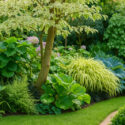
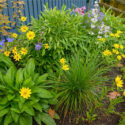
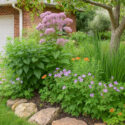
Heartleaf Bergenia, Heart-leaf Bergenia, Pigsqueak, Pig Squeak, Elephant’s Ears, Elephant Ear, Siberian Tea, Large Rockfoil, Bergenia crassifolia
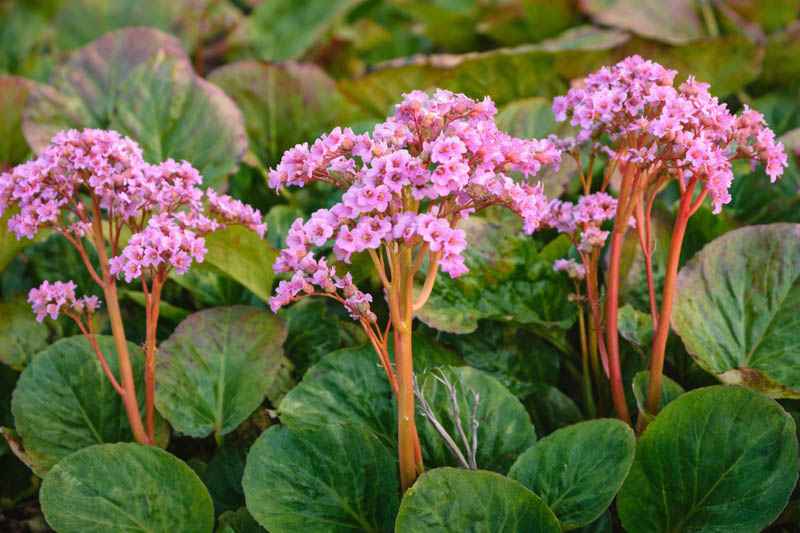
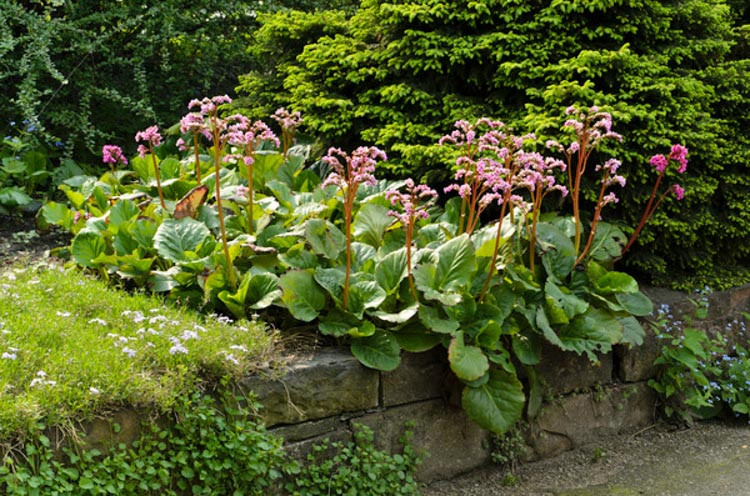
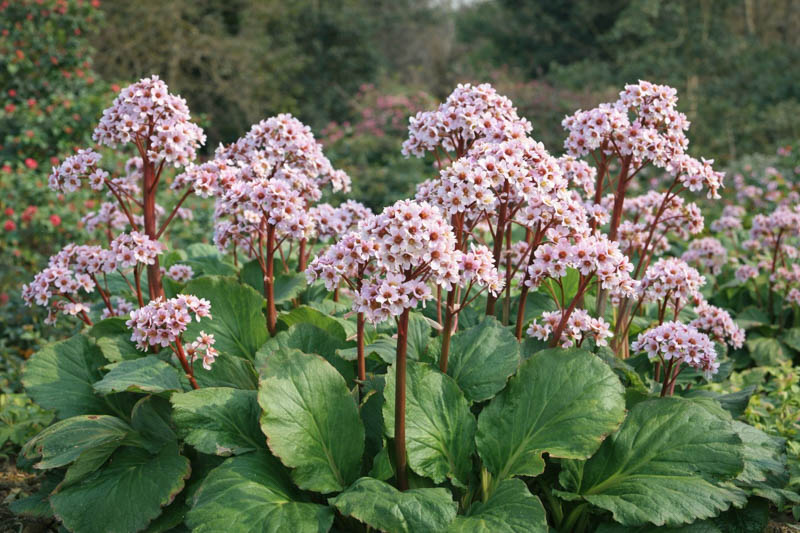
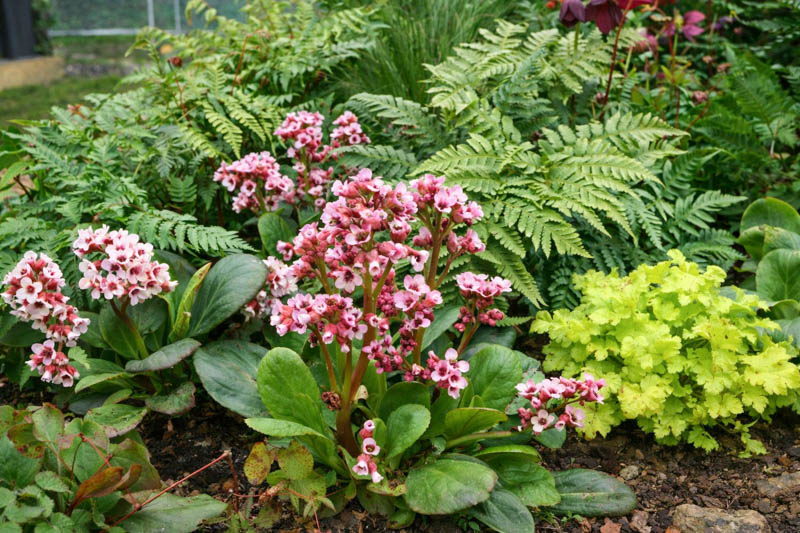
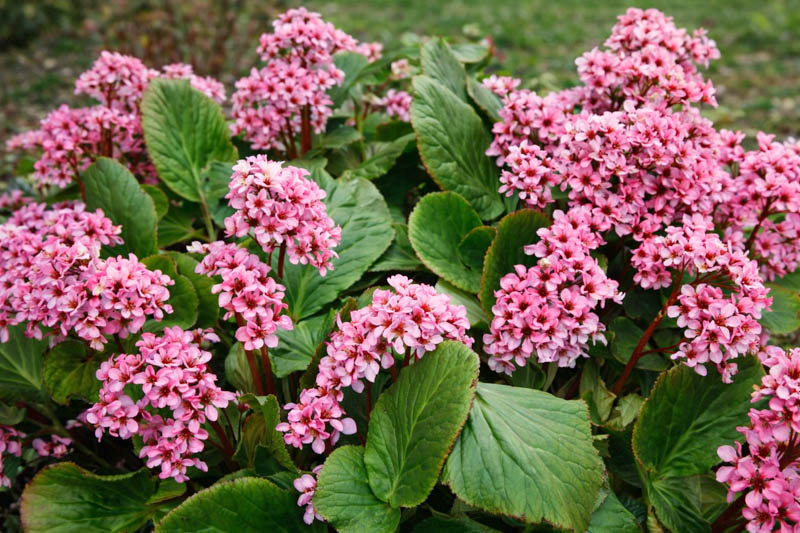


Bergenia cordifolia, commonly known as Heartleaf Bergenia or Pig Squeak, is a clump-forming, evergreen perennial prized for its leathery foliage, early spring blooms, and impressive toughness. Native to Siberia and parts of Central Asia, it thrives where many perennials struggle – from cold, exposed sites to challenging shade or dry borders.
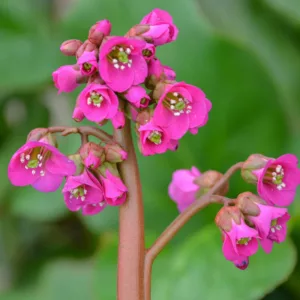
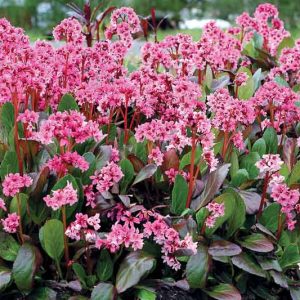
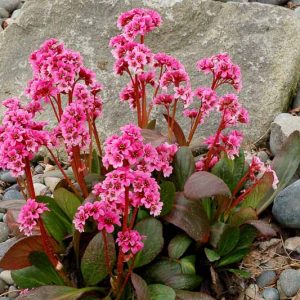
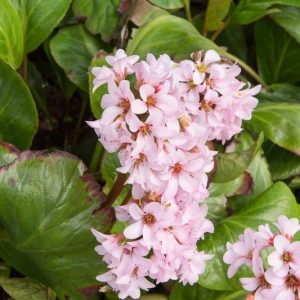
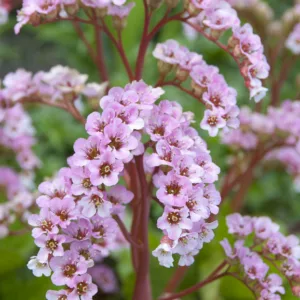
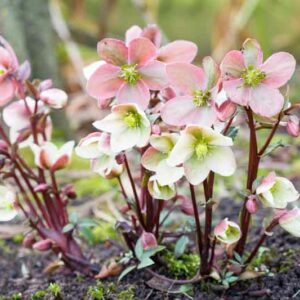
In early spring, thick red stems carry upright clusters of deep pink flowers just above the foliage, making a cheerful display when little else is in bloom. The large, shiny, heart-shaped leaves form bold rosettes that stay attractive most of the year. Deep green in summer and flushed with purplish bronze in winter, Heartleaf Bergenia provides long-lasting texture, color, and evergreen structure. Low maintenance, rabbit and deer resistant, and wonderfully versatile, Bergenia cordifolia is a standout evergreen ground cover for beds, borders, banks, slopes, and city gardens.
Summary: A clump-forming, evergreen perennial with bold, leathery, heart-shaped leaves and bright clusters of pink spring flowers.
Use: Ground cover, banks and slopes, mixed borders, rock gardens, cottage gardens, city and courtyard gardens.
Highlight: Foliage that turns rich purplish bronze in cold weather, plus early-season blooms that shine in cool spring light.
Note: Thrives in sun or part shade, tolerates heavy shade, and copes with poor soils and light drought once established.
| Botanical Name | Bergenia cordifolia |
|---|---|
| Family | Saxifragaceae |
| Common Names | Heartleaf Bergenia, Elephant’s Ears, Pig Squeak |
| Native Range | Siberia and Central Asia, on rocky slopes, forest edges, and stream banks. |
| Plant Type and Habit | Evergreen perennial with a clump-forming, rhizomatous habit that slowly expands to form bold ground-hugging carpets. |
| Hardiness (approx. USDA) | Hardy in USDA Zones 3 to 8, depending on local conditions. |
| Size | Typically 12-18 in. tall and wide (30-45 cm), with clumps widening via short rhizomes over time. |
| Sun and Exposure | Grows well in sun or part shade and is notably heavy shade tolerant, especially in cooler climates. |
| Soil | Humus-rich, moist, well-drained soils are ideal, but Bergenia tolerates a wide range of soil conditions, including poor or rocky soils, as long as extremes of heat and drought are avoided. |
| Seasonal Interest | Early spring flowers, lush green summer foliage, and dramatic purplish bronze winter color provide four seasons of interest. |
| Primary Uses | Ground cover, edging for paths and borders, banks and slopes, rock gardens, underplanting of shrubs and small trees, city gardens. |
Bergenia cordifolia is a compact, evergreen perennial that forms bold rosettes of large, leathery leaves. Each leaf can reach up to 12 in. long (30 cm), deep green and glossy through the growing season. The heart-shaped or rounded foliage is thick and substantial, giving the plant a strong architectural presence in the garden.
In early spring, especially in colder climates, thick red stems push up above the foliage carrying dense clusters of deep pink to rose flowers. These upright clusters contrast beautifully with the dark leaves below. The blooms are long lasting in cool weather and are often among the first perennials to flower, making them invaluable for early color. When temperatures drop, the foliage takes on dramatic tones of purple, red, or bronze, ensuring year-round interest.
Heartleaf Bergenia is native to Siberia and parts of Central Asia. In the wild, it grows on rocky slopes, forest margins, and along streams where soils are lean but moisture is available, and winters are long and cold. This origin explains its legendary hardiness and tolerance of difficult conditions.
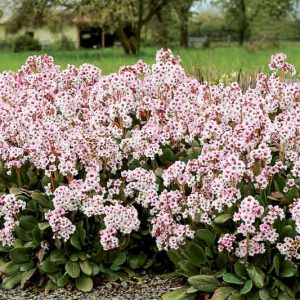
Bergenia cordifolia forms clumps 12-18 in. tall and wide (30-45 cm), slowly spreading via short, creeping rhizomes. It is not a rampant spreader but will gradually knit together into handsome mats, making it a natural choice for ground cover on banks and slopes or in large drifts beneath trees and shrubs.
The growth rate is moderate. Once established, Bergenia is long lived and surprisingly tough, standing up to cold winters, urban pollution, and occasional neglect. Its foliage remains attractive even in exposed sites where many finer textured perennials would struggle.
Bergenia typically flowers in early to mid spring, depending on climate. Flower spikes arise on thick red stems and are covered with nodding, bell-shaped blooms in shades of pink, rose, or occasionally white. The flowers are showy and long lived in cool weather, and they combine beautifully with early bulbs such as crocuses, daffodils, and tulips.
Removing faded flower spikes keeps the clumps neat and can help channel energy back into foliage growth. The blooms are also excellent for cutting and can be used in small spring bouquets.
The foliage is the main reason many gardeners fall in love with Heartleaf Bergenia. Thick, glossy leaves provide bold texture in mixed borders and ground cover plantings. They contrast beautifully with fine foliage plants like ferns, grasses, and airy perennials.
In summer, the leaves remain deep green and fresh looking. As autumn approaches and temperatures cool, pigments build up and the foliage often turns purplish bronze or reddish. In regions with cold winters, the evergreen leaves persist, bringing color and structure to otherwise bare beds. After particularly harsh winters, some leaves may scorch or collapse, but new foliage quickly replaces them in spring.
Heartleaf Bergenia is hardy in roughly USDA Zones 3 to 8. It laughs at cold winters and is particularly valuable in colder regions where reliable evergreen ground covers are in short supply. In hot climates, it prefers part shade and consistent moisture to avoid leaf scorch.
The early spring flowers provide helpful nectar to emerging pollinators. Insects searching for food after winter will often visit Bergenia blooms alongside early bulbs and flowering shrubs. Its dense foliage also creates small, cool microhabitats for invertebrates on the soil surface.
Bergenia is widely regarded as rabbit and deer-resistant. The thick, leathery leaves are not particularly appealing to browsing mammals. While no plant is completely deer proof, Heartleaf Bergenia generally escapes serious damage and is a good choice for gardens where hungry visitors limit plant options. For more strategies and plant ideas, explore the Ultimate Guide to Deer-Resistant Plants: Strategies, Lists & Zone Picks.
Once established, Bergenia cordifolia is reasonably drought tolerant, especially in part shade and cooler climates. It prefers regular moisture but can cope with periods of dryness if soil is not excessively sandy or exposed. For gardeners seeking water wise choices, Bergenia is often listed among drought-tolerant ground covers that save water and stop weeds and pairs well with other drought-tolerant shrubs, perennials & ground covers.
Bergenia is generally considered non-toxic to humans and pets and is grown primarily as an ornamental. As with all garden plants, it is best not to encourage pets or children to eat foliage or flowers.
Bergenia cordifolia is not considered invasive. It spreads slowly by short rhizomes, gradually forming clumps and low mats. In most gardens, its spread is easy to manage by lifting and dividing or removing sections where necessary.
Bergenia has modest nutrient needs. A yearly top dressing of compost or leaf mold in spring is usually enough to maintain healthy, vigorous clumps without regular fertilizer.
Bergenia is generally pest free. Occasionally, slugs and snails may nibble on young leaves, especially in damp, shaded sites. Damage is usually cosmetic and rarely requires serious intervention.
Yes. Bergenia cordifolia is an evergreen or semi-evergreen perennial in most climates. Its thick, leathery leaves usually persist through winter, often turning shades of red, purple, or bronze in cold weather. In very harsh winters, some foliage may be damaged, but fresh leaves emerge in spring.
Mature clumps of Bergenia cordifolia typically reach about 12-18 inches tall and 12-18 inches wide. Over time, short rhizomes allow the plant to expand into low mats, especially when used as a ground cover on banks, slopes, or the front of borders.
Bergenia cordifolia grows well in sun to part shade and is also tolerant of fairly deep shade, especially in cooler climates. In hot summer regions, it performs best with morning sun and afternoon shade or bright dappled light to prevent leaf scorch and stress.
Once established, Bergenia cordifolia tolerates short periods of drought, particularly in partial shade and reasonably cool conditions. However, it performs best with consistent moisture in well-drained, humus-rich soil and will look stressed if exposed to prolonged heat and dryness without supplemental watering.
Yes. The clusters of bell-shaped flowers that appear in early spring provide useful nectar for emerging pollinators, including bees and other insects. While it is not the top pollinator magnet in the garden, Bergenia cordifolia contributes valuable early-season forage when little else is in bloom.
Bergenia cordifolia is widely considered deer and rabbit resistant. The thick, tough leaves are not usually favored by browsing mammals. Occasional sampling is possible when food is scarce, but serious damage is uncommon, making Bergenia a good choice in gardens with deer or rabbits.
The easiest way to propagate Bergenia cordifolia is by division. In spring or fall, lift a clump and separate sections of rhizome with healthy leaves and roots, then replant at the same depth. Rhizome pieces with visible buds can also be rooted. Seed propagation is possible but much slower.
Bergenia cordifolia does not need routine cutting back like many perennials. Instead, remove spent flower spikes after blooming and trim away damaged, browned, or winter-burned leaves in late winter or early spring. This light grooming keeps plants tidy and allows new foliage to shine.
The most common issues with Bergenia cordifolia are leaf scorch from too much hot sun, stress from prolonged drought, and crown or root rot in poorly drained soils. Occasional leaf spot diseases may appear in crowded, damp plantings. Good siting, adequate moisture, and well-drained soil usually prevent problems.
No. Bergenia cordifolia is not considered invasive. It spreads slowly by short rhizomes, forming clumps and low mats over time. Unwanted growth is easily controlled by lifting and dividing clumps or removing sections. It does not typically escape cultivation or aggressively crowd out other garden plants.
Royal Horticultural Society (RHS) – Bergenia cordifolia horticultural and cultivation details
Missouri Botanical Garden Plant Finder – cultural notes and size, hardiness, and landscape uses for Bergenia cordifolia
Updated: December 2025 • Reviewed by Gardenia Editors
| Hardiness |
3 - 8 |
|---|---|
| Heat Zones |
1 - 8 |
| Climate Zones | 1, 1A, 1B, 2, 2A, 2B, 3, 3A, 3B, 4, 5, 6, 7, 8, 9, 12, 13, 14, 15, 16, 17, 18, 19, 20, 21, 22, 23, 24, A1, A2, A3 |
| Plant Type | Perennials |
| Plant Family | Saxifragaceae |
| Genus | Bergenia |
| Common names | Bergenia |
| Exposure | Full Sun, Partial Sun |
| Season of Interest | Spring (Early, Mid), Winter |
| Height | 1' - 2' (30cm - 60cm) |
| Spread | 1' - 2' (30cm - 60cm) |
| Spacing | 18" (50cm) |
| Maintenance | Low |
| Water Needs | Average |
| Soil Type | Chalk, Clay, Loam, Sand |
| Soil pH | Acid, Alkaline, Neutral |
| Soil Drainage | Moist but Well-Drained |
| Characteristics | Cut Flowers, Showy, Evergreen |
| Tolerances | Full Shade, Deer, Rabbit, Drought, Heat, Fire |
| Attracts | Butterflies |
| Garden Uses | Banks And Slopes, Beds And Borders, Ground Covers |
| Garden Styles | City and Courtyard, Gravel and Rock Garden, Informal and Cottage, Traditional Garden |
| Toxic to Humans | No known toxicity |
| Toxic to Cats | No known toxicity |
| Toxic to Dogs | No known toxicity |
| Toxic to Horses | No known toxicity |


| Hardiness |
3 - 8 |
|---|---|
| Heat Zones |
1 - 8 |
| Climate Zones | 1, 1A, 1B, 2, 2A, 2B, 3, 3A, 3B, 4, 5, 6, 7, 8, 9, 12, 13, 14, 15, 16, 17, 18, 19, 20, 21, 22, 23, 24, A1, A2, A3 |
| Plant Type | Perennials |
| Plant Family | Saxifragaceae |
| Genus | Bergenia |
| Common names | Bergenia |
| Exposure | Full Sun, Partial Sun |
| Season of Interest | Spring (Early, Mid), Winter |
| Height | 1' - 2' (30cm - 60cm) |
| Spread | 1' - 2' (30cm - 60cm) |
| Spacing | 18" (50cm) |
| Maintenance | Low |
| Water Needs | Average |
| Soil Type | Chalk, Clay, Loam, Sand |
| Soil pH | Acid, Alkaline, Neutral |
| Soil Drainage | Moist but Well-Drained |
| Characteristics | Cut Flowers, Showy, Evergreen |
| Tolerances | Full Shade, Deer, Rabbit, Drought, Heat, Fire |
| Attracts | Butterflies |
| Garden Uses | Banks And Slopes, Beds And Borders, Ground Covers |
| Garden Styles | City and Courtyard, Gravel and Rock Garden, Informal and Cottage, Traditional Garden |
| Toxic to Humans | No known toxicity |
| Toxic to Cats | No known toxicity |
| Toxic to Dogs | No known toxicity |
| Toxic to Horses | No known toxicity |
How many Bergenia cordifolia (Heartleaf Bergenia) do I need for my garden?
| Plant | Quantity | |
|---|---|---|
| Bergenia cordifolia (Heartleaf Bergenia) | N/A | Buy Plants |
Create a membership account to save your garden designs and to view them on any device.
Becoming a contributing member of Gardenia is easy and can be done in just a few minutes. If you provide us with your name, email address and the payment of a modest $25 annual membership fee, you will become a full member, enabling you to design and save up to 25 of your garden design ideas.
Join now and start creating your dream garden!
Create a membership account to save your garden designs and to view them on any device.
Becoming a contributing member of Gardenia is easy and can be done in just a few minutes. If you provide us with your name, email address and the payment of a modest $25 annual membership fee, you will become a full member, enabling you to design and save up to 25 of your garden design ideas.
Join now and start creating your dream garden!