Big Blue Lilyturf, Lilyturf, Border Grass, Monkey Grass, Liriope, Blue Liriope, Ophiopogon muscari, Convallaria spicata, Liriope exiliflora

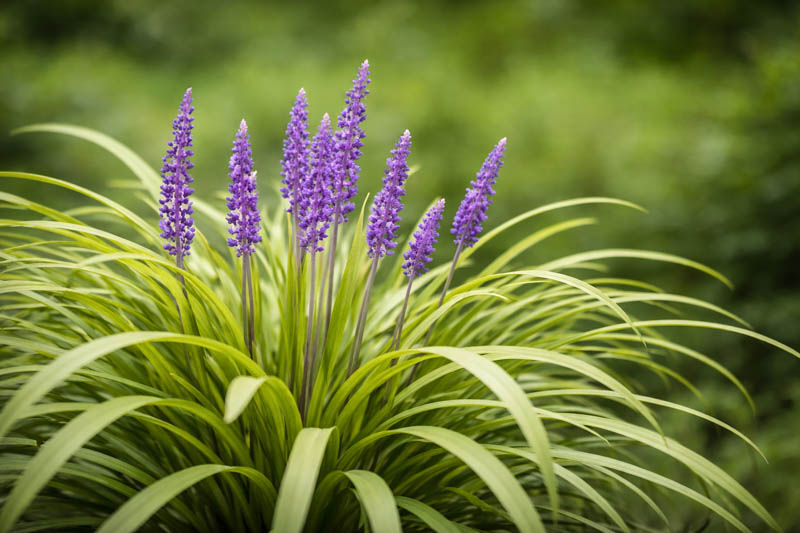
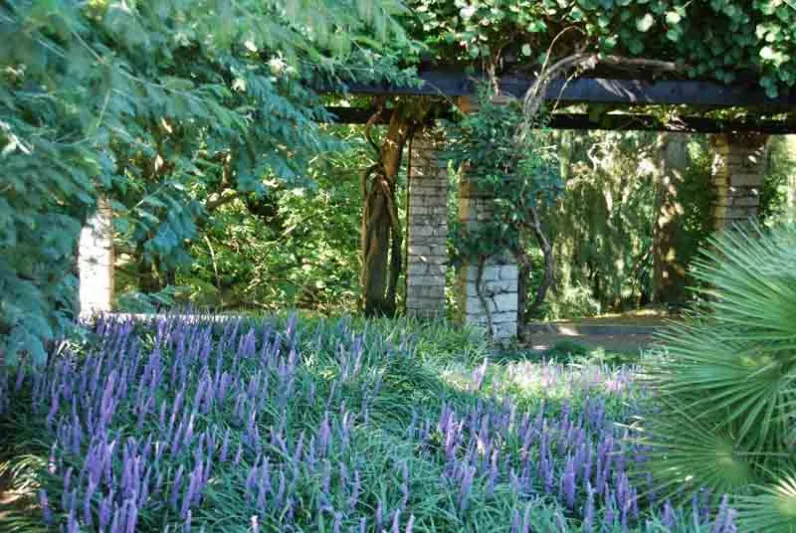
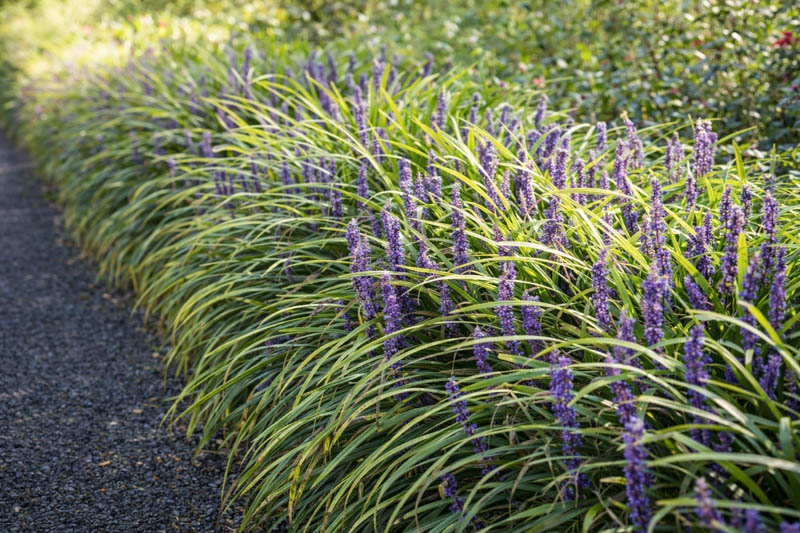
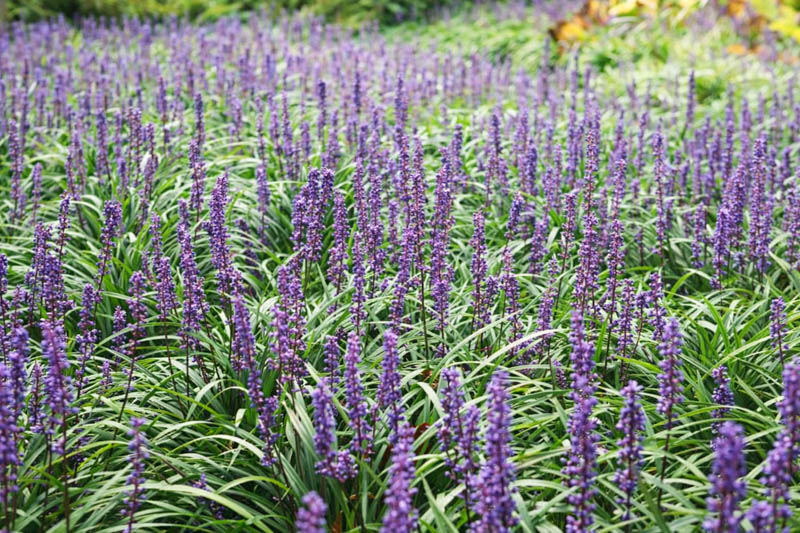
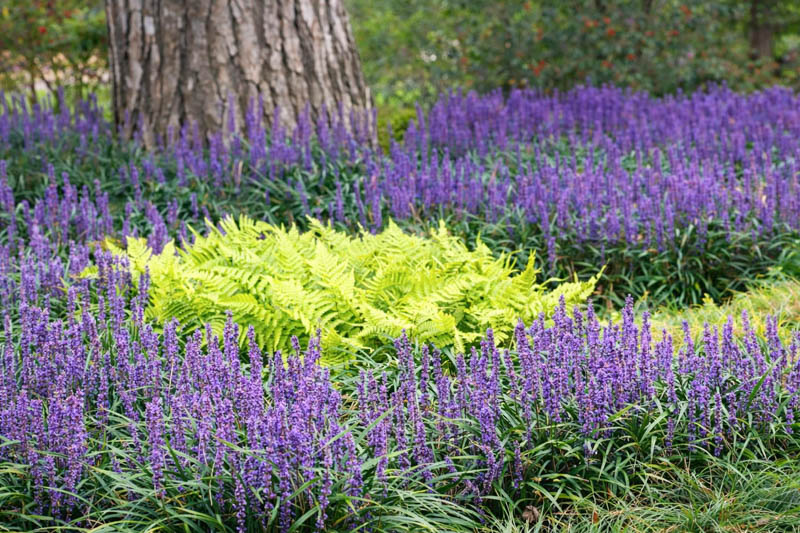
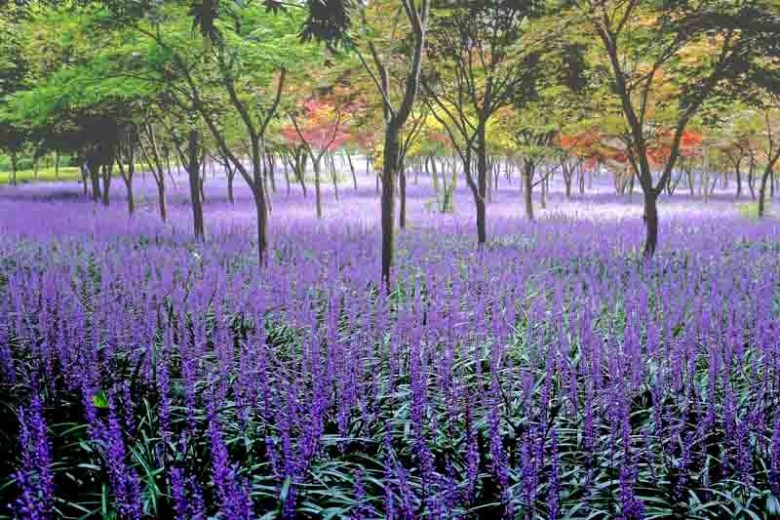


Liriope muscari, commonly known as Blue Lily Turf or simply Liriope, is a beloved evergreen perennial grown for its arching, grass-like foliage, late-summer flowers, and remarkable toughness. Native to China, Taiwan, Korea, and Japan, this versatile foliage plant thrives almost anywhere: sun, shade, humidity, heat, and even drought once established. If you need a reliable edging plant, a no-fuss ground cover, or a lush lawn alternative, Liriope steps up effortlessly.
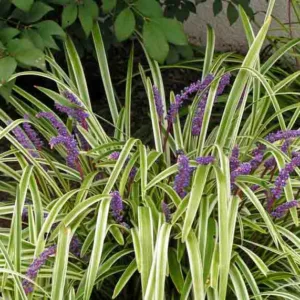
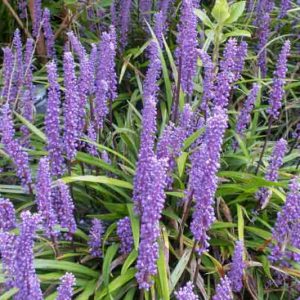
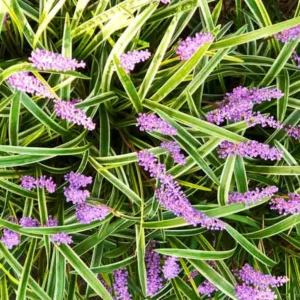
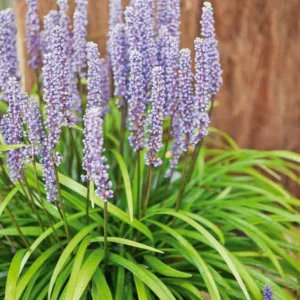
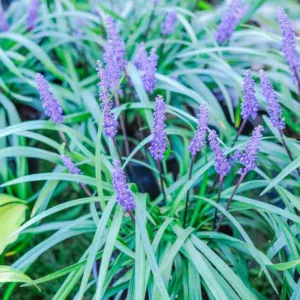
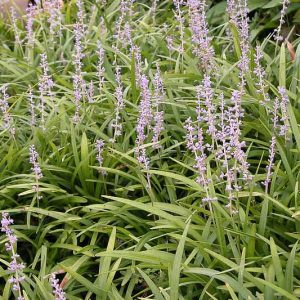
In late summer and fall, upright spikes of tightly clustered purple, violet, or lavender-blue flowers rise above the foliage, resembling Muscari (grape hyacinths), hence the species name. These blooms transition into glossy black berries that often persist into winter, adding subtle off-season interest. Dense, compact, and evergreen, Blue Lily Turf brings texture, year-round structure, and dependable performance to beds, borders, slopes, tree rings, and anywhere a tough, low-maintenance ground cover is needed.
Summary: A clump-forming, evergreen perennial with arching, grassy foliage and upright violet-purple flower spikes in late summer.
Use: Ground cover, edging plant, mass plantings, slopes, lawn substitute, underplanting.
Highlight: Thrives in sun or shade, tolerates heat, humidity, drought, deer, and rabbits, a nearly indestructible landscape workhorse.
Note: Stunning in large swaths or “rivers,” and beloved for its tidy, low-maintenance habit.
| Botanical Name | Liriope muscari |
|---|---|
| Family | Asparagaceae |
| Common Names | Blue Lily Turf, Lilyturf, Monkey Grass, Big Blue Lily Turf |
| Native Range | China, Taiwan, Korea, and Japan |
| Plant Type and Habit | Evergreen perennial with a clumping, tuft-forming habit that slowly expands to form robust groundcover mats. |
| Hardiness (approx. USDA) | Hardy in USDA Zones 5–10 |
| Size | Typically 12–18 in. tall and wide (30–45 cm) |
| Sun and Exposure | Full sun to partial shade; tolerates full shade but foliage may elongate and spread more slowly. |
| Soil | Moderately fertile, preferably acidic, moist but well-drained soils; tolerates clay, heat, humidity, and drought once established. |
| Seasonal Interest | Late summer to early fall flowers, evergreen foliage, persistent winter berries. |
| Primary Uses | Edging, ground cover, lawn substitute, mass plantings, front of borders, under trees, along paths and pool decks. |
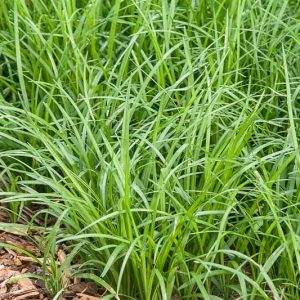
Liriope muscari is a compact, evergreen perennial forming dense clumps of narrow, arching, dark green leaves that look grassy but feel more substantial. The foliage remains attractive year-round, maintaining its form and color even through winter in most climates.
In late summer, erect flower spikes 6–8 in. tall (15–20 cm) rise above the foliage. Each spike is packed with small, violet-purple flowers that resemble miniature grape hyacinths. These blooms persist for weeks before developing into glossy black berries that often last well into winter.
Blue Lily Turf is the recipient of the prestigious Award of Garden Merit of the Royal Horticultural Society.
Blue Lily Turf is native to China, Taiwan, Korea, and Japan, where it grows along forest edges and in open woodlands, conditions that explain its remarkable adaptability to both sun and shade.
Liriope forms slowly spreading clumps that reach 12–18 in. tall and wide. Its tough, evergreen leaves make it ideal for edging patios, creating broad sweeps of ground cover, or replacing high-maintenance turf.
Bloom season: late summer through early fall. The upright spikes arrive when many perennials are winding down, adding a welcome splash of purple or violet. These flowers contrast beautifully with the deep green foliage and can brighten shady corners.
The foliage remains evergreen in most climates and adds structure to winter beds. The long, arching leaves create a soft, flowing texture useful for balancing shrubs and bolder perennials.
Liriope muscari is hardy in USDA Zones 5–10, tolerating a broad range of climates and growing conditions. In cooler climates, a late-winter haircut helps refresh tired leaves.
Flowers attract late-season pollinators, and the dense foliage creates habitat for soil-dwelling insects, but browsing animals typically leave it alone.
Liriope is widely regarded as rabbit and deer-resistant., thanks to its tough, fibrous foliage. Best Deer-Resistant Plants for Zone 8
Once established, Liriope is drought-tolerant and suitable for low-water gardens.
Generally considered non-toxic, though not intended for consumption.
Liriope muscari can be locally invasive in some regions, especially in parts of the southeastern United States where it may spread into natural areas and displace native ground covers. It spreads by short rhizomes and can creep beyond intended borders if not managed.
Always check regional guidance before planting and avoid allowing clumps to escape into adjacent woodland or natural areas. For current distribution and invasive status by state, consult the Invasive Plant Atlas of the United States listing for Liriope muscari.
Liriope has modest nutrient needs. A light top dressing of compost in spring is usually enough to maintain healthy, vigorous clumps without regular fertilizer. Overfeeding can lead to overly lush, floppy foliage.

Liriope is generally pest free and one of the easiest perennials to grow. Occasionally, slugs and snails may nibble on young foliage in very damp, shaded sites, but damage is usually cosmetic. In some regions, scale insects or spider mites may appear on stressed plants, but serious infestations are rare in well grown clumps.
Liriope muscari can be locally invasive in some regions, especially in the southeastern United States, where it may escape cultivation and spread into natural areas. It expands slowly by short rhizomes and can move beyond intended boundaries if not managed. Check regional guidance and monitor plantings near woodlands.
Yes. Liriope muscari tolerates full shade and is commonly planted under trees where turfgrass fails. Flowering may be reduced, and foliage may appear longer or softer in deep shade, but the plant remains healthy and evergreen in most climates.
Cut all old foliage down to just above ground level in late winter or early spring, before new leaves begin emerging. This removes winter-damaged foliage and ensures fresh, uniform growth for the new season. Avoid cutting once new leaves have begun to elongate.
In USDA Zones 6–10, Liriope muscari is typically evergreen, keeping its foliage through winter. In colder climates or exposed sites, some leaves may brown or collapse, but new growth quickly replaces them in spring after pruning.
Yes. After its first growing season, Liriope muscari becomes reliably drought tolerant. It performs well in low-water landscapes and handles heat and humidity. Supplemental watering during prolonged drought keeps foliage looking its best.
Yes. Liriope muscari makes an excellent low-maintenance lawn alternative, especially in shady or difficult areas. It tolerates some foot traffic, needs minimal mowing, and maintains evergreen texture throughout the year.
Liriope muscari spreads moderately by clumping and short rhizomes. It fills in planting areas over time but is generally slower growing than Liriope spicata. It can be controlled easily by edging or periodic division.
Liriope muscari blooms in late summer to early fall, producing upright spikes of violet, purple, or lilac flowers that resemble miniature grape hyacinths. These blooms often persist for weeks and are followed by black berries.
Yes. Liriope muscari is widely considered deer and rabbit resistant. Its tough, fibrous foliage is not preferred by browsing wildlife, making it a reliable choice in gardens with deer pressure.
Lift clumps in early spring and split them into smaller sections with several shoots and roots attached. Replant divisions immediately at the same depth. Division every few years helps maintain plant vigor and control spread.
Updated: December 2025 • Reviewed by Gardenia Editors
| Hardiness |
5 - 10 |
|---|---|
| Heat Zones |
1 - 11 |
| Climate Zones | 2B, 3, 3A, 3B, 4, 5, 6, 7, 8, 9, 10, 14, 15, 16, 17, 18, 19, 20, 21, 22, 23, 24, H1, H2 |
| Plant Type | Perennials |
| Plant Family | Asparagaceae |
| Genus | Liriope |
| Common names | Lily Turf, Monkey Grass |
| Exposure | Full Sun, Partial Sun, Shade |
| Season of Interest | Summer (Late), Fall |
| Height | 1' - 2' (30cm - 60cm) |
| Spread | 1' - 2' (30cm - 60cm) |
| Spacing | 12" - 18" (30cm - 50cm) |
| Maintenance | Low |
| Water Needs | Average |
| Soil Type | Clay, Loam, Sand |
| Soil pH | Acid, Neutral |
| Soil Drainage | Moist but Well-Drained |
| Characteristics | Plant of Merit, Showy, Evergreen, Fruit & Berries |
| Tolerances | Full Shade, Drought, Deer, Rabbit, Heat, Poor Soil, Humidity, Fire, Erosion |
| Garden Uses | Banks And Slopes, Beds And Borders, Edging, Ground Covers, Patio And Containers, Underplanting Roses And Shrubs |
| Garden Styles | City and Courtyard, Gravel and Rock Garden, Informal and Cottage, Japanese Garden |
| Toxic to Humans | Low severity |
| Toxic to Cats | Not toxic |
| Toxic to Dogs | Not toxic |
| Toxic to Horses | Not toxic |


| Hardiness |
5 - 10 |
|---|---|
| Heat Zones |
1 - 11 |
| Climate Zones | 2B, 3, 3A, 3B, 4, 5, 6, 7, 8, 9, 10, 14, 15, 16, 17, 18, 19, 20, 21, 22, 23, 24, H1, H2 |
| Plant Type | Perennials |
| Plant Family | Asparagaceae |
| Genus | Liriope |
| Common names | Lily Turf, Monkey Grass |
| Exposure | Full Sun, Partial Sun, Shade |
| Season of Interest | Summer (Late), Fall |
| Height | 1' - 2' (30cm - 60cm) |
| Spread | 1' - 2' (30cm - 60cm) |
| Spacing | 12" - 18" (30cm - 50cm) |
| Maintenance | Low |
| Water Needs | Average |
| Soil Type | Clay, Loam, Sand |
| Soil pH | Acid, Neutral |
| Soil Drainage | Moist but Well-Drained |
| Characteristics | Plant of Merit, Showy, Evergreen, Fruit & Berries |
| Tolerances | Full Shade, Drought, Deer, Rabbit, Heat, Poor Soil, Humidity, Fire, Erosion |
| Garden Uses | Banks And Slopes, Beds And Borders, Edging, Ground Covers, Patio And Containers, Underplanting Roses And Shrubs |
| Garden Styles | City and Courtyard, Gravel and Rock Garden, Informal and Cottage, Japanese Garden |
| Toxic to Humans | Low severity |
| Toxic to Cats | Not toxic |
| Toxic to Dogs | Not toxic |
| Toxic to Horses | Not toxic |
How many Liriope muscari (Blue Lily Turf) do I need for my garden?
| Plant | Quantity | |
|---|---|---|
| Liriope muscari (Blue Lily Turf) | N/A | Buy Plants |
Create a membership account to save your garden designs and to view them on any device.
Becoming a contributing member of Gardenia is easy and can be done in just a few minutes. If you provide us with your name, email address and the payment of a modest $25 annual membership fee, you will become a full member, enabling you to design and save up to 25 of your garden design ideas.
Join now and start creating your dream garden!
Create a membership account to save your garden designs and to view them on any device.
Becoming a contributing member of Gardenia is easy and can be done in just a few minutes. If you provide us with your name, email address and the payment of a modest $25 annual membership fee, you will become a full member, enabling you to design and save up to 25 of your garden design ideas.
Join now and start creating your dream garden!