Common Sunflower, Comb Flower, Golden Flower of Peru, St Bartholomew's Star
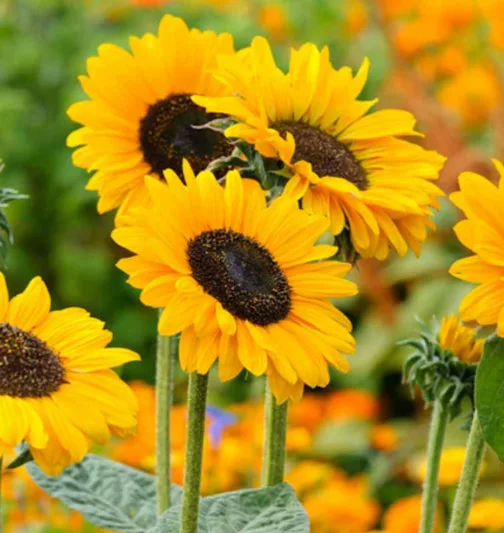


Helianthus annuus, the classic garden sunflower, brings food, color, and wildlife to any space. From crunchy sunflower seeds and versatile sunflower oil to cheerful cut stems for a sunflower bouquet or whole swaths planted as a sunflower field, this warm-season annual earns its keep in kitchens, vases, and pollinator gardens. Discover How you can Create a Thriving Pollinator Haven in your Own Backyard
Whether you dream of a single cheerful vase or a whole sunflower field, here’s everything you need to know to plant, grow, and enjoy them.
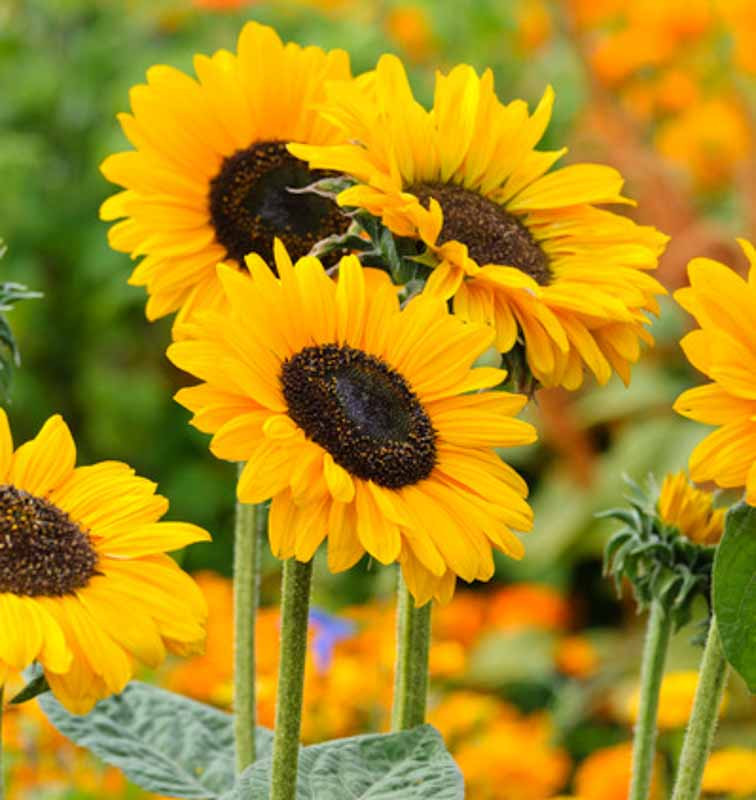
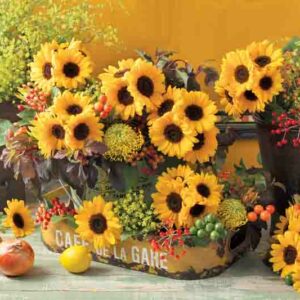
Summary: Sunflower (Helianthus annuus) is a warm-season annual grown for dazzling blooms, protein-rich sunflower seeds, and versatile sunflower oil. In gardens, it thrives in full sun and well-drained soil, ranging from compact patio types to towering giants for seasonal screens or a photogenic sunflower field. Young plants track the sun; mature heads face east, feeding bees in bloom and birds as seed ripens. For kitchens, roasted seeds offer sunflower seeds benefits (vitamin E, minerals, fiber); they’re also blended into creamy sunflower butter for nut-free sandwiches and sauces. Florists prize long, straight stems for a cheerful sunflower bouquet, and branching types extend vase life with multiple heads. Across cultures, sunflower meaning includes loyalty, joy, and optimism—living sunshine you can plant, harvest, and share.
| Botanical Name | Helianthus annuus |
|---|---|
| Family | Asteraceae |
| Native Range | North America; widely cultivated and naturalized globally |
| Plant Type & Habit | Annual; single-stem (cut) and branching forms |
| Hardiness | Grown as an annual (frost-sensitive) |
| Size | 1–3 ft (dwarf); 4–8 ft (garden); 10–16+ ft (giants) |
| Sun / Soil | Full sun; fertile, well-drained soils; avoid waterlogging |
| Bloom / Harvest | ~60–90 days to bloom; harvest seed when head backs turn yellow-brown |
| Uses | Edible seeds & oil; cut flowers; seasonal screens; wildlife |
| Wildlife | Bees & butterflies in bloom; birds on ripe heads |
| Toxicity | Generally non-toxic to cats/dogs |
Helianthus annuus is a fast-growing, warm-season annual in the daisy family (Asteraceae), along with kitchen and garden familiars such as artichoke, lettuce, chicory, cardoon, Jerusalem artichoke, safflower, dandelion, daisy, calendula, tarragon, and wormwood.
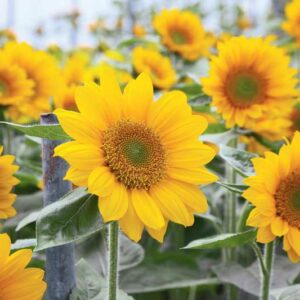
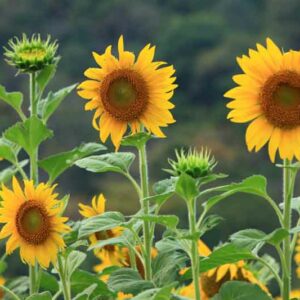
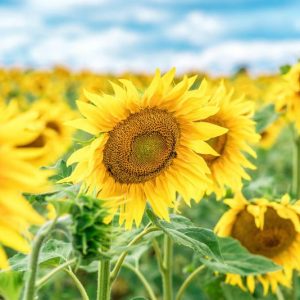
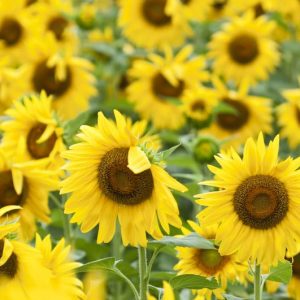
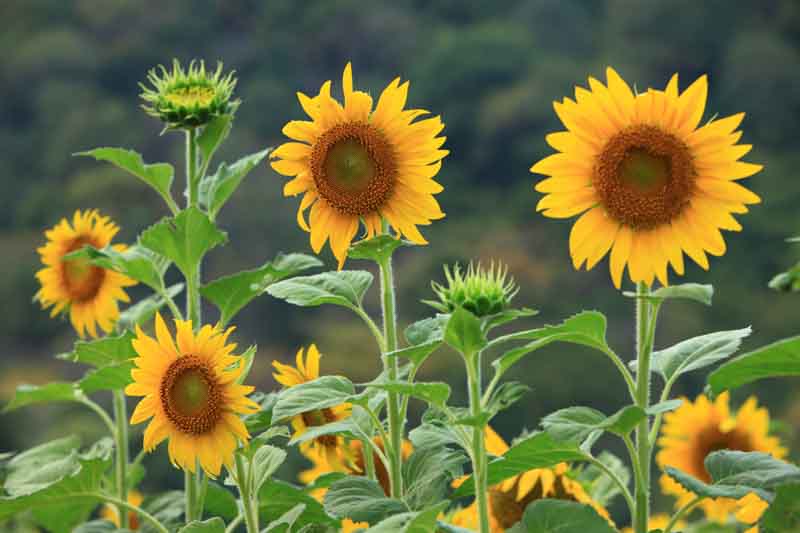
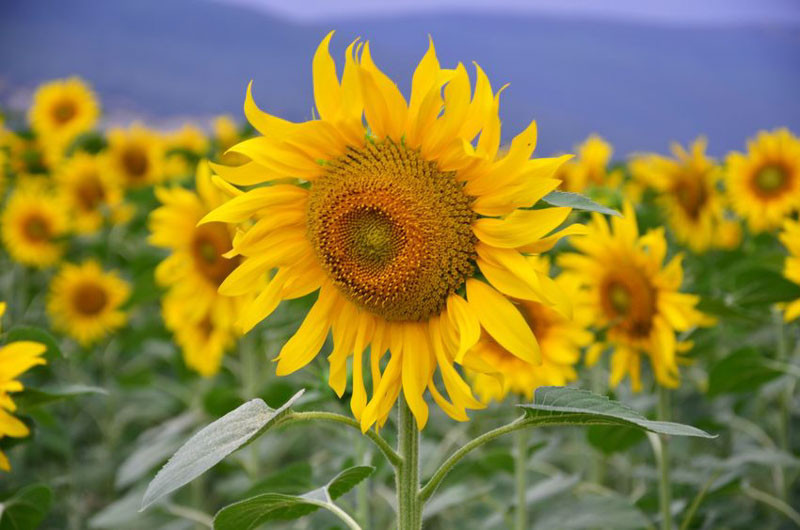
A single, pithy stem (or many, in branching types) carries big, sandpapery leaves and ends in a composite head: showy ray florets around a packed disk of fertile florets that ripen into edible sunflower seeds. Young buds follow the sun; as stems stiffen, mature heads usually settle facing east.
💡 Did you know? East-facing heads warm faster at sunrise and can attract more morning pollinators—one reason floriculture growers often like that natural orientation.
Wild H. annuus is native chiefly to the Great Plains and southwestern parts of North America—roughly from the central/western United States into northern Mexico, with outlying native populations in adjacent southern Canada. It is now widely naturalized farther east in North America and across much of the world through cultivation.
Height: 1–3 ft (dwarf), 4–8 ft (garden standards), 10–16+ ft (giants).
Head diameter: ~4–12 in on most garden forms; up to ~16–18 in on giants.
Grower’s lever: Wider spacing and richer soil make thicker stems and bigger heads; tighter spacing makes longer stems and slightly smaller, bouquet-friendly blooms.
Discover 39 most beautiful sunflower varieties for your garden
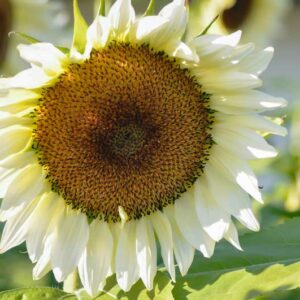
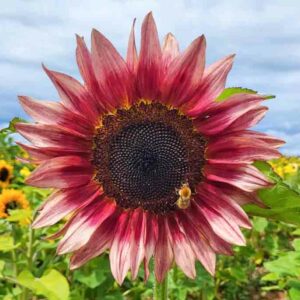
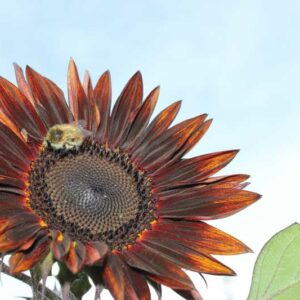
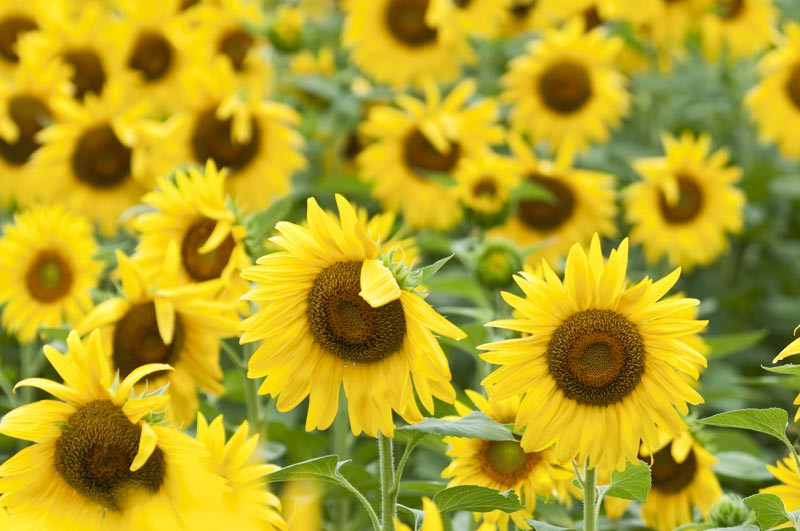
Heads open from the outer ring inward over ~3–8 days. Colors range from lemon and classic gold to bronze, mahogany, and near-chocolate; centers can be pale lime to near-black. Pollenless lines are tidy indoors; pollen-bearing types support more pollinators and typically set seed better.
Bloom window (temperate N. Hemisphere): mid-summer to early fall (often July–September). In frost-free areas, staggered sowings can produce flowers much of the year.
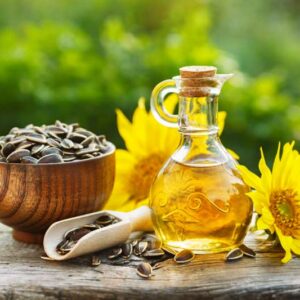
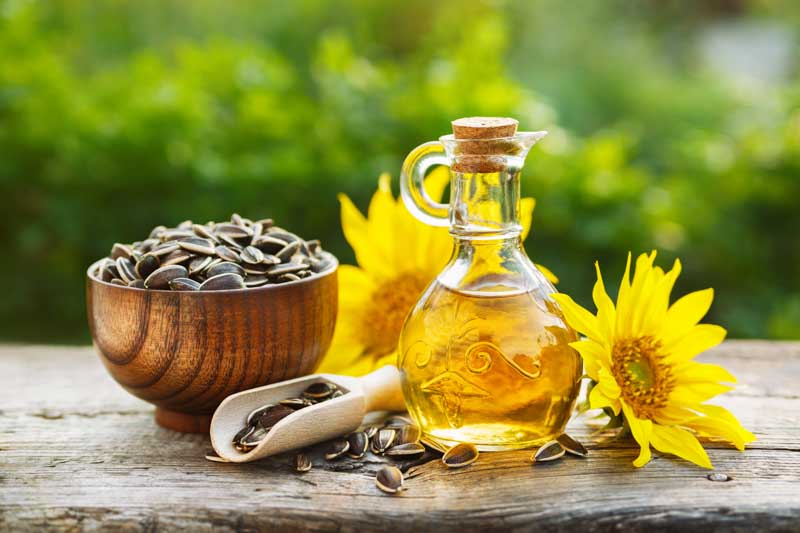
Sunflower “seeds” are achenes—tiny one-seeded fruits. Large, striped confection achenes are for snacking; small, black oilseed achenes are pressed into sunflower oil (including high-oleic types prized for stability). Both roast beautifully and can be ground into sunflower butter—one reason sunflower seeds benefits are beloved in lunchboxes.
Ready-to-harvest checklist: the back of the head turns yellow-brown, bracts feel papery, seeds are plump and fully colored, and they loosen with a firm rub. If birds arrive early, cut heads slightly green-backed and finish drying indoors in paper or mesh bags.
Large, rough, heart- to ovate leaves (often 4–12 in / 10–30 cm) sit alternately on long petioles, building a deep, shade-casting canopy that suppresses weeds.
Grown as an annual in all USDA zones; not frost-tolerant. Sow outdoors after last frost when soil is consistently ≥ 55–60°F (13–16°C). Best growth at ~70–85°F (21–29°C) in full sun (6–8+ hours).
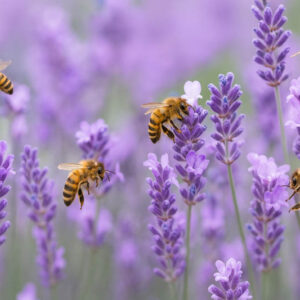
Sunflower nectar and pollen draw native bees, honeybees, butterflies, and beneficial insects. After bloom, the seed buffet keeps finches, chickadees, and small mammals visiting. Wildlife-Friendly Plants: Attract Bees, Butterflies & Birds
Deep taproots (often 3–6 ft / 0.9–1.8 m in garden soils) help the plant ride out short dry spells. For maximum head size and seed fill, keep soil evenly moist from bud stage through peak bloom. 42 Drought-Tolerant Annuals That Deliver Big Color
Bottom line: Annual sunflowers are rated only moderately resistant to deer at best and are often browsed, especially when young. Rabbits readily clip seedlings. Protection is usually needed in areas with wildlife pressure.
What actually works
Generally regarded as non-toxic to cats and dogs. As with any plant, enthusiastic grazing can cause mild stomach upset.
H. annuus self-seeds if heads shatter, but does not spread by rhizomes. Deadhead or harvest to prevent volunteers.
| Category | Cultivar(s) | Habit & Height (approx.) | Notes / Best Uses |
|---|---|---|---|
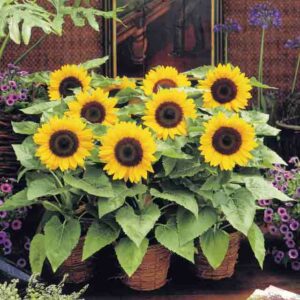
| Dwarf & Patio | ‘Sunny Smile’, ‘Teddy Bear’, ‘Firecracker’ | Compact, branching or semi-dwarf; ~15–20 in (Sunny Smile), 2–3 ft (Teddy Bear/Firecracker) | Great for containers/front borders; ‘Sunny Smile’ & ‘Firecracker’ are pollen-free; ‘Teddy Bear’ has plush double “pom-pom” blooms |
| Cut-Flower Singles (Pollenless) | ‘Sunrich Gold’, ‘Sunrich Summer Provence’, ProCut® ‘White Nite’, ProCut® ‘Red’, ‘Vincent’s Choice’ |
Mostly single-stem, uniform; ~4–6 ft; upward-facing heads, long stems | Designed for floristry—clean, long-lasting blooms with no pollen drop; excellent for indoor arrangements |
| Cut-Flower Singles (Pollen-bearing) | ‘Valentine’, ‘Taiyo’ |
Single or well-branched; ~4–6 ft; classic or primrose blooms | Great in bouquets and for pollinators (pollen present); classic garden look with abundant nectar/pollen |
| Branching Garden | ‘Autumn Beauty’, ‘Evening Sun’, ‘Ring of Fire’, ‘Velvet Queen’, ‘Floristan’ |
Multi-headed, extended bloom; ~3–6 ft (varies by cultivar) | Long season of color; terrific for borders, cutting, and wildlife; many bicolors and rich reds/bronzes |
| Giants | ‘Mammoth Grey Stripe’, ‘Russian Mammoth’, ‘Arikara’ |
Towering single stems; ~8–12+ ft; huge heads | Height screens, contests, and abundant edible seeds; leave some heads for birds |
Heights and traits are approximate and vary by climate and culture; see each linked cultivar page for details.
| Nutrient | Amount |
|---|---|
| Calories | ~165–170 kcal |
| Total fat | ~14 g (low saturated) |
| Protein | ~6 g |
| Carbohydrate | ~6 g (≈3 g fiber) |
| Vitamin E | ~7–8 mg |
| Magnesium | ~90 mg |
| Selenium | ~15 µg |
Rounded values; consult packaging or databases for exact figures by product and roast.
Not all sunflower oil is the same. Traditional (high-linoleic) types skew toward omega-6 polyunsaturated fats; mid-oleic (NuSun) and high-oleic types are richer in monounsaturated oleic acid—great for stability and high-heat cooking.
| Type | Fatty-acid profile (approx.) | Best uses |
|---|---|---|
| High-linoleic | Higher PUFA (omega-6) | Dressings, low-to-medium heat |
| Mid-oleic (NuSun) | Balanced MUFA/PUFA | Sautéing, everyday cooking |
| High-oleic | Higher MUFA (oleic acid) | High-heat searing & roasting |
Nutrition per tablespoon ≈ 120–124 kcal, ~14 g fat, naturally vitamin E–rich; exact profile depends on cultivar and processing.
| Nutrient | Amount |
|---|---|
| Calories | ~120–124 kcal |
| Total fat | ~14 g |
| Vitamin E | ~5–6 mg |
| Fatty acids | Profile varies by type (high-linoleic vs. mid-oleic vs. high-oleic) |
Exact fatty-acid breakdown depends on cultivar and processing; high-oleic oils excel for high heat and shelf stability.
Sunflower isn’t typically propagated by cuttings (unlike basil or coleus). Seed is faster, stronger, and simpler.
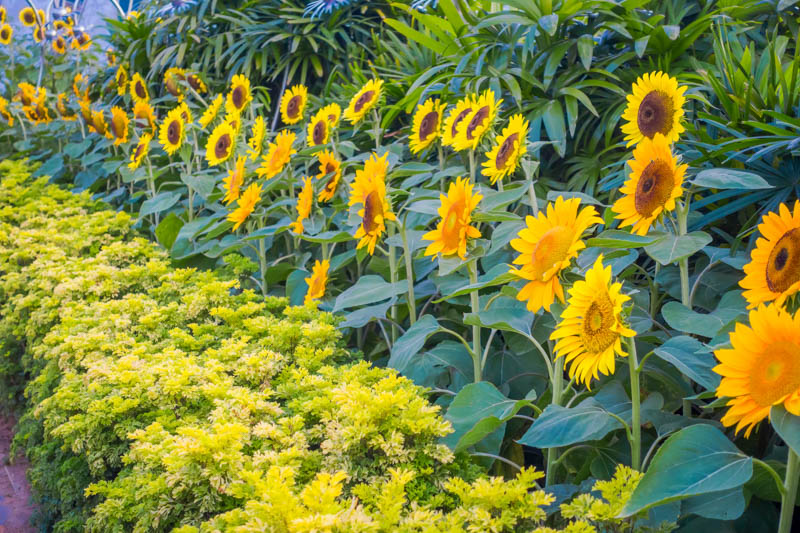
Corn, pole beans, cucumbers (small-fruited/pickling): Use sunflowers as auxiliary posts in a Three-Sisters-style mix.
How: Direct-sow sunflowers 2–3 weeks before vines; space sunflowers 18–24 in. apart; sow beans/cukes 6–8 in. from stems; limit to 1–2 vines per sunflower and tie with soft ties.
Do not climb: Heavy vines (melons, large winter squash). Let those ramble on the ground or give them their own trellis.
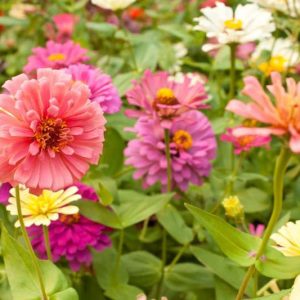
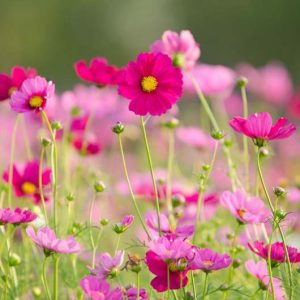
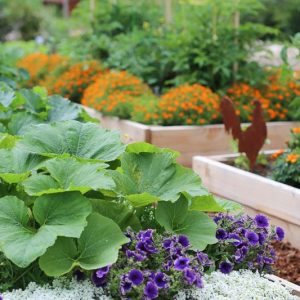
Zinnias, cosmos, dill, cilantro/coriander: A flower–herb mix that feeds hoverflies, lacewings, tachinid flies, and parasitic wasps.
Placement: Weave a 12–24 in. “beneficial runway” along the sunny face of the sunflower row.
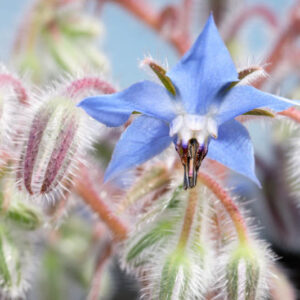
Borage & phacelia: Fast bloomers that bridge pollinator forage while sunflowers size up—excellent near cucumbers, squash, and strawberries.
Peppers & eggplant: Place sunflowers on the north or west side as a light windbreak and pollinator beacon. Keep 30–36 in. spacing so the crops stay in full sun.
Leafy greens (lettuce, spinach, chard): Tuck on the east side to catch morning light and gentle afternoon shade in hot spells.
Herbs for pest balance: basil, thyme underplantings invite predators that help with aphids and caterpillars.
Shade-sensitive crops: Keep tomatoes, peppers, and bush beans out of a sunflower’s midday shade. Maintain 3–4 ft separation and plant sunflowers north/west of these crops.
Allelopathic residues: Fresh sunflower roots/stems can suppress tiny seeds (lettuce, carrots, beets). Compost or remove residues and wait 3–6 weeks before sowing in that exact row.
Water competition: Giants drink deeply. Mulch and deep-water less often but thoroughly so neighbors aren’t starved.
| Disease | Key Signs | Notes |
|---|---|---|
| Powdery mildew | Whitish-gray powder on leaves | Often cosmetic; improve airflow, avoid overhead water. |
| Downy mildew | Yellow/chlorotic leaves; white fuzz undersides | Cool, wet spring; stunts/kills seedlings—use resistant seed, warm soils. |
| Alternaria leaf blight | Small dark spots expand; defoliation | Remove debris; increase spacing/airflow. |
| Phoma black stem | Black lesions on stems | Can cause collapse; practice rotation & residue management. |
| Phomopsis stem canker | Brown, sunken stem lesions; wilting | Avoid dense canopies; rotate; remove infected stalks. |
| Rust | Orange/reddish-brown pustules | Weakens plants; choose resistant cultivars, rotate. |
| Septoria leaf spot | Water-soaked lesions; later tan with dark margins | Reduce leaf wetness; remove infected leaves. |
| Sclerotinia wilt / white mold | Wilting; white cottony growth on stems/heads | Often fatal in wet soils; long rotations & airflow are key. |
| Fusarium wilt | Yellowing, wilting, vascular browning | Soilborne & persistent; rotate and sanitize. |
| Botrytis (gray mold) | Gray fuzzy mold on heads/leaves | Remove affected tissue; improve airflow. |
| Verticillium wilt | Interveinal chlorosis; one-sided wilt | No cure; rotate widely and manage host weeds. |
| Pest | What You See | Notes |
|---|---|---|
| aphids & ants | Curling/sticky leaves; ants “farm” honeydew | Blast with water; encourage predators; control ants if populations persist. |
| cutworms & wireworms | Seedlings cut or fail to emerge | Use collars; avoid fresh sod; re-sow if stand loss is high. |
| flea beetles, Japanese beetles, grasshoppers | Shot-holes; skeletonized leaves/flowers | Row cover early; hand-pick; trap crops and timing help. |
| spider mites & thrips | Stippled, bronzed foliage; fine webbing (mites) | Rinse undersides; keep plants unstressed; use reflective mulch where hot/dry. |
| stink bugs & leafhoppers | Seed/flower damage; hopper burn; virus/phytoplasma risk | Weed control on edges; scout at bud set; protect heads you’ll eat/save. |
| caterpillars (head feeders) | Frass/webbing in heads; poor seed fill | Hand-remove; bag prized heads as petals drop to exclude pests & birds. |
| slugs & snails | Chewed seedlings; slime trails | Traps, barriers; water in mornings; keep mulch thin near stems. |
| deer, rabbits, squirrels | Clipped seedlings, missing buds, stolen heads | Use fencing/netting where pressure is high; harvest heads promptly. |
Quick IPM note: Start with sanitation, spacing, and strong plant vigor. Spot-treat only as needed and follow labels; some gardeners use neem oil for soft-bodied pests.
Yes—sunflower is considered non-toxic to dogs and cats, though nibbling any plant can cause mild digestive upset.
Oilseed types have smaller, black achenes for pressing sunflower oil; confection types have larger, striped seeds for snacking.
Young plants exhibit heliotropism (bud/leaf tracking). Mature flower heads generally face east; they stop tracking once the head is heavy.
Harvest early and hang heads indoors to finish drying, or cover maturing heads with breathable paper or mesh bags.
Absolutely—choose dwarf types (1–3 ft), use a large pot (at least 3–5 gallons), and water consistently.
It’s a smooth, nut-free spread made from ground sunflower seeds—great for schools and for anyone avoiding nuts (check labels if cross-contact is a concern).
When ray petals just lift from the disk and before pollen sheds.
Usually tight spacing, low light, or drought during bud/early bloom; thin plants and water deeply.
For common sunflowers (Helianthus annuus), each head shows petals (“rays”) for about 7–14 days.
The tiny disk florets in the center open in sequence over roughly 5–10 days.
Branching varieties keep making new heads for 4–8+ weeks, and with succession sowings every 2–3 weeks you can have blooms from mid-summer to first frost (earlier/longer in frost-free climates).
The common sunflower (H. annuus) is an annual—it completes its life cycle in one season and does not regrow from the same plant next year.
However, it often self-seeds if mature heads are left to dry and shatter, so you may find volunteer seedlings the following spring.
If you want true perennials, choose species such as H. maximiliani, H. decapetalus, or H. tuberosus (Jerusalem artichoke).
Bottom line: If you want a plant that feeds you, charms pollinators, fills vases, and makes the whole garden feel like summer—grow sunflower. From the crunch of sunflower seeds to the shimmer of sunflower oil, from a happy sunflower bouquet to an immersive sunflower field, Helianthus annuus brings sunshine you can plant, harvest, and share.
| Hardiness |
2 - 11 |
|---|---|
| Heat Zones |
1 - 12 |
| Climate Zones | 1, 1A, 1B, 2, 2A, 2B, 3, 3A, 3B, 4, 5, 6, 7, 8, 9, 10, 11, 12, 13, 14, 15, 16, 17, 18, 19, 20, 21, 22, 23, 24 |
| Plant Type | Annuals |
| Plant Family | Compositae |
| Genus | Helianthus |
| Common names | Sunflower |
| Exposure | Full Sun |
| Season of Interest | Summer (Mid, Late) |
| Height | 3' - 10' (90cm - 3m) |
| Spread | 1' - 3' (30cm - 90cm) |
| Spacing | 30" - 36" (80cm - 90cm) |
| Maintenance | Low |
| Water Needs | Low, Average |
| Soil Type | Chalk, Clay, Loam, Sand |
| Soil pH | Alkaline, Neutral, Acid |
| Soil Drainage | Moist but Well-Drained, Well-Drained |
| Characteristics | Cut Flowers, Showy |
| Native Plants | United States, Pennsylvania, Rhode Island, Vermont, Connecticut, Delaware, Maine, Massachusetts, Maryland, New Hampshire, New Jersey, New York, California, Northeast, Midwest, Pacific Northwest, Southeast, Southwest, Rocky Mountains, Alaska, Illinois, Indiana, Iowa, Kansas, Michigan, Minnesota, Missouri, Nebraska, North Dakota, Ohio, South Dakota, Wisconsin, Idaho, Oregon, Washington, Louisiana, Mississippi, North Carolina, South Carolina, Tennessee, Virginia, West Virginia, Alabama, Arkansas, Florida, Georgia, Kentucky, Texas, Arizona, Nevada, New Mexico, Oklahoma, Colorado, Montana, Utah, Wyoming |
| Tolerances | Drought, Deer, Dry Soil, Heat, Poor Soil |
| Attracts | Bees, Birds, Butterflies |
| Garden Uses | Beds And Borders |
| Garden Styles | Cutting Garden, Informal and Cottage, Prairie and Meadow |
| Toxic to Humans | No known toxicity |
| Toxic to Cats | No known toxicity |
| Toxic to Dogs | No known toxicity |
| Toxic to Horses | No known toxicity |


| Hardiness |
2 - 11 |
|---|---|
| Heat Zones |
1 - 12 |
| Climate Zones | 1, 1A, 1B, 2, 2A, 2B, 3, 3A, 3B, 4, 5, 6, 7, 8, 9, 10, 11, 12, 13, 14, 15, 16, 17, 18, 19, 20, 21, 22, 23, 24 |
| Plant Type | Annuals |
| Plant Family | Compositae |
| Genus | Helianthus |
| Common names | Sunflower |
| Exposure | Full Sun |
| Season of Interest | Summer (Mid, Late) |
| Height | 3' - 10' (90cm - 3m) |
| Spread | 1' - 3' (30cm - 90cm) |
| Spacing | 30" - 36" (80cm - 90cm) |
| Maintenance | Low |
| Water Needs | Low, Average |
| Soil Type | Chalk, Clay, Loam, Sand |
| Soil pH | Alkaline, Neutral, Acid |
| Soil Drainage | Moist but Well-Drained, Well-Drained |
| Characteristics | Cut Flowers, Showy |
| Native Plants | United States, Pennsylvania, Rhode Island, Vermont, Connecticut, Delaware, Maine, Massachusetts, Maryland, New Hampshire, New Jersey, New York, California, Northeast, Midwest, Pacific Northwest, Southeast, Southwest, Rocky Mountains, Alaska, Illinois, Indiana, Iowa, Kansas, Michigan, Minnesota, Missouri, Nebraska, North Dakota, Ohio, South Dakota, Wisconsin, Idaho, Oregon, Washington, Louisiana, Mississippi, North Carolina, South Carolina, Tennessee, Virginia, West Virginia, Alabama, Arkansas, Florida, Georgia, Kentucky, Texas, Arizona, Nevada, New Mexico, Oklahoma, Colorado, Montana, Utah, Wyoming |
| Tolerances | Drought, Deer, Dry Soil, Heat, Poor Soil |
| Attracts | Bees, Birds, Butterflies |
| Garden Uses | Beds And Borders |
| Garden Styles | Cutting Garden, Informal and Cottage, Prairie and Meadow |
| Toxic to Humans | No known toxicity |
| Toxic to Cats | No known toxicity |
| Toxic to Dogs | No known toxicity |
| Toxic to Horses | No known toxicity |
How many Helianthus annuus (Common Sunflower) do I need for my garden?
| Plant | Quantity | |
|---|---|---|
| Helianthus annuus (Common Sunflower) | N/A | Buy Plants |
Create a membership account to save your garden designs and to view them on any device.
Becoming a contributing member of Gardenia is easy and can be done in just a few minutes. If you provide us with your name, email address and the payment of a modest $25 annual membership fee, you will become a full member, enabling you to design and save up to 25 of your garden design ideas.
Join now and start creating your dream garden!
Create a membership account to save your garden designs and to view them on any device.
Becoming a contributing member of Gardenia is easy and can be done in just a few minutes. If you provide us with your name, email address and the payment of a modest $25 annual membership fee, you will become a full member, enabling you to design and save up to 25 of your garden design ideas.
Join now and start creating your dream garden!