Featherplume, Feather Plume, Feather Dalea, Feathery Dalea, Indigo Bush, Pea Bush, Indigobush, Parosela formosa.
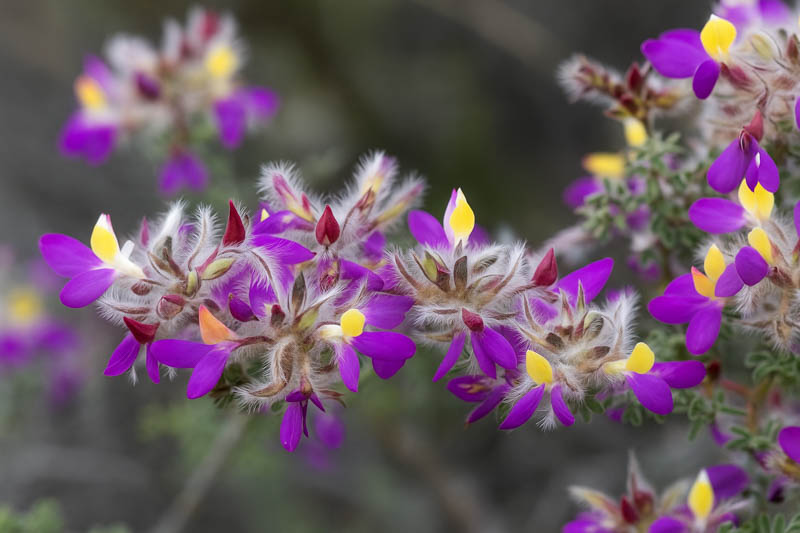
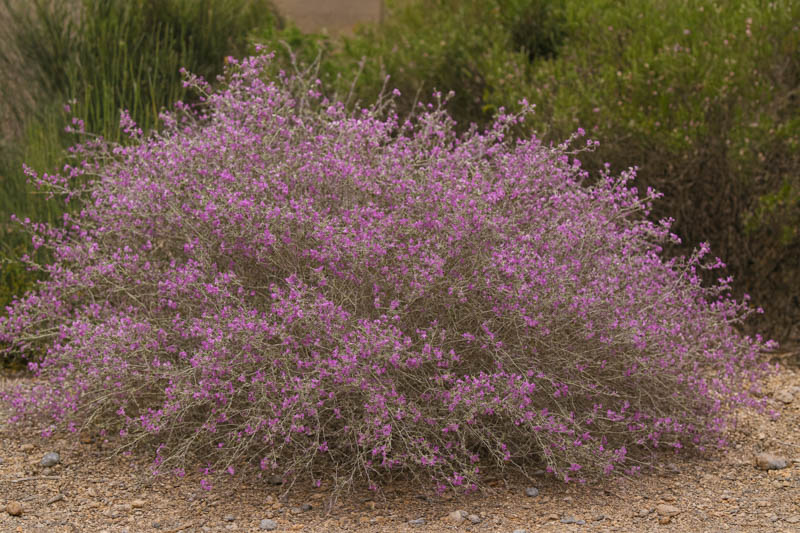


If you garden in blazing sun with thin, rocky soil and almost no irrigation, Dalea formosa might be your new best friend. Known as indigobush, feather dalea, or featherplume, this compact Southwest native shrub covers itself in clouds of purple flowers that native bees, and butterflies cannot resist. It thrives where other shrubs sulk: hot parkways, xeric slopes, and exposed ranch land in Texas, New Mexico, and the High Plains.
Summary: Compact, finely textured native shrub for hot, dry, windy sites in the Southern Great Plains and Southwest.
Use: Xeriscapes, hell strips, pollinator gardens, native shrub borders, highway and ranch plantings.
Highlight: Masses of purple pea flowers on feathery foliage, blooming off and on from spring through fall with very little water.
Note: A rugged, low mound that pairs perfectly with fourwing saltbush, blackfoot daisy, blue grama, and other Texas xeric plants.
| Botanical Name | Dalea formosa Torr. |
|---|---|
| Family | Fabaceae (pea or legume family) |
| Common Names | Feather dalea, featherplume, indigobush, feather dalea shrub |
| Native Range | Southern Great Plains and Southwest United States into northern Mexico, especially Texas, Arizona, New Mexico, Oklahoma, and Colorado, on dry plains, mesas, and rocky slopes. |
| Plant Type and Habit | Small, deciduous to semi evergreen shrub with rounded, mounding habit and fine, twiggy branching |
| Hardiness (USDA) | Roughly Zones 6 to 9, depending on drainage and winter wet |
| Size | About 3 to 6 ft tall and wide; naturally rounded mound |
| Sun and Exposure | Full sun; needs open exposure for dense growth and heavy bloom |
| Soil | Thrives in well drained, gravelly, sandy, or rocky soils, including calcareous and alkaline sites; poor soil is fine as long as it drains |
| Seasonal Interest | Showy purple flowers from late spring into fall; airy seed heads and soft texture through winter |
| Primary Uses | Low shrub layer in xeriscapes, rock gardens, hot street strips, pollinator borders, and restoration plantings |
Indigobush is a compact, finely textured native shrub that looks like a purple mist floating over the desert floor when in full bloom. It forms a low, rounded mound of thin, woody stems clothed in tiny, divided leaves. From a distance, the foliage reads as soft gray green, giving a cooling effect in hot, reflective sites.
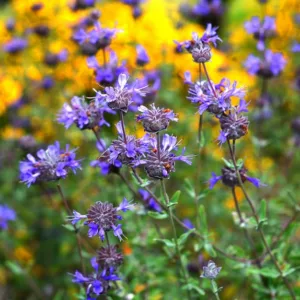
The star of the show is the bloom. Each stem is lined with small pea like flowers grouped in short spikes. Individual blossoms are usually purple to violet with a contrasting yellow center, classic pea family flowers that are magnets for native bees. In the right conditions, indigobush can flower off and on from late spring through fall, especially after summer rain pulses.
Dalea formosa is native to arid and semi arid parts of the Southern Great Plains and Southwest. It occurs naturally in Texas, Arizona, New Mexico, Oklahoma, and Colorado, extending south into northern Mexico on dry plains, mesas, gravelly slopes, and desert grasslands.
This background explains why indigobush is so at home in xeriscapes, prairie gardens, and roadside plantings. It evolved with intense sun, wind, and periodic drought, and it prefers those conditions over pampered, highly irrigated beds.
In cultivation, indigobush typically matures between 3 to 6 ft tall and wide, creating a natural dome or cushion. Growth is moderate. Plants usually reach useful size within two or three seasons, then slow down and focus on flowering and thickening their framework.
The branching is dense but not rigid, which gives the shrub a soft, informal outline. Unlike many non native foundation shrubs, it does not demand constant shearing. A light trim after flowering is usually enough to keep the tufted, feather like look.
indigobush carries its flowers on short upright spikes along the stems. The blooms are small but extremely numerous, so a mature plant can seem covered in purple. Flowering usually begins in late spring as temperatures rise and can continue into fall, especially in years with well timed rain.
As a member of the pea family, Dalea formosa forms small seed pods after flowering. These pods add subtle texture and provide seed for birds and for natural reseeding in favorable sites.
The foliage of indigobush is one of its best landscape features. Leaves are tiny and divided, giving the shrub a fine, airy texture that moves with every breeze. Color is typically gray green to blue green, which plays well with silver leaved plants like fourwing saltbush and with bold forms like yucca and agave.
Because the foliage is so fine, indigobush visually knits together grasses, cacti, and wildflowers, helping a xeric planting look intentional rather than random.
Indigobush is adapted to regions with hot summers, strong sun, and relatively low humidity. It is generally hardy in USDA Zones 6 to 9 when given perfect drainage. In colder climates, winter wet is more damaging than cold itself. Plant on slopes, berms, or coarse, rocky beds where snowmelt and rain can drain quickly.
In mild winters it may hold some foliage and behave as semi evergreen. In colder or harsher climates it can drop more leaves and resprout strongly in spring.
indigobush may be small, but it pulls its weight in a wide range of designs:
Members of the genus Dalea are excellent pollinator plants, and indigobush is no exception. The pea flowers are visited by native solitary bees, bumblebees, butterflies, and other beneficial insects. Extended bloom through the warm season helps bridge nectar gaps between spring wildflowers and fall asters.
The dense, twiggy structure offers cover for small birds and insects, and the seed provides some forage. In a diverse native planting, indigobush helps build a resilient, wildlife friendly plant community.
Drought tolerance is one of the main reasons indigobush is promoted for xeric landscaping. In its native habitat it survives on seasonal rainfall and long dry periods. Once established in the garden, it usually needs irrigation only in the most severe droughts.
During the first one to two growing seasons, water deeply but infrequently, allowing the soil to dry between soakings. This encourages deep roots and long term resilience. After that, many gardeners treat indigobush as a no irrigation shrub, especially on native soil.
Plant indigobush in full sun only. At least six, and preferably eight or more, hours of direct sun will give the best flower production and the tightest mound. In partial shade, plants can become thin and flower less heavily.
Soil drainage is the key factor. Indigobush thrives in:
Heavy clay that stays wet is the enemy. If clay is all you have, plant on a berm amended with coarse sand and gravel, or site indigobush at the top of a slope where water moves away quickly.
Use a simple schedule:
As a legume, indigobush can work with soil microbes to access nitrogen. It does not need rich soil or heavy fertilizer. Too much nitrogen can push weak, leafy growth at the expense of flowers.
Mulch is optional but helpful in the first years. Use rock, gravel, or a thin layer of coarse organic mulch that will not hold water against the crown.
indigobush requires only light pruning:
indigobush can be grown from seed, though germination can be variable. Seeds benefit from scarification or soaking to soften the seed coat. Sow in a well drained mix and keep just slightly moist until seedlings appear.
Semi hardwood cuttings taken in late spring or early summer may root under mist with bottom heat. Because this process can be tricky at home, many gardeners prefer to purchase container plants from native or xeric focused nurseries.
When matched with its preferred conditions, indigobush is usually trouble free.
Dalea formosa, commonly called feather dalea or featherplume, is a small, rounded native shrub in the pea family. It produces fine, feathery foliage and masses of purple pea like flowers that attract bees and butterflies in hot, dry landscapes.
eather dalea is native to the Southern Great Plains and Southwest, especially Texas, New Mexico, Oklahoma, and Colorado, and extends into northern Mexico. It typically grows on dry plains, mesas, and rocky slopes with well drained, often calcareous soils.
In most gardens feather dalea reaches about 1 to 3 feet tall and 2 to 4 feet wide, forming a low, dense mound. It stays naturally compact and does not usually need heavy pruning.
Yes. Dalea formosa is highly drought tolerant once established. It evolved in arid and semi arid regions and prefers infrequent, deep watering over regular irrigation. In xeriscapes it often survives on rainfall alone after the first couple of years.
Feather dalea is excellent for pollinators. Its long blooming purple flowers attract native bees, bumble bees, butterflies, and other beneficial insects, making it a valuable addition to wildlife friendly and pollinator focused gardens.
Feather dalea is easy to grow if you can provide its key requirements: full sun and fast drainage. Avoid heavy, wet soils and overwatering, and this native shrub will reward you with years of color and texture with very little maintenance.
Updated: November 2025
| Hardiness |
6 - 9 |
|---|---|
| Plant Type | Shrubs |
| Plant Family | Leguminosae |
| Exposure | Full Sun |
| Season of Interest | Summer (Early, Mid, Late) |
| Height | 3' - 6' (90cm - 180cm) |
| Spread | 3' - 6' (90cm - 180cm) |
| Spacing | 36" - 72" (90cm - 180cm) |
| Maintenance | Low |
| Water Needs | Low |
| Soil Type | Chalk, Loam, Sand |
| Soil pH | Acid, Alkaline, Neutral |
| Soil Drainage | Well-Drained |
| Characteristics | Showy |
| Native Plants | United States, Southwest, Texas, Arizona, New Mexico, Oklahoma, Colorado, Rocky Mountains |
| Tolerances | Drought, Dry Soil, Rocky Soil |
| Attracts | Bees, Butterflies, Birds |
| Garden Uses | Banks And Slopes, Beds And Borders |
| Garden Styles | Gravel and Rock Garden, Informal and Cottage, Prairie and Meadow |
| Toxic to Humans | No known toxicity |
| Toxic to Cats | No known toxicity |
| Toxic to Dogs | No known toxicity |
| Toxic to Horses | No known toxicity |


| Hardiness |
6 - 9 |
|---|---|
| Plant Type | Shrubs |
| Plant Family | Leguminosae |
| Exposure | Full Sun |
| Season of Interest | Summer (Early, Mid, Late) |
| Height | 3' - 6' (90cm - 180cm) |
| Spread | 3' - 6' (90cm - 180cm) |
| Spacing | 36" - 72" (90cm - 180cm) |
| Maintenance | Low |
| Water Needs | Low |
| Soil Type | Chalk, Loam, Sand |
| Soil pH | Acid, Alkaline, Neutral |
| Soil Drainage | Well-Drained |
| Characteristics | Showy |
| Native Plants | United States, Southwest, Texas, Arizona, New Mexico, Oklahoma, Colorado, Rocky Mountains |
| Tolerances | Drought, Dry Soil, Rocky Soil |
| Attracts | Bees, Butterflies, Birds |
| Garden Uses | Banks And Slopes, Beds And Borders |
| Garden Styles | Gravel and Rock Garden, Informal and Cottage, Prairie and Meadow |
| Toxic to Humans | No known toxicity |
| Toxic to Cats | No known toxicity |
| Toxic to Dogs | No known toxicity |
| Toxic to Horses | No known toxicity |
How many Dalea formosa (Indigobush) do I need for my garden?
| Plant | Quantity | |
|---|---|---|
| Dalea formosa (Indigobush) | N/A | Buy Plants |
Create a membership account to save your garden designs and to view them on any device.
Becoming a contributing member of Gardenia is easy and can be done in just a few minutes. If you provide us with your name, email address and the payment of a modest $25 annual membership fee, you will become a full member, enabling you to design and save up to 25 of your garden design ideas.
Join now and start creating your dream garden!
Create a membership account to save your garden designs and to view them on any device.
Becoming a contributing member of Gardenia is easy and can be done in just a few minutes. If you provide us with your name, email address and the payment of a modest $25 annual membership fee, you will become a full member, enabling you to design and save up to 25 of your garden design ideas.
Join now and start creating your dream garden!