Feather Reed Grass ‘Avalanche’, Variegated Feather Reed Grass, Avalanche Feather Reed Grass, Reed Grass ‘Avalanche’,
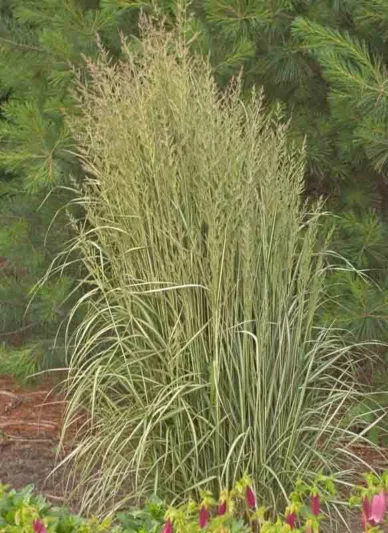


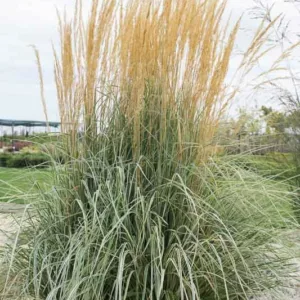
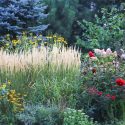
Calamagrostis x acutiflora ‘Avalanche’ is the feather reed grass to plant when you want crisp, architectural height – plus bright, high-contrast foliage that reads from across the garden. Each narrow blade looks “painted” with a creamy-white center and green margins, so the clump glows like a living spotlight in borders and mixed beds. When summer arrives, tall, feathery plumes rise above the foliage in soft pinkish-purple, then mature to a golden tan and often linger well into winter for extra seasonal interest and structure.
Fast-growing, reliable, and refreshingly low drama, ‘Avalanche’ performs best in full sun to part shade in average, medium to wet soils, including heavy clay. Once established, it is considered drought tolerant and is often listed as deer and rabbit resistant. (Like most grasses, it is wind-pollinated rather than nectar-rich for bees, butterflies, or hummingbirds, but it still adds real ecological value as cover, texture, and shelter – and it is known to attract birds.)
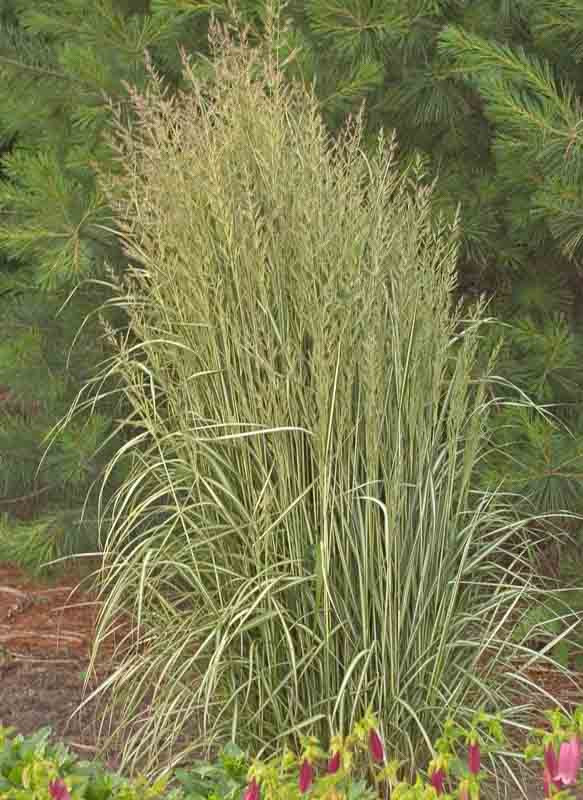
Summary: Variegated, cool-season clump-forming ornamental grass with narrow blades featuring a creamy-white center and green margins, plus tall, airy summer plumes that mature to golden tan and often persist into winter.
Use: Ideal for perennial borders, prairie-style plantings, modern designs, narrow spaces, and brightening mixed beds with clean vertical lines.
Highlight: Multi-season interest – fresh spring growth, summer plumes, fall color, and winter structure.
Note: ‘Avalanche’ is often described as the opposite variegation pattern of ‘Overdam’ – white centers rather than white edges – making it a strong choice for bold contrast planting.
| Botanical Name | Calamagrostis x acutiflora ‘Avalanche’ |
|---|---|
| Family | Grass family (Poaceae) |
| Common Names | Feather Reed Grass, Reed Grass |
| Native Range | This plant is a garden hybrid (Calamagrostis x acutiflora) rather than a wild species. |
| Plant Type and Habit | Cool-season, clump-forming ornamental grass with a compact, tufted silhouette and upright flowering stems |
| Hardiness (approx. USDA) | Often listed as hardy in USDA Zones 5-9 (performance is best where summers are not relentlessly hot and humid). |
| Height | 3-5 ft. (90-150 cm) in bloom; clump stays relatively narrow. |
| Spread | 2 ft. (60 cm) |
| Spacing | 18-24 in. (45-60 cm) |
| Sun and Exposure | Best in full sun; part shade tolerated (especially in hotter climates). |
| Soil | Average, medium to wet, but well-drained soil; excellent clay tolerance. |
| Seasonal Interest | Summer plumes with strong fall and winter persistence |
| Flower – Plume Color | Pinkish-purple plumes maturing to golden tan |
| Foliage Color | Narrow blades with a creamy-white center and green margins (bold variegation for high-contrast plantings) |
| Fragrance | None |
| Drought Tolerant | Yes (once established) |
| Heat Tolerant | Moderate (best with consistent moisture in hot, humid regions) |
| Pollution Tolerant | Yes |
| Nectar – Pollen | Not a primary nectar plant |
| Attracts | Birds |
| Deer – Rabbit | Often considered deer and rabbit resistant |
| Toxicity | Generally considered non-toxic |
| Invasive Status | Not considered invasive; clump-forming and well-behaved in gardens |
‘Avalanche’ is a compact, tufted feather reed grass grown for two headline features: bold variegated foliage and tall, elegant plumes. The leaves form a neat clump of narrow blades that arch just enough to look soft while still reading as crisp and intentional. In summer, flowering stems rise above the foliage and create those classic feathery plumes – airy, upright, and perfect for adding height without adding bulk.
Calamagrostis x acutiflora is a hybrid reed grass widely used in ornamental planting. ‘Avalanche’ is a cultivar selected for its distinctive variegation and dependable garden performance, so it is best described as garden-origin rather than a wild native species.
This is a true clump-former. It expands gradually from the crown, stays where you plant it, and does not run through the garden. That well-behaved habit is why designers rely on feather reed grasses for structured, repeatable patterns. ‘Avalanche’ is also considered fast-growing in cool-season conditions – spring and early fall are when it looks especially fresh and energetic.
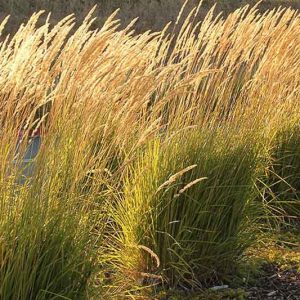
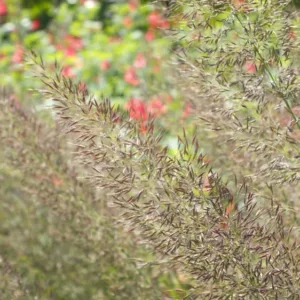
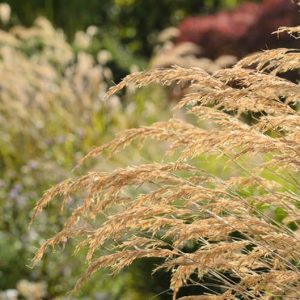
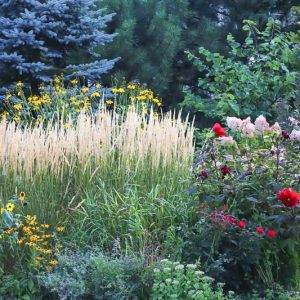
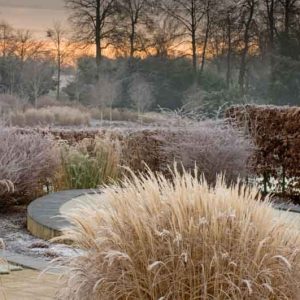
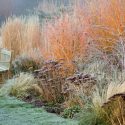
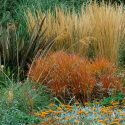
Plumes typically appear in summer. They often open with a pinkish-purple tone, then fade and mature to a warm golden tan. One of the biggest wins is persistence: the seed heads can remain attractive well into fall and often stand through winter if left uncut.
The foliage is the early-season showstopper: narrow blades with a creamy-white center that brightens the border like a ribbon of light. Through summer heat, ‘Avalanche’ is noted for holding its variegation well, so the clump stays luminous instead of washing out. As the season progresses, the plant shifts from “foliage sparkle” to “plume drama,” and in winter, dried stems add structure, movement, and that satisfying rustle in the breeze.
Calamagrostis x acutiflora ‘Avalanche’ is commonly listed as hardy across a broad range (often Zones 5-9). In colder climates, the top growth dries and stands through winter; in spring, new shoots emerge from the crown. In milder climates, it may look present for much of the year, but it still benefits from a clean annual cutback before new growth begins.
‘Avalanche’ is not grown as a nectar plant (it is wind-pollinated), but it still supports garden life through structure: shelter, seasonal cover, and perching or hiding space for small wildlife. For more pollinator action, pair it with nectar-rich perennials nearby for bees, butterflies, and hummingbirds – while the grass provides movement and a clean “framework” around them.
‘Avalanche’ is widely regarded as rabbit and deer-resistant. No plant is completely immune when wildlife pressure is high, but heavy browsing is uncommon with feather reed grass.
Once established, ‘Avalanche’ is considered drought tolerant. For the best foliage color and plume performance, it appreciates occasional deep watering during prolonged heat, especially in sandy soils or containers.
Calamagrostis x acutiflora ‘Avalanche’ is generally considered non-toxic to humans and pets. As with all garden plants, discourage chewing or ingestion.
‘Avalanche’ is not considered invasive and is valued for being predictable and clump-forming. It expands gradually and is easy to manage by division if it becomes wider than you prefer. (Many feather reed grass cultivars are described as non-invasive in gardens due to their clump-forming habit and limited spread.)
Keep feeding light. Too much fertilizer can cause soft growth and leaning stems. A spring compost top-dress is typically enough. If your soil is very lean, a small dose of balanced fertilizer in spring can help, but avoid overdoing it.
‘Avalanche’ is generally trouble-free. In crowded or stressed conditions, you may see occasional minor issues (like aphids on fresh growth), but serious pest damage is uncommon for this ornamental grass.
No – ‘Avalanche’ is clump-forming, meaning it stays where you plant it and slowly enlarges into a tidy tuft instead of running through the garden.
‘Avalanche’ blooms in summer, producing airy, feathery plumes that often mature to golden tan and can persist into fall and winter.
In bloom, ‘Avalanche’ typically reaches about 3-5 ft tall and about 2 ft wide, making it a strong vertical accent without taking much ground space.
Full sun gives ‘Avalanche’ the strongest stems, best plumes, and the most upright form, but it can also grow well in part shade, especially in hotter climates.
Yes – once established, ‘Avalanche’ is drought tolerant, but occasional deep watering during long hot spells keeps it looking freshest.
Cut ‘Avalanche’ back in late winter, just before new growth starts, so you can enjoy the winter seed heads and still give the plant a clean spring reset.
Flopping usually means too much shade, overly rich soil, or excess fertilizer; more sun and lighter feeding typically restore sturdier, upright growth.
Yes – ‘Avalanche’ is a perennial ornamental grass that returns each spring from the crown in the right growing zones.
Updated: January 2026 – Reviewed by Gardenia Editors
| Hardiness |
5 - 9 |
|---|---|
| Heat Zones |
1 - 9 |
| Climate Zones | 2B, 3, 3A, 3B, 4, 5, 6, 7, 8, 9, 10, 11, 12, 13, 14, 15, 16, 17, 18, 19, 20, 21, 22, 23, 24 |
| Plant Type | Ornamental Grasses |
| Plant Family | Poaceae |
| Genus | Calamagrostis |
| Common names | Feather Reed Grass, Reed Grass |
| Exposure | Full Sun, Partial Sun |
| Season of Interest | Spring (Early, Mid, Late), Summer (Early, Mid, Late), Fall |
| Height | 3' - 5' (90cm - 150cm) |
| Spread | 1' - 2' (30cm - 60cm) |
| Spacing | 18" - 24" (50cm - 60cm) |
| Maintenance | Low |
| Water Needs | Average |
| Soil Type | Chalk, Clay, Loam, Sand |
| Soil pH | Acid, Alkaline, Neutral |
| Soil Drainage | Moist but Well-Drained, Well-Drained |
| Characteristics | Dried Arrangements, Cut Flowers, Showy |
| Tolerances | Drought, Deer, Rabbit, Wet Soil, Heat, Black Walnut, Erosion |
| Attracts | Birds |
| Garden Uses | Banks And Slopes, Beds And Borders, Patio And Containers |
| Garden Styles | City and Courtyard, Informal and Cottage, Modern Garden, Prairie and Meadow |
| Toxic to Humans | No known toxicity |
| Toxic to Cats | No known toxicity |
| Toxic to Dogs | No known toxicity |
| Toxic to Horses | No known toxicity |


| Hardiness |
5 - 9 |
|---|---|
| Heat Zones |
1 - 9 |
| Climate Zones | 2B, 3, 3A, 3B, 4, 5, 6, 7, 8, 9, 10, 11, 12, 13, 14, 15, 16, 17, 18, 19, 20, 21, 22, 23, 24 |
| Plant Type | Ornamental Grasses |
| Plant Family | Poaceae |
| Genus | Calamagrostis |
| Common names | Feather Reed Grass, Reed Grass |
| Exposure | Full Sun, Partial Sun |
| Season of Interest | Spring (Early, Mid, Late), Summer (Early, Mid, Late), Fall |
| Height | 3' - 5' (90cm - 150cm) |
| Spread | 1' - 2' (30cm - 60cm) |
| Spacing | 18" - 24" (50cm - 60cm) |
| Maintenance | Low |
| Water Needs | Average |
| Soil Type | Chalk, Clay, Loam, Sand |
| Soil pH | Acid, Alkaline, Neutral |
| Soil Drainage | Moist but Well-Drained, Well-Drained |
| Characteristics | Dried Arrangements, Cut Flowers, Showy |
| Tolerances | Drought, Deer, Rabbit, Wet Soil, Heat, Black Walnut, Erosion |
| Attracts | Birds |
| Garden Uses | Banks And Slopes, Beds And Borders, Patio And Containers |
| Garden Styles | City and Courtyard, Informal and Cottage, Modern Garden, Prairie and Meadow |
| Toxic to Humans | No known toxicity |
| Toxic to Cats | No known toxicity |
| Toxic to Dogs | No known toxicity |
| Toxic to Horses | No known toxicity |
How many Calamagrostis x acutiflora ‘Avalanche’ (Feather Reed Grass) do I need for my garden?
| Plant | Quantity | |
|---|---|---|
| Calamagrostis x acutiflora ‘Avalanche’ (Feather Reed Grass) | N/A | Buy Plants |
Create a membership account to save your garden designs and to view them on any device.
Becoming a contributing member of Gardenia is easy and can be done in just a few minutes. If you provide us with your name, email address and the payment of a modest $25 annual membership fee, you will become a full member, enabling you to design and save up to 25 of your garden design ideas.
Join now and start creating your dream garden!
Create a membership account to save your garden designs and to view them on any device.
Becoming a contributing member of Gardenia is easy and can be done in just a few minutes. If you provide us with your name, email address and the payment of a modest $25 annual membership fee, you will become a full member, enabling you to design and save up to 25 of your garden design ideas.
Join now and start creating your dream garden!