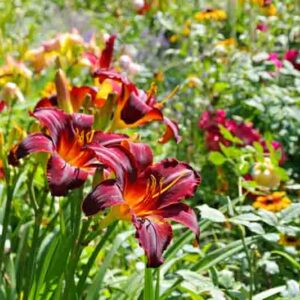
Not every daylily deserves the invasive label. The familiar orange ditch lily, Hemerocallis fulva, can escape gardens and form dense colonies, while modern ornamental hybrids usually remain localized clumps. Learn how to tell them apart, assess the plant in your garden, check local status, and choose attractive native alternatives.


Ask whether daylilies are invasive and you may hear two completely different answers. One gardener has watched orange daylilies take over a roadside or old property. Another has grown a named hybrid in the same flower bed for years with little more than gradual clump expansion.
Both observations can be correct because they may refer to very different plants.
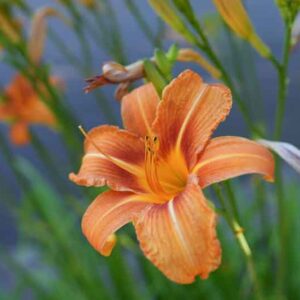
The familiar orange or tawny daylily, Hemerocallis fulva, also called ditch lily, can spread vigorously, escape cultivation, and form persistent colonies outside gardens. Modern ornamental daylily (Hemerocallis) hybrids generally behave differently: they are typically clump-forming plants that gradually enlarge but usually remain much more localized in managed landscapes.
That distinction matters. Saying “daylilies are invasive” is too broad. That distinction matters. Saying “daylilies are invasive” is too broad because different daylilies can behave very differently.
A better question is: Which daylily do I have, how is it actually spreading, and what is its invasive status where I live
Identify → Observe → Check → Decide
| Step | Ask | Why It Matters |
|---|---|---|
| Identify | Is it H. fulva, another species, or a named garden hybrid? | The invasive reputation of ditch lily should not automatically be applied to the whole genus. |
| Observe | Is it forming an expanding colony, appearing beyond the bed, or moving into unmanaged ground? | Actual spread helps distinguish ordinary garden growth from a developing escape problem. |
| Check | How is that species classified by your state, province, or local invasive-plant authority? | Invasive status, recommendations, and regulations vary geographically. |
| Decide | Should you leave it, contain it, remove it, replace it with a hybrid, or choose a native alternative? | The right response depends on plant identity, behavior, location, and garden goals. |
Gardenia’s guiding principle: Judge the daylily you actually have, not the common name alone.
Some daylilies can be invasive, but the entire genus should not be treated as one ecological category.
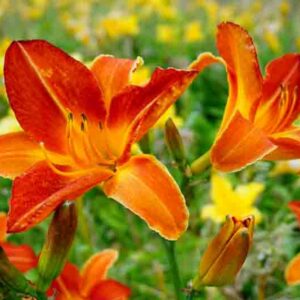
Hemerocallis fulva, the tawny, orange, common, or ditch daylily, is an Asian species that has naturalized widely outside its native range. It spreads vigorously through underground growth and can develop broad, persistent colonies along roadsides, old homesites, woodland edges, and other disturbed areas.
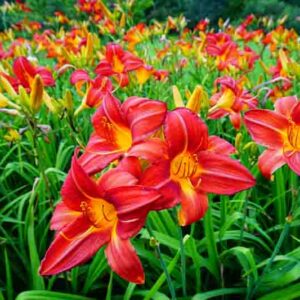
Modern ornamental hybrids are different. They generally develop as expanding clumps rather than the broad colony-forming stands associated with H. fulva. Illinois Extension specifically distinguishes contemporary ornamental hybrids from invasive tawny daylily, describing the hybrids as clump-forming plants that do not spread aggressively.
Do not confuse “daylily” with “ditch lily.” Hemerocallis is an entire genus containing species and thousands of cultivated hybrids. In North America, the strongest invasive concern usually centers on Hemerocallis fulva, not every named garden cultivar.

Hemerocallis fulva is native to Asia, including parts of China and Japan. It was introduced into cultivation elsewhere and is now naturalized across much of Europe and North America.
Its persistence is easy to understand. Tawny daylily tolerates a wide range of conditions, survives for many years, and spreads efficiently through underground rhizomes and associated vegetative growth. NC State Extension describes it as naturalizing easily and spreading rapidly by rhizomes, while Missouri Botanical Garden calls it a superb colonizer.
An invasive ornamental does not have to scatter huge quantities of seed across a landscape to become a problem. H. fulva can expand vegetatively as established plants produce additional underground growth and new shoots.
A small patch may therefore become an increasingly broad colony even when seedlings are not appearing throughout the garden.
This matters especially when a colony reaches a roadside, drainage area, field edge, woodland margin, abandoned property, or other place where the plant is no longer being actively managed.
The ecological concern is not simply that the plant becomes inconvenient in a flower bed. Dense stands outside cultivation can occupy space and resources that would otherwise support other vegetation.
Illinois Extension describes tawny daylily as forming dense monocultures in places such as roadsides, woodland edges, and old homesites, where it can outcompete native plants.
The risk is colony formation, not one orange flower. The concern with H. fulva is its ability to persist, spread underground, and build broad populations beyond cultivated beds.
This is the distinction most gardeners need and the one most easily lost when daylilies are discussed as though they were interchangeable.
| Characteristic | Hemerocallis fulva | Modern Garden Hybrids |
|---|---|---|
| Origin | Asian species | Cultivated hybrids developed through daylily breeding |
| Typical habit | Strongly spreading and colony-forming | Clump-forming and gradually expanding |
| Garden spread | Can expand rapidly through underground growth and persist beyond cultivation | Usually remains much more localized in managed gardens, although mature clumps increase in size |
| Invasive concern | Documented as invasive or problematic in parts of North America; regional status varies | Modern ornamental hybrids are generally not considered invasive in the way H. fulva is |
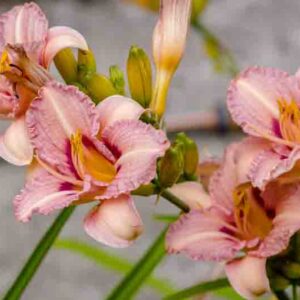
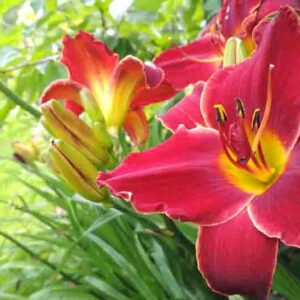
| Flowers | Typically tawny orange | Available in cream, yellow, orange, pink, red, purple, near-white, bicolors, eyes, edges, and many flower forms |
| Bloom behavior | Species flowering pattern | Cultivars span many bloom periods and may include reblooming selections |
| Garden approach | Use particular caution near natural or unmanaged areas | Suitable ornamental choices where nonnative plants fit the gardener’s goals |
Gardenia’s distinction: A plant can be vigorous without being invasive. Modern hybrid daylilies enlarge into clumps and may eventually need division, but ordinary clump expansion in a managed garden is not equivalent to H. fulva forming persistent colonies beyond cultivation.

Gardeners often use “aggressive” and “invasive” as though they mean the same thing. Keeping them separate leads to better decisions.
An aggressive garden plant may grow rapidly, produce a large clump, spread beyond its allotted bed, or require regular division. That can make it inconvenient, but it does not automatically make it ecologically invasive.
Invasive is generally used for nonnative species that establish beyond cultivation, spread into surrounding landscapes, and cause or are capable of causing ecological or other harm. Formal definitions and regulatory categories vary among jurisdictions.
This is why the statement “my plant spreads quickly” cannot, by itself, tell you whether a species is invasive.
Ask two separate questions: Is this plant spreading too much for my garden? And is this species documented as invasive where I live? The answers are not necessarily the same.

Hemerocallis fulva is so familiar along roadsides and around old properties that it is sometimes mistaken for a North American wildflower. It is not. Its native range is in Asia, and its roadside abundance reflects centuries of cultivation followed by naturalization.
Typical clues include:
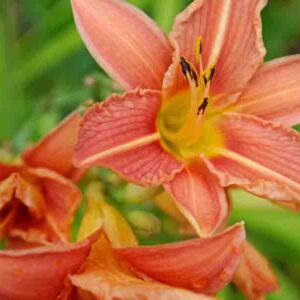
Color alone is not enough for identification. Many modern cultivars also produce orange flowers. The stronger clues are the combination of plant identity, colony-forming growth, relatively uniform appearance, and landscape context.
Orange does not automatically mean invasive. A named orange hybrid growing as a contained clump is not the same plant as a colony of tawny daylily spreading along a roadside.
Explore Gardenia’s Hemerocallis collection to see the diversity of cultivated daylily colors, forms, sizes, and flowering habits.
No. It is better to say that H. fulva is widely naturalized and invasive or problematic in parts of North America than to say it has the same legal or management status everywhere.
States and regions use different systems. A plant may be described as invasive, prohibited, regulated, restricted, discouraged, watch-listed, or simply naturalized depending on the jurisdiction.
Before planting, propagating, moving, selling, or deliberately spreading H. fulva, check the current guidance for your location.
Location matters. Gardenia can help identify the ecological concern, but current regional authorities should be used for legal status and local management recommendations.
Modern ornamental hybrids generally behave very differently from tawny daylily.
Illinois Extension distinguishes modern hybrids from invasive H. fulva, describing the hybrids as clump-forming plants that do not spread aggressively. NC State likewise describes hybrid daylilies as clumping plants, although the clumps grow and spread as they mature.
That means named cultivars such as ‘Happy Returns‘, ‘Pardon Me‘, ‘Prairie Blue Eyes‘, or ‘Stella de Oro‘ should not automatically be assigned the invasive behavior of H. fulva.
A hybrid daylily clump will normally become wider with age. A vigorous plant may eventually fill its allotted space and need division or relocation.
That is ordinary perennial growth. It is not the same ecological behavior as an introduced species escaping cultivation and creating persistent colonies in surrounding natural or semi-natural vegetation.
For guidance on managing mature clumps, see Gardenia’s When and How to Divide Daylilies.
Noninvasive does not mean native. A modern hybrid daylily can be a well-behaved ornamental without providing the same ecological relationships as a locally native perennial. Those are separate gardening decisions.
The answer depends on where the patch is growing, whether it is spreading, and how the species is treated by local invasive-plant authorities.
First confirm the identification. If the species is discouraged or invasive where you live, removing a small patch before it expands is usually easier than dealing with a large established colony later.
A patch moving into adjoining lawn, meadow, roadside, drainage area, woodland edge, or other unmanaged ground deserves more attention.
Because H. fulva persists through underground vegetative growth, cutting flowers or foliage alone will not eliminate the colony. Mechanical removal requires digging out as much of the underground plant material as practical and monitoring the area for regrowth.
Containment or removal becomes more important when the patch borders natural vegetation. For a large colony, follow local invasive-species management recommendations rather than relying on a generic control method.
Do not relocate the problem. Avoid dumping unwanted crowns, roots, rhizomes, or soil containing plant fragments along roadsides, woodland edges, vacant lots, drainage areas, or other places where the plant could establish.
If you are removing tawny daylily because of invasive concerns, a locally native perennial can preserve summer color while contributing more directly to regional plant communities and wildlife relationships.
The best substitute is not necessarily the plant with the closest flower color. First ask what job the tawny daylily was performing in the landscape. The table below highlights 10 especially useful alternatives for different garden roles; explore all 18 Gardenia plant profiles below for additional choices.
These alternatives are intended for gardeners replacing Hemerocallis fulva. There is no general reason to remove a well-behaved modern hybrid simply because it is a daylily.
| Native Alternative | Why Consider It | What It Replaces Best |
|---|---|---|
| Asclepias tuberosa Butterfly Milkweed |
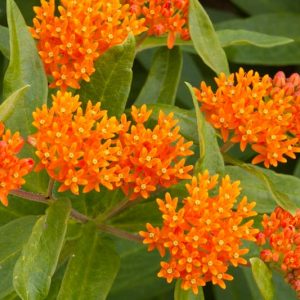
Brilliant orange summer flowers and strong wildlife value | Orange color in sunny, relatively dry beds |
| Asclepias incarnata Swamp Milkweed |
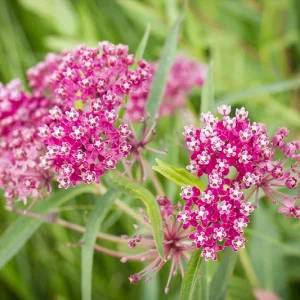
Tall summer flowers with excellent habitat value | Moist borders, rain gardens, and wetter soils |
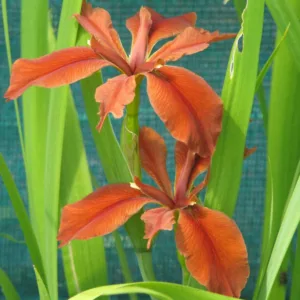
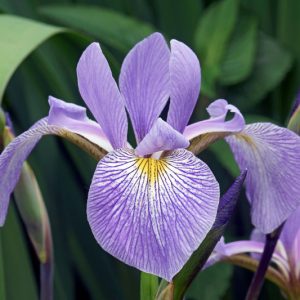
| Iris fulva Copper Iris |
Copper-red flowers with architectural, sword-like foliage | Blade-like foliage and color in suitable moist-region gardens |
| Lilium superbum Turk’s Cap Lily |
Tall stems topped by dramatic orange-red native lily flowers | Vertical summer drama and orange-red color |
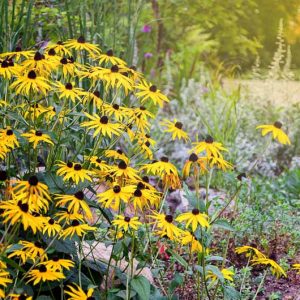
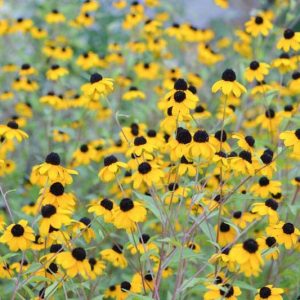
| Rudbeckia hirta Black-Eyed Susan |
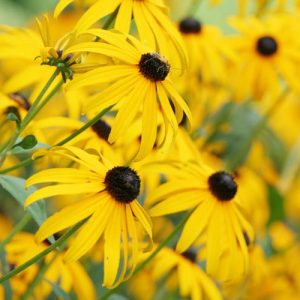
Bright summer flowers and easy massing in sunny sites | Broad drifts and easy summer color |
| Echinacea purpurea Purple Coneflower |
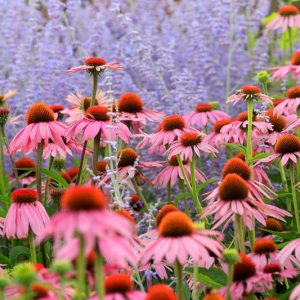
Long-lasting summer flowers with strong wildlife value | Mixed borders and pollinator-focused plantings |
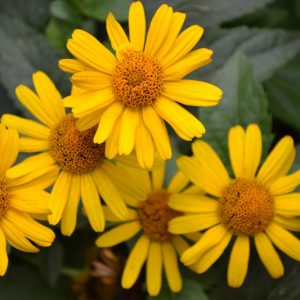
| Heliopsis helianthoides False Sunflower |
Long-season yellow flowers on an upright perennial | Sunny borders needing sustained midsummer color |
| Tradescantia virginiana Virginia Spiderwort |
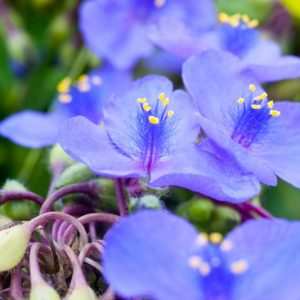
Clumping habit, arching strap-like foliage, and colorful spring-to-summer flowers | The closest foliage and overall habit substitute for daylilies |
| Coreopsis grandiflora Large-Flower Tickseed |
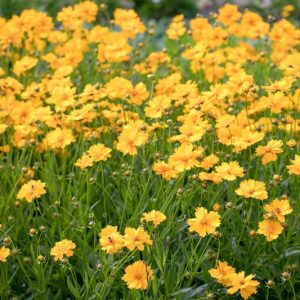
Bright yellow flowers over a long season on a compact, clump-forming perennial | Long-lasting summer color in sunny borders |
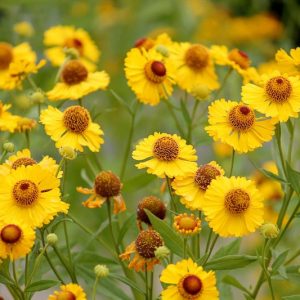
| Helenium autumnale Common Sneezeweed |
Upright native perennial with masses of warm yellow flowers in late summer and fall | Moist sunny sites and extending color later in the season |
Native status is regional. A species native somewhere in the United States is not necessarily native to your state, ecoregion, or county. Match the replacement to your location as well as to sunlight, soil, moisture, and landscape function.
Choose the replacement by function, not flower color alone. Was the tawny daylily massing a slope, tolerating damp soil, creating orange summer color, or filling a sunny border? Replace the job as well as the plant.
Use the plant profiles below to compare native alternatives by flower color, height, bloom season, sunlight, soil, moisture, hardiness, and wildlife value. Choose the plant that replaces the landscape role of your ditch lily – not simply its orange flowers.
| Hardiness |
3 - 9 |
|---|---|
| Heat Zones |
2 - 11 |
| Plant Type | Perennials |
| Genus | Hemerocallis |
| Exposure | Full Sun, Partial Sun |
| Season of Interest | Summer (Mid, Late) |
| Native Plants | United States |
| What You Have | Main Question | Gardenia’s Suggested Next Step |
|---|---|---|
| Confirmed H. fulva in a region where it is invasive | Could it escape or expand further? | Follow local management guidance and consider replacement. |
| H. fulva beside woodland, meadow, wetland, or other natural habitat | Is spread beyond cultivation likely? | Prioritize containment and check regional recommendations. |
| Named modern hybrid forming a normal expanding clump | Is it simply getting too large for the bed? | Keep it if desired and divide or relocate when necessary. |
| Unknown orange daylily forming a broad colony | Could this be H. fulva? | Identify it before propagating, sharing, or moving it. |
| Well-behaved hybrid in a garden being converted to natives | Would a native plant better serve your goals? | Choose a locally native alternative suited to the same conditions and landscape function. |
| Claim | Verdict | Why |
|---|---|---|
| “All daylilies are invasive.” | False | Modern ornamental hybrids generally behave as localized, gradually expanding clumps rather than invasive colonies. |
| “Orange roadside daylilies are native wildflowers.” | Usually false | H. fulva is native to Asia and has naturalized widely in North America. |
| “If a perennial spreads, it is invasive.” | False | Garden vigor, clump expansion, and ecological invasion are different concepts. |
| “Named hybrid daylilies behave like ditch lilies.” | Generally false | Modern hybrids are typically clump-forming and much more localized in managed gardens. |
| “H. fulva has the same invasive status everywhere.” | False | Regional invasive lists, recommendations, and regulations differ. |
| “A noninvasive hybrid is ecologically the same as a native plant.” | False | Invasiveness and native status answer different ecological questions. |
Gardenia’s shortcut: Before labeling a daylily invasive, look at three things: species identity + actual behavior + local status. Those three pieces of information give a much better answer than the common name alone.
Not all daylilies are invasive. Hemerocallis fulva, the orange or tawny ditch lily, can spread aggressively and is considered invasive or problematic in parts of North America. Modern ornamental hybrids generally behave as clump-forming garden plants and are not considered invasive in the same way.
Hemerocallis fulva is widely naturalized outside its Asian native range and can spread vigorously through underground growth to form persistent colonies. It is documented as invasive or problematic in a number of regions, but local status should be checked with current state or regional authorities.
The common names orange daylily, tawny daylily, common daylily, and ditch lily are often used for Hemerocallis fulva. However, many modern hybrid daylilies also have orange flowers, so flower color alone is not enough for reliable identification.
Modern ornamental daylily hybrids are generally clump-forming and are not considered invasive in the way Hemerocallis fulva is. Their clumps gradually enlarge with age and may need division, but ordinary garden expansion is not the same as ecological invasion.
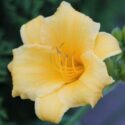
‘Stella de Oro’ is a modern cultivated daylily rather than the tawny daylily Hemerocallis fulva. Modern hybrids generally behave as localized clumps rather than forming the broad invasive colonies associated with ditch lily.
Hemerocallis fulva spreads effectively through underground rhizomes and related vegetative growth. This allows established patches to enlarge, persist, and form broad colonies without depending entirely on seed production.
Tawny daylily typically has tawny-orange flowers and is often seen forming broad, uniform colonies along roadsides, old homesites, and unmanaged areas. Modern hybrids come in a much wider range of flower colors and forms and generally grow as more localized clumps. Consider growth habit and context as well as flower color.
First identify the plant. If it is Hemerocallis fulva, check its current status in your region and observe whether it is moving beyond cultivation. Removal deserves particular consideration where colonies are expanding toward natural vegetation.
Small patches can sometimes be managed through persistent removal and monitoring, but established colonies can be difficult to eliminate because the plant survives and spreads through underground growth. Follow regional management advice for larger infestations.
No. Hemerocallis is native to Eurasia, and Hemerocallis fulva is native to Asia. Orange daylilies growing along North American roadsides are naturalized plants rather than native wildflowers.
Depending on your location and site, alternatives can include butterfly milkweed, swamp milkweed, copper iris, native lilies, coneflowers, black-eyed Susans, and false sunflower. Choose a locally native plant that matches the sunlight, soil, moisture, size, and landscape function you need.
No. Many perennials gradually expand within a garden. A plant can be vigorous, spreading, or require regular division without being an ecologically invasive species. Plant identity, escape beyond cultivation, ecological effects, and regional status all matter.
The statement “daylilies are invasive” is too broad to be useful.
Hemerocallis fulva deserves special attention. This Asian species can spread vigorously through underground growth, escape cultivation, and form persistent colonies in roadsides, woodland margins, old homesites, and other naturalized settings. It is considered invasive or problematic in parts of North America.
Modern ornamental hybrids behave differently. They are generally clump-forming plants that gradually enlarge in managed gardens and are not considered invasive in the same way as tawny daylily.
When you encounter an unfamiliar daylily, use Gardenia’s four-step approach:
Gardenia’s Daylily Invasiveness Check:
Identify → Observe → Check → Decide
Identify the plant. Observe whether it is remaining as a garden clump or forming colonies beyond cultivation. Check its current status in your region. Then decide whether leaving it, dividing it, containing it, removing it, or replacing it with a locally native plant best fits your garden.
Updated: August 2026 • Reviewed by Gardenia Editors
| Hardiness |
3 - 9 |
|---|---|
| Heat Zones |
2 - 11 |
| Plant Type | Perennials |
| Genus | Hemerocallis |
| Exposure | Full Sun, Partial Sun |
| Season of Interest | Summer (Mid, Late) |
| Native Plants | United States |
Create a membership account to save your garden designs and to view them on any device.
Becoming a contributing member of Gardenia is easy and can be done in just a few minutes. If you provide us with your name, email address and the payment of a modest $25 annual membership fee, you will become a full member, enabling you to design and save up to 25 of your garden design ideas.
Join now and start creating your dream garden!