Dappled Willow, Flamingo Willow, Shrimp Willow, Dappled Japanese Willow, Variegated Willow, Salix integra 'Albomaculata', Salix integra 'Nishiki Flamingo', Salix 'Fuiri-koriyanagi'

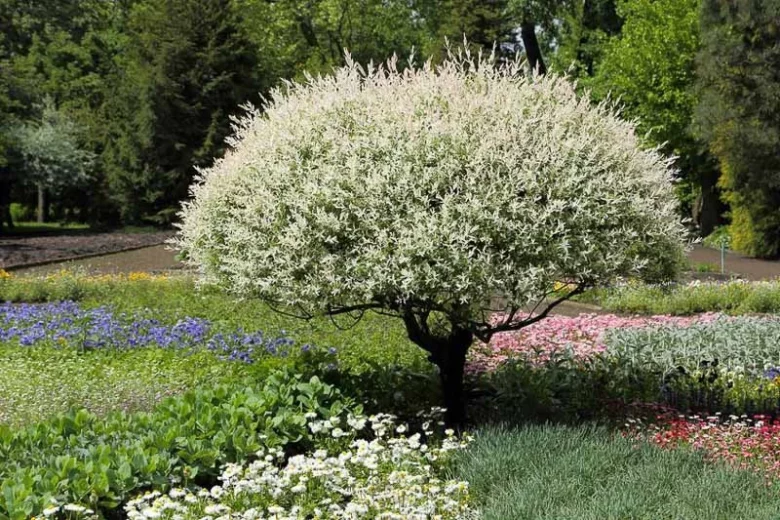
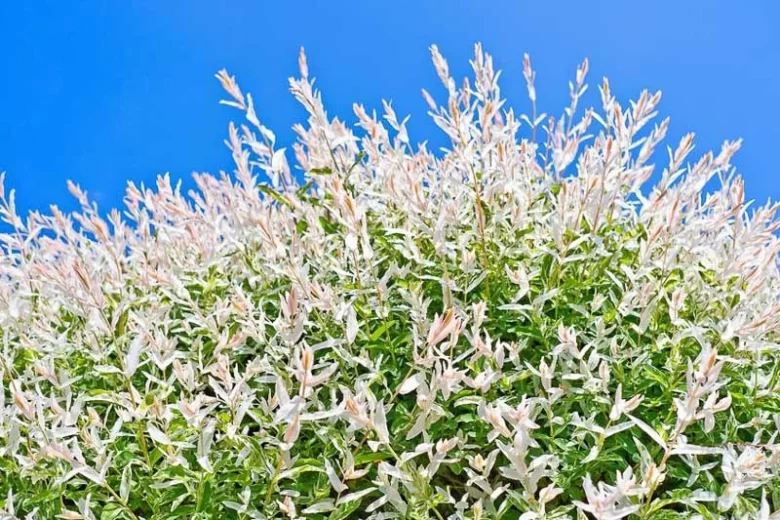


If you are dreaming of a shrub that changes outfits through the seasons – pink in spring, splashed cream and green in summer, and glowing yellow foliage with coral red stems in winter – Salix integra ‘Hakuro-Nishiki’, commonly called Dappled Willow, is hard to beat. This compact deciduous shrub or small tree offers eye catching, variegated foliage on graceful, arching branches that brighten almost any spot in the garden.
Despite its delicate, watercolor foliage, Dappled Willow is tough, fast growing, and surprisingly easy to care for. Give it full sun to part shade, fertile moist well drained soil, and regular pruning, and it will reward you with multiseason interest and a luminous presence. Whether you grow it as a rounded shrub, a small standard tree, or a colorful hedge, it delivers a lot of impact in a relatively small footprint.
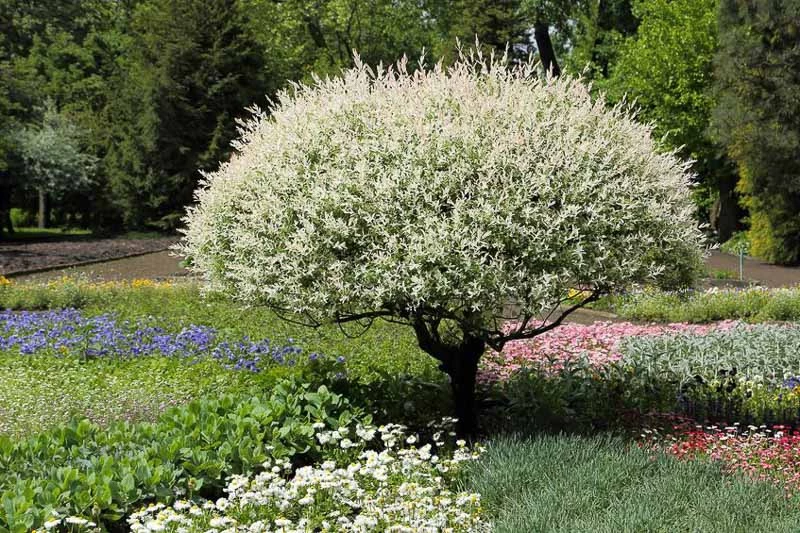
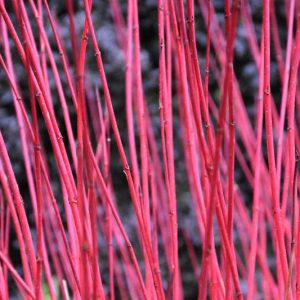
Summary: Compact, fast growing deciduous shrub or small tree with arching branches and narrow, lance shaped leaves that emerge pink in spring and mature to a soft mix of creamy white and green before turning yellow in fall. In winter, the younger stems glow coral red.
Use: Accent shrub, colorful hedge, mixed borders, foundation plantings, waterside plantings, and small ornamental tree when trained on a standard.
Highlight: Multi-season interest from spring foliage color, summer variegation, fall yellow leaves, and winter coral red stems, all on a compact, easy to maintain plant that is generally deer-resistant.
Note: Winner of the prestigious Award of Garden Merit of the Royal Horticultural Society. Responds very well to pruning, which encourages fresh colorful growth.
| Botanical Name | Salix integra ‘Hakuro-Nishiki’ |
|---|---|
| Family | Willow family (Salicaceae) |
| Common Names | Dappled Willow, Variegated Willow, Nishiki Willow, Hakuro Nishiki Willow |
| Native Range | Cultivar of Salix integra, a willow species native to China, Japan, Korea, and southeastern Siberia. |
| Plant Type and Habit | Deciduous shrub or small tree with a compact, rounded habit and graceful, slightly arching branches. |
| Hardiness (approx. USDA) | Typically hardy in about USDA Zones 4 to 7, sometimes into Zone 8 with adequate moisture. |
| Size | Generally reaches about 4 to 6 ft. high (120 to 180 cm) and 5 to 7 ft. across (150 to 210 cm) as a shrub. When grafted as a standard, the head can reach similar width on a short trunk. |
| Sun and Exposure | Full sun to part shade. Prefers full sun for best variegation, but appreciates some afternoon shade in hot summer areas. Best foliage color often occurs in cooler summer regions north of about USDA Zone 7. |
| Soil | Performs best in fertile, moist, well drained soils. Tolerates heavy or periodically wet soils better than many shrubs but dislikes prolonged drought. |
| Seasonal Interest | Pink spring foliage maturing to variegated white, green, and soft pink in summer, yellow fall color, and coral red stems in winter (especially on newer growth and in milder climates). |
| Primary Uses | Beds and borders, informal hedges, privacy screens, city gardens, cottage gardens, waterside plantings along streams or ponds, and specimen standards. |
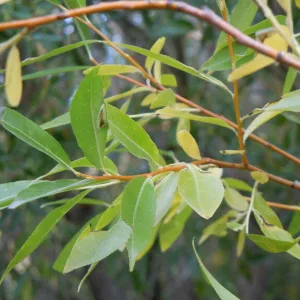
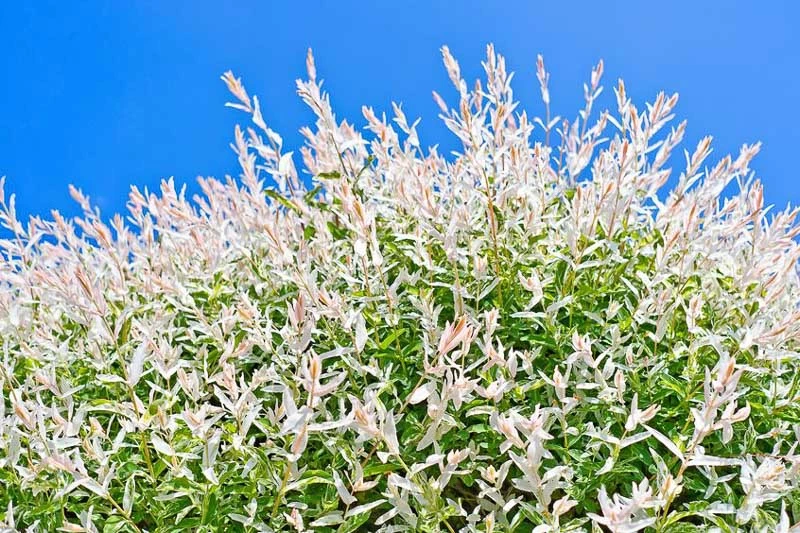
Salix integra ‘Hakuro-Nishiki’ is a deciduous, variegated willow valued primarily for its foliage rather than its flowers. The narrow, lance shaped leaves emerge a fresh, soft pink in spring, giving the whole shrub a candy floss effect. As they mature, the leaves become dappled with creamy white and green, often retaining touches of pink on new growth through early summer.
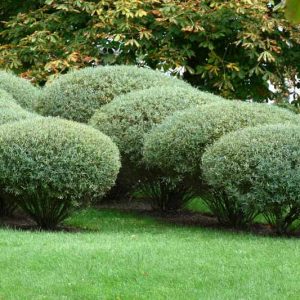
The result is a shrub that looks like it has been hand painted with pastel watercolors. On overcast days, its pale foliage seems to glow, and in bright sunshine, it adds a cooling, light catching presence to darker plantings. The overall habit is rounded and slightly arching, with many fine twigs creating a full, dense silhouette.
Salix integra ‘Hakuro-Nishiki’ is the recipient of the Award of Garden Merit of the Royal Horticultural Society for its noteworthy qualities.
Dappled Willow is a cultivar of Salix integra, a willow species native to China, Japan, Korea, and southeastern Siberia. In the wild, these willows often grow in moist areas and alongside streams or wetlands. That background explains their love of consistent moisture and their tolerance for heavier or periodically wet soils compared to many ornamental shrubs.
As a cultivated variety, ‘Hakuro-Nishiki’ has been selected for its distinctive variegated foliage and compact growth, making it suitable for gardens worldwide where hardy willows can be grown.
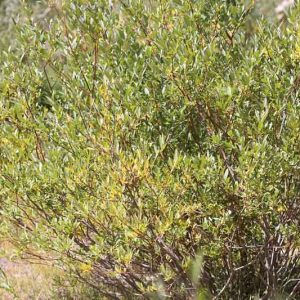
Dappled Willow is a compact, fast growing shrub or small tree. Left unpruned, it typically reaches 4 to 6 ft. high and 5 to 7 ft. wide, forming a rounded mound with elegantly arching branches.
Because it responds well to pruning, gardeners often shape it in different ways. You can maintain it as a dense, low shrub for borders and hedges, or buy a grafted standard where the variegated head sits on top of a straight trunk, creating a small ornamental tree that is ideal for entryways and focal points.
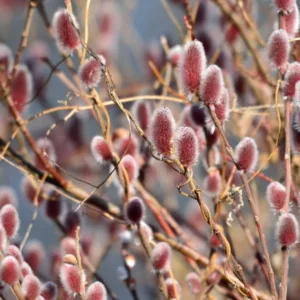
Like other willows, Salix integra ‘Hakuro-Nishiki’ produces catkins in early spring. These small, fluffy flower clusters appear on bare stems before or just as the leaves emerge. While they are attractive up close and can provide early pollen and nectar for insects, they are generally not the main ornamental feature.
Most gardeners grow Dappled Willow primarily for its striking foliage and stem color rather than for the flowers, but the catkins do add subtle seasonal interest when little else is blooming.
The foliage is where Dappled Willow truly shines. In spring, new leaves flush bright pink, especially on strongly growing shoots. As they expand, they become a mix of white, soft pink, and mid green, each leaf uniquely splashed and mottled.
As the season progresses, the pink tones often soften and the leaves become primarily green and creamy white, still very luminous. In autumn, the foliage turns yellow before falling, and in winter, the finer branches, especially the newer growth, display a coral red hue. In colder regions (Zones 4 and 5), the reddest color is usually on the new growth, while in milder climates, the entire length of the branches can turn coral red.
Dappled Willow is generally hardy in USDA Zones 4 to 7, sometimes extending into Zone 8 where summer heat is moderated by good soil moisture. In colder regions, the shrub may experience some tip dieback, but it usually resprouts strongly in spring.
Because willows tend to break dormancy relatively early, late frosts can occasionally nip the first flush of foliage, but new leaves usually follow quickly and the plant recovers without long term damage.
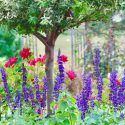
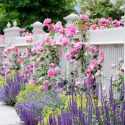
You can use Dappled Willow in many garden settings:
Willows are important early season resources for bees and other pollinators, providing pollen and nectar at a time when few other shrubs are in bloom. The dense branching and foliage also offer shelter and nesting sites for birds.
Dappled Willow is often described as deer-resistant. While hungry deer or rabbits may occasionally browse tender shoots, the plant is vigorous and usually outgrows minor damage. In areas with heavy browsing pressure, some protection may still be helpful when plants are young.
As a willow, ‘Hakuro-Nishiki’ prefers consistently moist soil and is not naturally drought tolerant. Short dry spells are usually tolerated, but prolonged dryness can lead to leaf scorch, browning, and premature leaf drop.
In hotter or drier climates, mulching and regular watering are essential to keep foliage fresh and to maintain its vibrant variegation.
Willows are generally considered low toxicity ornamental plants. They contain salicin and related compounds, but are not commonly listed as highly toxic to pets or humans. Even so, it is always wise to discourage pets and children from chewing on any ornamental plants.
Salix integra ‘Hakuro-Nishiki’ is not usually considered invasive in gardens. It does not typically spread aggressively by seed or rhizomes in ornamental settings. However, like many willows, its roots can seek out moisture, so avoid planting directly over drainage pipes or too close to foundations in very confined spaces.
The main reasons gardeners love Dappled Willow include its multiseason color, compact size, fast growth, and ease of pruning. It makes a small garden feel brighter, adds movement and texture to borders, and can quickly transform a plain area into a focal point.
Because it is easy to propagate from cuttings, you can often create multiple plants for hedges or repeats in the garden from just a few original shrubs.
Dappled Willow prefers:
If your soil is very dry or sandy, add compost and consider installing drip irrigation or soaker hoses to keep moisture levels more consistent.
Dappled Willow is easy to maintain and responds enthusiastically to pruning.
Dappled Willow is typically propagated from cuttings to maintain its variegated characteristics.
Overall, Dappled Willow is a robust, easy care shrub, but like all plants, it can occasionally run into pests, diseases, or cultural issues.
Aphids: These small sap sucking insects often cluster on tender new growth, causing distortion and sticky honeydew. A strong blast of water from the hose usually knocks them off. For persistent problems, insecticidal soap or horticultural oils can help.
Leaf beetles and sawflies: Willows can attract leaf feeding beetles and sawfly larvae, which chew holes or skeletonize leaves. Light infestations are mostly cosmetic, but heavy feeding may need control using hand picking, sprays, or encouraging natural predators.
Caterpillars: Various caterpillars may feed on willow leaves. In many gardens they are part of a healthy ecosystem, but heavy infestations can be managed with biological controls or targeted treatments if necessary.
Willow anthracnose and rust: Fungal diseases such as anthracnose or rust can cause leaf spots, blotches, or early leaf drop in damp, cool conditions. Good air circulation, proper spacing, and sanitation (removing fallen leaves) help reduce problems. Fungicidal sprays may be used if required.
Canker and dieback: Stressed plants, especially in poorly drained or compacted soils, may develop cankers and branch dieback. Prune out affected stems into healthy wood and improve overall growing conditions.
Root rot: Although willows like moisture, standing water without oxygen can still lead to root rot. Ensure soil is moist but not stagnant, and avoid planting in spots that remain flooded for long periods.
Leggy growth: Without regular pruning, Dappled Willow can become somewhat leggy, with older wood carrying less vibrant foliage. A rejuvenating prune in late winter restores density and color.
Leaf scorch and browning: Hot sun combined with drought can cause leaf tips and edges to brown, especially on the white variegated portions. Improving watering and providing some afternoon shade in very hot climates usually solves the problem.
Faded variegation: Variegation is strongest on fresh new growth. If the plant is not pruned regularly, you may see more green leaves and less pink and white. A good cut back in late winter encourages fresh, colorful shoots.
Salix integra ‘Hakuro-Nishiki’, commonly called Dappled Willow or Nishiki Willow, is a compact deciduous shrub or small tree grown mainly for its colorful, variegated foliage. New leaves emerge pink in spring, then mature to a mix of creamy white and green, often with touches of soft pink on fresh growth. In fall, the foliage turns yellow, and in winter the younger stems can take on a coral red color, giving the plant interest in all four seasons.
As a shrub, Dappled Willow typically grows about 4–6 ft (120–180 cm) tall and 5–7 ft (150–210 cm) wide. It has a naturally rounded, slightly arching habit, but size can be controlled easily with annual pruning. When grafted as a standard (lollipop tree), the canopy usually reaches similar width on top of a short trunk.
Dappled Willow is generally hardy in USDA Zones 4–7, sometimes extending into Zone 8 where summer heat is not extreme and soil moisture is reliable. In colder parts of its range, there may be some tip dieback in winter, but plants usually resprout vigorously in spring.
Dappled Willow performs best in full sun to light shade. At least 6 hours of direct sun per day encourages strong growth and the brightest pink and white variegation. In hot climates, some afternoon shade can reduce leaf scorch and keep the foliage looking fresh, especially on the white variegated portions.
This shrub prefers moist, fertile, well-drained soil rich in organic matter. It tolerates heavier or periodically wet soils better than many ornamentals, which makes it a good choice for low-lying or damp areas. Extremely dry, sandy soil is not ideal unless improved with organic matter and regular watering. A slightly acidic to neutral pH is preferred, though the plant is adaptable.
As a willow, Salix integra ‘Hakuro-Nishiki’ appreciates consistently moist soil. During the first year, it should be watered regularly and deeply to establish a strong root system. Once established, it still performs best with steady moisture, especially in summer. Prolonged drought and dry soil can lead to leaf scorch, browning, and premature leaf drop. Mulching the root zone helps maintain even moisture.
Dappled Willow is a relatively fast-growing shrub. Under good conditions, it can put on noticeable growth each season, quickly filling in as a hedge or accent. Annual or biannual pruning helps manage growth and maintain a compact, dense shape while encouraging vibrant new foliage.
The best time for major pruning is late winter to very early spring, before new growth starts. At that time, stems can be thinned and shortened to shape the plant and to encourage vigorous new shoots, which have the best variegated foliage and the brightest winter stem color. Many gardeners cut the shrub back quite hard (almost to a low framework) every year or every second year to renew growth and control size. Light trimming during the growing season can also be done to maintain a tidy outline, especially in hedges or standards.
Yes. Dappled Willow makes an attractive, informal hedge or light privacy screen. Its soft, variegated foliage creates a bright, billowing barrier rather than a dense, solid wall. For a hedge, plants are typically spaced about 4–6 ft (1.2–1.8 m) apart and pruned regularly in late winter to maintain height, density, and fresh variegation.
Dappled Willow can be grown in large containers, especially when grafted as a small standard tree, but it requires careful attention to watering. Container soil dries out faster than garden soil, and this plant dislikes drying out completely. Use a large pot with good drainage, a high-quality potting mix, and water regularly to keep the root zone evenly moist. Container-grown plants may also benefit from more frequent feeding and more diligent pruning to maintain shape and size.
| Hardiness |
4 - 7 |
|---|---|
| Heat Zones |
1 - 7 |
| Climate Zones | 3, 4, 5, 6, 7, 8, 9, 14, 15, 16, 17 |
| Plant Type | Shrubs |
| Plant Family | Salicaceae |
| Genus | Salix |
| Common names | Dappled Willow, Willow |
| Exposure | Full Sun, Partial Sun |
| Season of Interest | Spring (Early, Mid, Late), Summer (Early, Mid, Late), Fall, Winter |
| Height | 4' - 6' (120cm - 180cm) |
| Spread | 5' - 7' (150cm - 210cm) |
| Spacing | 84" (210cm) |
| Maintenance | Low |
| Water Needs | Average |
| Soil Type | Clay, Loam, Sand |
| Soil pH | Acid, Alkaline, Neutral |
| Soil Drainage | Moist but Well-Drained |
| Characteristics | Plant of Merit, Showy |
| Tolerances | Heat, Fire |
| Garden Uses | Beds And Borders, Hedges And Screens, Ponds And Streams |
| Garden Styles | City and Courtyard, Informal and Cottage, Traditional Garden |
| Toxic to Humans | No known toxicity |
| Toxic to Cats | No known toxicity |
| Toxic to Dogs | No known toxicity |
| Toxic to Horses | No known toxicity |


| Hardiness |
4 - 7 |
|---|---|
| Heat Zones |
1 - 7 |
| Climate Zones | 3, 4, 5, 6, 7, 8, 9, 14, 15, 16, 17 |
| Plant Type | Shrubs |
| Plant Family | Salicaceae |
| Genus | Salix |
| Common names | Dappled Willow, Willow |
| Exposure | Full Sun, Partial Sun |
| Season of Interest | Spring (Early, Mid, Late), Summer (Early, Mid, Late), Fall, Winter |
| Height | 4' - 6' (120cm - 180cm) |
| Spread | 5' - 7' (150cm - 210cm) |
| Spacing | 84" (210cm) |
| Maintenance | Low |
| Water Needs | Average |
| Soil Type | Clay, Loam, Sand |
| Soil pH | Acid, Alkaline, Neutral |
| Soil Drainage | Moist but Well-Drained |
| Characteristics | Plant of Merit, Showy |
| Tolerances | Heat, Fire |
| Garden Uses | Beds And Borders, Hedges And Screens, Ponds And Streams |
| Garden Styles | City and Courtyard, Informal and Cottage, Traditional Garden |
| Toxic to Humans | No known toxicity |
| Toxic to Cats | No known toxicity |
| Toxic to Dogs | No known toxicity |
| Toxic to Horses | No known toxicity |
How many Salix integra ‘Hakuro-Nishiki’ (Dappled Willow) do I need for my garden?
| Plant | Quantity | |
|---|---|---|
| Salix integra ‘Hakuro-Nishiki’ (Dappled Willow) | N/A | Buy Plants |
Create a membership account to save your garden designs and to view them on any device.
Becoming a contributing member of Gardenia is easy and can be done in just a few minutes. If you provide us with your name, email address and the payment of a modest $25 annual membership fee, you will become a full member, enabling you to design and save up to 25 of your garden design ideas.
Join now and start creating your dream garden!
Create a membership account to save your garden designs and to view them on any device.
Becoming a contributing member of Gardenia is easy and can be done in just a few minutes. If you provide us with your name, email address and the payment of a modest $25 annual membership fee, you will become a full member, enabling you to design and save up to 25 of your garden design ideas.
Join now and start creating your dream garden!