Nandina, Heavenly Bamboo, Sacred Bamboo, Chinese Sacred Bamboo
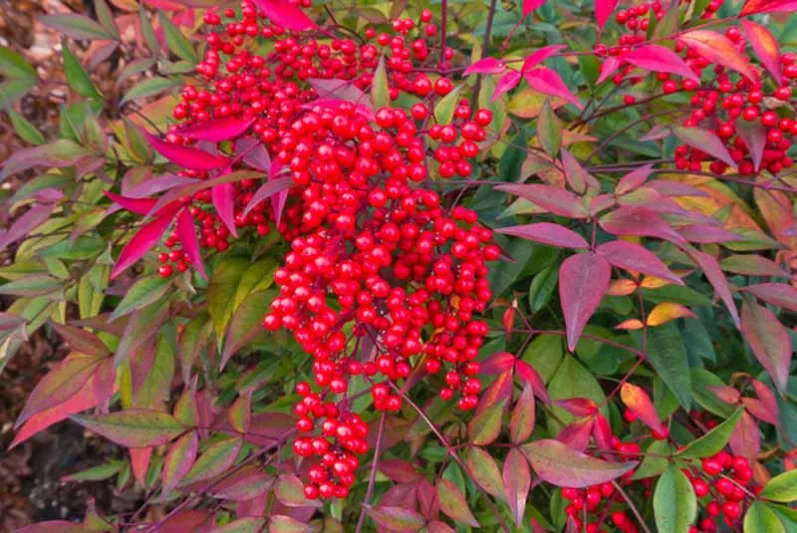
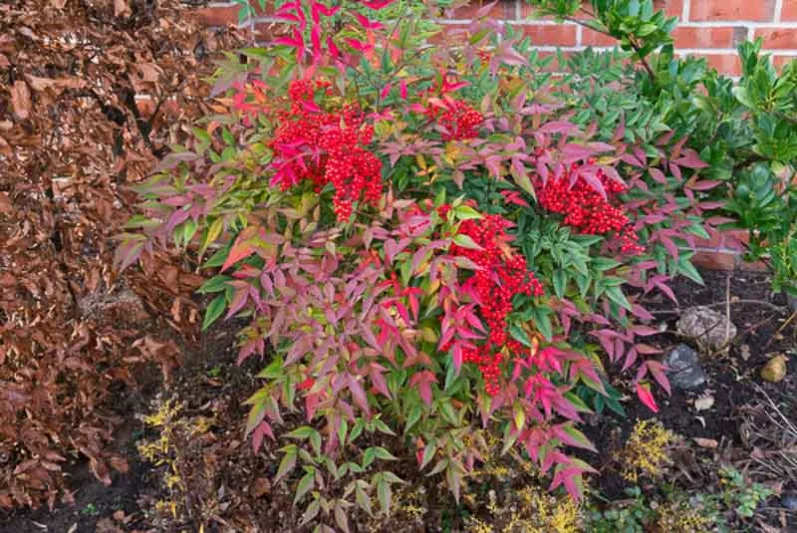


If you want a compact, easy care shrub that offers flowers, colorful foliage, and bright red berries all in one package, Nandina domestica, commonly known as Heavenly Bamboo, is hard to beat. Despite the name, it is not a true bamboo but an evergreen or semi-evergreen shrub with graceful, cane like stems and finely divided, lacy leaves that change color through the seasons.
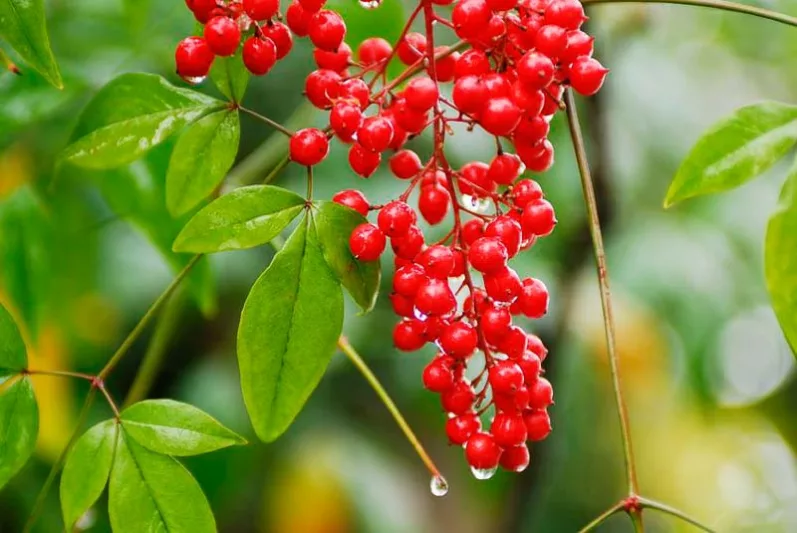
In spring, Heavenly Bamboo is sprinkled with clouds of tiny white flowers, followed by dangling clusters of green berries that ripen to glowing red and often persist into winter. The foliage emerges flushed with red or bronze, settles into soft green in summer, and then shifts back to shades of red, burgundy, and purple as temperatures cool. Tough, adaptable, and highly ornamental, Nandina is widely used in mixed borders, foundation plantings, and informal hedges. However, it can be invasive and highly toxic to pets and wildlife, so thoughtful placement and variety selection are important.
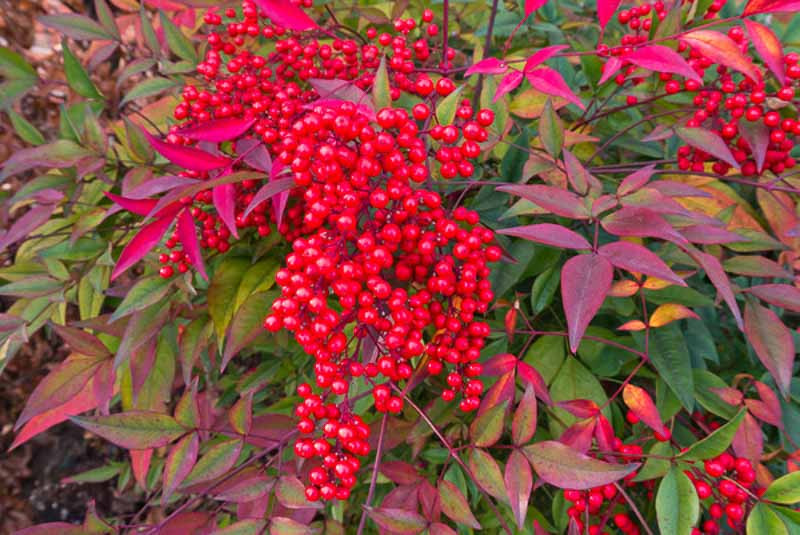
Summary: Small, upright evergreen to semi-evergreen shrub with bamboo-like canes, lacy compound leaves, frothy clusters of white flowers in spring, and showy red berries in fall and winter.
Use: Mixed shrub borders, foundation plantings, woodland gardens, containers, informal hedges, accent plantings, and winter interest gardens.
Highlight: Multi season color from foliage, flowers, and berries, plus a naturally upright habit that fits beautifully into smaller gardens and tight spaces.
Note: Leaves and berries are toxic to pets, livestock, and some birds, and the species can be invasive in parts of the southeastern United States. Choose nonfruiting or sterile cultivars where invasiveness or wildlife toxicity is a concern.
| Botanical Name | Nandina domestica |
|---|---|
| Family | Barberry family (Berberidaceae) |
| Common Names | Heavenly Bamboo, Sacred Bamboo, Nandina |
| Native Range | Native to China, Japan, and India, where it grows in woodland edges, thickets, and open forests. |
| Plant Type and Habit | Evergreen or semi-evergreen shrub with upright, cane like stems and a clump forming, somewhat rhizomatous habit. |
| Hardiness (approx. USDA) | Typically hardy in about USDA Zones 6 to 9, sometimes grown in warmer Zone 10 sites with some shade. |
| Size | Standard forms usually reach about 4 to 8 ft. tall (120 to 240 cm) and 2 to 4 ft. wide (60 to 120 cm). Dwarf cultivars stay much shorter and more compact. |
| Sun and Exposure | Full sun to part shade. Full sun generally gives the best foliage color and berry production, but plants tolerate light shade and even bright full shade in hot climates. |
| Soil | Grows well in average, moist, well drained soils. Tolerant of a wide range of soils, from clay to sandy loam, and generally prefers slightly acidic to neutral conditions. |
| Seasonal Interest | Colorful foliage year round, white flowers in spring to early summer, and clusters of bright red berries in fall and winter on fruiting forms. |
| Primary Uses | Mixed shrub borders, woodland gardens, foundation plantings, containers, informal hedges, courtyard gardens, and winter interest plantings. |
Nandina domestica is a compact, upright, multi stemmed evergreen shrub with a distinctive, airy look. Its slender, cane like stems resemble bamboo, which explains the common name Heavenly Bamboo, but botanically it is unrelated to true bamboos.
The foliage is one of the plant’s biggest assets. Leaves are compound and finely divided, giving a feathery, lacy texture. New growth emerges in shades of bronze, copper, or red, matures to medium or dark green in summer, and often shifts to burgundy, reddish purple, or scarlet in cooler weather. Many dwarf cultivars have even more intense and long lasting color.
In late spring to early summer, Heavenly Bamboo produces large, airy panicles of small white flowers at the tips of the canes. The flowers are sprinkled with golden anthers and rich in nectar, making them attractive to bees and other pollinating insects. On fruiting forms, the spent flowers are followed by clusters of round green berries that gradually ripen to bright red and often persist into winter.
Heavenly Bamboo is native to East Asia, particularly China, Japan, and India, where it grows in forest margins, thickets, and shaded hillsides. Its natural habitat in woodland edges helps explain why it performs so well in gardens with filtered light and well drained soils.
Introduced to Western gardens in the 19th century, it quickly became popular as a decorative, low maintenance shrub. Today it is widely grown in temperate and warm temperate regions around the world and is especially common in southern and western landscapes.
In the landscape, the species form of Nandina is typically a slow to moderate grower, reaching about 4 to 8 ft. tall and 2 to 4 ft. wide. It expands gradually via short rhizomes, forming a loose clump of vertical canes.
Modern cultivars offer a range of sizes and shapes, from tiny mounding dwarfs that stay under 2 feet tall to taller, more upright selections that create a bold vertical accent. Many gardeners like to plant Nandina in groups of three or more so the layered canes and foliage create a full, soft mass of texture and color.
Heavenly Bamboo produces profuse, branched clusters of small white flowers in late spring or early summer. While individually modest, the panicles are showy when viewed as a whole, and they draw in bees and other pollinators looking for nectar and pollen.
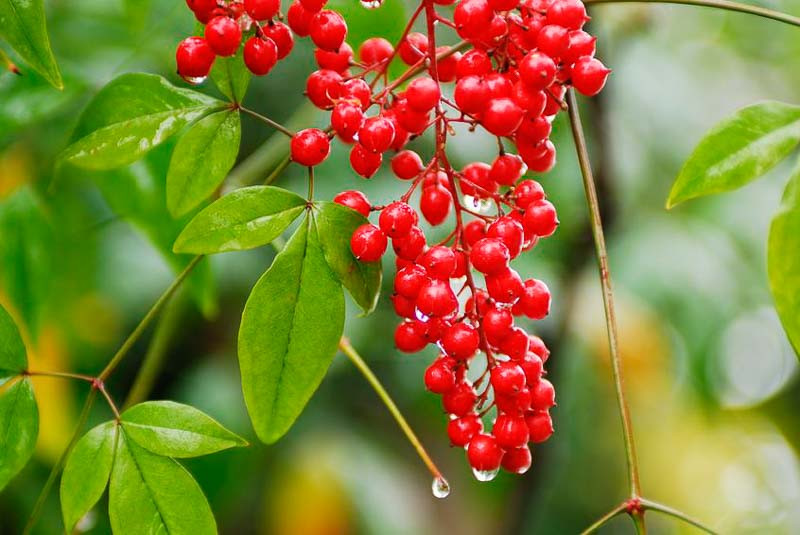
After flowering, the plant sets abundant clusters of berries on many cultivars. These start out green, then turn shiny red by fall, often hanging like ornaments against the foliage well into winter. The combination of red berries and colorful leaves makes Nandina a favorite for holiday and Christmas decorations.
Some newer Nandina varieties are sterile or nearly sterile, producing little to no fruit. These are a great choice where invasiveness or berry toxicity to wildlife is a concern.
The foliage of Heavenly Bamboo provides four-season interest. Young leaves emerge flushed with red or bronze, especially in spring. By summer they mellow to medium green, creating a cool backdrop for flowering perennials and other shrubs. As temperatures drop, the foliage of many cultivars turns shades of ruby, copper, wine, or plum, sometimes holding this color all winter in mild climates.
Combined with red berries, Nandina is a natural fit for winter interest plantings and pairs beautifully with other evergreen shrubs and trees with red berries.
Hardiness: Nandina domestica is generally hardy in USDA Zones 6 to 9. In the warmer part of its range it is fully evergreen, holding foliage and often berries through winter. In colder zones or during harsh winters, plants may drop some leaves or suffer tip dieback but typically resprout strongly from the base.
Because it tolerates both heat and moderate cold, Heavenly Bamboo is a versatile choice for many regions, especially in the southern United States, Pacific Coast, and milder inland climates.
You can use Nandina in a huge range of garden settings:
Pollinators: The nectar rich flowers of Heavenly Bamboo attract bees and other pollinating insects, helping support beneficial insect populations in your garden.
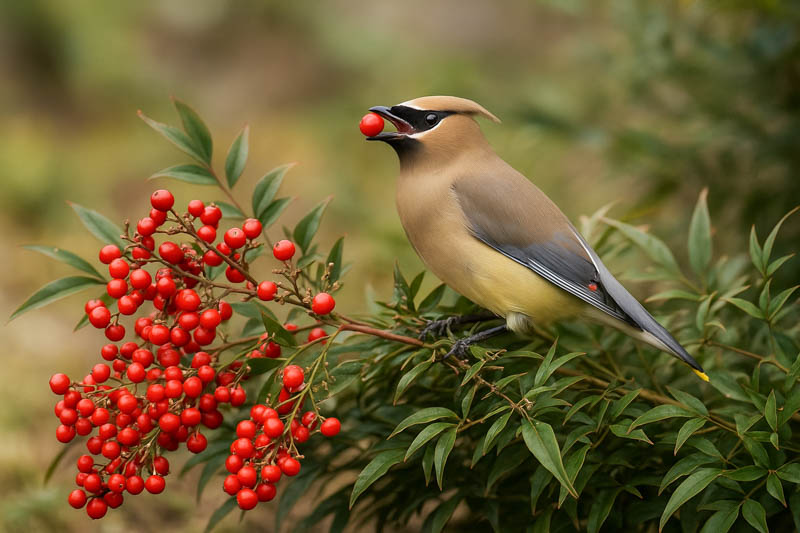
Birds: The bright red berries may catch the eye of birds, but this is where some caution is needed. The fruits contain cyanogenic glycosides that can convert to hydrogen cyanide when ingested. Cedar Waxwings, in particular, may gorge on the berries and suffer fatal poisoning. For bird friendly landscapes, consider planting native plant alternatives to Nandina domestica or sterile Nandina cultivars with few or no berries.
Nandina is usually considered somewhat resistant to deer thanks to its leathery foliage and chemical defenses, though hungry deer may still sample young plants. Rabbits are not typically drawn to it as a favorite food. In areas with heavy browsing pressure, protect new plantings until they are well established.
Once established, Heavenly Bamboo is moderately drought tolerant. It appreciates occasional deep watering during extended dry spells but is generally less thirsty than many broadleaf evergreens. In very dry climates, a bit of afternoon shade and regular mulching will keep foliage looking its best.
Both the leaves and berries of Nandina contain toxic compounds. The berries are particularly dangerous to birds, including Cedar Waxwings, which may eat large quantities and suffer fatal poisoning. The same cyanogenic compounds that harm birds are highly poisonous to dogs, cats, horses, and other animals if ingested in significant amounts.
If you share your garden with curious pets, select nonfruiting or low fruiting cultivars and avoid placing Nandina where animals are likely to chew on stems or fallen berries.
In many regions, especially the southeastern United States, Nandina has escaped cultivation and can become a problematic invasive shrub. Birds disperse the seeds, and seedlings may appear in natural areas, displacing native plants. To check where Nandina is considered invasive, consult this invasive species map and information resource.
In these areas, choose sterile or nonfruiting Nandina cultivars or, better yet, explore beautiful U.S. native plant alternatives that offer similar color and texture without the ecological risk.
Heavenly Bamboo combines multi season color, compact size, and low maintenance care, making it a standout in many garden designs. It offers a unique combination of evergreen foliage, seasonal color shifts, spring flowers, and red winter berries in one plant. When used wisely and responsibly, it can be an elegant, hardworking shrub in both modern and traditional landscapes.
To pair Nandina with other berry laden evergreens for maximum winter impact, visit Best Evergreen Shrubs and Trees with Red Berries. For more bird friendly options to surround or replace Heavenly Bamboo, explore Small Trees and Shrubs Birds Can’t Resist. and Top Native Texas Plants to Help Keep Birds Fed Through Every Season.
From Bare to Brilliant- Create a Winter-Beautiful Garden is another helpful guide if you want Heavenly Bamboo to play a starring role in your winter scenes.
Heavenly Bamboo is praised for coping with a wide range of garden soils. It prefers:
In heavy clay or compacted sites, loosen the soil and mix in compost or other organic matter before planting to encourage deep, healthy roots.
Heavenly Bamboo is naturally tidy but responds very well to occasional pruning.
Nandina can be propagated in several ways:
Heavenly Bamboo is generally a robust, low maintenance shrub with relatively few serious problems when grown in suitable conditions.
Scale insects and aphids: These sap sucking pests may appear on stems and leaves, sometimes excreting sticky honeydew. Light infestations can be managed with horticultural oil, insecticidal soap, and pruning of affected stems.
Spider mites: In hot, dry conditions, spider mites may cause stippled, dull foliage and fine webbing. Increase humidity, hose down foliage, and treat with horticultural oil if populations build up.
Leaf spot and blight: Fungal spots may develop on leaves in humid or overcrowded plantings. Improve air circulation, avoid overhead watering, and remove heavily infected leaves.
Root rot: Poorly drained or constantly waterlogged soils can lead to root rot, causing wilting and decline even when soil is wet. Plant Nandina in sites with reasonable drainage and avoid overwatering.
Leggy, bare lower stems: This often results from age, deep shade, or lack of pruning. Practice regular renewal pruning by removing a portion of the oldest canes each year to keep growth dense from top to bottom.
Chlorotic or yellowing leaves: High pH or nutrient poor soils can cause pale foliage. Improve soil with organic matter and, if needed, use fertilizers formulated for acid loving plants.
Too many seedlings: In areas where Nandina is invasive, berries may result in numerous volunteer seedlings. Remove unwanted seedlings promptly and consider switching to sterile cultivars or native alternatives as suggested in this native plant alternatives guide.
Breeders have developed a wide range of Heavenly Bamboo cultivars, from tiny mounds of fiery foliage to taller, berry laden shrubs. Here are some popular options to help you choose the right Nandina for your landscape.
| Variety | Approx. Size and Habit | Berry Color and Display | Notes and Uses | Pollination and Fruitfulness |
|---|---|---|---|---|
| Nandina domestica ‘Gulf Stream’ | Compact shrub, about 3 ft. tall and wide; dense, rounded habit with many upright stems. | Produces some clusters of red berries in fall where conditions are favorable, though foliage color is the main show. | Excellent for foundations, low hedges, and mass plantings. New growth is coppery red, turning green, then rich red in fall and winter. | Self fruitful; berry set may vary. In some regions considered a lower seeding option than the species. |
| Nandina domestica ‘Firepower’ | Dwarf, 1.5 to 2 ft. tall and wide; tight, mounding habit with very short stems. | Often produces few or no berries, focusing interest on foliage color instead of fruit. | Ideal for borders, containers, and mass plantings. Leaves emerge green and turn brilliant red in fall and winter. | Generally considered low fruiting, reducing invasive potential and wildlife risk from berries. |
| Nandina domestica ‘Obsession’ | Compact shrub, around 3 ft. tall and wide; very dense, upright form. | Produces minimal fruit in many gardens, with foliage color as the primary feature. | New growth emerges intense red and holds its color for long periods. Great for modern landscapes and small spaces. | Marketed as a low seeding or sterile type in many regions, helping limit invasiveness. |
| Nandina domestica ‘Harbour Dwarf’ | Low, spreading shrub, about 2 to 3 ft. tall and wider than tall; layered, groundcover like habit. | Typically light fruiting; berries, if present, are red but not produced in heavy clusters. | Useful as a low hedge, bank stabilizer, or front of border shrub. Foliage takes on bronze and red tones in cool weather. | Self fruitful but generally less aggressive than the species due to lower seed production. |
| Nandina domestica ‘Plum Passion’ | Medium shrub, often 4 to 6 ft. tall; upright, somewhat open habit. | May produce some berries, usually red, though they are less prominent than the dark foliage color. | Known for deep purple to plum colored foliage, especially on new growth. Striking accent in mixed borders. | Self fruitful but not typically a heavy seeder compared to the species. |
| Nandina domestica ‘Moon Bay’ | Compact shrub, usually 3 to 4 ft. tall and wide; naturally rounded, symmetrical habit. | Produces some red berries, but they are usually secondary to the colorful foliage. | Perfect for low hedges, borders, and foundation plantings. Leaves shift through red, green, and bronze tones with the seasons. | Self fruitful; berry production is moderate and varies by site. |
| Nandina domestica ‘Lemon Lime’ | Compact, about 3 ft. tall and wide; dense and rounded. | Typically produces few berries; bright foliage is the focal point. | New foliage emerges chartreuse to lemon yellow, maturing to lime green. Excellent for brightening shaded borders and modern designs. | Often listed as low seeding or sterile. A good choice where invasive potential or berry toxicity is a concern. |
| Nandina domestica ‘Domestica’ (species type) | Standard form, 4 to 8 ft. tall and 2 to 4 ft. wide; upright, canelike habit. | Heavy clusters of red berries in fall and winter under good growing conditions. | Traditional Heavenly Bamboo used in older landscapes and for cut holiday stems, but can be invasive in some regions. | Self fruitful and often a prolific seeder. Avoid in areas where Nandina is listed as invasive. |
Nandina domestica, commonly called Heavenly Bamboo, is an evergreen to semi-evergreen shrub with bamboo-like canes, lacy compound leaves, white spring flowers, and clusters of red berries that often persist into winter. It is widely used in gardens for four-season interest, especially in mild climates.
No. Despite its common name, Heavenly Bamboo is not a true bamboo. It belongs to the barberry family (Berberidaceae), not the grass family. The nickname comes from its slender, upright canes and layered foliage, which resemble bamboo visually but are botanically unrelated.
The typical species form of Nandina domestica grows about 4 to 8 feet tall and 2 to 4 feet wide. It forms a clump of upright canes that slowly spreads via short rhizomes. Many modern cultivars are more compact, staying in the 2 to 4 foot range and forming dense, rounded mounds.
In mild climates Nandina domestica is largely evergreen, holding foliage and often berries through winter. In colder areas or during severe winters it may become semi-evergreen, dropping leaves or suffering tip dieback. Healthy plants usually resprout from the base in spring if cold damage occurs
Color change is normal and desirable in Nandina. New growth often emerges bronze or red, matures to green in summer, then shifts to shades of red, burgundy, or purple in cool weather. Strong sun, cool nights, and certain cultivars enhance these colors, which are a major ornamental feature.
Prune Nandina domestica in late winter or early spring. The best technique is renewal pruning: remove a portion of the oldest, tallest canes at ground level each year. This encourages fresh new growth from the base and prevents the plant from becoming leggy or bare at the bottom. Light shaping cuts can be made as needed.
In average garden soil, Heavenly Bamboo usually requires little or no fertilizer. If growth is weak or leaves appear pale, apply a balanced, slow release fertilizer in early spring and water it in well. Overfertilizing can lead to soft, weak growth and is generally unnecessary for established plants.
Yes. Nandina berries and leaves contain cyanogenic glycosides that can release hydrogen cyanide when ingested. The berries are particularly dangerous to birds such as Cedar Waxwings, which may die after consuming large quantities. Dogs, cats, horses, and other animals can also be affected if they eat enough plant material. All parts of the plant should be considered toxic.
Nandina domestica is considered invasive in parts of the southeastern United States and some other warm regions. Birds spread the seeds into natural areas, where seedlings may form dense colonies and displace native vegetation. Gardeners in affected areas are encouraged to avoid planting the species form, to remove unwanted seedlings, and to consider sterile cultivars or native alternatives.
To reduce invasive risk, avoid planting the heavily fruiting species form, remove berry clusters before they ripen and drop seed, and promptly pull up volunteer seedlings. An even better strategy is to choose modern low fruiting or sterile Nandina cultivars or to plant native shrubs that provide similar color and structure without spreading aggressively.
Good native alternatives include winterberry holly (Ilex verticillata), Yaupon holly (Ilex vomitoria), American beautyberry (Callicarpa americana), various native viburnums, and chokeberry (Aronia melanocarpa). These shrubs offer attractive foliage and berries, support wildlife, and do not carry the same invasive and toxicity concerns as Nandina.
Yes. Many compact Nandina cultivars perform very well in containers. Use a high quality potting mix, a container with drainage holes, and water regularly, especially in hot weather. Container grown plants may need more frequent watering and occasional feeding compared to those in the ground. Protect pots from extreme freezing temperatures.
| Hardiness |
6 - 9 |
|---|---|
| Heat Zones |
4 - 12 |
| Climate Zones | 4, 5, 6, 7, 8, 9, 10, 11, 12, 13, 14, 15, 16, 17, 18, 19, 20, 21, 22, 23, 24 |
| Plant Type | Shrubs |
| Plant Family | Berberidaceae |
| Common names | Heavenly Bamboo, Nandina |
| Exposure | Full Sun, Partial Sun |
| Season of Interest | Spring (Late), Summer (Early, Mid, Late), Fall, Winter |
| Height | 4' - 8' (120cm - 240cm) |
| Spread | 2' - 4' (60cm - 120cm) |
| Spacing | 24" - 48" (60cm - 120cm) |
| Maintenance | Low |
| Water Needs | Average |
| Soil Type | Chalk, Clay, Loam, Sand |
| Soil pH | Acid, Alkaline, Neutral |
| Soil Drainage | Moist but Well-Drained |
| Characteristics | Showy, Evergreen |
| Tolerances | Full Shade, Drought, Heat |
| Attracts | Bees, Birds |
| Garden Uses | Beds And Borders, Hedges And Screens |
| Garden Styles | City and Courtyard, Gravel and Rock Garden, Informal and Cottage, Traditional Garden |
| Toxic to Humans | High severity |
| Toxic to Cats | Toxic |
| Toxic to Dogs | Toxic |
| Toxic to Horses | Toxic |

| Hardiness |
6 - 9 |
|---|---|
| Heat Zones |
4 - 12 |
| Climate Zones | 4, 5, 6, 7, 8, 9, 10, 11, 12, 13, 14, 15, 16, 17, 18, 19, 20, 21, 22, 23, 24 |
| Plant Type | Shrubs |
| Plant Family | Berberidaceae |
| Common names | Heavenly Bamboo, Nandina |
| Exposure | Full Sun, Partial Sun |
| Season of Interest | Spring (Late), Summer (Early, Mid, Late), Fall, Winter |
| Height | 4' - 8' (120cm - 240cm) |
| Spread | 2' - 4' (60cm - 120cm) |
| Spacing | 24" - 48" (60cm - 120cm) |
| Maintenance | Low |
| Water Needs | Average |
| Soil Type | Chalk, Clay, Loam, Sand |
| Soil pH | Acid, Alkaline, Neutral |
| Soil Drainage | Moist but Well-Drained |
| Characteristics | Showy, Evergreen |
| Tolerances | Full Shade, Drought, Heat |
| Attracts | Bees, Birds |
| Garden Uses | Beds And Borders, Hedges And Screens |
| Garden Styles | City and Courtyard, Gravel and Rock Garden, Informal and Cottage, Traditional Garden |
| Toxic to Humans | High severity |
| Toxic to Cats | Toxic |
| Toxic to Dogs | Toxic |
| Toxic to Horses | Toxic |
How many Nandina domestica (Heavenly Bamboo) do I need for my garden?
| Plant | Quantity | |
|---|---|---|
| Nandina domestica (Heavenly Bamboo) | N/A | Buy Plants |
Create a membership account to save your garden designs and to view them on any device.
Becoming a contributing member of Gardenia is easy and can be done in just a few minutes. If you provide us with your name, email address and the payment of a modest $25 annual membership fee, you will become a full member, enabling you to design and save up to 25 of your garden design ideas.
Join now and start creating your dream garden!
Create a membership account to save your garden designs and to view them on any device.
Becoming a contributing member of Gardenia is easy and can be done in just a few minutes. If you provide us with your name, email address and the payment of a modest $25 annual membership fee, you will become a full member, enabling you to design and save up to 25 of your garden design ideas.
Join now and start creating your dream garden!