Fairview Juniper, Fairview Chinese Juniper, Chinese Juniper 'Fairview'
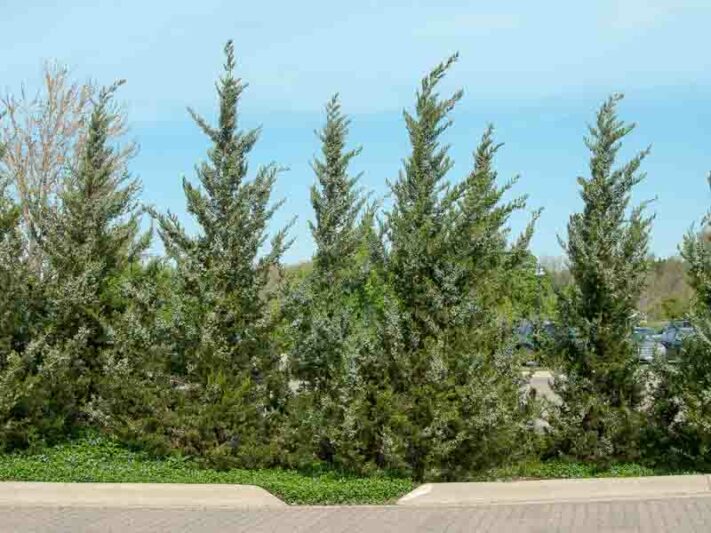


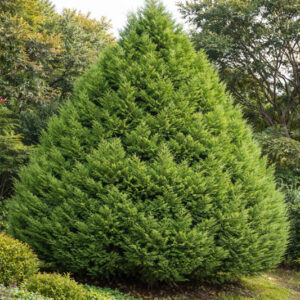
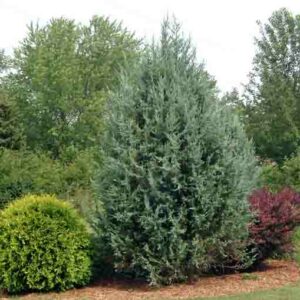
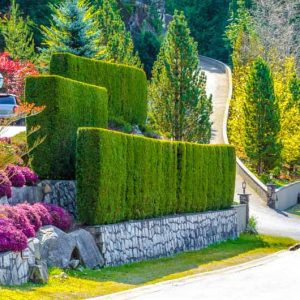
Juniperus chinensis ‘Fairview’ is a versatile and attractive juniper cultivar, known for its pyramidal shape, dense green foliage, and adaptability to a variety of landscape uses. Its size and form make it a popular choice for gardeners and landscape designers seeking a robust, evergreen tree with a formal appearance.
Juniperus belongs to the Cupressaceae family, which includes popular evergreen trees such as Juniperus virginiana (Eastern Red Cedar), Thuja occidentalis (Northern White Cedar), Cupressus sempervirens (Italian Cypress), Sequoia sempervirens (Coast Redwood), and Cupressus arizonica (Arizona Cypress).
Native: ‘Fairview’ is a cultivar of Chinese Juniper (Juniperus chinensis), native to China, Myanmar, Japan, Korea, and the Russian Far East.
Plant Type and Habit: This evergreen conifer exhibits a pyramidal growth habit with dense branching. It’s known for maintaining a consistent shape without extensive pruning, making it a popular choice for formal landscapes.
Size: ‘Fairview’ is a relatively large cultivar, growing to about 10-15 feet in height (3-4.5 meters) and 4-9 feet in width (1.2-2.7 meters). Its size makes it suitable as a specimen tree or for use in privacy screens and hedges.
Cones: Junipers are dioecious with separate male and female plants. Male plants produce small pollen cones, while pollinated female plants produce small, blue-black berry-like cones, adding winter interest.
Foliage: The foliage is dense and needle-like, maintaining a deep green color throughout the year. The leaves are small and scale-like, contributing to the plant’s full appearance.
Bark: The bark is gray-brown, developing a slightly rough texture as the plant matures.
Uses: Ideal for use in privacy screens, hedges, windbreaks, or as a focal point in landscape designs. Its formal appearance also makes it suitable for foundational plantings and formal gardens.
Hardiness: It is hardy in USDA zones 4-9, adaptable to a range of environmental conditions.
Wildlife: Provides limited attraction for wildlife, though birds may feed on the cones.
Toxicity: Junipers are generally not toxic, but the cones should not be ingested in large quantities.
Deer and Rabbit: Relatively resistant to deer and rabbits, which makes it suitable for areas where these animals are a concern.
Drought: Once established, it has a good tolerance for drought conditions, making it a good choice for water-efficient landscapes.
Salt: Exhibits moderate salt tolerance, making it suitable for planting in coastal areas or landscapes where saline soil or salt spray may be present.
Invasiveness: This Juniper is not considered invasive. It grows in a controlled manner, maintaining its narrow form.
Benefits: The primary benefits of ‘Fairview’ include its dense foliage, which provides excellent privacy and wind protection. It’s also low-maintenance, requiring minimal pruning, and offers year-round color and structure in the landscape.
Light: Prefers full sun. Can tolerate partial shade, but growth may be less dense.
Soil: Thrives in well-drained soil. Adaptable to a wide range of soil types, including clay, loam, and sandy soils.
Water: Requires moderate watering, especially when young. Established plants are relatively drought-tolerant. Avoid overwatering to prevent root rot.
Fertilizer: Fertilize in early spring with a balanced, slow-release fertilizer. Over-fertilization is unnecessary and can be harmful.
Pruning: Prune to shape in late winter or early spring. Regular heavy pruning is not required due to its natural shape.
Propagation: Propagated through semi-hardwood cuttings in late summer.
Pests and Diseases: Junipers are often prone to twig blight and needle blight. They also act as hosts for cedar-apple rust and similar rust diseases during part of their lifecycle. In wet, poorly drained soils, root rot can be a problem. Bark and main stems may be affected by canker. Additionally, they may occasionally suffer from insect pests like aphids, bagworms, webworms, and scale insects.
| Hardiness |
4 - 9 |
|---|---|
| Heat Zones |
1 - 9 |
| Climate Zones | 1, 1A, 1B, 2, 2A, 2B, 3, 3A, 3B, 4, 5, 6, 7, 8, 9, 10, 11, 12, 13, 14, 15, 16, 17, 18, 19, 20, 21, 22, 23, 24 |
| Plant Type | Conifers, Trees |
| Plant Family | Cupressaceae |
| Genus | Juniperus |
| Common names | Chinese Juniper, Juniper |
| Exposure | Full Sun |
| Season of Interest | Spring (Early, Mid, Late), Summer (Early, Mid, Late), Fall, Winter |
| Height | 10' - 15' (3m - 4.6m) |
| Spread | 4' - 9' (120cm - 270cm) |
| Spacing | 48" - 108" (120cm - 270cm) |
| Maintenance | Low |
| Water Needs | Low, Average |
| Soil Type | Chalk, Clay, Loam, Sand |
| Soil pH | Acid, Alkaline, Neutral |
| Soil Drainage | Well-Drained |
| Characteristics | Showy, Evergreen |
| Tolerances | Drought, Deer, Salt, Dry Soil, Rocky Soil, Heat |
| Garden Uses | Beds And Borders, Hedges And Screens |
| Garden Styles | Coastal Garden, Informal and Cottage, Traditional Garden |
| Toxic to Humans | No known toxicity |
| Toxic to Cats | No known toxicity |
| Toxic to Dogs | No known toxicity |
| Toxic to Horses | No known toxicity |


| Hardiness |
4 - 9 |
|---|---|
| Heat Zones |
1 - 9 |
| Climate Zones | 1, 1A, 1B, 2, 2A, 2B, 3, 3A, 3B, 4, 5, 6, 7, 8, 9, 10, 11, 12, 13, 14, 15, 16, 17, 18, 19, 20, 21, 22, 23, 24 |
| Plant Type | Conifers, Trees |
| Plant Family | Cupressaceae |
| Genus | Juniperus |
| Common names | Chinese Juniper, Juniper |
| Exposure | Full Sun |
| Season of Interest | Spring (Early, Mid, Late), Summer (Early, Mid, Late), Fall, Winter |
| Height | 10' - 15' (3m - 4.6m) |
| Spread | 4' - 9' (120cm - 270cm) |
| Spacing | 48" - 108" (120cm - 270cm) |
| Maintenance | Low |
| Water Needs | Low, Average |
| Soil Type | Chalk, Clay, Loam, Sand |
| Soil pH | Acid, Alkaline, Neutral |
| Soil Drainage | Well-Drained |
| Characteristics | Showy, Evergreen |
| Tolerances | Drought, Deer, Salt, Dry Soil, Rocky Soil, Heat |
| Garden Uses | Beds And Borders, Hedges And Screens |
| Garden Styles | Coastal Garden, Informal and Cottage, Traditional Garden |
| Toxic to Humans | No known toxicity |
| Toxic to Cats | No known toxicity |
| Toxic to Dogs | No known toxicity |
| Toxic to Horses | No known toxicity |
How many Juniperus chinensis ‘Fairview’ (Chinese Juniper) do I need for my garden?
| Plant | Quantity | |
|---|---|---|
| Juniperus chinensis ‘Fairview’ (Chinese Juniper) | N/A | Buy Plants |
Create a membership account to save your garden designs and to view them on any device.
Becoming a contributing member of Gardenia is easy and can be done in just a few minutes. If you provide us with your name, email address and the payment of a modest $25 annual membership fee, you will become a full member, enabling you to design and save up to 25 of your garden design ideas.
Join now and start creating your dream garden!
Create a membership account to save your garden designs and to view them on any device.
Becoming a contributing member of Gardenia is easy and can be done in just a few minutes. If you provide us with your name, email address and the payment of a modest $25 annual membership fee, you will become a full member, enabling you to design and save up to 25 of your garden design ideas.
Join now and start creating your dream garden!