Eastern Poison Ivy, Poison Ivy, Poison Oak, Rhus radicans
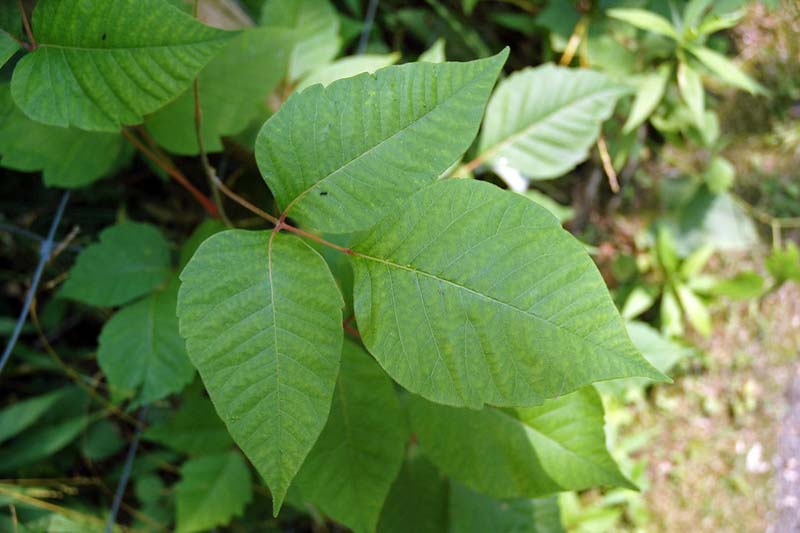


Summary: The classic “leaves of three” plant, Toxicodendron radicans is a deciduous, urushiol-producing native of North America (also present in East Asia) that grows as a groundcover, shrub, or climbing vine with hairy aerial rootlets. Trifoliate leaves emerge reddish in spring, turn green in summer, and blaze red/orange/yellow in fall. Panicles of small greenish-white flowers appear late spring to midsummer, followed by gray-white berries that persist into winter and feed birds. Poison ivy thrives along woodland edges, fencerows, riverbanks, and roadsides in sun to partial shade and well-drained soils. All parts contain urushiol—the oil that causes allergic contact dermatitis in most people—and the resin can transfer from tools, clothes, and pet fur; smoke from burning plants is hazardous. Learn to recognize and avoid; control with careful, protected removal—never burn.
| Botanical Name | Toxicodendron radicans (syn. Rhus radicans) |
|---|---|
| Family | Anacardiaceae |
| Native Range | Southern Canada to the U.S. and Guatemala; also East Asia (central China, Taiwan, Japan) |
| Plant Type & Habit | Deciduous woody vine/shrub/groundcover; climber via aerial rootlets; alternate leaves in clusters of three |
| Size | Vine 60–150 ft (18–45 m); shrub 1–6 ft (0.3–1.8 m); mats as groundcover |
| Leaves | Trifoliate; margins smooth/toothed/lobed; spring reddish, summer green, fall red–orange–yellow |
| Flowers & Fruit | Greenish-white flowers late spring–midsummer; gray-white berries persist into winter (bird-dispersed) |
| Sun & Exposure | Partial shade to sun; thrives at woodland edges, fencerows, riverbanks, roadsides |
| Soil | Well-drained; adaptable across forest/field/urban margins |
| Water | Average; tolerates periodic dryness once established |
| Toxicity & Safety | All parts contain urushiol; indirect transfer via tools/clothes/pets; smoke hazardous; causes allergic dermatitis |
| Wildlife | Berries feed birds (seed dispersal); foliage browsed by some mammals; flowers support insects |
| Invasiveness | Native but aggressive; noxious in some areas; bird-dispersed; vigorous regrowth (see U.S. listing) |
Toxicodendron radicans, commonly known as Poison Ivy, is a notorious plant renowned for its ability to cause severe skin irritation upon contact. While it is admired for its vibrant foliage that changes color with the seasons, its potential to deliver an itchy rash makes it one of the most avoided plants in North America.
Poison Ivy belongs to the Anacardiaceae family, which includes other irritant-producing plants such as poison oak and poison sumac. Its name derives from the Greek “toxico” (poison) and “dendron” (tree), highlighting its toxic properties.
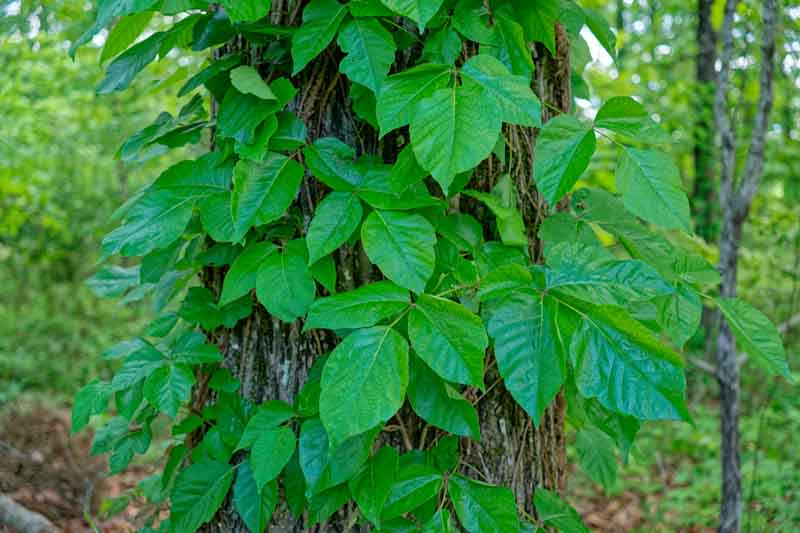
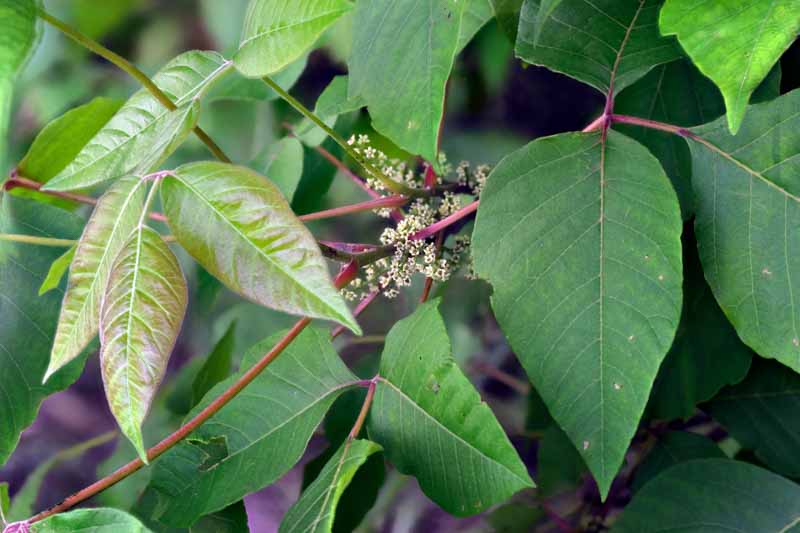
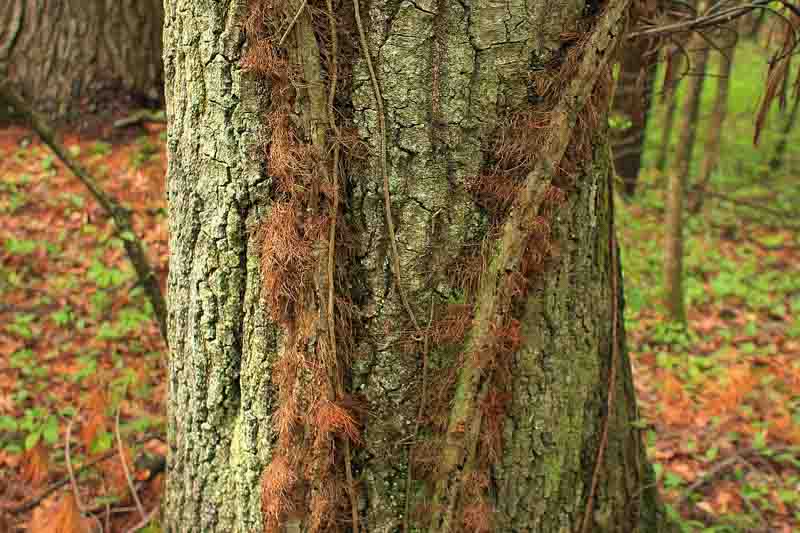
Poison Ivy is a deciduous plant that can grow as a ground cover, shrub, or climbing vine. Its leaves are trifoliate, consisting of three almond-shaped leaflets with smooth, toothed, or lobed edges. The leaf color ranges from reddish in spring to green in summer and vibrant red, orange, or yellow in fall.
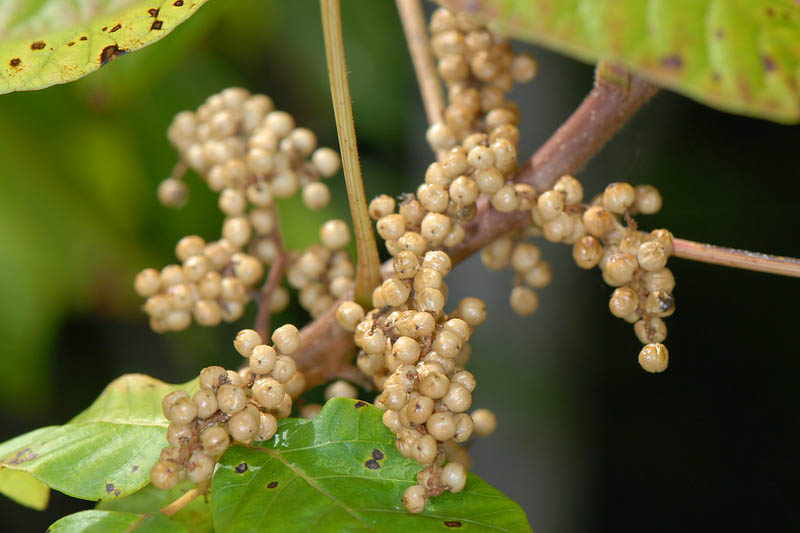
The plant produces small, greenish-white flowers in clusters from late spring to midsummer, followed by grayish-white, waxy berries that persist into winter.
Poison Ivy is native to a wide range, including southern Canada, the United States, and extending south to Guatemala. It is also native to East Asia, including central China, Taiwan, and Japan. It thrives in diverse habitats such as forests, woodlands, fields, riverbanks, and roadsides. Preferring partial shade and well-drained soils, it can climb trees, sprawl across the ground, or grow as a shrub, making it a resilient and widespread plant within its native range.
Toxicodendron radicans is a perennial plant with variable growth habits. It can appear as:
Its ability to grow in different forms allows it to invade a wide variety of ecosystems.
Poison Ivy can grow as a vine reaching lengths of 60-150 feet (18–45 meters) or as a shrub up to 1-6 feet (0.3-1.8 meters) tall. Ground-covering varieties spread horizontally, forming dense mats.
Poison Ivy is a versatile plant with a variety of forms, making it important to recognize its key identifying features to avoid contact.
Four key characteristics typically identify Poison Ivy:
However, its appearance can vary significantly depending on the environment and even within the same area. Identification can be challenging, even for experienced individuals, due to factors such as leaf damage, its bare appearance in winter, or unusual growth patterns caused by environmental or genetic influences.
The most notable characteristic of Poison Ivy is its compound leaves, which are always grouped in clusters of three leaflets—leading to the well-known rhyme, “Leaves of three, let it be.”
Box Elder (Acer negundo)
Box elder saplings can resemble poison ivy due to their trifoliate leaves. However, box elder typically has opposite leaves, while poison ivy has alternate leaves. Observing where leaf stalks meet the main stem is key—box elder’s leaves are paired directly opposite one another, unlike poison ivy’s alternating pattern.
Virgin’s Bower (Clematis virginiana)
A vine native to eastern North America, Virgin’s Bower grows up to 10–20 feet tall and produces fragrant white flowers (1 inch in diameter) from midsummer to fall. Found on moist slopes, fence rows, and streambanks, its leaves differ from poison ivy in texture and shape.
Virginia Creeper (Parthenocissus quinquefolia)
Virginia creeper is often confused with poison ivy, especially when young. Its leaves may appear trifoliate initially but typically mature to five leaflets. The surface is slightly wrinkled, with more serrated edges. Virginia creeper’s sap contains oxalate crystals, which can cause skin irritation.
Western Poison Oak (Toxicodendron diversilobum)
This plant has leaflets in threes, similar to poison ivy, but its leaflets resemble oak leaves. It grows only in western North America and prefers shady or sunny areas depending on its growth form. Poison ivy often shares the name “poison oak” due to similar appearances in some environments.
Poison Sumac (Toxicodendron vernix)
This plant is easily distinguished by its compound leaves with 7–15 leaflets, never in groups of three. Poison Sumac typically grows in wet environments such as swamps and is rarer than poison ivy.
Kudzu (Pueraria lobata)
An invasive vine in the southern U.S., kudzu has trifoliate leaves similar to poison ivy but larger and with hairy undersides. Kudzu’s stems are also pubescent, unlike the smooth stems of poison ivy.
Blackberries and Raspberries (Rubus spp.)
These plants resemble poison ivy but are differentiated by their thorny stems and wrinkled, light-colored undersides. Their trifoliate leaf pattern often changes to five leaflets as they grow. Unlike poison ivy, Rubus plants lack a true climbing habit.
Strawberries (Fragaria spp.)
Wild and cultivated strawberries have trifoliate leaves with serrated edges and red runners. They grow low to the ground, have petiolules of equal length, and feature small trichomes on stems—distinct from poison ivy’s smooth stems.
Riverbank Grape (Vitis riparia)
This vine differs from poison ivy by its lack of rootlets and its purplish, shreddy-barked vines that hang away from trees. Poison ivy vines are brown, densely root-covered, and cling closely to their support.
Fragrant Sumac (Rhus aromatica)
Fragrant sumac closely resembles poison ivy but can be distinguished by its center leaflet, which lacks a long stalk. Crushed leaves emit a citrus-like aroma. Its fruit ripens red and hairy, contrasting poison ivy’s smooth, white fruit.
Hoptree (Ptelea trifoliata)
Hoptree has trifoliate leaves similar to poison ivy but is a larger plant. Its distinctive flowers and seeds make identification straightforward for mature specimens, minimizing confusion.
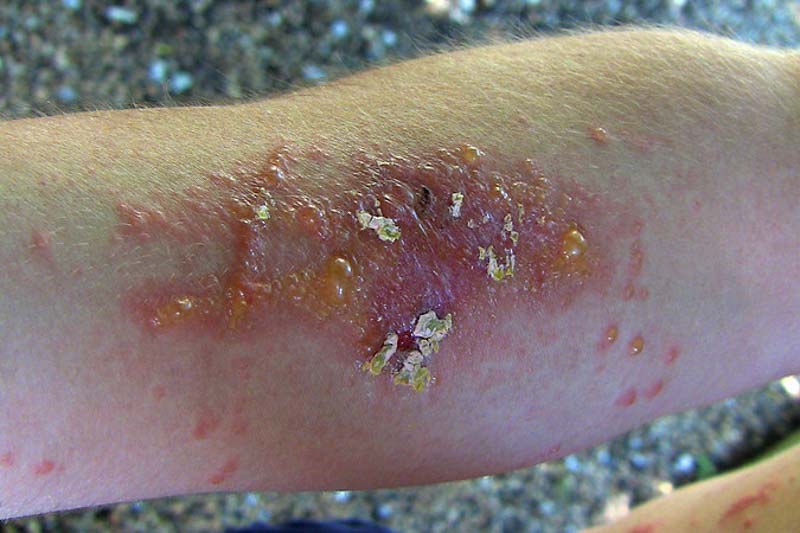
Poison Ivy is infamous for producing urushiol, an oily compound found in all parts of the plant, including leaves, stems, roots, and berries. Urushiol causes allergic contact dermatitis in about 85% of the population. Poisonous flowers and plants: Identifying toxic risks around you
Symptoms typically appear 12-48 hours after exposure but can take longer if it’s the first encounter. The rash can last 1-3 weeks, depending on the severity and individual sensitivity.
Wash the Skin: If you suspect contact with Poison Ivy, wash the affected area immediately with soap and cool water. Rinse thoroughly to remove any remaining urushiol. Washing within 15-30 minutes can significantly reduce the severity of the reaction.
Clean Contaminated Items: Wash clothes, tools, shoes, and pets that may have come into contact with the plant to prevent re-exposure.
Scratching can cause the rash to worsen and lead to infection. Keep nails trimmed and clean to minimize damage to the skin.
Seek medical attention if:
To prevent future reactions:
Timely and proper care can help minimize discomfort and speed recovery from Poison Ivy exposure.
Removing Poison Ivy requires caution and persistence due to its ability to regrow from roots and its production of urushiol, a toxic oil that can cause severe skin irritation. Follow these methods to safely eliminate poison ivy from your property.
Protect Yourself: Always wear gloves, long sleeves, pants, and eye protection to avoid skin contact. Use disposable gloves if possible, and wash all clothing thoroughly after the task.
Dig Out Plants: Cut the plant off at ground level and place it immediately in plastic garbage bags. Use a shovel to dig out the entire root system to prevent regrowth, and bag the roots promptly for disposal. Begin this process early in the spring when the plants are smaller and easier to manage.
Dispose Safely: Never burn poison ivy, as urushiol can become airborne and cause respiratory issues. Place plants in plastic bags and dispose of them in the trash. Avoid composting.
Herbicides: Use glyphosate or triclopyr-based herbicides specifically labeled for poison ivy. Apply during active growth (late spring to summer) when the plant is most vulnerable.
Targeted Application: Spray herbicide on leaves and stems without affecting nearby desirable plants. Follow up with additional treatments for stubborn regrowth.
Smothering: Cover poison ivy patches with heavy tarps or thick mulch to block sunlight. Leave in place for several months to ensure the plant dies.
Vinegar Solution: Apply a mix of white vinegar and water as a natural, non-selective herbicide for small patches.
Eliminating poison ivy may take multiple seasons, but with persistence and proper safety measures, it is possible to regain control of your space.
Poison Ivy is a valuable resource for wildlife. Birds, such as songbirds and woodpeckers, consume the berries and spread the seeds, while deer, rabbits, and other mammals occasionally browse its foliage without ill effects. Various insects, including beetles, flies, bees, wasps, ants, and butterflies, feed on poison ivy flowers.
Because it provides benefits to wildlife, Poison Ivy can be allowed to remain undisturbed in natural areas with minimal human activity.
Poison Ivy is a native plant to North America, but its aggressive growth habit and adaptability have led to concerns about its invasive tendencies in certain settings. Poison Ivy thrives in a wide range of habitats, including forests, fields, roadsides, and urban areas. Its ability to spread rapidly and form dense thickets can outcompete native vegetation and disrupt local ecosystems.
The plant’s invasiveness is largely attributed to its reproductive strategies and environmental adaptability. Poison Ivy produces small, white, berry-like fruits that are highly attractive to birds. These birds disperse the seeds far and wide, leading to its establishment in diverse environments. Its roots and stems can also propagate vegetatively, allowing it to colonize areas quickly.
Poison Ivy is classified as a noxious weed in certain areas of the United States and should not be moved or grown under conditions involving danger of dissemination..
Find out where Poison Ivy is invasive in the United States.
Poison ivy has compound leaves in clusters of three leaflets (“leaves of three, let it be”). Leaflet edges may be smooth, toothed, or lobed; leaves emerge reddish in spring, turn green in summer, and show red/orange/yellow in fall. As a vine it climbs with hairy aerial rootlets; it can also form groundcover mats or low shrubs.
The rash itself is not contagious. What spreads the rash is urushiol oil. If oil remains on skin, tools, clothing, or pet fur, it can transfer to another person. Once urushiol has been washed off, fluid from blisters does not spread the rash.
Wash exposed skin within 15–30 minutes using soap and cool water. Clean under fingernails. Launder clothes, and wash tools and pet fur to remove lingering urushiol. Early washing can reduce the severity of the reaction.
Yes. Urushiol can stick to pet fur and transfer to people who pet them. After outdoor excursions in infested areas, bathe or wipe pets with pet-safe shampoo or wipes and wear gloves while doing so.
Wear full protection (gloves, long sleeves, eye protection). Bag plants and roots; never burn. For persistent patches, spot-apply a labeled herbicide (glyphosate or triclopyr) during active growth and repeat as needed. Smother small patches with tarps or thick mulch for months.
Its berries feed birds and the flowers support insects, but because urushiol poses risks to people, pets, and maintenance crews, keep it out of areas with human activity. Leave it only in remote natural areas where contact is unlikely.
A typical rash lasts 1–3 weeks, depending on exposure, individual sensitivity, and care. Mild cases may clear in 7–10 days; severe cases can last longer. Blisters often appear within 1–3 days and may ooze before crusting as they heal. Seek medical advice if symptoms persist beyond three weeks or show signs of infection.
It is highly sensitizing due to urushiol. Contact with even small amounts can trigger allergic dermatitis (itchy rash, redness, blisters, swelling). Exposure can occur from direct contact, contaminated objects, or inhaling smoke from burning plants. Sensitive individuals may react severely.
Every part of the plant contains urushiol: leaves, stems, roots, and flowers/berries. Even dead plants remain hazardous because urushiol can persist for years.
Year-round. Appearance changes by season: spring (reddish, shiny new leaves), summer (green foliage; flowers and white berries forming), fall (vivid red/orange/yellow), winter (bare stems/vines still contain urushiol).
| Hardiness |
4 - 10 |
|---|---|
| Plant Type | Climbers, Perennials, Shrubs |
| Plant Family | Anacardiaceae |
| Exposure | Full Sun, Partial Sun |
| Height | 1' - 6' (30cm - 180cm) |
| Spread | 1' - 3' (30cm - 90cm) |
| Maintenance | High |
| Water Needs | Average |
| Soil Type | Clay, Loam, Sand |
| Soil pH | Acid, Neutral, Alkaline |
| Soil Drainage | Moist but Well-Drained |
| Native Plants | United States, Northeast, Pennsylvania, Rhode Island, Vermont, Connecticut, Delaware, Maine, Massachusetts, Maryland, New Hampshire, New Jersey, New York, Illinois, Indiana, Iowa, Kansas, Michigan, Midwest, Minnesota, Missouri, Nebraska, North Dakota, Ohio, South Dakota, Wisconsin, Idaho, Oregon, Pacific Northwest, Washington, Southeast, Louisiana, Mississippi, North Carolina, South Carolina, Tennessee, Virginia, West Virginia, Alabama, Arkansas, Florida, Georgia, Kentucky, Southwest, Texas, Arizona, Nevada, New Mexico, Oklahoma, Colorado, Montana, Rocky Mountains, Utah, Wyoming |
| Attracts | Bees, Butterflies, Birds |
| Toxic to Humans | No known toxicity |
| Toxic to Cats | No known toxicity |
| Toxic to Dogs | No known toxicity |
| Toxic to Horses | No known toxicity |

| Hardiness |
4 - 10 |
|---|---|
| Plant Type | Climbers, Perennials, Shrubs |
| Plant Family | Anacardiaceae |
| Exposure | Full Sun, Partial Sun |
| Height | 1' - 6' (30cm - 180cm) |
| Spread | 1' - 3' (30cm - 90cm) |
| Maintenance | High |
| Water Needs | Average |
| Soil Type | Clay, Loam, Sand |
| Soil pH | Acid, Neutral, Alkaline |
| Soil Drainage | Moist but Well-Drained |
| Native Plants | United States, Northeast, Pennsylvania, Rhode Island, Vermont, Connecticut, Delaware, Maine, Massachusetts, Maryland, New Hampshire, New Jersey, New York, Illinois, Indiana, Iowa, Kansas, Michigan, Midwest, Minnesota, Missouri, Nebraska, North Dakota, Ohio, South Dakota, Wisconsin, Idaho, Oregon, Pacific Northwest, Washington, Southeast, Louisiana, Mississippi, North Carolina, South Carolina, Tennessee, Virginia, West Virginia, Alabama, Arkansas, Florida, Georgia, Kentucky, Southwest, Texas, Arizona, Nevada, New Mexico, Oklahoma, Colorado, Montana, Rocky Mountains, Utah, Wyoming |
| Attracts | Bees, Butterflies, Birds |
| Toxic to Humans | No known toxicity |
| Toxic to Cats | No known toxicity |
| Toxic to Dogs | No known toxicity |
| Toxic to Horses | No known toxicity |
Create a membership account to save your garden designs and to view them on any device.
Becoming a contributing member of Gardenia is easy and can be done in just a few minutes. If you provide us with your name, email address and the payment of a modest $25 annual membership fee, you will become a full member, enabling you to design and save up to 25 of your garden design ideas.
Join now and start creating your dream garden!
Create a membership account to save your garden designs and to view them on any device.
Becoming a contributing member of Gardenia is easy and can be done in just a few minutes. If you provide us with your name, email address and the payment of a modest $25 annual membership fee, you will become a full member, enabling you to design and save up to 25 of your garden design ideas.
Join now and start creating your dream garden!