Feverfew 'Virgo', Chrysanthemum parthenium 'Virgo, Pyrethrum parthenium 'Virgo'
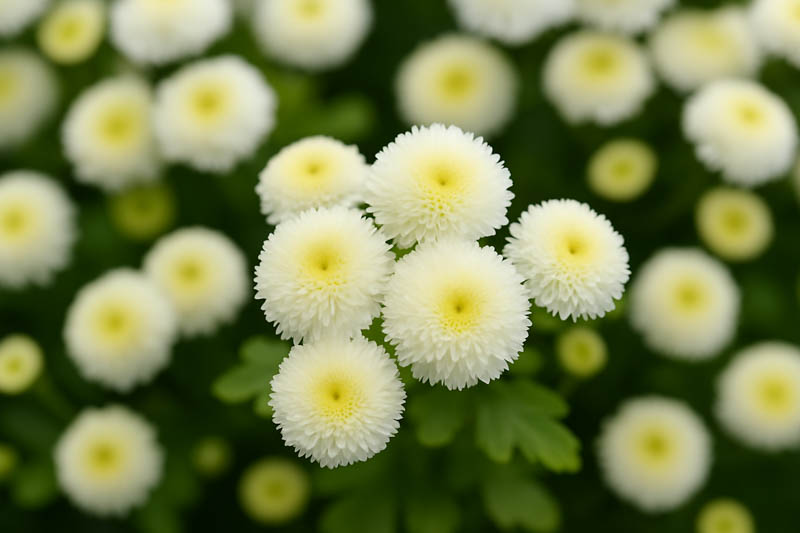


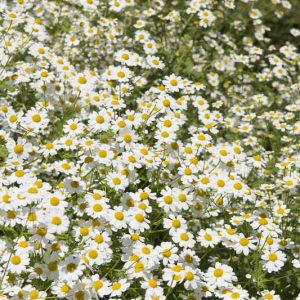
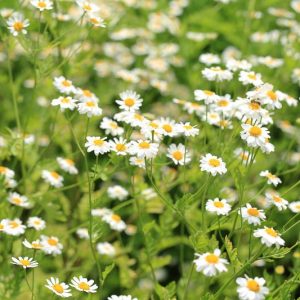
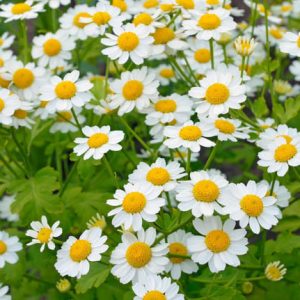
Imagine a gauzy drift of tiny, snow-white daisies hovering above neat, ferny foliage—like floating puffs of cloud that shimmer in sunlight and sway with every breeze. Honeybees and butterflies dart from bloom to bloom, gathering nectar as you brush past aromatic leaves. Tanacetum ‘Virgo’ (also sold as Matricaria ‘Virgo’) is a modern feverfew that gives your borders, cutting beds, and cottage gardens all the ease, sparkle, and natural pollinator buzz you crave, with virtually zero maintenance.
Tanacetum ‘Virgo’ is a contemporary selection bred for those who love blanket daisy displays but want a compact, refined habit. Its lineage traces to feverfew, Tanacetum parthenium (syn. Matricaria parthenium)—a cottage-garden classic. Where old feverfew strains might seed about or flop, ‘Virgo’ delivers masses of uniform, button-centered flowers on a tidy, well-branched mound—built for bouquets, front-of-border sparkle, and season-long pollinator support.
| Botanical Name | Tanacetum parthenium ‘Virgo’ (syn. Matricaria parthenium) |
| Common Name | Feverfew, Virgo Daisy, Matricaria |
| Plant Type | Perennial (often grown as an annual) |
| Hardiness Zones | Perennial in USDA 6–9; commonly grown as an annual elsewhere |
| Height & Spread | 18–30 in. tall × 12–18 in. wide (45–75 × 30–45 cm) |
| Bloom Time | Late spring to frost (with deadheading) |
| Flower Color & Size | Pure white with yellow centers, ½–1 in. (1.5–2.5 cm); button to semi-double |
| Wildlife | Attracts bees, butterflies, hoverflies; deer & rabbit resistant |
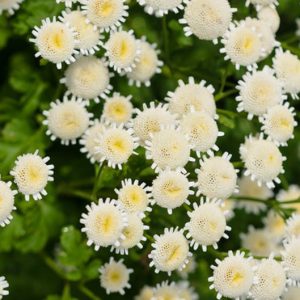
‘Virgo’ forms neatly mounded, compact plants with aromatic, finely divided green leaves. Flower stems launch clouds of white daisy buttons, each perfectly defined with a golden eye. The dainty, long-lasting sprays hover above foliage from early summer right through fall if deadheaded.
Ancestor species of ‘Virgo’ trace to Tanacetum parthenium (syn. Matricaria parthenium), native to Eurasia and long naturalized in cottage gardens. In cultivation, ‘Virgo’ flourishes in sunny, well-drained borders with decent air movement and adapts easily to urban conditions.
‘Virgo’ is a compact, upright perennial (grown as an annual in colder zones), with abundant, slender branches that hold blooms well above a bushy mound of aromatic, lacy leaves. It stays neat, responds well to pinching, and resists flopping.
Plants typically reach 18–30 in. (45–75 cm) in height and 12–18 in. (30–45 cm) across—great for mixing among low grasses, herbs, and taller summer perennials.
Pure white, button-like to lightly double blooms with bright yellow eyes appear in hundreds per plant. Excellent for bouquets and beloved by pollinators.
Finely cut, aromatic green leaves—pleasantly herbal but bitter when crushed, contributing to natural pest resistance.
The nectar-rich blooms lure bees and hoverflies nonstop. Butterflies visit for nectar, while aromatic foliage makes plants less attractive to browsing animals.
Aromatic, bitter, and strongly textured foliage deters browsing mammals—ideal for unprotected beds or wild garden edges.
After establishment, ‘Virgo’ handles moderate drought; prefers deep, occasional waterings to frequent, shallow sips.
Not edible. Foliage and flowers may cause skin irritation for sensitive individuals; handle with care and avoid ingestion.
Clump-forming and easy to manage. May self-seed modestly; deadhead spent sprays if you want to prevent volunteers.
Full sun (6+ hours) yields the densest bloom and sturdiest plants; part shade is tolerated but reduces flowering.
Any average, well-drained garden soil is suitable. Rich loam produces the fastest, most compact clumps.
Water deeply but infrequently to encourage strong roots. Allow the upper soil to dry slightly between soakings.
Feeding is rarely necessary—a light compost mulch in spring is usually plenty. Excess fertilizer can make stems floppy.
Deadhead regularly for the longest display; shear lightly after a flush to encourage re-bloom. Pinch growing tips early for a fuller shape.
Excellent in pots—drainage and sun are key. Pair with blue lobelia, bright nasturtium, or silver herbs for contrast.
In warm climates, cut back in fall and mulch lightly. In frost zones, treat as an annual or overwinter container plants dry and sheltered.
Typically 18–30 in. tall and 12–18 in. wide—perfect for bouquets or massed front-of-border planting.
No. Enjoy the display, not the taste; plants may irritate skin for some people.
Yes—if you deadhead and shear lightly after flushes, flowers keep coming from late spring to frost.
Rarely touched—the aromatic foliage discourages browsing.
Absolutely. Give it drainage, full sun, and occasional deadheading to keep it compact and floriferous.
Modestly. Pull extras where you want pinpoint order, or deadhead to prevent volunteers.
Final tip: For season-long sparkle and pollinator joy, thread Tanacetum ‘Virgo’ among herbs, grasses, or summer bloomers. Give it sun and an occasional trim, and you’ll be rewarded with clouds of white and bee buzz, right up to autumn’s chill!
| Hardiness |
6 - 9 |
|---|---|
| Heat Zones |
1 - 9 |
| Climate Zones | 2A, 2B, 3A, 3B, 4, 5, 6, 7, 8, 9, 10, 11, 12, 13, 14, 15, 16, 17, 18, 19, 20, 21, 22, 23, 24 |
| Plant Type | Perennials |
| Plant Family | Compositae |
| Genus | Tanacetum |
| Common names | Feverfew |
| Exposure | Full Sun |
| Season of Interest | Spring (Late), Summer (Early, Mid, Late), Fall |
| Height | 1' - 3' (30cm - 90cm) |
| Spread | 1' - 2' (30cm - 60cm) |
| Spacing | 24" (60cm) |
| Maintenance | Average |
| Water Needs | Average |
| Soil Type | Loam, Sand |
| Soil pH | Acid, Alkaline, Neutral |
| Soil Drainage | Well-Drained |
| Characteristics | Dried Arrangements, Cut Flowers, Fragrant, Showy |
| Tolerances | Drought, Deer, Heat |
| Attracts | Bees, Butterflies |
| Garden Uses | Beds And Borders, Edging, Patio And Containers |
| Garden Styles | City and Courtyard, Informal and Cottage, Prairie and Meadow |
| Toxic to Humans | Low severity |
| Toxic to Cats | Toxic |
| Toxic to Dogs | Toxic |
| Toxic to Horses | Toxic |


| Hardiness |
6 - 9 |
|---|---|
| Heat Zones |
1 - 9 |
| Climate Zones | 2A, 2B, 3A, 3B, 4, 5, 6, 7, 8, 9, 10, 11, 12, 13, 14, 15, 16, 17, 18, 19, 20, 21, 22, 23, 24 |
| Plant Type | Perennials |
| Plant Family | Compositae |
| Genus | Tanacetum |
| Common names | Feverfew |
| Exposure | Full Sun |
| Season of Interest | Spring (Late), Summer (Early, Mid, Late), Fall |
| Height | 1' - 3' (30cm - 90cm) |
| Spread | 1' - 2' (30cm - 60cm) |
| Spacing | 24" (60cm) |
| Maintenance | Average |
| Water Needs | Average |
| Soil Type | Loam, Sand |
| Soil pH | Acid, Alkaline, Neutral |
| Soil Drainage | Well-Drained |
| Characteristics | Dried Arrangements, Cut Flowers, Fragrant, Showy |
| Tolerances | Drought, Deer, Heat |
| Attracts | Bees, Butterflies |
| Garden Uses | Beds And Borders, Edging, Patio And Containers |
| Garden Styles | City and Courtyard, Informal and Cottage, Prairie and Meadow |
| Toxic to Humans | Low severity |
| Toxic to Cats | Toxic |
| Toxic to Dogs | Toxic |
| Toxic to Horses | Toxic |
How many Tanacetum parthenium ‘Virgo’ (Feverfew) do I need for my garden?
| Plant | Quantity | |
|---|---|---|
| Tanacetum parthenium ‘Virgo’ (Feverfew) | N/A | Buy Plants |
Create a membership account to save your garden designs and to view them on any device.
Becoming a contributing member of Gardenia is easy and can be done in just a few minutes. If you provide us with your name, email address and the payment of a modest $25 annual membership fee, you will become a full member, enabling you to design and save up to 25 of your garden design ideas.
Join now and start creating your dream garden!
Create a membership account to save your garden designs and to view them on any device.
Becoming a contributing member of Gardenia is easy and can be done in just a few minutes. If you provide us with your name, email address and the payment of a modest $25 annual membership fee, you will become a full member, enabling you to design and save up to 25 of your garden design ideas.
Join now and start creating your dream garden!