Kashmir Rowan, Cashmir Rowan, Kashmir Mountain Ash, Pyrus cashmiriana, Sorbus foliolosa, Sorbus foliosa, Pyrus foliolosa var. cashmiriana, Pyrus fraxinus

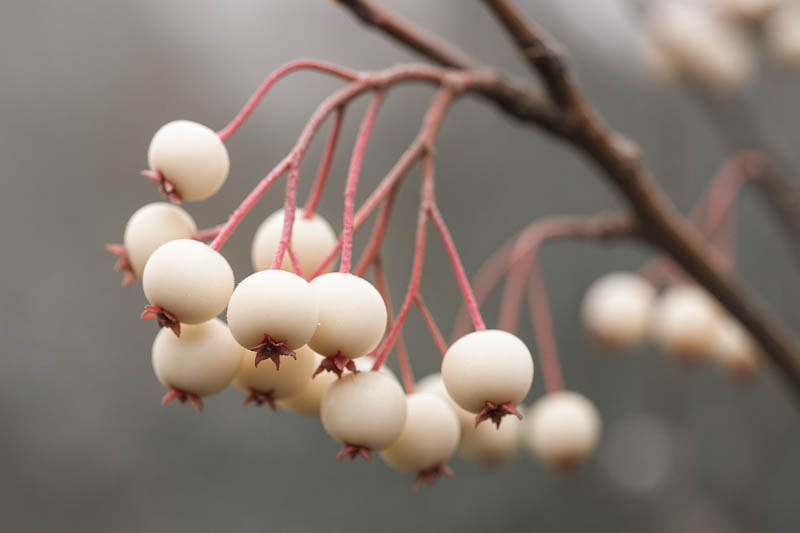


Sorbus cashmiriana is the white-fruited rowan tree you plant when you want winter jewelry. An RHS Award of Garden Merit winner, it froths with pink-tinged blossom in spring, casts dappled shade in summer, warms its leaves in fall, then shows big porcelain-white fruits that gleam through frost. Small enough for most gardens, tough enough for city air, and adored by birds later in the season.
Summary: Kashmir rowan is a small, elegant, deciduous tree with pink-tinged spring flowers and unusually large, white fruits that persist well into winter. A superb specimen for front gardens and courtyards.
Use: Specimen tree, winter-interest focal point, wildlife planting, small garden canopy, street-side plantings where soils are reasonable.
Highlight: Fruits are bigger than typical rowans and glow white rather than red or orange, so they read from a distance and photograph beautifully.
Note: Fruit is primarily ornamental. If you plan to use it in the kitchen, cook well and sweeten to reduce bitterness.
| Botanical Name | Sorbus cashmiriana |
|---|---|
| Family | Rosaceae – rose family |
| Common Names | Kashmir rowan, Kashmir mountain ash, Kashmir sorbus, white-fruited rowan tree |
| Native Range | Western Himalaya, Kashmir region and adjacent mountains of northern India and Pakistan |
| Plant Type & Habit | Small deciduous tree, upright when young, rounding with age, often with multiple picturesque stems |
| Hardiness (USDA) | Generally hardy in Zones 5 to 8, best where summers are cool to moderate |
| Size | 20 to 30 ft tall (6 to 9 m) and 15 to 25 ft wide (4.5 to 7.5 m) at maturity |
| Sun & Exposure | Full sun to light shade, best fruiting and flowering with at least 6 hours of sun |
| Soil | Moist but well drained loam or sandy loam, moderately fertile, slightly acidic to neutral pH |
| Bloom & Fruit | Late spring corymbs of pink-tinged white flowers, large porcelain-white pomes that persist into winter |
| Primary Uses | Specimen, front-yard tree, winter display, wildlife value, small street tree where soils are good |
| Award | Royal Horticultural Society Award of Garden Merit (AGM) |
Kashmir rowan is a refined rowan tree with classic mountain-ash grace and a unique finish. Spring brings flurries of pink-tinged white blossom that hum with bees. Summer gives dappled shade and tidy pinnate leaves. Autumn adds warm leaf color. Then big porcelain-white fruits stay bright on bare twigs when little else remains. Not the common rowan (Sorbus aucuparia) with orange red clusters, this white-fruited rowan reads like moonlit pearls in low sun.
Wild populations occur in the Kashmir region of the western Himalaya where summers are moderate and winters are cold. That alpine pedigree explains its poise in cool-temperate gardens and its preference for decent drainage with steady moisture.
Upright when young with a clear main stem, then broadening into a rounded canopy of fine branchwork. It carries fruit on short spurs along the previous season’s growth. Branch angles are graceful rather than stiff, so even leafless silhouettes are decorative.
Moderate. Expect steady annual extension. Many specimens approach near-mature proportions in about a decade under average garden conditions.
Rowans are generally shorter-lived ornamentals. Lifespan is best in cool, well-drained sites and shorter in hot or highly urban settings. Good siting and light, regular care extend vigor.
Expect roughly 20 to 30 ft tall (6 to 9 m) and 15 to 25 ft wide (4.5 to 7.5 m) at maturity. Compact for a true canopy tree, which is why designers reach for it in small front gardens and near patios and entries.
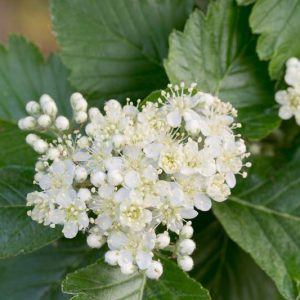
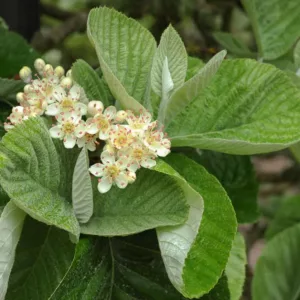
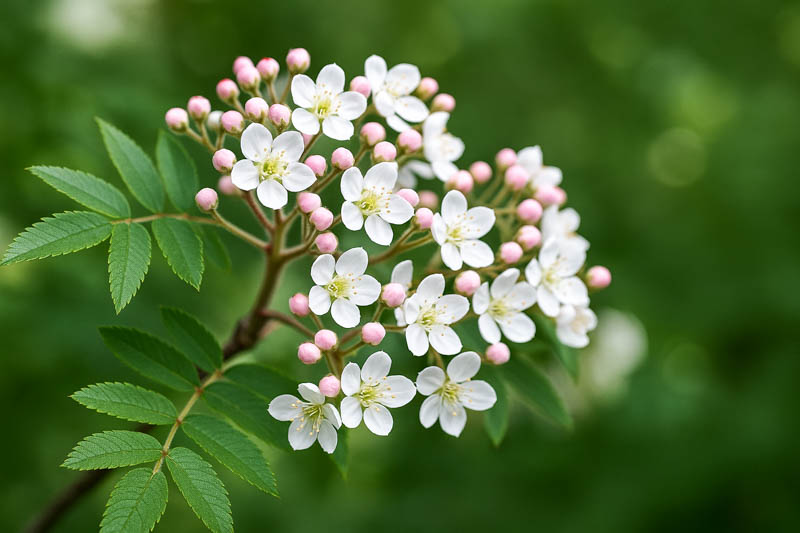
Late spring corymbs about 2 to 4 in across (5 to 10 cm) open soft pink, fading to white. Individual flowers are small but numerous, giving a foamy look. Bees find them quickly and, with kind spring weather, you get heavy fruit set.
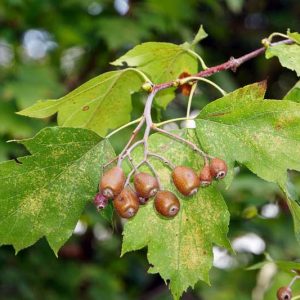
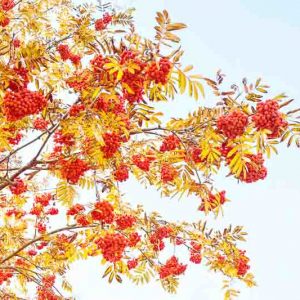
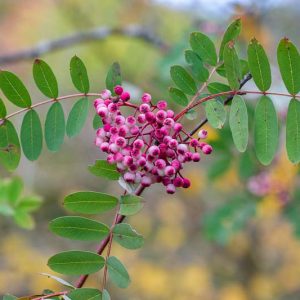
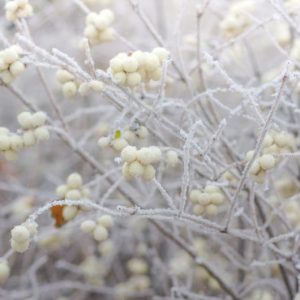
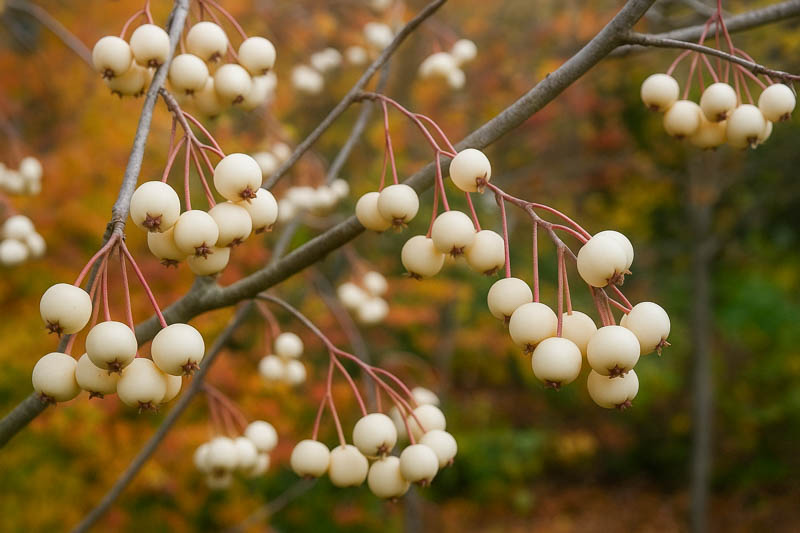
Pomes about 0.5 to 0.6 in across (12 to 15 mm), much larger than typical rowans, chalk-white to porcelain-white. They color by late summer, hold through fall, and often persist into deep winter until thrushes, blackbirds, or waxwings finish them. White clusters usually persist longer than red or orange ones and catch every slant of light for curb-appeal sparkle. Add Sparkle: Ornamental Shrubs and Trees with White Berries.
Pinnate leaves 6 to 10 in long (15 to 25 cm) carry typically 15 to 21 slender leaflets, finer and more feathery than many rowans. Summer color is cool mid green. Fall color varies by climate from soft butter yellow to amber with occasional orange flushes.
Generally hardy in USDA Zones 5 to 8 where summers are not extreme. In hotter climates provide afternoon shade and deep mulch to moderate soil temperatures.
Kashmir rowan holds the Royal Horticultural Society Award of Garden Merit for consistent performance and ornamental value.
Flowers feed pollinators in late spring. Fruits feed birds later than red-fruited rowans because white fruits are less conspicuous and slower to soften. That delay is perfect for winter viewing. The airy branching also gives small birds a safe perch. Small Trees and Shrubs Birds Can’t Resist.
Fruit is primarily ornamental and tastes bitter and astringent when raw. As with many rowans, raw fruit may contain parasorbic acid which can upset stomachs. Cooking converts much of this to sorbic acid and reduces bitterness. If you experiment in the kitchen, cook well and sweeten, and avoid consuming seeds.
Kashmir rowan is not considered invasive in gardens. Seedlings may appear near parent trees where birds perch. Pull or transplant while small if they are not wanted.
Full sun gives the best flower and fruit set. In hot-summer climates, light afternoon shade prevents leaf scorch and keeps berries handsome longer.
Prefers moderately fertile, well drained loam with steady moisture. Slightly acidic to neutral pH suits it well. Heavy clay can work if you amend for drainage and mound the planting area a few inches above grade.
Water deeply and regularly for the first 2 years. Established trees handle typical dry spells, but extended drought reduces fruit size and can stress foliage. Mulch 2 to 3 in (5 to 7 cm) deep to stabilize soil temperature and moisture.
Feed lightly. A spring ring of compost is usually plenty. Avoid high nitrogen lawn fertilizers under the canopy which push soft, sappy growth that is more prone to pests and disease.
Rowans prefer a light hand. In late winter remove dead, damaged, or crossing wood and any tight, upright shoots that compete with the central leader. Thin lightly to keep a layered, airy crown. Avoid hard summer pruning which can stimulate soft regrowth.
For a single-stem tree, choose the strongest central leader when young and remove competing uprights. For a multi-stem look, allow 3 to 5 well spaced stems to develop, then maintain with occasional thinning cuts.
White fruits of Kashmir rowan are best treated as ornamental. If you are curious in the kitchen, cook thoroughly with sugar and lemon, then strain for a clear jelly with a floral note. Taste will be subtle compared to red or orange rowans. Never eat seeds and avoid large quantities of raw fruit.
Moderate. Expect roughly 12 to 18 inches of extension growth per year while establishing, then a steady pace to 20 to 30 ft over many seasons.
Yes, usually later in the season. The fruits tend to persist until hard weather softens them, then thrushes, blackbirds, and waxwings descend.
The fruits are firm and often hang well into winter, so drop is limited compared to softer crabapples. Avoid planting directly over busy paths if you are worried.
Not recommended long term. It is a small tree but still wants open ground. If you must, use a very large planter and plan to transplant after a few years.
It is a rowan tree but a different species. Common mountain ash is Sorbus aucuparia with orange to red fruits. Sorbus cashmiriana is prized for larger, white fruits.
Updated: November 2025 • Reviewed by Gardenia Editors
| Hardiness |
5 - 8 |
|---|---|
| Plant Type | Shrubs, Trees |
| Plant Family | Rosaceae |
| Genus | Sorbus |
| Common names | Ash, Rowan |
| Exposure | Full Sun, Partial Sun |
| Season of Interest | Spring (Late), Summer (Early, Mid, Late), Fall, Winter |
| Height | 20' - 30' (6.1m - 9.1m) |
| Spread | 15' - 25' (4.6m - 7.6m) |
| Maintenance | Low |
| Water Needs | Average |
| Soil Type | Clay, Loam, Sand |
| Soil pH | Acid, Neutral |
| Soil Drainage | Moist but Well-Drained, Well-Drained |
| Characteristics | Showy, Fruit & Berries, Plant of Merit |
| Attracts | Birds |
| Garden Uses | Small Gardens |
| Garden Styles | Informal and Cottage |
| Toxic to Humans | No known toxicity |
| Toxic to Cats | No known toxicity |
| Toxic to Dogs | No known toxicity |
| Toxic to Horses | No known toxicity |


| Hardiness |
5 - 8 |
|---|---|
| Plant Type | Shrubs, Trees |
| Plant Family | Rosaceae |
| Genus | Sorbus |
| Common names | Ash, Rowan |
| Exposure | Full Sun, Partial Sun |
| Season of Interest | Spring (Late), Summer (Early, Mid, Late), Fall, Winter |
| Height | 20' - 30' (6.1m - 9.1m) |
| Spread | 15' - 25' (4.6m - 7.6m) |
| Maintenance | Low |
| Water Needs | Average |
| Soil Type | Clay, Loam, Sand |
| Soil pH | Acid, Neutral |
| Soil Drainage | Moist but Well-Drained, Well-Drained |
| Characteristics | Showy, Fruit & Berries, Plant of Merit |
| Attracts | Birds |
| Garden Uses | Small Gardens |
| Garden Styles | Informal and Cottage |
| Toxic to Humans | No known toxicity |
| Toxic to Cats | No known toxicity |
| Toxic to Dogs | No known toxicity |
| Toxic to Horses | No known toxicity |
How many Sorbus cashmiriana (Kashmir Rowan) do I need for my garden?
| Plant | Quantity | |
|---|---|---|
| Sorbus cashmiriana (Kashmir Rowan) | N/A | Buy Plants |
Create a membership account to save your garden designs and to view them on any device.
Becoming a contributing member of Gardenia is easy and can be done in just a few minutes. If you provide us with your name, email address and the payment of a modest $25 annual membership fee, you will become a full member, enabling you to design and save up to 25 of your garden design ideas.
Join now and start creating your dream garden!
Create a membership account to save your garden designs and to view them on any device.
Becoming a contributing member of Gardenia is easy and can be done in just a few minutes. If you provide us with your name, email address and the payment of a modest $25 annual membership fee, you will become a full member, enabling you to design and save up to 25 of your garden design ideas.
Join now and start creating your dream garden!