Sweet Box, Fragrant Sweet Box, Christmas Box, Winter Box, Fragrant Sarcococca, Sweet Sarcococca, Confused Sweet Box

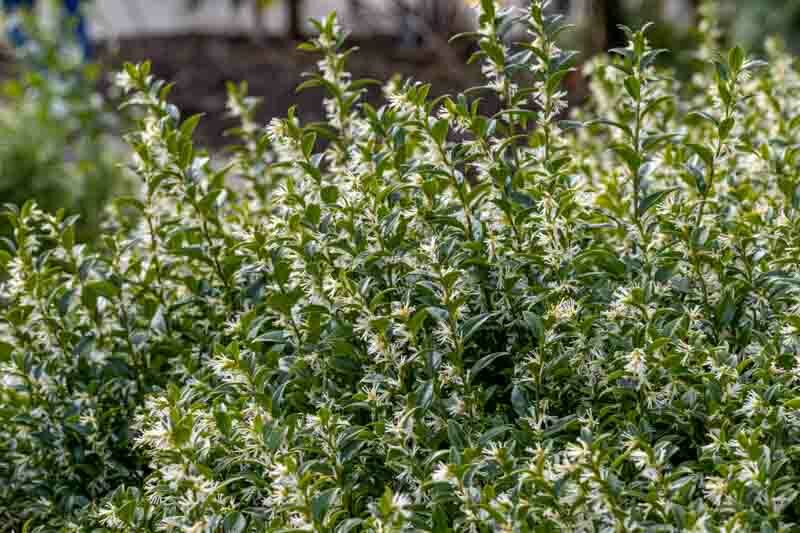


If you have ever walked through a quiet winter garden and suddenly caught a warm, sweet, almost vanilla-like perfume drifting through the cold air, chances are you were standing near Sarcococca confusa, one of the most delightfully fragrant winter shrubs available. Often overlooked during the growing season, this tough, evergreen beauty truly comes alive in the chilliest months, producing small but powerfully scented flowers at a time when most plants are sleeping. Glossy dark green leaves, dependable structure, and an intoxicating winter bloom make Sarcococca confusa a go-to shrub for shady gardens, patios, and entryways where its famous fragrance can be appreciated up close.
Sarcococca confusa thrives in partial to full shade and prefers moist, humus-rich, well-drained soil. It tolerates pollution, dry shade, and periods of neglect, making it one of the most reliable evergreen shrubs for difficult garden areas. Use it in shaded borders, woodland plantings, foundation beds, entryways, patios, containers, or as a low hedge where its winter scent and year-round structure can shine.
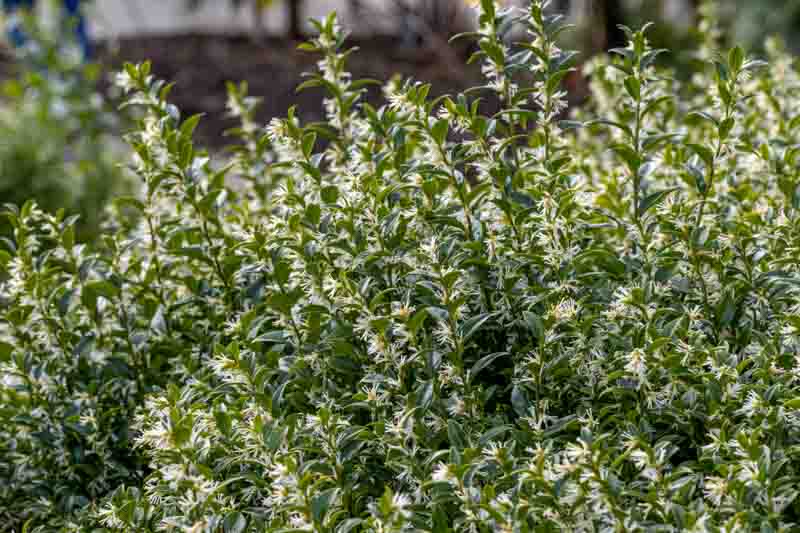
Summary: A small, reliable evergreen shrub prized for its glossy foliage, strong vanilla-like fragrance, and winter-blooming charm that lights up shaded corners when little else is in flower.
Use: Ideal for shade gardens, woodland edges, foundation plantings, patios, entryways, containers, low hedges, and winter fragrance gardens where structure and scent are both important design elements.
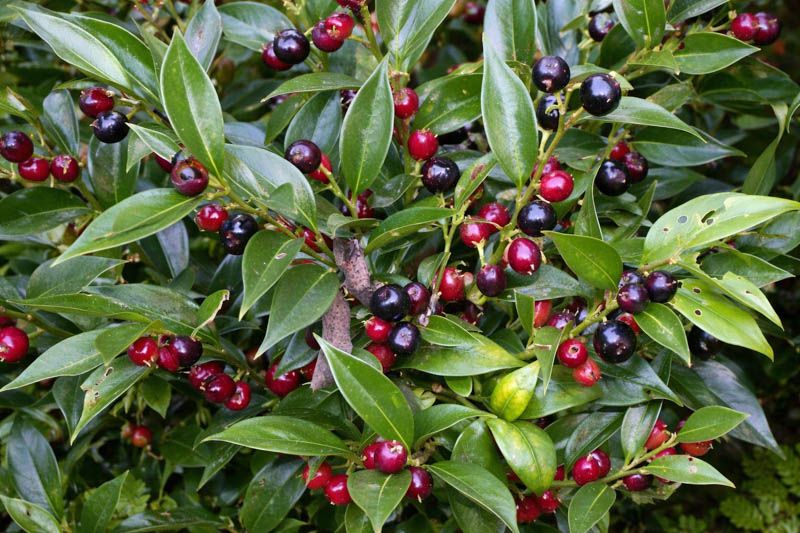
Highlight: Produces highly perfumed late-winter flowers along the stems, followed by shiny berries that turn from red to black as they mature, extending the season of interest.
Note: For maximum impact, plant near busy walkways, front doors, or patios so the exceptional winter scent can be enjoyed every time you pass by.
| Botanical Name | Sarcococca confusa |
|---|---|
| Family | Buxaceae (Boxwood family) |
| Common Names | Sweet Box, Christmas Box, Fragrant Sweet Box |
| Native Range | Native to China, especially forested, shaded hillsides and woodland margins where soils are moist and rich in organic matter. |
| Plant Type and Habit | Evergreen shrub with a dense, upright, rounded habit and radiating stems that create a neat, bushy silhouette without much pruning. |
| Hardiness (approx. USDA) | Zones 6 to 9, performing best in regions with cool to mild winters and not excessively hot, dry summers. |
| Size | Grows 3-5 ft. tall and wide (90-150 cm) at a moderate rate, making it ideal for small gardens and tight shaded spaces. |
| Sun and Exposure | Thrives in part to full shade and will tolerate a little morning sun if the soil is kept moist and roots are protected by mulch. |
| Soil | Prefers moderately fertile, moist, well-drained, humus-rich soil but is surprisingly tolerant of dry shade and urban pollution once established. |
| Seasonal Interest | Late winter to early spring fragrant blooms, handsome evergreen foliage that looks good year-round, and berries that mature from red to glossy black for subtle color. |
| Primary Uses | Beds, borders, low hedges, evergreen groundcover, cottage gardens, woodland gardens, containers, and entryway plantings where fragrance is a priority. |
Looking for a shrub that perfumes the garden when almost everything else is bare and dormant?
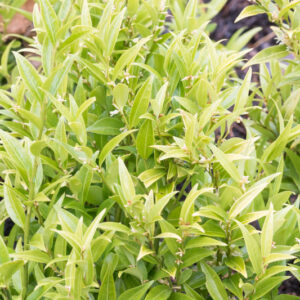
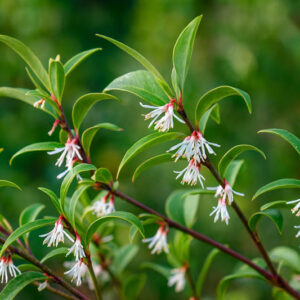
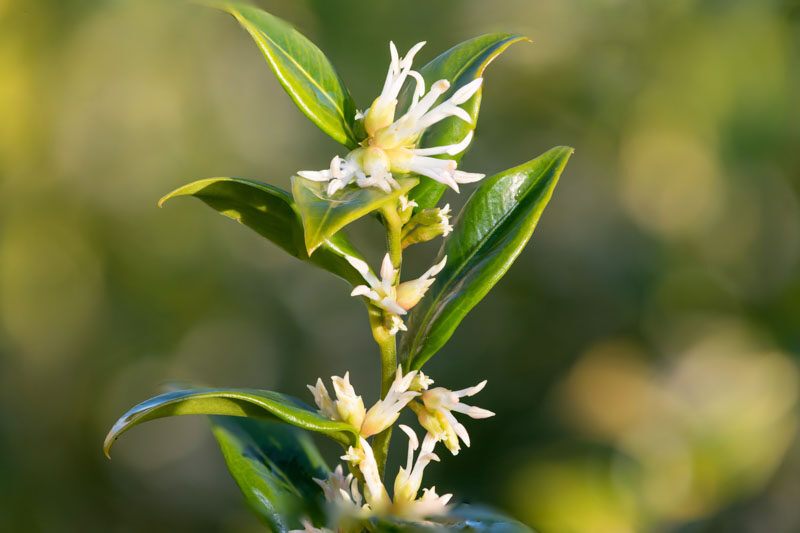
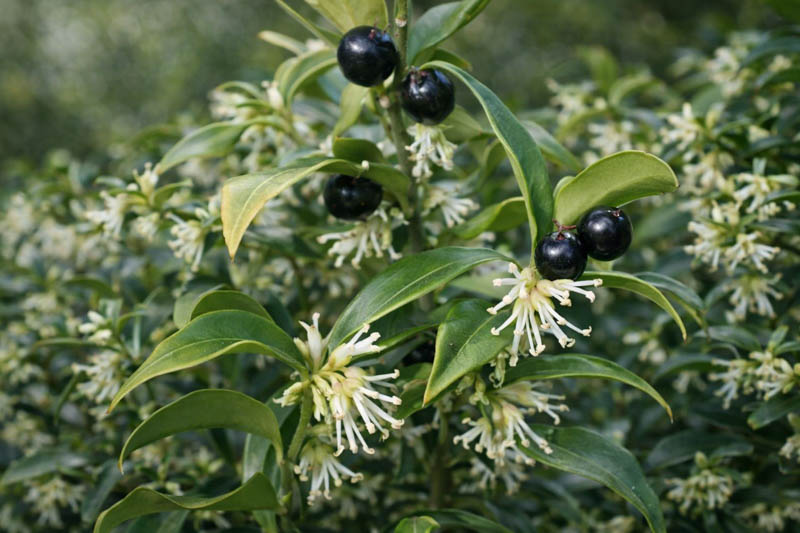
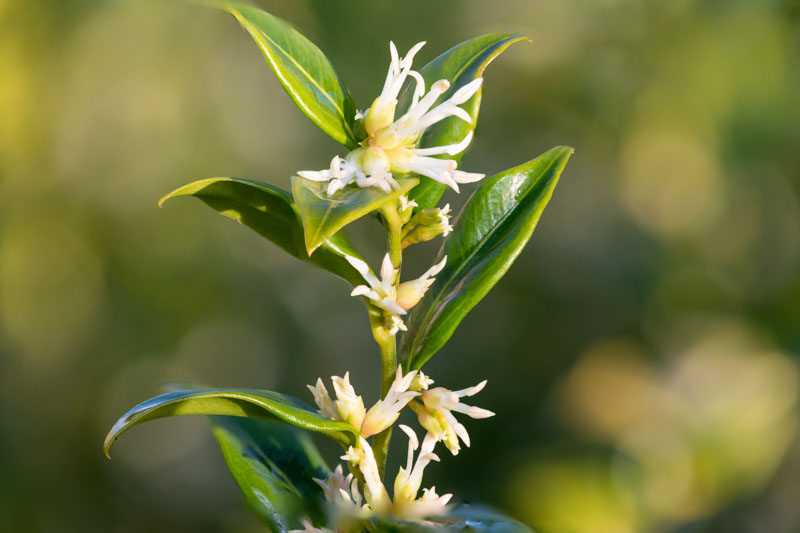
Sarcococca confusa is a compact, evergreen shrub admired for its dark green, glossy foliage and intensely fragrant winter flowers. The leaves are broad, smooth, and slightly rippled, giving the plant a polished, refined appearance year-round. The flowers are tiny and somewhat hidden among the foliage, but their powerful vanilla-like scent is unmistakable, especially on still winter days when fragrance carries through the cool air.
Flowering begins in late winter and continues into early spring. After the blooms fade, the plant produces small fruits that turn from red to black as they mature, offering subtle decorative appeal long into the season and adding an extra layer of interest after the main floral display has passed.
Sweet Box is the recipient of the prestigious Award of Garden Merit of the Royal Horticultural Society, which highlights its reliability, good performance, and ornamental value in a wide range of garden conditions.
Sarcococca confusa is native to China, thriving on shaded slopes and forest understories where moisture is consistent and sunlight is filtered. Its natural woodland origins explain its ability to flourish in deep shade, cope with root competition, and perform well in sheltered garden spaces where other shrubs might fail.
This species forms a bushy, upright shrub with stems radiating from a central root system, creating a naturally rounded form. It grows at a moderate pace, typically reaching 3 to 5 ft. tall and wide. Its growth is denser and more rounded than some other Sarcococca species, making it excellent for hedging, foundation planting, and creating evergreen structure in small and medium-sized gardens.
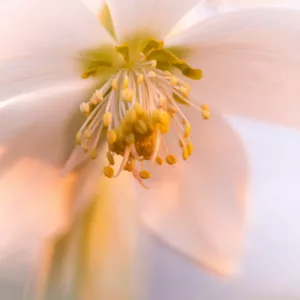
Sarcococca confusa blooms from late winter to early spring, often starting when the garden still feels very much in winter. The blooms themselves are small, ivory-white, and tucked among the foliage, but their fragrance is intense and far-reaching. Many gardeners plant it near doorways or paths specifically to enjoy that lovely winter perfume as they pass by. After flowering, shiny berries appear, turning from bright red to glossy black as they mature, extending interest into spring.
The foliage of Sarcococca confusa is one of its standout features: dark green, glossy, and evergreen, with leaves that hold their color and shine through winter. The dense leaf canopy provides structure in shade gardens, softens hard edges, and acts as an attractive backdrop for seasonal bulbs and woodland perennials.
Most plants flourish in USDA Zones 6 to 9, where winters are cold enough to set buds but not harsh enough to burn the foliage. In colder climates, a protective mulch and shelter from freezing winds will improve winter survival and keep leaves looking their best.
Sarcococca confusa provides valuable winter nectar sources for early pollinators, especially on mild days when bees will venture out. Birds may sometimes sample the berries, although they are not considered a major wildlife food source, and the dense foliage offers shelter for small creatures.
Sweet Box is rabbit and deer-resistant thanks to its tough, leathery foliage and strong fragrance. It is also rarely affected by pests or disease, which makes it an excellent low-maintenance choice for gardeners who want reliable performance with minimal fuss.
Once established, Sarcococca confusa tolerates dry shade remarkably well, making it ideal for growing beneath trees or in sheltered courtyards where rainwater may be limited and competition from roots is high.
The plant is considered non-toxic to humans and pets, although the berries are not intended for consumption and may cause mild stomach upset if eaten in quantity.
It spreads gently by short suckers and is not considered invasive, remaining compact and manageable in average garden conditions.
Gardeners love Sarcococca confusa for its fragrance, evergreen structure, ease of care, adaptability, and winter beauty. It is one of the most reliable shrubs for difficult shade and an excellent choice for low-maintenance, high-impact winter planting.
Have a gloomy, dry corner that nothing seems to like? This might be the shrub that finally thrives there.
Sweet Box prefers:
Once planted correctly, Sarcococca confusa asks for very little but gives a lot back every winter.
Generally pest free, but occasionally the following can appear, especially on stressed plants:
Sarcococca confusa, commonly called Sweet Box or Christmas Box, is a compact evergreen shrub grown for its glossy dark green foliage and intensely fragrant winter flowers. It thrives in shade, offers year-round structure, and is especially valued for its vanilla-like scent in late winter.
Sarcococca confusa typically grows 3 to 5 feet tall and 3 to 5 feet wide, forming a dense, rounded shrub. Its moderate growth rate makes it ideal for small gardens, foundation beds, and narrow shaded borders where space is limited.
Sarcococca confusa blooms in late winter to early spring, often when few other plants are flowering. The small ivory-white flowers may be visually discreet, but they release a powerful, sweet fragrance that can be noticed several meters away.
Yes, Sarcococca confusa is fully evergreen. It keeps its dark, glossy leaves all year, providing reliable structure, color, and texture in shaded areas even during the quiet months of winter.
Sarcococca confusa prefers partial to full shade and performs best in cool, sheltered positions. It can tolerate deep shade and even dry shade once established, making it a valuable shrub for difficult, low-light sites.
Once established, Sarcococca confusa is well known for its ability to tolerate dry shade, particularly under trees or near walls where other shrubs struggle. It still benefits from occasional deep watering during extended dry spells.
Sarcococca confusa thrives in moist, humus-rich, well-drained soil with a neutral to slightly acidic pH. While it is adaptable, it resents waterlogged conditions, so good drainage is essential for long-term health.
Sarcococca confusa is generally considered deer and rabbit resistant. Its leathery leaves and strong fragrance make it less appealing to browsing animals, which is a major advantage in wildlife-prone gardens.
Sarcococca confusa requires very little pruning. Light shaping after flowering and the removal of dead or damaged stems are usually sufficient to maintain a neat, rounded form and encourage fresh growth.
Yes, Sarcococca confusa grows very well in containers placed in partial to full shade. In pots, it provides evergreen structure and winter fragrance near doors, patios, and seating areas, as long as the potting mix is well drained and not allowed to dry out completely.
Updated: December 2025 • Reviewed by Gardenia Editors
| Hardiness |
6 - 9 |
|---|---|
| Heat Zones |
6 - 9 |
| Climate Zones | 4, 5, 6, 7, 8, 9, 14, 15, 16, 17, 18, 19, 20, 21, 22, 23, 24 |
| Plant Type | Shrubs |
| Plant Family | Buxaceae |
| Genus | Sarcococca |
| Common names | Sweet Box |
| Exposure | Partial Sun, Shade |
| Season of Interest | Spring (Early), Winter |
| Height | 3' - 5' (90cm - 150cm) |
| Spread | 3' - 5' (90cm - 150cm) |
| Spacing | 60" (150cm) |
| Maintenance | Low |
| Water Needs | Average |
| Soil Type | Chalk, Clay, Loam, Sand |
| Soil pH | Acid, Alkaline, Neutral |
| Soil Drainage | Moist but Well-Drained |
| Characteristics | Fragrant, Plant of Merit, Showy, Evergreen |
| Tolerances | Full Shade, Deer, Rabbit, Heat |
| Garden Uses | Beds And Borders, Ground Covers, Hedges And Screens, Patio And Containers |
| Garden Styles | City and Courtyard, Informal and Cottage, Traditional Garden |
| Toxic to Humans | No known toxicity |
| Toxic to Cats | No known toxicity |
| Toxic to Dogs | No known toxicity |
| Toxic to Horses | No known toxicity |


| Hardiness |
6 - 9 |
|---|---|
| Heat Zones |
6 - 9 |
| Climate Zones | 4, 5, 6, 7, 8, 9, 14, 15, 16, 17, 18, 19, 20, 21, 22, 23, 24 |
| Plant Type | Shrubs |
| Plant Family | Buxaceae |
| Genus | Sarcococca |
| Common names | Sweet Box |
| Exposure | Partial Sun, Shade |
| Season of Interest | Spring (Early), Winter |
| Height | 3' - 5' (90cm - 150cm) |
| Spread | 3' - 5' (90cm - 150cm) |
| Spacing | 60" (150cm) |
| Maintenance | Low |
| Water Needs | Average |
| Soil Type | Chalk, Clay, Loam, Sand |
| Soil pH | Acid, Alkaline, Neutral |
| Soil Drainage | Moist but Well-Drained |
| Characteristics | Fragrant, Plant of Merit, Showy, Evergreen |
| Tolerances | Full Shade, Deer, Rabbit, Heat |
| Garden Uses | Beds And Borders, Ground Covers, Hedges And Screens, Patio And Containers |
| Garden Styles | City and Courtyard, Informal and Cottage, Traditional Garden |
| Toxic to Humans | No known toxicity |
| Toxic to Cats | No known toxicity |
| Toxic to Dogs | No known toxicity |
| Toxic to Horses | No known toxicity |
How many Sarcococca confusa (Sweet Box) do I need for my garden?
| Plant | Quantity | |
|---|---|---|
| Sarcococca confusa (Sweet Box) | N/A | Buy Plants |
Create a membership account to save your garden designs and to view them on any device.
Becoming a contributing member of Gardenia is easy and can be done in just a few minutes. If you provide us with your name, email address and the payment of a modest $25 annual membership fee, you will become a full member, enabling you to design and save up to 25 of your garden design ideas.
Join now and start creating your dream garden!
Create a membership account to save your garden designs and to view them on any device.
Becoming a contributing member of Gardenia is easy and can be done in just a few minutes. If you provide us with your name, email address and the payment of a modest $25 annual membership fee, you will become a full member, enabling you to design and save up to 25 of your garden design ideas.
Join now and start creating your dream garden!