Frogfruit, Frog Fruit, Turkey Tangle Frogfruit, Turkey Tangle Fogfruit, Sawtooth Fogfruit, Turkey Tangle, Capeweed, Matchweed, Common Lippia, Texas Frogfruit, Carpetweed, Creeping Charlie, Carpetweed Frogfruit, Lippia, Kurapia, Matchhead.
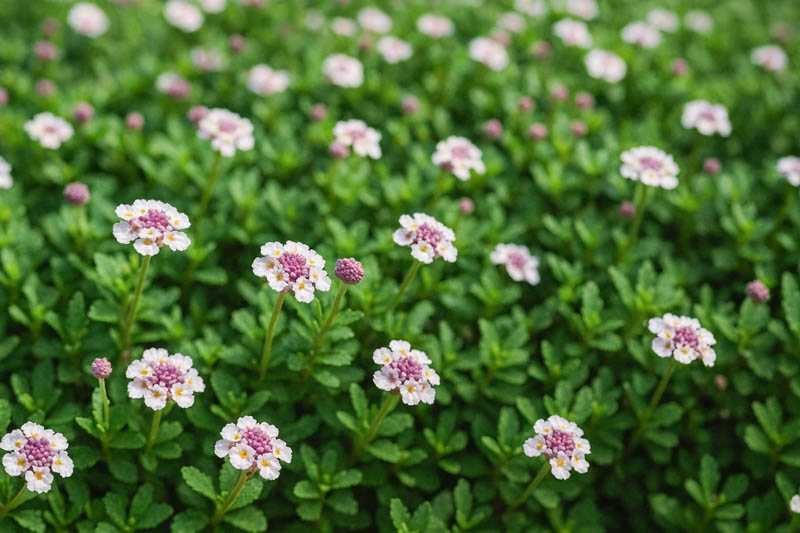
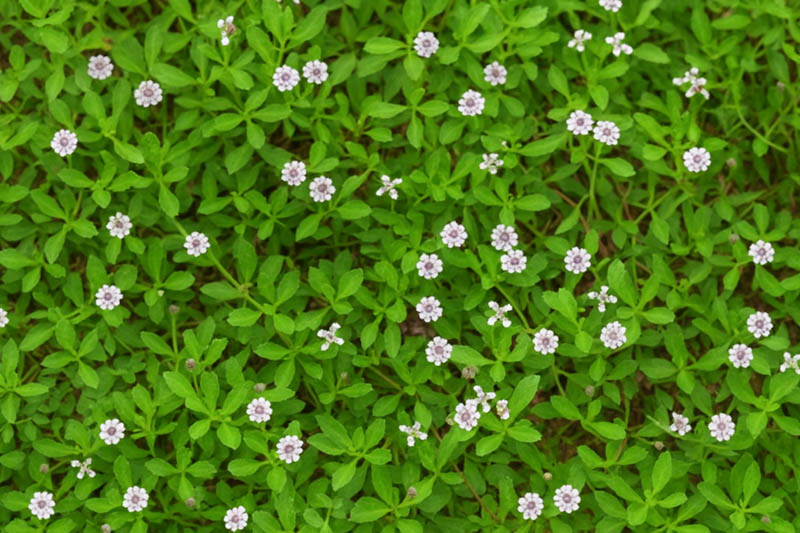
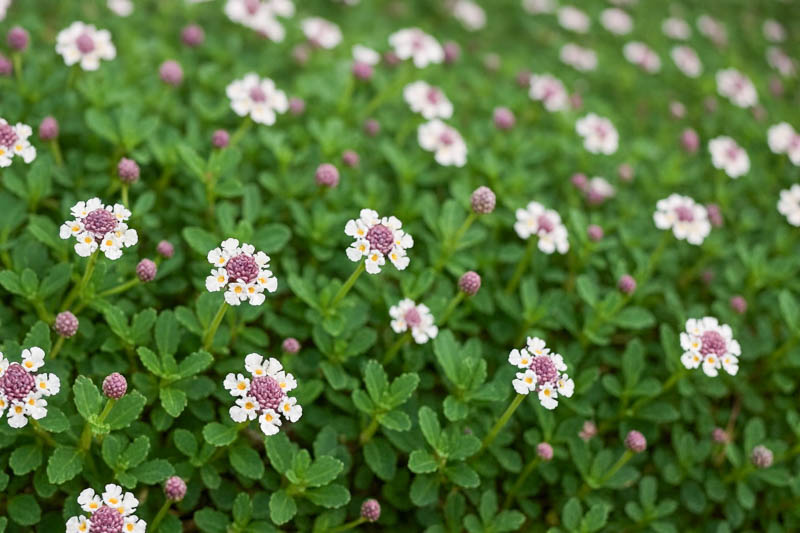


If you are tired of thirsty turf and bare spots that fry in summer, Phyla nodiflora might be your new favorite groundcover. Often called frogfruit, turkey tangle frogfruit, or matchweed, this creeping native forms a low, weaving mat of foliage dotted with tiny button like flowers that bees and butterflies love. It thrives in heat, handles some foot traffic, and can turn problem spots in Texas, the Gulf Coast, and warm regions across the South and West into a living, pollinator friendly carpet.
Summary: Low, spreading native groundcover for hot, sunny or lightly shaded sites, great as a lawn alternative and living mulch in warm climates.
Use: Pollinator lawns, between stepping stones, erosion control on banks, in swales, rain gardens, and around shrubs in low water landscapes.
Highlight: Tight, mat forming foliage that stays low and green with tiny white and purple flower buttons that bloom over a long season.
Note: Spreads by runners; fantastic in the right spot, but give it clear boundaries where you do not want it to wander.
| Botanical Name | Phyla nodiflora (L.) Greene |
|---|---|
| Family | Verbenaceae (verbena family) |
| Common Names | Frogfruit, turkey tangle frogfruit, matchweed, creeping lippia, fogfruit |
| Native Range | Native to warm regions of the Americas and widely naturalized in southern United States and subtropical to tropical areas worldwide, often in moist to seasonally dry sites. |
| Plant Type and Habit | Warm season, mat forming perennial groundcover with creeping, rooting stems |
| Hardiness (USDA) | Roughly Zones 7 to 11, depending on drainage and winter cold; semi evergreen in frost free areas |
| Size | Foliage usually 1 to 3 inches tall; runners can spread several feet wide over time |
| Sun and Exposure | Full sun to light or partial shade; best flowering in sun, better summer color with a bit of afternoon shade in extreme heat |
| Soil | Tolerates clay, loam, and sandy soils; prefers well drained to moderately moist soil, from lawn like conditions to seasonally wet areas |
| Seasonal Interest | Spring through fall flowers in mild climates, evergreen or semi evergreen foliage in frost free zones |
| Primary Uses | Lawn replacement, pollinator lawn, living mulch under shrubs, path and patio joints, pond and rain garden edges, erosion control |
Frogfruit is a low, creeping perennial groundcover that hugs the soil surface rather than growing up. Thin, trailing stems root as they go, creating a patchwork mat of small, rounded leaves. From spring through fall, especially in warm, moist seasons, the runners are dotted with charming flower heads that look like tiny matchsticks or buttons.
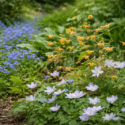
Each flower head has a purple center surrounded by a ring of white to pale pink flowers. Up close they are surprisingly intricate, and they buzz with small bees and skippers on sunny days. From a distance, the effect is a soft, speckled lawn that feels more like a small meadow than a clipped carpet.
Phyla nodiflora is native to warm regions of the Americas and has spread to subtropical and tropical regions around the world. In the United States it is most often seen in Texas, the Gulf Coast, Florida, and warm parts of the South and Southwest, where it shows up in low meadows, along pond edges, in ditches, and in open lawn like clearings.
Because it evolved with heat, seasonal moisture, and periods of drought, frogfruit adapts easily to rain gardens, bioswales, and low water yards that mimic those conditions.
Frogfruit hugs the ground, usually staying just a couple of inches tall, though flower stalks can reach 4 to 6 inches in bloom. It spreads by slender stolons that crawl along the soil and root at the nodes. In good conditions a few plugs can fill several square feet in a season or two.
The overall look is informal and naturalistic rather than sharp and formal. In lawn areas you can mow or string trim occasionally to encourage denser growth. Between stepping stones or under open shrubs, it can be left to form a more relaxed, meadowy carpet.
The flowers may be small, but they are surprisingly showy when you look closely. Each bloom cluster is a cylindrical or button like head at the end of a thin stem, with a purple cone in the middle and a halo of tiny white petals that open in sequence. The flower buttons appear from late spring through fall in warm climates, often peaking after summer rain.
Leaves are small, oval to slightly spoon shaped, with a few shallow teeth near the tip. Color ranges from medium to deep green, sometimes a bit bronzy in strong sun or cool weather. The foliage is dense enough to shade the soil and help suppress weeds once the mat is established.
Because the leaves are small and the runners are thin, frogfruit reads as a fine to medium textured carpet that blends easily with ornamental grasses, sedges, and native wildflowers. It feels softer and more relaxed underfoot than a clipped turf lawn, but it is still usable for paths, dog runs, and play areas with modest traffic.
Frogfruit is best suited to regions with warm summers and mild to moderate winters. It is generally hardy across much of the southern United States in roughly USDA Zones 7 to 11, behaving as a semi evergreen perennial in frost free climates and a warm season perennial that may brown in winter farther north. Best Groundcovers for Hardiness Zone 8 That Actually Thrive
Cold, soggy soil is harder on it than heat. In areas with harsh winters and long freezes it may not persist as a permanent groundcover, but it can still be used as a fast growing summer cover in difficult spots.
You can slot frogfruit into many different landscape roles where short plants and strong spread are helpful:
Frogfruit shines in wildlife friendly and pollinator lawns. The nectar rich flowers are popular with small native bees, hoverflies, butterflies, and even hummingbirds. In many regions frogfruit is listed as a larval host plant for butterflies such as the phaon crescent and white peacock, making it a valuable backbone species for a pollinator lawn. Top Native Texas Plants That Hummingbirds Can’t Resist
The low, dense canopy provides shelter for ground dwelling insects and small soil critters that help cycle organic matter and keep a living yard healthy.
One of the most common questions about frogfruit is whether it can handle being walked on. The answer is yes, with some limits. It is well suited to light to moderate foot traffic, such as kids cutting across the yard, pets exploring, or visitors using a garden path.
For daily sports level wear or heavy dog zoomies, it is better to pair frogfruit with stepping stones or to keep a small area of tougher turf. In mixed use yards, many gardeners plant frogfruit in the outer zones and keep a small, irrigated turf patch where the heaviest traffic happens.
Frogfruit is often described as drought tolerant, and it is, but it is slightly different from classic desert plants. In nature it often grows where moisture is present seasonally but the soil dries between rain events. Once established it can ride out long dry spells, especially if roots have access to deeper moisture.
In the garden, a good strategy is to water deeply and then allow the surface to dry. The mat may thin a bit in extreme drought, but it usually rebounds quickly after rain or irrigation returns.
Frogfruit is not commonly listed as toxic to humans, dogs, or cats and is widely used in lawns, play areas, and pet-friendly landscapes. It is generally considered safe to handle and grow, though all ornamental plants should be avoided as food.
Frogfruit is not regarded as a major invasive species in most of its native or naturalized range, but it can spread aggressively in gardens due to its creeping stems that root wherever they touch soil. In irrigated beds or open lawns, it may outcompete slower plants. Light edging or containment is recommended to maintain defined planting areas.
Frogfruit performs best in full sun to light shade. At least six hours of direct sun per day will give you the thickest carpet and the heaviest bloom. In bright, open shade or dappled light it will still grow, but flowering may be lighter and the mat a bit looser.
Soil texture is flexible, but frogfruit appreciates reasonable drainage and at least occasional moisture. It thrives in:
If your site is very heavy clay that stays wet for days, consider loosening the surface and planting on a slight berm or gentle slope so water can move through more quickly.
A simple watering approach works well:
Frogfruit does not need much fertilizer. Too much nitrogen can encourage lush, weak growth and more weeds. In most yards you can simply:
One advantage of a frogfruit lawn is the lower mowing schedule. You can:
Frogfruit is easy to propagate if you want to expand a planting:
Young frogfruit lawns are still open enough that weeds can slip in. Hand weed or spot treat early to prevent aggressive invaders from taking over. As the mat thickens, fewer weeds will be able to get established, and maintenance drops to occasional touch ups.
Frogfruit is generally a low maintenance, problem free groundcover when grown in appropriate conditions.
Frogfruit is a low-growing, perennial groundcover in the verbena family. Its current accepted scientific name is usually Phyla nodiflora (syn. Lippia nodiflora). It forms dense mats of small leaves and produces tiny white to pale lavender flowers on short spikes, which attract bees and butterflies. It is native or naturalized in much of the southern United States, including Texas.
Yes, frogfruit is considered native or widely naturalized in large parts of the southern U.S., including the Gulf Coast, Southeast, and parts of the Southwest. In Texas, it is typically treated as a native or native-adjacent species in many plant lists and is commonly recommended for ecological lawns, pollinator plantings, and restoration work.
Frogfruit is widely used as:
A lawn alternative or turf replacement in low-traffic areas
A living mulch under trees or between stepping stones
A pollinator-friendly groundcover in native plant beds
A slope-covering plant where erosion control is needed
A gap-filler between larger perennials and shrubs
Because it spreads quickly, it is especially useful where you want to cover bare soil with a green, living carpet that supports insects and requires less mowing than turf.
Yes. Frogfruit is valued as a nectar source for bees and small butterflies and is a larval host plant for several butterfly species, including common buckeye (Junonia coenia), phaon crescent (Phyciodes phaon), and white peacock (Anartia jatrophae) in regions where those butterflies occur. The flowers bloom for long periods in warm weather, making it a reliable resource in ecological plantings.
Frogfruit can be an excellent lawn alternative in warm climates if expectations match its nature. It forms a green carpet, tolerates mowing, and needs less water than typical turf. However:
It is not as uniformly smooth as a manicured turfgrass.
It may brown or thin in extreme cold or prolonged drought.
It tolerates light to moderate foot traffic, but not heavy sports use.
Many homeowners use frogfruit in areas where they want a soft, natural groundcover rather than a formal lawn.
Under favorable conditions (warm weather, sun, irrigation, open soil), frogfruit can spread rapidly, forming a continuous mat in one growing season. In poorer soils, shade, or drought, spread is slower. Because it roots at stem nodes, each planted piece can eventually colonize a surprisingly large area.
In garden beds, frogfruit is often described as vigorous. It can creep into adjacent areas if not contained, especially in irrigated landscapes. In its native or naturalized range it is generally treated as a beneficial native or naturalized species, not as a serious invasive threat, but local classification can differ by region or country. In small mixed borders, some edging or occasional trimming may be needed to keep it from over-running slower-growing plants.
In frost-free or very mild climates, frogfruit can be effectively evergreen, staying green year-round. In cooler regions or higher elevations, it may turn brown or die back partially in winter, then resprout from the roots and surviving stems in spring.
Yes. Frogfruit’s creeping stems and frequent rooting at the nodes make it effective at stabilizing slopes and bare soil. It is commonly recommended for banks, ditches, and other areas where a low, binding plant cover is needed, especially in warm regions where it grows for long seasons.
Frogfruit prefers full sun to light or dappled shade. It will usually tolerate bright shade or morning sun with afternoon shade, but may bloom less and spread more slowly. In deep, continuous shade it tends to become thin and weak, so it is best paired with more shade-tolerant groundcovers in very low-light conditions.
Updated: November 2025 • Reviewed by Gardenia Editors
| Hardiness |
7 - 11 |
|---|---|
| Plant Type | Perennials |
| Plant Family | Verbenaceae |
| Exposure | Full Sun, Partial Sun |
| Season of Interest | Spring (Early, Mid, Late), Summer (Early, Mid, Late), Fall, Winter |
| Height | 1" - 3" (3cm - 8cm) |
| Spread | 2' - 3' (60cm - 90cm) |
| Spacing | 24" - 36" (60cm - 90cm) |
| Maintenance | Low |
| Water Needs | Average |
| Soil Type | Clay, Loam, Sand |
| Soil pH | Acid, Alkaline, Neutral |
| Soil Drainage | Moist but Well-Drained |
| Characteristics | Showy, Evergreen, Semi-Evergreen |
| Native Plants | United States, California, Southeast, Southwest, Louisiana, Mississippi, North Carolina, South Carolina, Tennessee, Virginia, Alabama, Arkansas, Florida, Georgia, Texas, Arizona, Nevada, New Mexico, Oklahoma |
| Tolerances | Fire |
| Attracts | Bees, Butterflies, Hummingbirds |
| Garden Uses | Banks And Slopes, Ground Covers, Rain Gardens |
| Garden Styles | Informal and Cottage, Prairie and Meadow |
| Toxic to Humans | No known toxicity |
| Toxic to Cats | No known toxicity |
| Toxic to Dogs | No known toxicity |
| Toxic to Horses | No known toxicity |


| Hardiness |
7 - 11 |
|---|---|
| Plant Type | Perennials |
| Plant Family | Verbenaceae |
| Exposure | Full Sun, Partial Sun |
| Season of Interest | Spring (Early, Mid, Late), Summer (Early, Mid, Late), Fall, Winter |
| Height | 1" - 3" (3cm - 8cm) |
| Spread | 2' - 3' (60cm - 90cm) |
| Spacing | 24" - 36" (60cm - 90cm) |
| Maintenance | Low |
| Water Needs | Average |
| Soil Type | Clay, Loam, Sand |
| Soil pH | Acid, Alkaline, Neutral |
| Soil Drainage | Moist but Well-Drained |
| Characteristics | Showy, Evergreen, Semi-Evergreen |
| Native Plants | United States, California, Southeast, Southwest, Louisiana, Mississippi, North Carolina, South Carolina, Tennessee, Virginia, Alabama, Arkansas, Florida, Georgia, Texas, Arizona, Nevada, New Mexico, Oklahoma |
| Tolerances | Fire |
| Attracts | Bees, Butterflies, Hummingbirds |
| Garden Uses | Banks And Slopes, Ground Covers, Rain Gardens |
| Garden Styles | Informal and Cottage, Prairie and Meadow |
| Toxic to Humans | No known toxicity |
| Toxic to Cats | No known toxicity |
| Toxic to Dogs | No known toxicity |
| Toxic to Horses | No known toxicity |
How many Phyla nodiflora (Frogfruit) do I need for my garden?
| Plant | Quantity | |
|---|---|---|
| Phyla nodiflora (Frogfruit) | N/A | Buy Plants |
Create a membership account to save your garden designs and to view them on any device.
Becoming a contributing member of Gardenia is easy and can be done in just a few minutes. If you provide us with your name, email address and the payment of a modest $25 annual membership fee, you will become a full member, enabling you to design and save up to 25 of your garden design ideas.
Join now and start creating your dream garden!
Create a membership account to save your garden designs and to view them on any device.
Becoming a contributing member of Gardenia is easy and can be done in just a few minutes. If you provide us with your name, email address and the payment of a modest $25 annual membership fee, you will become a full member, enabling you to design and save up to 25 of your garden design ideas.
Join now and start creating your dream garden!