The peace lily plant is a symbol of elegance and tranquility. With glossy green leaves and graceful white blooms, it thrives in low light and purifies indoor air. Easy peace lily care makes it perfect for beginners—bringing beauty, calm, and fresh energy to homes, offices, and meditation spaces.


A friendly, in-depth guide to the peace lily plant—covering everyday peace lily care, how peace lily growth works indoors, varieties to try, and the deeper peace lily meaning that makes this classic houseplant so loved.
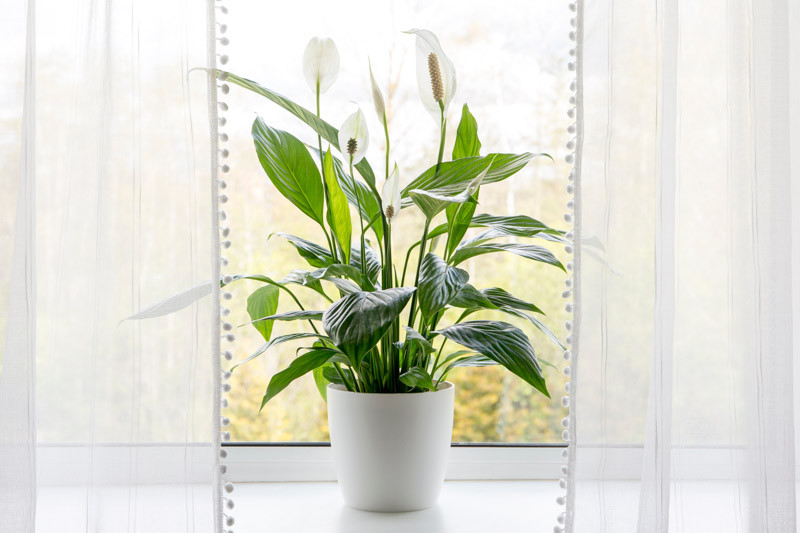
Summary: Evergreen, clumping houseplant valued for glossy leaves and elegant white spathes. Thrives in bright, indirect light and fits low-light corners, making peace lily care approachable for beginners. Reliable peace lily growth indoors with steady moisture, moderate humidity, and occasional feeding.
Bloom: White spathes surrounding a central spadix; peak spring–summer, with sporadic rebloom indoors.
Use: Ornamental indoor plant for homes/offices; shade container or tropical understory in frost-free zones. Often chosen to freshen indoor spaces.
Safety: Contains calcium oxalate; toxic if chewed/ingested by pets and people—place out of reach.
| Botanical Name | Spathiphyllum spp. |
|---|---|
| Family | Araceae (Arum family) |
| Common Names | Peace lily, spathiphyllum |
| Native Range | Tropical Central & South America (rainforest understories) |
| Plant Type & Habit | Evergreen perennial; clumping rosettes with upright, glossy leaves |
| Hardiness (USDA) | 11–12 outdoors; widely grown indoors elsewhere |
| Size | Typically 1–4 ft (30–120 cm) tall and wide; larger in giant cultivars |
| Sun & Exposure | Bright, indirect light; tolerates low light; avoid hot direct sun |
| Soil | Well-draining houseplant mix (add perlite/bark); slightly acidic to neutral |
| Water Quality | Soft/filtered preferred; hard water may cause brown tips |
| Bloom & Flower | White spathes with a spadix; peak spring–summer; indoor rebloom with good light |
| Blooming Trigger | Bright, indirect light (closer to windows), steady moisture, light feeding |
| Wildlife | Indoors: minimal wildlife value; Outdoors (tropics): visited by insects |
| Toxicity | Contains calcium oxalate; toxic/irritant if ingested by pets or people |
| Invasiveness | Not generally invasive; can clump/spread slowly in frost-free shade |
| Primary Uses | Indoor ornamental, office/low-light plant, shady containers/understory in warm zones |
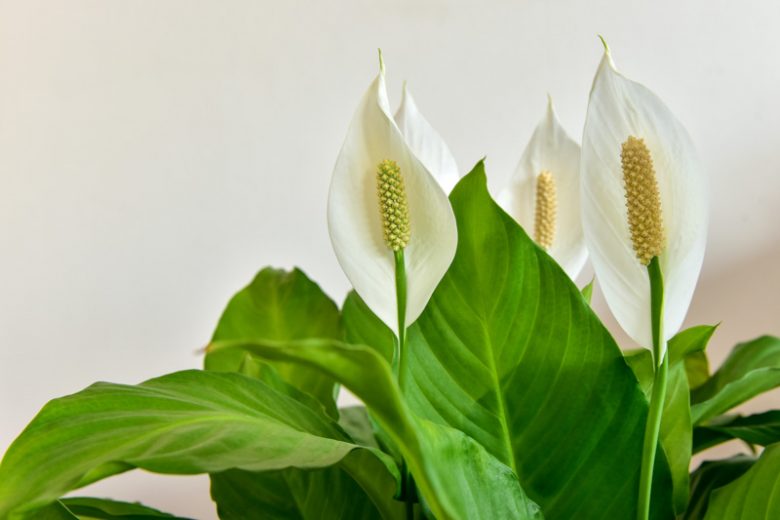
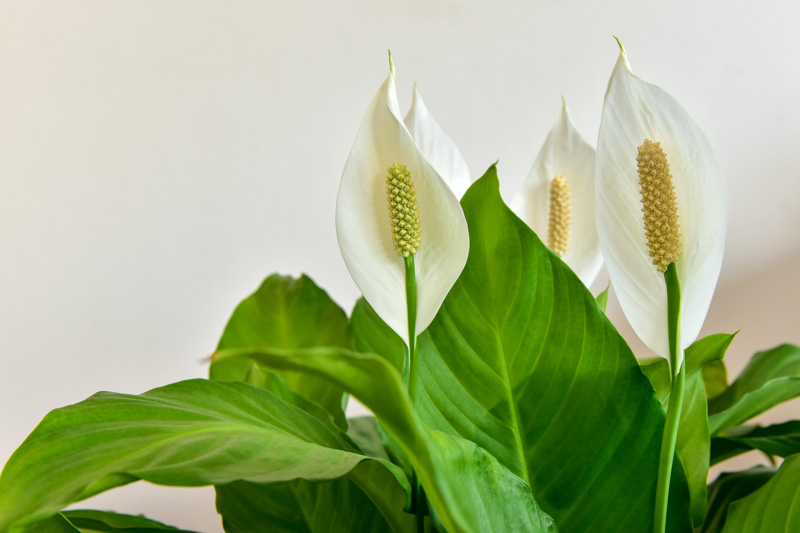
The peace lily plant is a tropical evergreen from the Araceae family. Despite the name, it isn’t a true lily. What you recognize as the white flower is a spathe—a modified leaf—that surrounds a central spadix made up of tiny true flowers. Indoors, its rich green leaves and elegant white spathes create a calm, sculptural look that suits homes and offices alike.
Peace lilies are widely appreciated for improving indoor ambiance. Many plant owners choose them to help dilute stuffy, stale air and to introduce calming greenery to bedrooms, living rooms, and workspaces.
Peace lilies are popularized by lab studies showing pollutant removal in sealed chambers. In typical homes, ventilation and source control matter far more. Treat the plant as a beautiful air-freshness companion—great for ambiance—rather than a stand-alone air cleaner.
They handle lower light better than many flowering houseplants. While bright, indirect light is ideal, they’ll carry on in a north window or a few feet back from brighter exposures.
White spathes read as clean and modern, with a gentle symbolism that resonates during moments of remembrance, healing, or fresh starts.
The plant communicates its needs clearly—drooping leaves usually mean it’s time to water—so peace lily care is approachable even for new plant parents.
Indoors, most plants mature between 1 and 4 feet (30-120 cm) tall, depending on variety and pot size. Growth is moderate: faster than many succulents, slower than vining pothos. With steady care, a plant can live for many years and rebloom multiple times.
*Ranges vary by pot size, mix, humidity, and season—always confirm by feeling the top 1 inch of soil.
Water quality: If your tap water is hard/chlorinated and you see brown tips, try filtered, distilled, or rainwater.
During repotting in spring or early summer.
Gently tease soil from the root ball.
Separate natural clumps so each division has roots and at least a few leaves.
Place each division at the same depth in fresh, well-draining mix.
Moisten thoroughly and let excess drain.
Bright, indirect light and normal watering. New growth should appear within weeks.
Most often from overwatering or poor drainage. Let the top inch dry between waterings, check that the pot drains well, and remove standing water from saucers. Peace Lily Leaves Turning Yellow? 15 Causes—and How to Fix Them
Usually due to low humidity, underwatering, or mineral build-up from hard tap water or excess fertilizer. Increase humidity and try filtered, distilled, or rainwater. Flush the pot thoroughly if salts have accumulated. Peace Lily Brown Tips? 15 Reasons and How to Stop Them
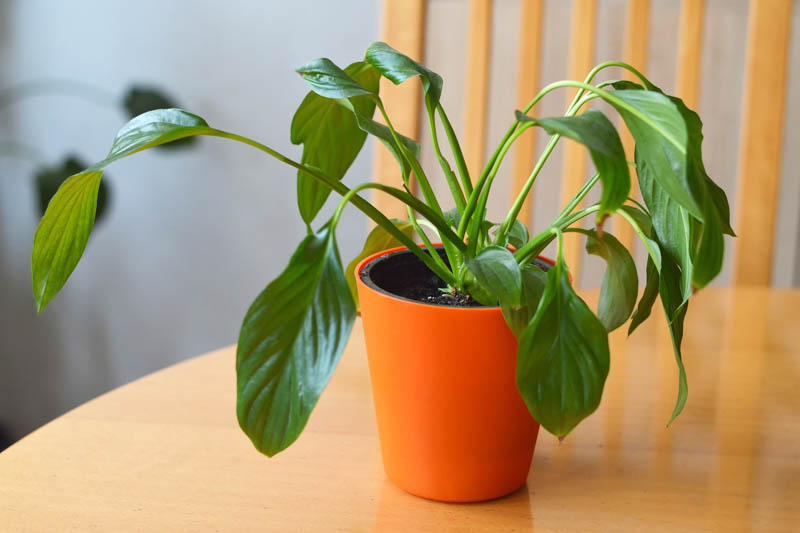
Classic thirst signal, but can also occur from root rot, low light, or temperature swings. Water if dry; otherwise assess light and roots. Peace Lily Drooping? Here’s Exactly How to Revive It
Common in deep shade. Move the peace lily plant to brighter, indirect light and resume light feeding in spring and summer.
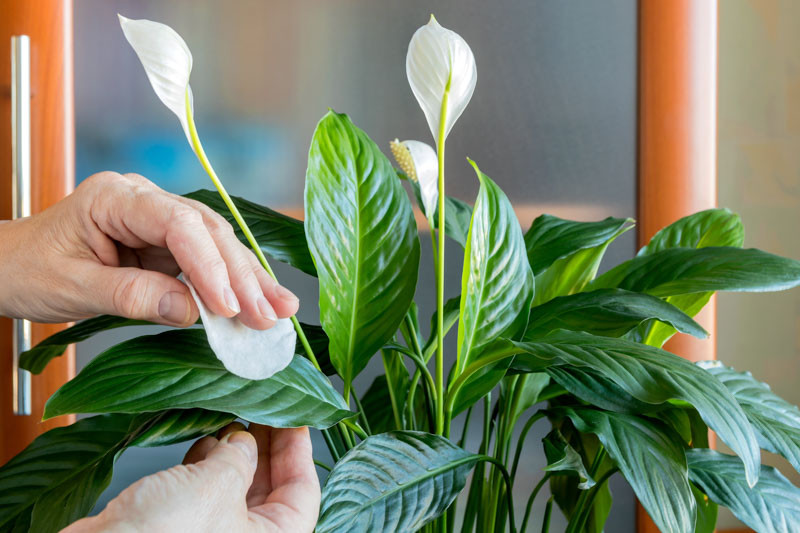
Wipe with cotton swabs dipped in alcohol, then follow up with insecticidal soap or neem oil on leaf undersides and stems. Repeat weekly until clear.
If the plant wilts and the soil smells sour even when wet, slide it from the pot and check roots. Trim soft, brown sections, repot into fresh mix, and water sparingly until recovery.
Some plants appreciate a brief winter rest with reduced watering and no fertilizer. Resume regular peace lily care as days lengthen to encourage spathes.
The plant is associated with peace, purification, and renewal. The white spathe resembles a white flag, a universal sign of truce, and is often chosen for sympathy, healing, and new beginnings. In many homes it’s used as a calming presence in bedrooms and reflective spaces. Those drawn to spiritual balance sometimes place it near entryways or meditation corners as a gentle reminder to slow down and breathe.
All parts of the peace lily plant contain insoluble calcium oxalate crystals (raphides). Chewing or swallowing any part can cause mouth, tongue, and throat irritation, drooling, vomiting, and difficulty swallowing in cats, dogs and people. Keep out of reach of children, cats, and dogs. Wash hands after pruning; sap may irritate sensitive skin.
Yes, peace lilies are toxic to cats. They contain calcium oxalate crystals, which can cause irritation and swelling in the mouth, throat, and gastrointestinal tract when ingested. Symptoms of ingestion may include drooling, vomiting, difficulty swallowing, and pawing at the mouth. Contact your veterinarian immediately if you suspect your cat has ingested any part of a peace lily.
Yes, peace lilies are toxic to dogs for the same reasons as cats. If ingested, they can cause similar symptoms, including drooling, vomiting, difficulty swallowing, and pawing at the mouth. If you think your dog has ingested a peace lily, contact your veterinarian right away.
Watering frequency for peace lilies depends on factors like pot size, soil type, and environmental conditions. Generally, you should water your peace lily when the top inch of the soil feels dry. This could be anywhere from every few days to once a week, depending on the specific conditions. Be careful not to overwater, as this can lead to root rot.
There are several reasons why your peace lily may be drooping:
Underwatering: If the soil is too dry, the leaves may droop. Water the plant thoroughly and allow the excess water to drain. The leaves should perk up within a few hours.
Overwatering: Overwatering can cause root rot, which leads to drooping leaves. Check the soil moisture and ensure proper drainage. If you suspect root rot, remove the plant from the pot, trim away affected roots, and repot the plant in fresh, well-draining soil.
Insufficient light: If your peace lily is not receiving enough light, the leaves may droop. Move the plant to a brighter location with indirect sunlight.
Temperature fluctuations: Exposure to cold drafts, air vents, or extreme temperature changes can cause the leaves to droop. Ensure your peace lily is kept at a consistent temperature between 65°F and 80°F (18°C – 27°C).
The peace lily plant blends style, serenity, and approachability. With simple peace lily care—bright, indirect light, evenly moist soil, and occasional feeding—you’ll enjoy lush leaves, elegant white spathes, and steady peace lily growth for years. Many plant lovers also appreciate the quiet peace lily meaning that makes it a thoughtful gift for milestones, recovery, and remembrance. Few houseplants work as hard—and look as effortless—on a windowsill or office shelf.
| Hardiness |
11 - 12 |
|---|---|
| Plant Type | Houseplants, Perennials |
| Plant Family | Araceae |
| Common names | Peace Lily |
| Exposure | Partial Sun |
| Season of Interest | Spring (Early, Mid, Late), Summer (Early, Mid, Late), Fall, Winter |
| Height | 1' - 4' (30cm - 120cm) |
| Spread | 1' - 4' (30cm - 120cm) |
| Maintenance | Low |
| Water Needs | Average |
| Soil Type | Clay, Loam, Sand |
| Soil pH | Acid, Alkaline, Neutral |
| Soil Drainage | Moist but Well-Drained |
| Characteristics | Showy, Evergreen |
| Garden Uses | Patio And Containers |
| Toxic to Humans | Medium severity |
| Toxic to Cats | Toxic |
| Toxic to Dogs | Toxic |
| Toxic to Horses | Toxic |


Giovani Dressler, FotoHelin, Ludmila Kapustkina, Shutterstock
| Hardiness |
11 - 12 |
|---|---|
| Plant Type | Houseplants, Perennials |
| Plant Family | Araceae |
| Common names | Peace Lily |
| Exposure | Partial Sun |
| Season of Interest | Spring (Early, Mid, Late), Summer (Early, Mid, Late), Fall, Winter |
| Height | 1' - 4' (30cm - 120cm) |
| Spread | 1' - 4' (30cm - 120cm) |
| Maintenance | Low |
| Water Needs | Average |
| Soil Type | Clay, Loam, Sand |
| Soil pH | Acid, Alkaline, Neutral |
| Soil Drainage | Moist but Well-Drained |
| Characteristics | Showy, Evergreen |
| Garden Uses | Patio And Containers |
| Toxic to Humans | Medium severity |
| Toxic to Cats | Toxic |
| Toxic to Dogs | Toxic |
| Toxic to Horses | Toxic |
How many Peace Lily (Spathiphyllum) do I need for my garden?
| Plant | Quantity | |
|---|---|---|
| Peace Lily (Spathiphyllum) | N/A | Buy Plants |
Create a membership account to save your garden designs and to view them on any device.
Becoming a contributing member of Gardenia is easy and can be done in just a few minutes. If you provide us with your name, email address and the payment of a modest $25 annual membership fee, you will become a full member, enabling you to design and save up to 25 of your garden design ideas.
Join now and start creating your dream garden!
Create a membership account to save your garden designs and to view them on any device.
Becoming a contributing member of Gardenia is easy and can be done in just a few minutes. If you provide us with your name, email address and the payment of a modest $25 annual membership fee, you will become a full member, enabling you to design and save up to 25 of your garden design ideas.
Join now and start creating your dream garden!