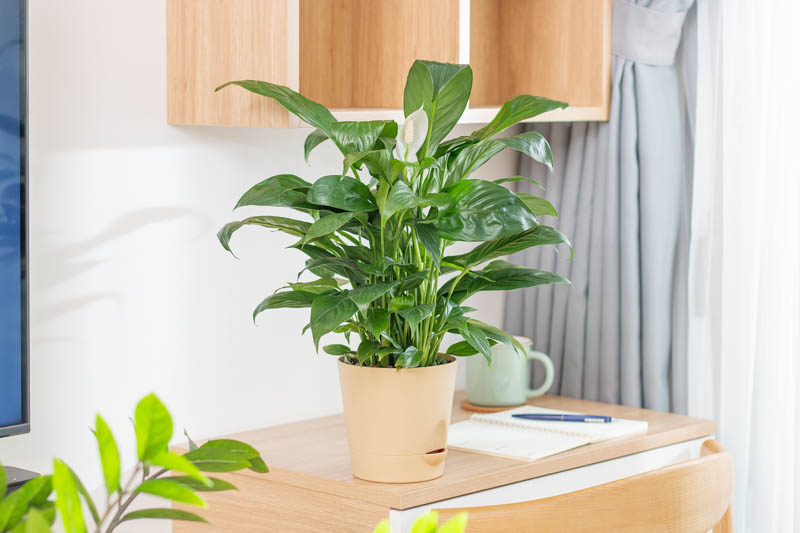
Peace Lily
The peace lily (Spathiphyllum) looks elegant, acts dramatic, and quietly explains what it needs—if you know how to listen. Here are bite-size facts to level up your lily IQ.
Not actually a lily. Peace lilies are aroids, related to philodendrons. The “flower” is a white spathe that shows off a bumpy spadix packed with tiny blooms.
Drama queen—in a good way. They droop when thirsty and perk up after a drink. Learn the difference between “parched” and “uh-oh, too wet” with these guides: Water Your Peace Lily Right: When, How Much & What to Do and Why Peace Lilies Droop.
Light makes the show. They tolerate low light, but bright, indirect light fuels blooming. In deep shade, you’ll get lush leaves and fewer spathes.
Air-purifying myth, decoded. The famous NASA study was in sealed chambers. Indoors, they’re better for vibes than ventilation—still totally worth it for that spa look.
Water quality matters. Minerals, fluoride, or softened water can crisp leaf tips. Keep edges sleek with distilled/RO/rainwater and these fixes: Brown Tips: Causes & Fixes.
Yellow leaves talk. Lower, older leaves naturally yellow; widespread yellowing points to watering, light, or root issues. Quick help here: Why Leaves Turn Yellow.
Pet safety 101. Contain calcium oxalate crystals—toxic to cats and toxic to dogs if chewed. Usually causes mouth irritation/drooling; call your vet for guidance.
Humidity sweet spot. They glow at 40–60% RH. A pebble tray or room humidifier keeps foliage glossy and tip-burn away.
Rebloomers with rhythm. Bloom cycles follow light and energy. After spathes fade to green, trim the stalk—new ones follow with steady care.
Multiply by dividing. Got a clump? Split the root mass in spring for instant “new plants” to gift (or hoard).
TL;DR: bright-indirect light, gentle water, steady moisture, and you’ve got a living, leafy peace treaty with your home.