Common Olive, Cultivated Olive, Edible Olive, European Olive, Lady's Oil, Olive Oil Plant, Sweet Oil Plant
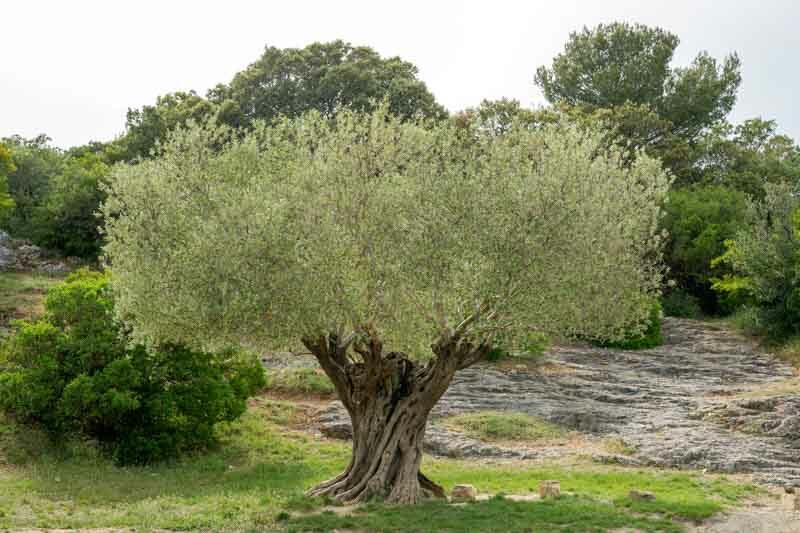
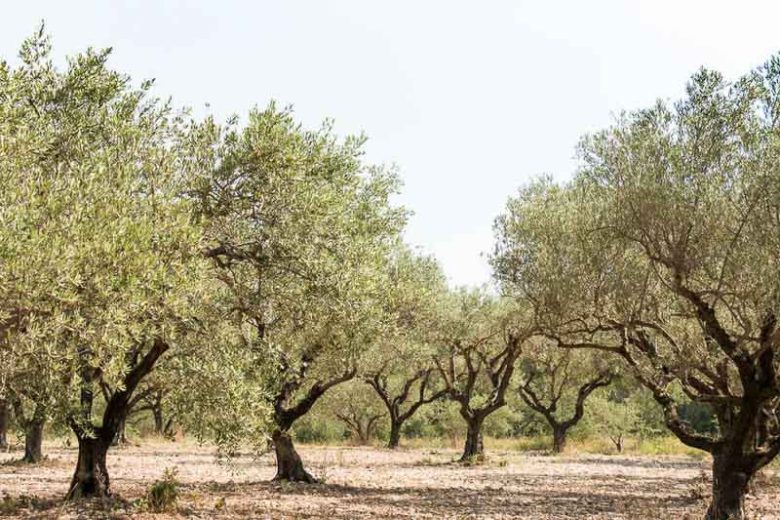


Olea europaea, commonly known as the olive tree, is a long-lived evergreen beloved for its silvery foliage, gnarled trunk, and valuable fruit. Native to the Mediterranean Basin, this resilient tree has been cultivated for thousands of years for its olives and oil, as well as its symbolic association with peace, prosperity, and endurance.
With its shimmering gray-green leaves and naturally sculptural form, the olive tree brings instant Mediterranean character to gardens and patios. It thrives in hot, dry climates and poor, rocky soils where many other trees struggle. Whether grown in the ground in warm regions or in containers in cooler climates, Olea europaea is a superb choice for low-maintenance structure, drought-tolerant beauty, and, with the right conditions, a steady harvest of olives.
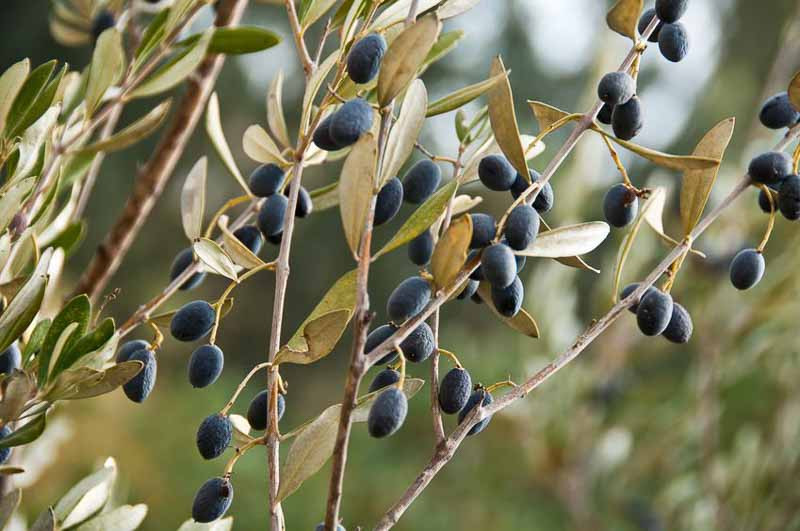
Summary: A long-lived, evergreen tree or large shrub with graceful, silvery foliage and small fruits used for table olives and olive oil.
Use: Mediterranean-style gardens, coastal landscapes, containers, courtyards, gravel gardens, windbreaks, and edible landscapes.
Highlight: Exceptional drought tolerance, sculptural trunk and branching, and valuable fruit and oil production in warm, sunny climates.
Note: Thrives in full sun and well-drained, often poor soils. Ideal for dry, low-maintenance gardens.
| Botanical Name | Olea europaea |
|---|---|
| Family | Oleaceae |
| Common Names | Olive Tree, European Olive, Common Olive |
| Native Range | Mediterranean Basin – Southern Europe, North Africa, Western Asia |
| Plant Type and Habit | Evergreen tree or large shrub with an upright habit when young, becoming more spreading and gnarled with age. |
| Hardiness (approx. USDA) | Hardy in USDA Zones 8 to 10 (some cultivars tolerate brief dips below freezing). |
| Size | Typically 20–30 ft. tall (6–9 m) and 20–30 ft. wide (6–9 m) in the ground; smaller in containers. |
| Sun and Exposure | Requires full sun for best growth and fruiting; tolerates heat and reflected light. |
| Soil | Well-drained, often rocky or sandy soils. Tolerates alkaline and poor soils, but dislikes waterlogged conditions. |
| Seasonal Interest | Year-round evergreen foliage, small fragrant spring flowers, and summer to fall fruit in suitable climates. |
| Primary Uses | Edible landscapes, Mediterranean gardens, coastal plantings, structural specimens, patios, and container gardens. |
| Fruit & Yield | Fruiting usually begins 2–4 years after planting grafted trees; mature trees can produce 10–40+ lbs (4–18+ kg) of olives per year in home gardens. |
| Light | Full sun (6–8+ hours daily) is essential for strong growth and fruiting. |
|---|---|
| Water | Moderate; keep evenly moist during establishment, then allow soil to dry slightly between deep waterings. |
| Soil | Fast-draining sandy or gravelly soils; tolerates alkaline and poor soils but not standing water. |
| Feeding | Light, annual feeding in spring; fruiting trees appreciate modest nitrogen. |
| Pruning | Prune to a vase-shaped, open canopy; remove crossing, weak, or shaded interior branches. |
| Fruiting Expectations | 2–4 years to first harvest for grafted trees; fruiting is much less reliable indoors or in cool climates. |
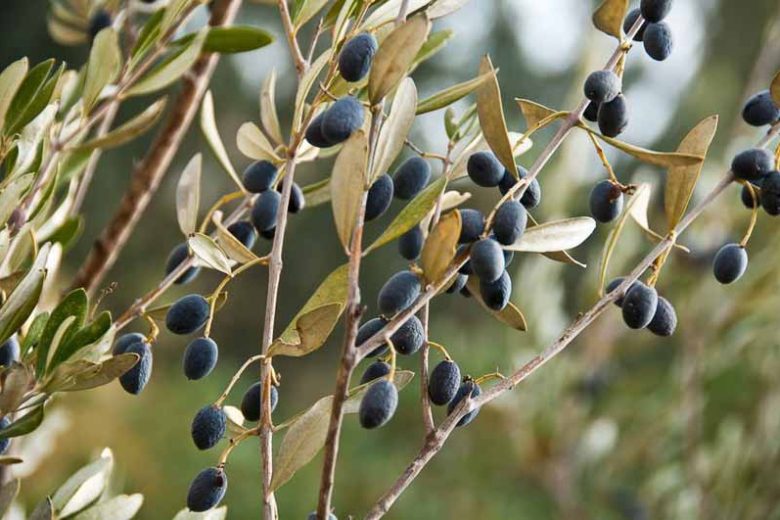
Olea europaea is a slow-growing evergreen tree or large shrub with a naturally graceful, rounded crown and a distinctive, often twisted trunk. The narrow, lance-shaped leaves are gray-green above and silvery beneath, giving the tree a shimmering appearance in sunlight. In late spring to early summer, it bears small, creamy-white, lightly fragrant flowers, followed by oval fruits (olives) that ripen from green to purplish-black.
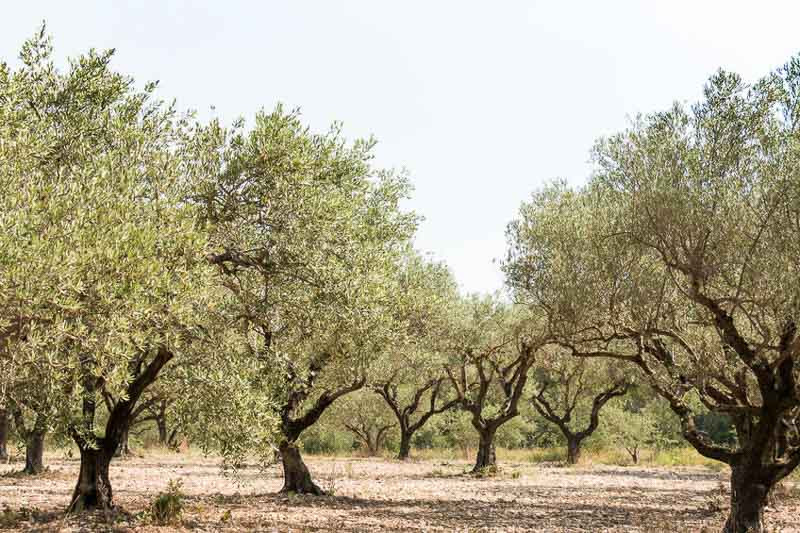
Over time, olive trees develop thick, gnarled trunks and intricate branching that lend them a strong architectural presence. Their understated foliage color and fine texture blend beautifully with stone, gravel, and terracotta, making them a hallmark of Mediterranean-style gardens and courtyards.
The olive tree is indigenous to the Mediterranean region, spanning southern Europe, northern Africa, and western Asia. It has evolved to thrive in hot, dry summers and mild, wet winters, often in rocky, nutrient-poor soils. This natural toughness translates into excellent performance in similar climates around the world, especially in coastal and arid regions.
In suitable climates, Olea europaea typically reaches 20–30 ft. tall and wide, though it often remains smaller in poor soils or windy coastal sites. Growth is generally moderate rather than fast, especially in dry conditions, which makes it easier to manage in smaller gardens and in containers.
Young trees tend to be upright with a single trunk, gradually developing a broader, more spreading canopy as they mature. With thoughtful pruning, olive trees can be trained as multi-stemmed specimens, standard trees, or kept compact in containers on patios and terraces.
The olive tree produces small, creamy-white, often fragrant flowers arranged in clusters at the leaf axils in late spring to early summer. Pollination is primarily by wind, and many cultivars are partially or fully self-fertile, though planting more than one variety can improve fruit set and yield.
The fruits (olives) are initially green, gradually turning purple or black as they ripen. They vary in size, shape, and oil content depending on the cultivar. Olives are harvested for curing (table olives) or pressed for oil. They are naturally bitter when fresh and require processing before eating.
Olive trees provide subtle yet striking year-round interest with their narrow, gray-green leaves that are paler and silvery underneath. The foliage maintains its color and texture even in heat and drought, softening hardscapes and reflecting light in a unique, shimmering way. In winter, the evergreen canopy and sculptural branches remain attractive when many plants are dormant.
Olive trees are typically hardy in USDA Zones 8–10. They withstand intense heat and drought once established, but are sensitive to prolonged or severe freezes. Short periods of light frost are often tolerated, especially by hardy cultivars, but temperatures below about 15°F (-9°C) can cause serious damage.
Although olive flowers are primarily wind-pollinated, the tree provides habitat and shelter for birds and beneficial insects. Birds and small mammals may feed on ripe or fallen fruits. In dry regions, olive groves can offer important shade and cover for wildlife.
Deer may browse the tender new shoots of young olive trees and can damage bark by rubbing against the trunk. Mature trees are less appealing but can still suffer injury. Rabbits may chew on young stems and bark near ground level.
Once established, Olea europaea is notably drought tolerant. Its deep and wide-spreading root system allows it to access moisture deep in the soil, making it an excellent choice for low-water gardens and dry slopes. Young trees, however, still require regular watering until their root systems develop.
The leaves and fruits of the olive tree are generally considered non-toxic to humans and most pets. However, as with most ornamental plants, ingestion of large quantities of plant material is not recommended.
In some regions, particularly parts of California and other Mediterranean-climate areas, cultivated olives have escaped into the wild and can be found in grasslands and shrublands. Gardeners in such areas should check local guidance and consider non-fruiting or low-fruiting cultivars if invasiveness is a concern.
Apply a light dose of balanced, slow-release fertilizer in spring, especially in poor soils. Fruiting varieties appreciate modest nitrogen to support new growth and fruiting wood, but avoid over-fertilizing, which can promote leafy growth at the expense of flowers and olives.
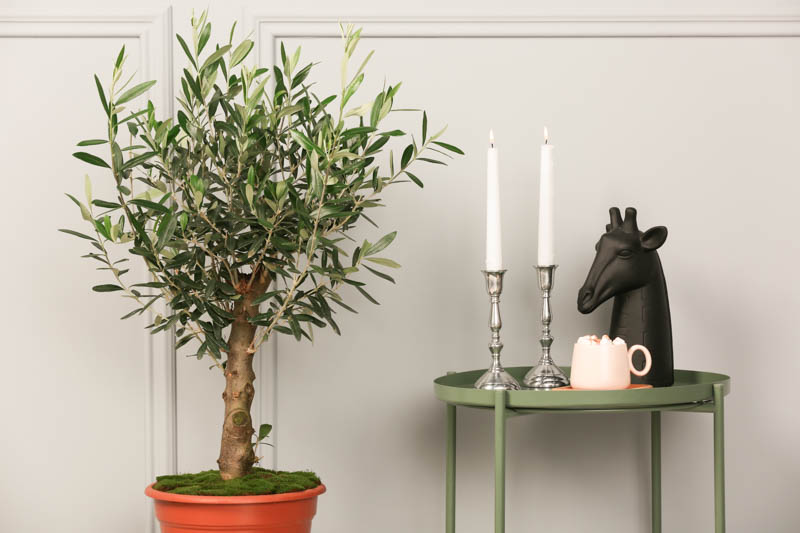
Growing an olive tree (Olea europaea) indoors allows you to enjoy Mediterranean character even in cooler climates. While indoor trees rarely match the fruiting potential of outdoor specimens, they can still be long-lived, handsome container plants with careful attention to light and watering.
Olive trees are generally slow to moderate growers. In good conditions, a young tree may add 12–24 inches (30–60 cm) of new growth per year. Growth is usually faster in deep, well-drained soils with regular water and slower in very dry or nutrient-poor sites, which helps keep them manageable in gardens and containers.
Most grafted olive trees start producing small crops 2–4 years after planting, with yields increasing as the tree matures. Seed-grown trees can take much longer, often 5–12 years or more. Reliable fruiting also depends on full sun, suitable winter chill, good pollination, and proper watering and pruning.
Many olive cultivars are partially or fully self-fertile, so a single tree can set fruit. However, planting a second, compatible variety often improves pollination and increases yields. In cooler or marginal climates, good light, warmth, and overall tree health are usually more limiting than the number of trees.
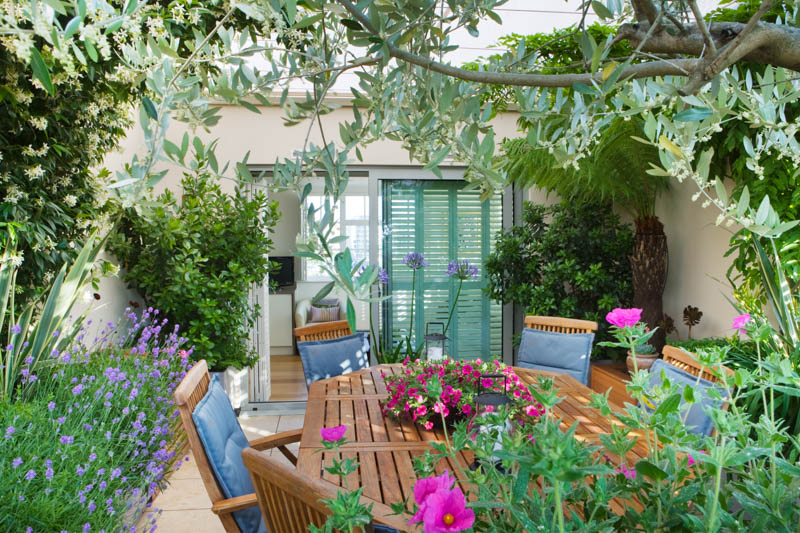
Yes. Olive trees adapt well to container culture if they have full sun, excellent drainage, and careful watering. Choose dwarf or compact cultivars, use a gritty, well-draining potting mix, and repot every few years as roots fill the container. Potted olives are ideal for patios, terraces, and small gardens.
Indoor olive trees rarely produce heavy crops. They need very bright light, long hours of sun, and seasonal temperature changes to flower and fruit well. Indoors, they are best grown mainly as ornamental evergreens with Mediterranean character. Any flowers or olives you get should be considered a bonus rather than a guarantee.
Olive trees require regular watering during their first one or two years to establish deep roots. After that, they are highly drought tolerant and prefer deep, infrequent watering rather than frequent, shallow irrigation. Overwatering, especially in poorly drained soils or containers, is a common cause of decline and root rot.
Most olive trees are hardy in USDA zones 8–10. They tolerate brief light frosts but can suffer serious damage below about 15°F (-9°C), especially if cold is prolonged or accompanied by wind. In cooler regions, they are often grown in containers that can be moved to shelter during severe cold.
Olive tree roots are vigorous and wide-spreading but not typically as destructive as some other trees. They can exploit cracks and poorly built walls but are not usually a problem in average garden settings. Allow space away from foundations, pools, and underground pipes, and avoid planting in very tight spots.
Fruiting olive trees can drop blossoms and ripe or overripe fruit, which may stain hard surfaces. For patios, pool areas, or driveways, consider non-fruiting or low-fruiting ornamental cultivars, or be prepared to harvest regularly and clean up fallen fruit to prevent staining and slippery surfaces.
Updated: December 2025 • Reviewed by Gardenia Editors
| Hardiness |
8 - 10 |
|---|---|
| Heat Zones |
8 - 10 |
| Climate Zones | 8, 9, 11, 12, 13, 14, 15, 16, 17, 18, 19, 20, 21, 22, 23, 24, H1, H2 |
| Plant Type | Shrubs, Trees |
| Plant Family | Oleaceae |
| Common names | Olive |
| Exposure | Full Sun |
| Season of Interest | Spring (Early, Mid, Late), Summer (Early, Mid, Late), Fall, Winter |
| Height | 20' - 30' (6.1m - 9.1m) |
| Spread | 20' - 30' (6.1m - 9.1m) |
| Maintenance | Average |
| Water Needs | Low |
| Soil Type | Chalk, Clay, Loam, Sand |
| Soil pH | Acid, Alkaline, Neutral |
| Soil Drainage | Well-Drained |
| Characteristics | Showy, Evergreen, Fruit & Berries |
| Tolerances | Drought, Heat |
| Garden Uses | Beds And Borders, Patio And Containers |
| Garden Styles | City and Courtyard, Coastal Garden, Gravel and Rock Garden, Mediterranean Garden |
| Toxic to Humans | No known toxicity |
| Toxic to Cats | No known toxicity |
| Toxic to Dogs | No known toxicity |
| Toxic to Horses | No known toxicity |


| Hardiness |
8 - 10 |
|---|---|
| Heat Zones |
8 - 10 |
| Climate Zones | 8, 9, 11, 12, 13, 14, 15, 16, 17, 18, 19, 20, 21, 22, 23, 24, H1, H2 |
| Plant Type | Shrubs, Trees |
| Plant Family | Oleaceae |
| Common names | Olive |
| Exposure | Full Sun |
| Season of Interest | Spring (Early, Mid, Late), Summer (Early, Mid, Late), Fall, Winter |
| Height | 20' - 30' (6.1m - 9.1m) |
| Spread | 20' - 30' (6.1m - 9.1m) |
| Maintenance | Average |
| Water Needs | Low |
| Soil Type | Chalk, Clay, Loam, Sand |
| Soil pH | Acid, Alkaline, Neutral |
| Soil Drainage | Well-Drained |
| Characteristics | Showy, Evergreen, Fruit & Berries |
| Tolerances | Drought, Heat |
| Garden Uses | Beds And Borders, Patio And Containers |
| Garden Styles | City and Courtyard, Coastal Garden, Gravel and Rock Garden, Mediterranean Garden |
| Toxic to Humans | No known toxicity |
| Toxic to Cats | No known toxicity |
| Toxic to Dogs | No known toxicity |
| Toxic to Horses | No known toxicity |
How many Olea europaea (Common Olive) do I need for my garden?
| Plant | Quantity | |
|---|---|---|
| Olea europaea (Common Olive) | N/A | Buy Plants |
Create a membership account to save your garden designs and to view them on any device.
Becoming a contributing member of Gardenia is easy and can be done in just a few minutes. If you provide us with your name, email address and the payment of a modest $25 annual membership fee, you will become a full member, enabling you to design and save up to 25 of your garden design ideas.
Join now and start creating your dream garden!
Create a membership account to save your garden designs and to view them on any device.
Becoming a contributing member of Gardenia is easy and can be done in just a few minutes. If you provide us with your name, email address and the payment of a modest $25 annual membership fee, you will become a full member, enabling you to design and save up to 25 of your garden design ideas.
Join now and start creating your dream garden!