Rose Of Sharon, Shrub Althea, Althea, Syrian Ketmia, Korean Rose, Rose Mallow, Althaea syriaca, Ketmia syriaca
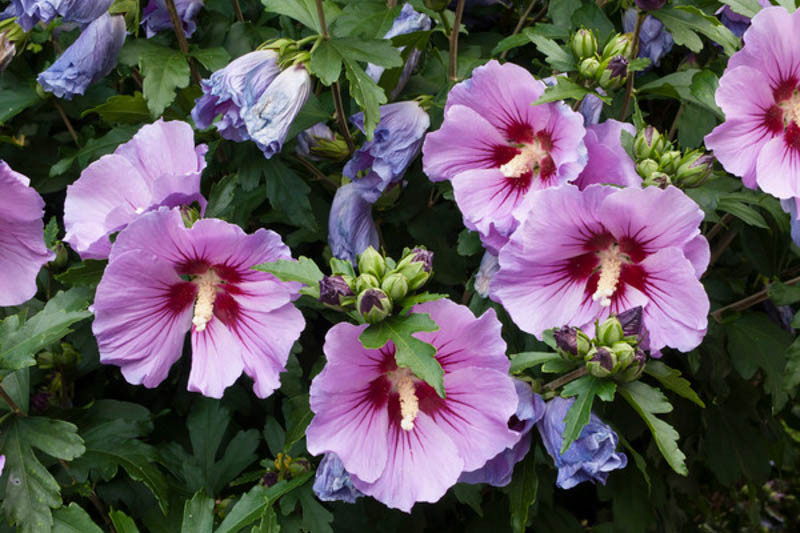
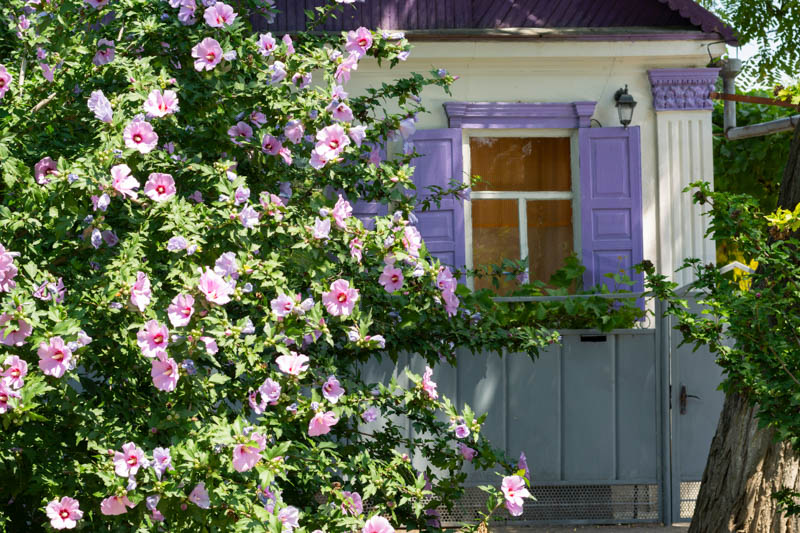
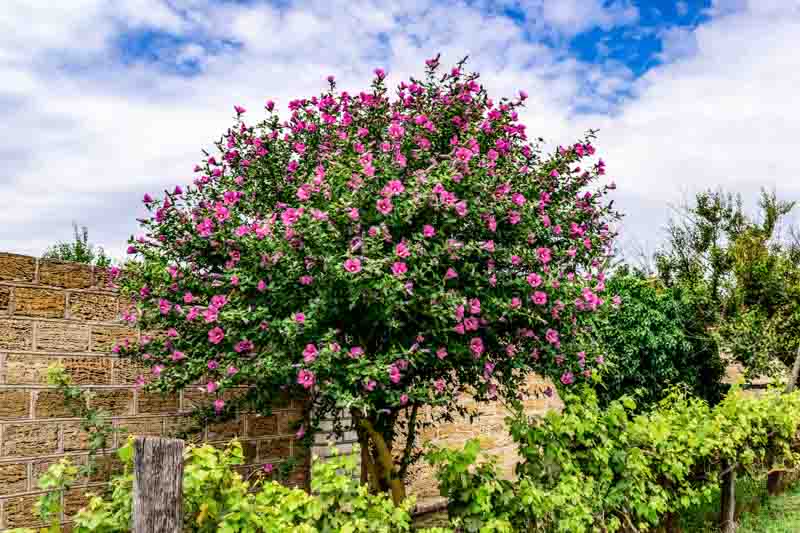


Hibiscus syriacus, widely known as Rose of Sharon or Shrub Althea, is a beloved deciduous flowering shrub celebrated for its exotic, hollyhock-like blooms and incredible resilience. Native to parts of China, India, and East Asia, this tough yet elegant shrub thrives where many flowering plants struggle – from humid urban gardens to drought-prone suburban landscapes.
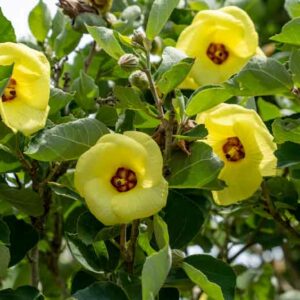
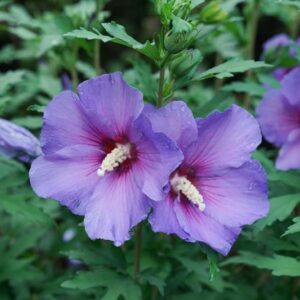
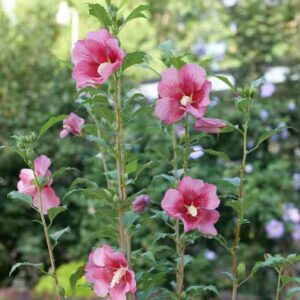
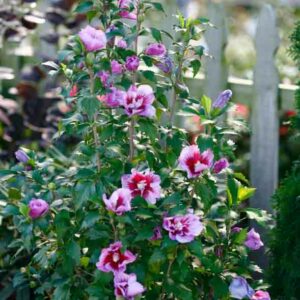
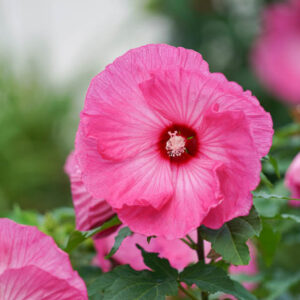
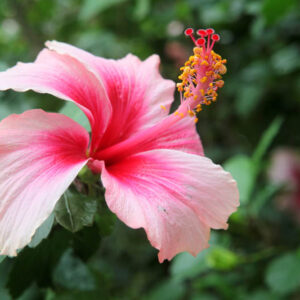
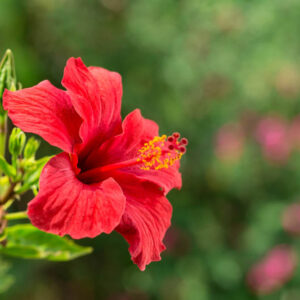
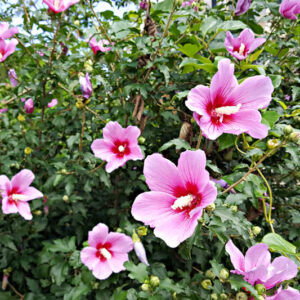
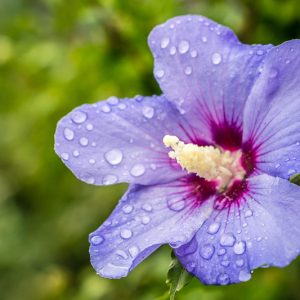
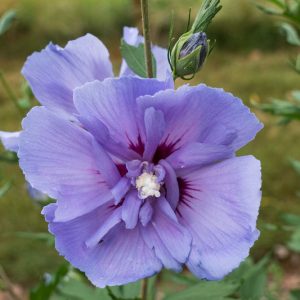
From midsummer straight into fall, Hibiscus syriacus puts on a dazzling show of large, colorful blossoms in shades of white, pink, red, lavender, or blue. These blooms feature prominent tubular stamens that attract bees, butterflies, and hummingbirds. The foliage emerges late in spring, starting pale yellow-green and maturing to a rich, medium green. Low maintenance, heat tolerant, and adaptable to poor soils, Rose of Sharon is a dependable shrub for hedges, screens, borders, foundation plantings, and late-season color.
Summary: A vigorous, deciduous flowering shrub with large hollyhock-like blooms that appear from midsummer to fall.
Use: Hedges, screens, foundation plantings, mixed borders, specimen shrubs.
Highlight: Exceptionally long bloom season, excellent heat and drought tolerance, and reliable late-summer color.
Note: Thrives in full sun, tolerates poor soils, humidity, and urban conditions. Deer-resistant.
| Botanical Name | Hibiscus syriacus |
|---|---|
| Family | Malvaceae |
| Common Names | Rose of Sharon, Shrub Althea |
| Native Range | China, India, East Asia |
| Plant Type and Habit | Deciduous shrub with an upright, vase-shaped habit and vigorous branching. |
| Hardiness (approx. USDA) | Hardy in USDA Zones 5 to 9. |
| Size | Typically 8-12 ft. tall (240-360 cm) and 6-10 ft. wide (180-300 cm). |
| Sun and Exposure | Prefers full sun for maximum flowering; tolerates light shade. |
| Soil | Average, moist, well-drained soils are ideal but it tolerates poor, compacted, or alkaline soils. |
| Seasonal Interest | Midsummer to fall blooms, late-emerging foliage, and sculptural winter branching. |
| Primary Uses | Back-of-border structure, hedges, privacy screens, foundation plantings, specimen accents. |
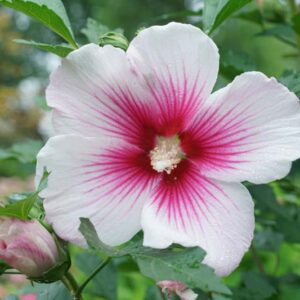
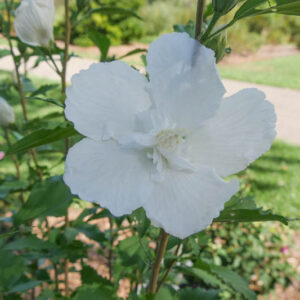
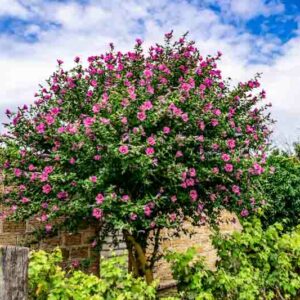
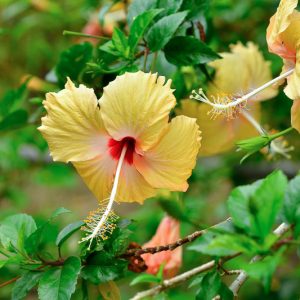
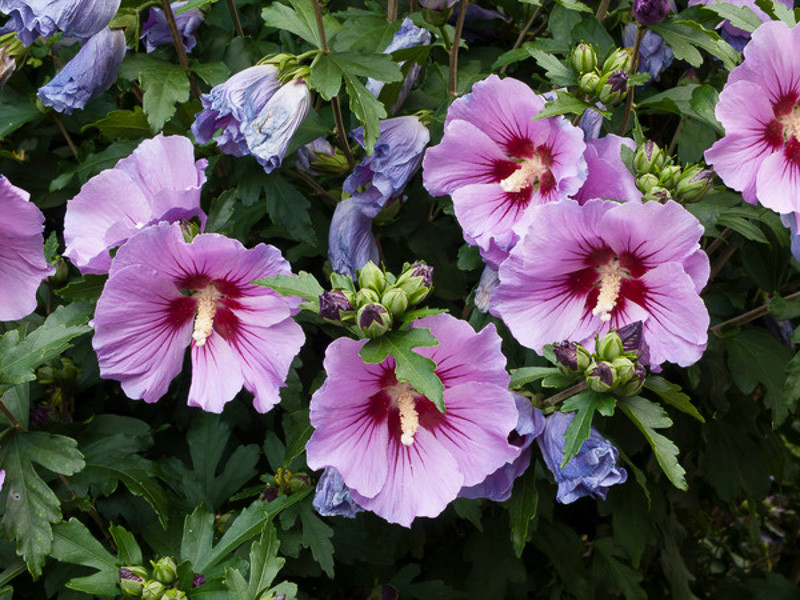
Hibiscus syriacus is a vigorous deciduous shrub with open, vase-shaped growth and large, tropical-looking flowers that appear from midsummer into fall. These blooms come in single or double forms, often with striking eyes of red, wine, or deep pink. Each flower lasts only a day, but the shrub produces so many buds that the display continues for months.
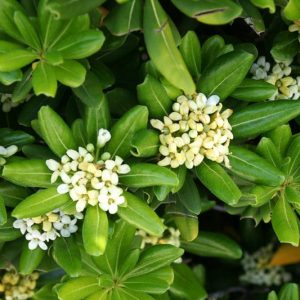
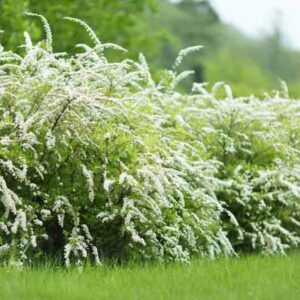
The foliage emerges later than many shrubs, helping it avoid frost damage. Its broadly ovate, palmately veined leaves create a soft but structural backdrop for the blooms. The upright habit is naturally suited to hedging and screening, while the generous bloom time keeps the garden lively just as many perennials begin to fade.
Rose of Sharon is native to China, India, and other regions of East Asia. It grows naturally in warm, sunny, seasonally dry habitats, which explains its tolerance of heat, humidity, and poor soils. Its adaptability allowed it to spread widely in cultivation and become a cherished landscape shrub throughout temperate regions.
This shrub typically reaches 8-12 ft. tall and 6-10 ft. wide, with an upright branching pattern and a moderate growth rate. In good conditions, young plants quickly establish and begin flowering within a few seasons.
Hibiscus syriacus can self-seed in favorable conditions, creating new seedlings around established plants. Deadhead faded blooms if you wish to prevent this. Its vigor and reliability make it an excellent structural plant for borders, lawns, and foundation plantings.
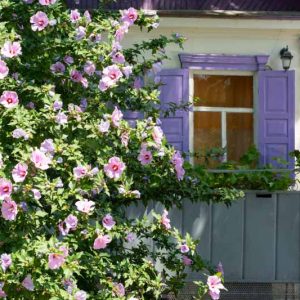
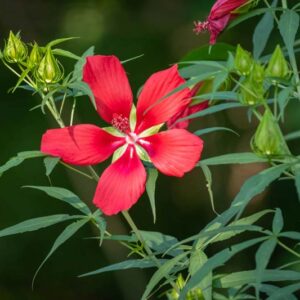
The bloom period extends from midsummer well into autumn, making Rose of Sharon one of the longest-flowering shrubs for temperate gardens. Flowers range from pure white to deep red, lavender-blue, rosy pink, and bicolored selections with dramatic eyes.
The long bloom window provides essential nectar for pollinators in late summer – a time when food sources in the garden naturally begin to dwindle.
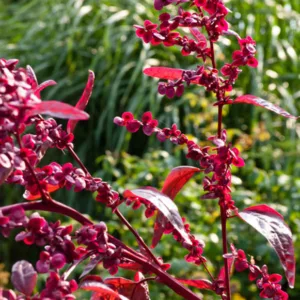
The foliage emerges late and can appear sparse early in the season, but once mature it forms a dense cover of medium green leaves. These remain fresh-looking even in heat and humidity. As winter approaches, leaves drop, revealing a sculptural branching pattern that provides subtle visual interest until spring.
Hardy in USDA Zones 5-9, Rose of Sharon performs beautifully in both cold winters and hot summers. It tolerates humidity, drought, and urban pollution – qualities that make it a favorite in city and suburban landscapes.
The tubular stamens of Rose of Sharon make it irresistible to bees, butterflies, and hummingbirds. It is a valuable nectar source late in the season. Its seeds may attract small birds later in fall.
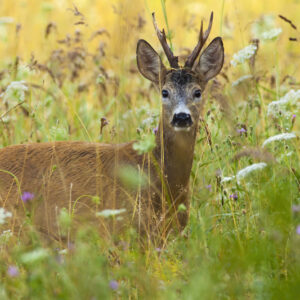
Deer resistant. While not completely deer proof, Hibiscus syriacus is generally avoided by browsing mammals due to its texture and sap, making it a smart choice for deer-prone gardens.
Once established, Rose of Sharon tolerates extended dry periods thanks to its deep root system. It thrives in full sun and handles urban heat islands with ease, making it ideal for low-maintenance, water-wise landscapes.
Hibiscus syriacus is generally considered non-toxic to humans and pets. However, ingestion of large quantities of plant material is not recommended, as with most ornamental plants.
In certain regions of the U.S., Rose of Sharon can self-seed aggressively. To check regions where it is classified as invasive, visit:
Find where this species is invasive in the United States.
Apply compost or a balanced slow-release fertilizer in spring. Avoid heavy nitrogen, which encourages lush foliage at the expense of flower production.
Rose of Sharon typically blooms from midsummer to early fall. New buds are produced continuously, giving the shrub a remarkably long flowering season.
Full sun produces the strongest stems and heaviest bloom set. While the plant tolerates part shade, flowering will be noticeably reduced.
In some regions, Rose of Sharon can self-seed aggressively. Removing seed pods helps prevent spread. You can check regional invasiveness here: Invasive Plant Atlas listing.
Prune in late winter or early spring before growth begins. Cutting stems back to 2–3 buds encourages larger blooms and maintains a tidy shape.
Yes. Deer tend to avoid Rose of Sharon, making it a strong choice for gardens where browsing pressure is high.
This species naturally leafs out late in spring. This is normal and not a sign of stress or disease.
Updated: December 2025 • Reviewed by Gardenia Editors
| Hardiness |
5 - 9 |
|---|---|
| Heat Zones |
1 - 8 |
| Climate Zones | 2A, 2B, 3A, 3B, 4, 5, 6, 7, 8, 9, 10, 11, 12, 13, 14, 15, 16, 17, 18, 19, 20, 21, 22, 23, 24, H1 |
| Plant Type | Shrubs |
| Plant Family | Malvaceae |
| Genus | Hibiscus |
| Common names | Hibiscus, Rose of Sharon |
| Exposure | Full Sun, Partial Sun |
| Season of Interest | Summer (Mid, Late), Fall |
| Height | 8' - 12' (240cm - 3.7m) |
| Spread | 6' - 10' (180cm - 3m) |
| Spacing | 120" (3m) |
| Maintenance | Low |
| Water Needs | Low, Average |
| Soil Type | Chalk, Clay, Loam, Sand |
| Soil pH | Alkaline, Neutral |
| Soil Drainage | Moist but Well-Drained, Well-Drained |
| Characteristics | Showy |
| Tolerances | Drought, Deer, Clay Soil, Heat |
| Attracts | Butterflies, Hummingbirds |
| Garden Uses | Beds And Borders, Hedges And Screens, Wall-Side Borders |
| Garden Styles | City and Courtyard, Informal and Cottage |
| Toxic to Humans | No known toxicity |
| Toxic to Cats | Not toxic |
| Toxic to Dogs | Not toxic |
| Toxic to Horses | Not toxic |


| Hardiness |
5 - 9 |
|---|---|
| Heat Zones |
1 - 8 |
| Climate Zones | 2A, 2B, 3A, 3B, 4, 5, 6, 7, 8, 9, 10, 11, 12, 13, 14, 15, 16, 17, 18, 19, 20, 21, 22, 23, 24, H1 |
| Plant Type | Shrubs |
| Plant Family | Malvaceae |
| Genus | Hibiscus |
| Common names | Hibiscus, Rose of Sharon |
| Exposure | Full Sun, Partial Sun |
| Season of Interest | Summer (Mid, Late), Fall |
| Height | 8' - 12' (240cm - 3.7m) |
| Spread | 6' - 10' (180cm - 3m) |
| Spacing | 120" (3m) |
| Maintenance | Low |
| Water Needs | Low, Average |
| Soil Type | Chalk, Clay, Loam, Sand |
| Soil pH | Alkaline, Neutral |
| Soil Drainage | Moist but Well-Drained, Well-Drained |
| Characteristics | Showy |
| Tolerances | Drought, Deer, Clay Soil, Heat |
| Attracts | Butterflies, Hummingbirds |
| Garden Uses | Beds And Borders, Hedges And Screens, Wall-Side Borders |
| Garden Styles | City and Courtyard, Informal and Cottage |
| Toxic to Humans | No known toxicity |
| Toxic to Cats | Not toxic |
| Toxic to Dogs | Not toxic |
| Toxic to Horses | Not toxic |
How many Hibiscus syriacus (Rose of Sharon) do I need for my garden?
| Plant | Quantity | |
|---|---|---|
| Hibiscus syriacus (Rose of Sharon) | N/A | Buy Plants |
Create a membership account to save your garden designs and to view them on any device.
Becoming a contributing member of Gardenia is easy and can be done in just a few minutes. If you provide us with your name, email address and the payment of a modest $25 annual membership fee, you will become a full member, enabling you to design and save up to 25 of your garden design ideas.
Join now and start creating your dream garden!
Create a membership account to save your garden designs and to view them on any device.
Becoming a contributing member of Gardenia is easy and can be done in just a few minutes. If you provide us with your name, email address and the payment of a modest $25 annual membership fee, you will become a full member, enabling you to design and save up to 25 of your garden design ideas.
Join now and start creating your dream garden!