American Pie Series, Dianthus 'Wp19 Pie65'
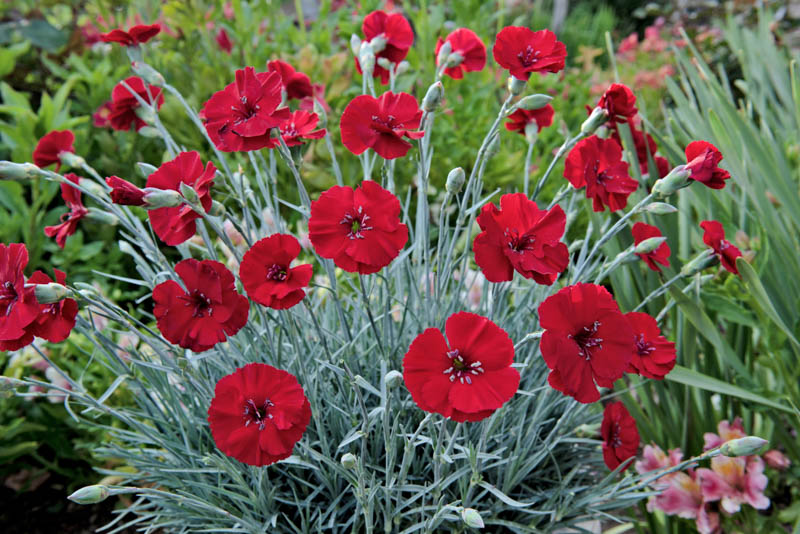
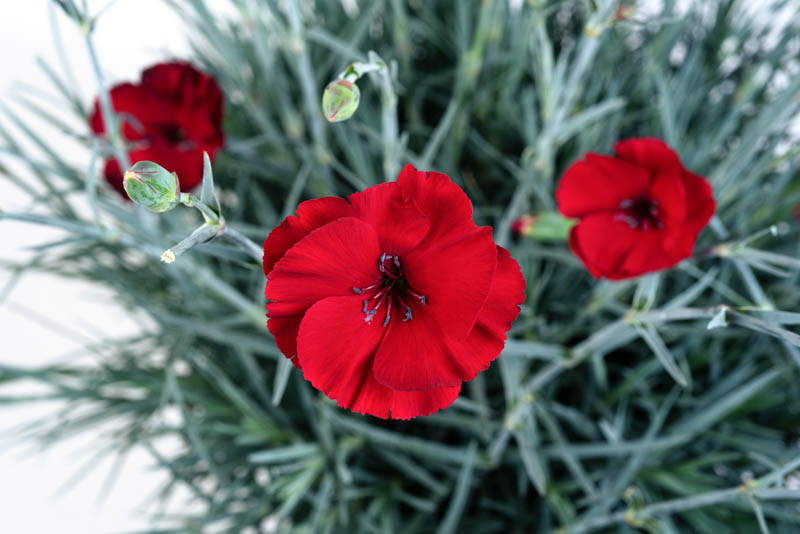


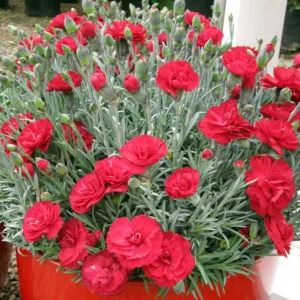
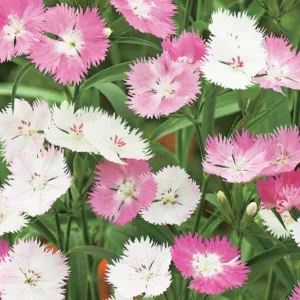
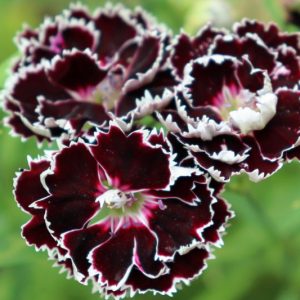
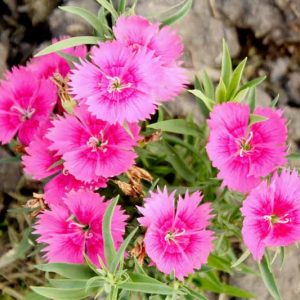
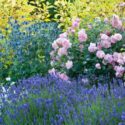
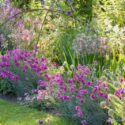
Imagine strolling through your spring garden, the sun warming the air and the scent of spicy, sweet blossoms drifting up as you pass. Clusters of cherry-red blooms rimmed in white glow above frosty blue foliage. Bees buzz, butterflies float, and your border feels instantly elevated. This is the magic of Dianthus American Pie® ‘Cherry Pie’—a new perennial pink designed for nostalgic beauty and modern ease.
Bred in the United Kingdom by Whetman® Pinks, this standout is part of the American Pie® Series. The ‘Cherry Pie’ selection combines exceptional repeat flowering, robust health, classic clove-scented blooms, and unique cherry-red petals crisply edged in white. Unlike many old-fashioned pinks, ‘Cherry Pie’ brings consistent color from spring through fall, in a compact, clump-forming habit.
At maturity, it grows about 11 inches (28cm) tall and 11 inches wide—ideal for the front of borders, mixed beds, or containers.
A true perennial: plants persist several years, with evergreen to semi-evergreen foliage providing structure across seasons. Divide every 2–3 years to maintain vigor.
Narrow, glaucous blue-green leaves form dense, grassy hummocks, making an attractive base even out of bloom.
The spicy, aromatic foliage deters deer and rabbits, making it a reliable pick in critter-prone areas.
Dianthus is mildly poisonous to humans and animals, including cats, dogs, horses, and children. All parts, especially the leaves, contain triterpenoid saponins. Contact can cause dermatitis; ingestion may result in vomiting or gastrointestinal upset. Though toxicity is considered low, sensitive individuals should handle with care and avoid eating any part of the plant. Always supervise children and pets in the garden to prevent accidental contact or ingestion.
Clump-forming and non-invasive. ‘Cherry Pie’ does not run or self-seed aggressively—perfect for contained beds and mixed borders.
This hybrid is best grown from vegetative divisions or purchased nursery plants—seedlings will not come true.
| Season | Task |
|---|---|
| Spring | Plant/divide clumps, feed, watch for early buds |
| Summer | Deadhead, water in heat, harvest blooms for vases |
| Autumn | Remove faded stems, mulch lightly in zone 4–5 |
| Winter | Protect crown with dry mulch, enjoy evergreen foliage |
“I cut a handful every week all summer—the blooms and fragrance don’t stop. Bees love them and so do I.” — Oregon gardener
Yes! With regular deadheading it reblooms from late spring to frost.
No—strong, upright stems stay neat even after rain.
Absolutely. Use free-draining mix and full sun for best performance.
Yes! Strong clove fragrance is a highlight indoors and out.
| Hardiness |
5 - 9 |
|---|---|
| Heat Zones |
1 - 8 |
| Climate Zones | 1, 1A, 1B, 2, 2A, 2B, 3, 3A, 3B, 4, 5, 6, 7, 8, 9, 10, 11, 12, 13, 14, 15, 16, 17, 18, 19, 20, 21, 22, 23, 24, A2, A3 |
| Plant Type | Perennials |
| Plant Family | Caryophyllaceae |
| Genus | Dianthus |
| Common names | Dianthus Flower, Gillyflower, Pink |
| Exposure | Full Sun |
| Season of Interest | Spring (Late), Summer (Early, Mid, Late), Fall |
| Height | 11" (28cm) |
| Spread | 11" (28cm) |
| Spacing | 10" - 12" (25cm - 30cm) |
| Maintenance | Low |
| Water Needs | Low, Average |
| Soil Type | Chalk, Loam, Sand |
| Soil pH | Alkaline, Neutral |
| Soil Drainage | Well-Drained |
| Characteristics | Fragrant, Showy, Evergreen |
| Tolerances | Drought, Deer, Rabbit, Heat, Fire |
| Attracts | Bees, Butterflies |
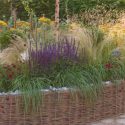
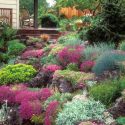
| Garden Uses | Banks And Slopes, Beds And Borders, Edging, Patio And Containers |
| Garden Styles | City and Courtyard, Coastal Garden, Gravel and Rock Garden, Informal and Cottage |
| Toxic to Humans | Low severity |
| Toxic to Cats | Toxic |
| Toxic to Dogs | Toxic |
| Toxic to Horses | Toxic |


| Hardiness |
5 - 9 |
|---|---|
| Heat Zones |
1 - 8 |
| Climate Zones | 1, 1A, 1B, 2, 2A, 2B, 3, 3A, 3B, 4, 5, 6, 7, 8, 9, 10, 11, 12, 13, 14, 15, 16, 17, 18, 19, 20, 21, 22, 23, 24, A2, A3 |
| Plant Type | Perennials |
| Plant Family | Caryophyllaceae |
| Genus | Dianthus |
| Common names | Dianthus Flower, Gillyflower, Pink |
| Exposure | Full Sun |
| Season of Interest | Spring (Late), Summer (Early, Mid, Late), Fall |
| Height | 11" (28cm) |
| Spread | 11" (28cm) |
| Spacing | 10" - 12" (25cm - 30cm) |
| Maintenance | Low |
| Water Needs | Low, Average |
| Soil Type | Chalk, Loam, Sand |
| Soil pH | Alkaline, Neutral |
| Soil Drainage | Well-Drained |
| Characteristics | Fragrant, Showy, Evergreen |
| Tolerances | Drought, Deer, Rabbit, Heat, Fire |
| Attracts | Bees, Butterflies |
| Garden Uses | Banks And Slopes, Beds And Borders, Edging, Patio And Containers |
| Garden Styles | City and Courtyard, Coastal Garden, Gravel and Rock Garden, Informal and Cottage |
| Toxic to Humans | Low severity |
| Toxic to Cats | Toxic |
| Toxic to Dogs | Toxic |
| Toxic to Horses | Toxic |
How many Dianthus American Pie® Cherry Pie (Pink) do I need for my garden?
| Plant | Quantity | |
|---|---|---|
| Dianthus American Pie® Cherry Pie (Pink) | N/A | Buy Plants |
Create a membership account to save your garden designs and to view them on any device.
Becoming a contributing member of Gardenia is easy and can be done in just a few minutes. If you provide us with your name, email address and the payment of a modest $25 annual membership fee, you will become a full member, enabling you to design and save up to 25 of your garden design ideas.
Join now and start creating your dream garden!
Create a membership account to save your garden designs and to view them on any device.
Becoming a contributing member of Gardenia is easy and can be done in just a few minutes. If you provide us with your name, email address and the payment of a modest $25 annual membership fee, you will become a full member, enabling you to design and save up to 25 of your garden design ideas.
Join now and start creating your dream garden!