Straggler Daisy, Horseherb, Lawnflower, Creeping Cinderella-weed, Creeping Cinderella Weed, Prostrate Lawnflower, Hierba Del Caballo, Sprawling Horseweed, Synedrella vialis, Synedrellopsis grisebachii, Blainvillea tampicana, Calyptocarpus blepharolepis, Calyptocarpus tampicanus.


If your St. Augustine has given up under trees and your Bermuda turns crispy by July, Calyptocarpus vialis might be the scrappy little hero you are looking for. Often called horseherb, straggler daisy, or lawnflower, this native groundcover creeps into thin lawn, shade, and hard packed soil and quietly knits it into a soft green carpet dotted with tiny yellow daisies. It thrives in heat, shrugs off drought, tolerates mowing and foot traffic, and can turn problem spots in Texas and the southern United States into easy, low water, pollinator friendly turf.
Summary: Semi evergreen, spreading native groundcover for sun to shade, ideal as a lawn alternative or gap filler in dry, shady Texas and southern gardens.
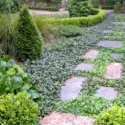
Use: Shady lawns, beneath trees, between stepping stones, along paths, for erosion control on banks, and as a living mulch in water wise landscapes.
Highlight: Forms a soft, ankle high mat of bright green foliage sprinkled with tiny yellow daisy like flowers from spring through fall.
Note: Spreads by creeping stems and seed; wonderfully tough in the right place but can be a bit weedy if you want a sharp, formal lawn.
| Botanical Name | Calyptocarpus vialis Less. |
|---|---|
| Family | Asteraceae (aster or daisy family) |
| Common Names | Horseherb, straggler daisy, lawnflower, carpet daisy, creeping Cinderella weed, hierba del caballo |
| Native Range | Native to south and south central United States (including Texas and Gulf states) and into Mexico, Central America, and northern South America; naturalized in other warm, disturbed sites worldwide. |
| Plant Type and Habit | Warm season, semi evergreen perennial groundcover with low, spreading, rooting stems |
| Hardiness (USDA) | Generally hardy in Zones 7 to 10; dies back in harder freezes but usually returns from the crown and roots in spring |
| Size | Usually 3 to 6 inches tall in mown areas, 6 to 12 inches tall in unmown patches; spreads 1 to 2 feet or more by stems and seed |
| Sun and Exposure | Thrives in partial shade to bright shade, tolerates full sun with enough moisture; one of the best shade tolerant lawn alternatives in warm climates |
| Soil | Adaptable to clay, loam, caliche, and sandy soils that are reasonably well drained; tolerates compacted and thin soils under trees |
| Seasonal Interest | Yellow daisy like flowers from spring through fall, sometimes nearly year round in frost free areas; semi evergreen foliage in mild winters |
| Primary Uses | Lawn substitute in shade, groundcover under trees, path and patio joints, erosion control on slopes, meadow and woodland edge filler, pollinator friendly lawn alternative |
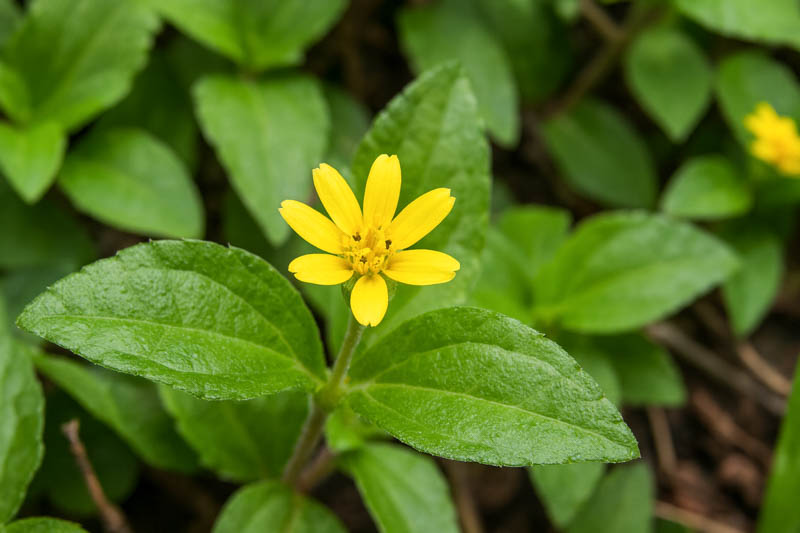
Horseherb is a low, creeping perennial groundcover that wanders across the soil surface instead of growing upright. Stems sprawl and root as they go, weaving a patchwork mat of small green leaves. In warm weather, the carpet is sprinkled with bright yellow, single daisies that sit just above the foliage and glow in the shade.
The flowers are small but cheerful, like mini sunflowers shrunk down to the size of a fingernail. Because they bloom over a long season, they add a soft, meadow like look to shady lawns and under tree plantings. Up close, the combination of bright green leaves and yellow daisies is surprisingly charming for a plant many people once thought of as a lawn weed.
Calyptocarpus vialis is native to south and south central Texas, the Gulf Coast, and parts of the southeastern United States, extending through Mexico, Central America, the Caribbean, and into northern South America. It has also been introduced to other warm regions around the world where it favors disturbed sites like lawns, roadsides, and paths.
Because it evolved in warm, humid to seasonally dry climates with thin soils and partial shade, horseherb is a natural fit for shady Texas lawns, live oak understories, and low water urban yards that echo those conditions.
Horseherb typically grows 3 to 6 inches tall in mown areas and up to around 6 to 12 inches tall where it is allowed to relax. It spreads by creeping stems and short stolons that root at the nodes, plus self sown seed. In friendly conditions a few plugs can spread to cover several square feet in a year or two.
The overall effect is loose and natural rather than sharp and formal. In places where you want a tidy, lawn like look, occasional mowing or string trimming will keep the foliage low and even. In more natural areas, you can let horseherb wander to fill spaces between stepping stones, shrubs, and perennials.
The flowers of horseherb are small, yellow, daisy like heads with both ray and disc florets, held singly on short stems above the foliage. They appear from spring through fall, and in frost free areas may bloom off and on almost all year.
Each flower is only about a quarter inch across, but when many are in bloom they spark the groundcover with points of light. Small butterflies and other pollinators visit the blooms for nectar, adding movement and life to otherwise quiet corners of the garden.
Leaves are opposite, small, and somewhat triangular or lance shaped, typically 1 to 2 inches long. They are a fresh medium green, sometimes slightly rough to the touch. Stems are thin, flexible, and willing to weave around roots, rocks, and paving.
Because leaves and stems are fine textured, horseherb reads as a soft, fine to medium textured carpet. It contrasts nicely with broad leaved perennials and bold textured shrubs and blends easily with other low native groundcovers like frogfruit and native sedges.
Horseherb is best suited to regions with warm summers and mild to moderate winters, including much of Texas, the Gulf Coast, and the lower South. It is generally hardy in USDA Zones 7 to 10. In warm zones it may behave as an almost evergreen groundcover; in colder spots it can brown or die back but often returns from roots in spring.
It tolerates heat, humidity, reflected light from buildings and pavement, and the kind of intermittent drought that stresses traditional turf. Extended hard freezes combined with saturated soil can be harder on it, so good drainage is helpful at the edge of its range.
You can plug horseherb into many garden roles where low height, shade tolerance, and easy spread are an asset:
Horseherb may be small, but it still pulls its weight in a wildlife friendly yard. The yellow flowers supply nectar to small native bees, hoverflies, and butterflies, and the foliage offers cover for ground dwelling insects and other small critters.
Several sources cite horseherb as having good wildlife value in native plantings, especially in shaded pollinator gardens and woodland edges where few other lawn alternatives will flower so reliably.
One of horseherb’s big selling points is that it tolerates light to moderate foot traffic. It can handle kids cutting across the yard, pets exploring their favorite routes, and homeowners walking to the compost pile or shed.
For high impact sports, heavy dog zoomies, or constant play, it is better to combine horseherb with stepping stones or keep a small area of tougher turf grass. Many gardeners allow horseherb to dominate in shady and outer zones and reserve a small, irrigated patch of formal lawn where the most intense use happens.
Horseherb is surprisingly drought tolerant once established, especially in shade. It evolved in climates with seasonal moisture and then long, dry stretches, so it is comfortable going lean on water for part of the year.
In the garden, a good watering pattern is to water deeply but infrequently, then let the soil surface dry before watering again. Horseherb may thin or look a little tired during extreme heat and drought, but it usually bounces back quickly after rain or supplemental irrigation.
Horseherb is not commonly listed as toxic to humans, dogs, or cats and is widely used in lawns, public landscapes, and play areas within its range. Some references even mention edible leaves, but it is grown as an ornamental, not a food crop. As with any landscape plant, it is best not to encourage people or pets to eat it.
In its native and naturalized range, horseherb is viewed as both a helpful lawn alternative and a persistent lawn weed. It spreads by creeping stems and seed and can colonize open soil quickly. It is not considered a major invasive species in most regions, but in manicured lawns and beds you may need to edge, spot weed, or thin it to keep it from overrunning slower plants.
Horseherb performs best in partial shade to bright shade, which is why it often shows up in thin, shady lawns. It will tolerate full sun where soils are not bone dry, and in irrigated landscapes it can even compete with turf in open areas.
In very deep shade the mat can become thin and leggy; in those spots, combine horseherb with more shade loving groundcovers and leaf mulch for a layered look.
One of the strengths of horseherb is how flexible it is with soil type. It will grow in:
It prefers soil that drains reasonably well but has at least some periodic moisture. On very heavy clays that stay wet for days, loosen the top few inches, add some compost, or plant on a gentle slope so excess water can move away.
A simple watering approach keeps horseherb happy:
Horseherb has modest nutrient needs. Too much fertilizer can encourage more weeds than horseherb and is simply not necessary for good growth.
One advantage of a horseherb lawn is the lower mowing demand. You can treat it like a very relaxed turf:
Horseherb is easy to spread around your yard once you have a starter patch.
New horseherb lawns and groundcovers will still have gaps where weeds can sneak in. Hand weed early to remove aggressive invaders, then let the horseherb close ranks. As the mat thickens, weed pressure drops and maintenance usually shrinks to a few quick sessions per season.
Horseherb is generally a low maintenance, problem free groundcover when it is used where it belongs.
Horseherb, also known as straggler daisy, is a low-growing, warm-season perennial groundcover in the aster family (Asteraceae). Its botanical name is Calyptocarpus vialis. It spreads by creeping stems that root at the nodes and produces small yellow daisy-like flowers, often naturalizing in lawns, paths, and under trees in warm regions of the southern United States.
Horseherb (Calyptocarpus vialis) is native to parts of the southern U.S., including Texas, Louisiana, Mississippi, Alabama, and Florida, and ranges south through Mexico, Central America, and into northern South America. It has also become naturalized in other warm regions where conditions are favorable.
Horseherb typically grows about 3–6 inches (7–15 cm) tall in mown or trafficked areas and can reach 6–10 inches (15–25 cm) tall in unmown patches. It spreads by creeping stems and by seed, often filling bare or thin spots in lawns and beds. In favorable conditions, a small patch can expand significantly within one or two growing seasons.
Yes, horseherb is widely used as a low-input lawn alternative in warm climates, especially in partial shade. It tolerates mowing, light to moderate foot traffic, heat, and short dry periods. However, it does not create a perfectly uniform surface like manicured turf and may thin in extreme drought or heavy wear. It is best where you want a soft, informal, green carpet rather than a formal lawn.
Horseherb is particularly valued because it grows well in partial shade to bright shade. It often appears under trees, along fences, and on the north side of buildings where traditional turf grasses decline. It may still grow in full sun if there is enough soil moisture, but its real strength is covering lightly shaded, dry areas where many other groundcovers struggle.
Horseherb performs best with a few hours of direct sun or bright, filtered light each day. Ideal conditions are dappled shade or morning sun with afternoon shade. In deep, continuous shade the foliage can become thin and leggy. In full sun it can still survive, especially with occasional irrigation, but may look less lush in very hot, dry periods.
Once established, horseherb is moderately to highly drought tolerant, especially in shade. It evolved in climates with seasonal rainfall followed by dry periods. In the garden, it can survive long stretches without irrigation, though it may thin or look stressed in extreme drought. It usually greens back up quickly when rain or watering returns.
Horseherb tolerates light to moderate foot traffic, such as children walking through the yard, pets exploring, and people using informal paths. It can be mown like a relaxed lawn. However, it does not withstand persistent heavy sports use or constant high-impact “dog zoomies” as well as dedicated turf grasses. In high-traffic areas, combine horseherb with stepping stones or retain a small patch of tougher turf.
In its native and naturalized range, horseherb is generally considered vigorous rather than formally invasive. It spreads easily by stems and seed and can act as a persistent lawn weed in conventional turf. However, it is not typically listed as a serious ecological invasive in North America. In gardens, it can overrun slower plants if not managed; edging, mowing, and occasional removal of unwanted patches are usually sufficient to keep it in bounds.
Updated: November 2025 • Reviewed by Gardenia Editors
| Hardiness |
7 - 10 |
|---|---|
| Plant Type | Perennials |
| Plant Family | Asteraceae |
| Exposure | Full Sun, Partial Sun |
| Season of Interest | Spring (Early, Mid, Late), Summer (Early, Mid, Late), Fall, Winter |
| Height | 3" - 1' (8cm - 30cm) |
| Spread | 1' - 2' (30cm - 60cm) |
| Spacing | 24" (60cm) |
| Maintenance | Low |
| Water Needs | Average |
| Soil Type | Clay, Loam, Sand |
| Soil pH | Acid, Alkaline, Neutral |
| Soil Drainage | Moist but Well-Drained |
| Characteristics | Showy, Semi-Evergreen |
| Native Plants | United States, Southeast, Louisiana, Mississippi, Alabama, Florida, Southwest, Texas |
| Tolerances | Drought, Deer, Rabbit, Salt, Heat, Humidity |
| Attracts | Bees, Butterflies |
| Garden Uses | Banks And Slopes, Ground Covers |
| Garden Styles | Gravel and Rock Garden, Informal and Cottage, Prairie and Meadow |
| Toxic to Humans | No known toxicity |
| Toxic to Cats | No known toxicity |
| Toxic to Dogs | No known toxicity |
| Toxic to Horses | No known toxicity |


| Hardiness |
7 - 10 |
|---|---|
| Plant Type | Perennials |
| Plant Family | Asteraceae |
| Exposure | Full Sun, Partial Sun |
| Season of Interest | Spring (Early, Mid, Late), Summer (Early, Mid, Late), Fall, Winter |
| Height | 3" - 1' (8cm - 30cm) |
| Spread | 1' - 2' (30cm - 60cm) |
| Spacing | 24" (60cm) |
| Maintenance | Low |
| Water Needs | Average |
| Soil Type | Clay, Loam, Sand |
| Soil pH | Acid, Alkaline, Neutral |
| Soil Drainage | Moist but Well-Drained |
| Characteristics | Showy, Semi-Evergreen |
| Native Plants | United States, Southeast, Louisiana, Mississippi, Alabama, Florida, Southwest, Texas |
| Tolerances | Drought, Deer, Rabbit, Salt, Heat, Humidity |
| Attracts | Bees, Butterflies |
| Garden Uses | Banks And Slopes, Ground Covers |
| Garden Styles | Gravel and Rock Garden, Informal and Cottage, Prairie and Meadow |
| Toxic to Humans | No known toxicity |
| Toxic to Cats | No known toxicity |
| Toxic to Dogs | No known toxicity |
| Toxic to Horses | No known toxicity |
How many Calyptocarpus vialis (Horseherb) do I need for my garden?
| Plant | Quantity | |
|---|---|---|
| Calyptocarpus vialis (Horseherb) | N/A | Buy Plants |
Create a membership account to save your garden designs and to view them on any device.
Becoming a contributing member of Gardenia is easy and can be done in just a few minutes. If you provide us with your name, email address and the payment of a modest $25 annual membership fee, you will become a full member, enabling you to design and save up to 25 of your garden design ideas.
Join now and start creating your dream garden!
Create a membership account to save your garden designs and to view them on any device.
Becoming a contributing member of Gardenia is easy and can be done in just a few minutes. If you provide us with your name, email address and the payment of a modest $25 annual membership fee, you will become a full member, enabling you to design and save up to 25 of your garden design ideas.
Join now and start creating your dream garden!