Pawpaw, Papaw, Custard Apple, False Banana, Indian Banana, Wild Banana
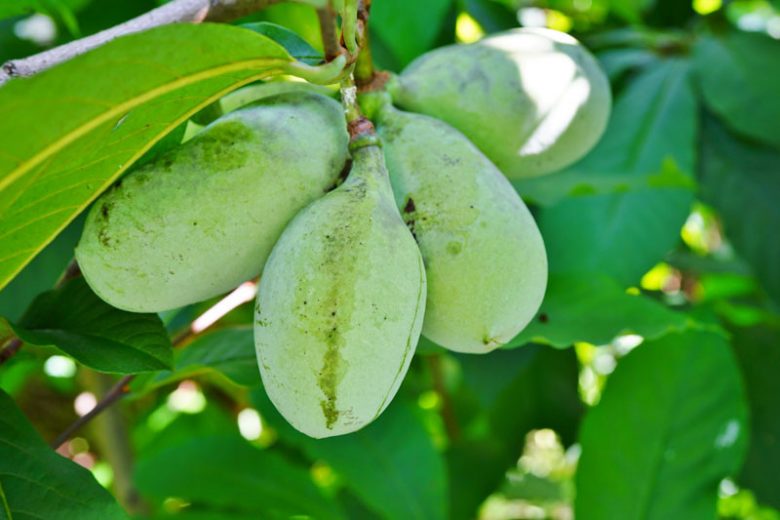
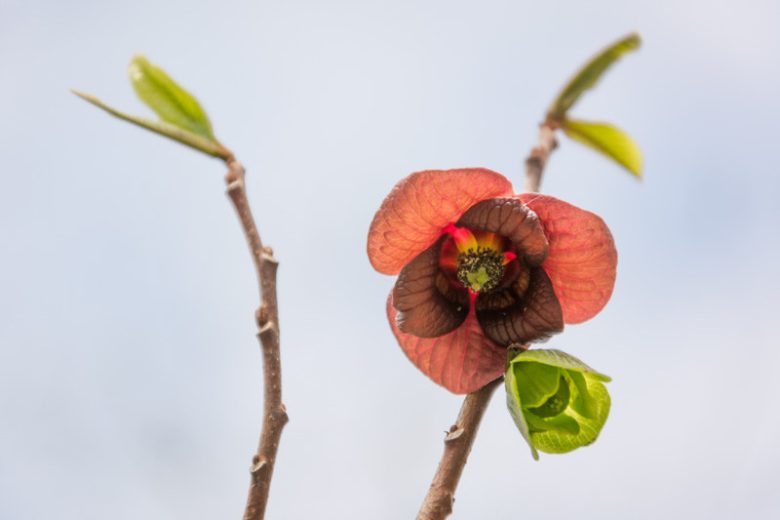


Noted for its great foliage effect, Asimina triloba (Pawpaw) is a large, multi-stemmed shrub or small tree with large, slightly drooping, oval, rich green leaves, 6-12 in. long (15-30 cm), turning brilliant yellow to golden hues in fall. Cup-shaped, purple flowers, up to 2 in. across (5 cm), appear in spring before the leaves, and are followed by egg-shaped, edible, greenish yellow fruit, 5 in. long (12 cm), which mature to black and have a slight banana-like taste. The fruits are usually eaten raw or used in ice creams or pies. They attract wildlife and may persist on the tree for weeks, resembling Christmas ornaments. This is a good understory tree with no serious disease or insect problems.
Pawpaw belongs to the Annonaceae family, commonly known as the custard apple family. This diverse family includes a variety of tropical and subtropical fruit trees prized for their unique flavors and ornamental value. Other notable members of the Annonaceae family include:
| Hardiness |
5 - 9 |
|---|---|
| Heat Zones |
6 - 8 |
| Plant Type | Fruits, Shrubs, Trees |
| Plant Family | Annonaceae |
| Common names | Custard Apple, Papaw, Pawpaw, Wild Banana |
| Exposure | Full Sun, Partial Sun |
| Season of Interest | Spring (Mid, Late), Fall |
| Height | 15' - 30' (4.6m - 9.1m) |
| Spread | 15' - 30' (4.6m - 9.1m) |
| Maintenance | Low |
| Water Needs | Average |
| Soil Type | Loam |
| Soil pH | Acid, Neutral |
| Soil Drainage | Moist but Well-Drained |
| Characteristics | Showy, Fruit & Berries |
| Native Plants | United States, Northeast, Pennsylvania, Delaware, Maryland, New Jersey, New York, Illinois, Indiana, Iowa, Kansas, Michigan, Midwest, Missouri, Nebraska, Ohio, Wisconsin, Southeast, Louisiana, Mississippi, North Carolina, South Carolina, Tennessee, Virginia, West Virginia, Alabama, Arkansas, Florida, Georgia, Kentucky, Southwest, Texas, Oklahoma |
| Tolerances | Wet Soil, Full Shade, Heat, Black Walnut, Humidity, Fire |
| Garden Uses | Ponds And Streams, Rain Gardens, Wall-Side Borders |
| Garden Styles | City and Courtyard, Mediterranean Garden |
| Toxic to Humans | Low severity |
| Toxic to Cats | No known toxicity |
| Toxic to Dogs | No known toxicity |
| Toxic to Horses | No known toxicity |


| Hardiness |
5 - 9 |
|---|---|
| Heat Zones |
6 - 8 |
| Plant Type | Fruits, Shrubs, Trees |
| Plant Family | Annonaceae |
| Common names | Custard Apple, Papaw, Pawpaw, Wild Banana |
| Exposure | Full Sun, Partial Sun |
| Season of Interest | Spring (Mid, Late), Fall |
| Height | 15' - 30' (4.6m - 9.1m) |
| Spread | 15' - 30' (4.6m - 9.1m) |
| Maintenance | Low |
| Water Needs | Average |
| Soil Type | Loam |
| Soil pH | Acid, Neutral |
| Soil Drainage | Moist but Well-Drained |
| Characteristics | Showy, Fruit & Berries |
| Native Plants | United States, Northeast, Pennsylvania, Delaware, Maryland, New Jersey, New York, Illinois, Indiana, Iowa, Kansas, Michigan, Midwest, Missouri, Nebraska, Ohio, Wisconsin, Southeast, Louisiana, Mississippi, North Carolina, South Carolina, Tennessee, Virginia, West Virginia, Alabama, Arkansas, Florida, Georgia, Kentucky, Southwest, Texas, Oklahoma |
| Tolerances | Wet Soil, Full Shade, Heat, Black Walnut, Humidity, Fire |
| Garden Uses | Ponds And Streams, Rain Gardens, Wall-Side Borders |
| Garden Styles | City and Courtyard, Mediterranean Garden |
| Toxic to Humans | Low severity |
| Toxic to Cats | No known toxicity |
| Toxic to Dogs | No known toxicity |
| Toxic to Horses | No known toxicity |
How many Asimina triloba (Pawpaw) do I need for my garden?
| Plant | Quantity | |
|---|---|---|
| Asimina triloba (Pawpaw) | N/A | Buy Plants |
Create a membership account to save your garden designs and to view them on any device.
Becoming a contributing member of Gardenia is easy and can be done in just a few minutes. If you provide us with your name, email address and the payment of a modest $25 annual membership fee, you will become a full member, enabling you to design and save up to 25 of your garden design ideas.
Join now and start creating your dream garden!
Create a membership account to save your garden designs and to view them on any device.
Becoming a contributing member of Gardenia is easy and can be done in just a few minutes. If you provide us with your name, email address and the payment of a modest $25 annual membership fee, you will become a full member, enabling you to design and save up to 25 of your garden design ideas.
Join now and start creating your dream garden!