Reblooming daylilies can produce additional flower scapes after their primary display, extending color well beyond a single bloom period. Discover how rebloom really works, why climate and season length matter, how to support repeat flowering, and which Gardenia cultivars offer some of the best opportunities for a longer daylily season.


A single daylily flower usually lasts only one day, but that does not mean the show has to be brief. A well-branched scape can carry many buds that open in succession, a mature clump may produce several scapes, and some cultivars can send up additional flowering scapes after their first display.
Those cultivars are known as reblooming daylilies.
Rebloom can dramatically extend the usefulness of daylilies (Hemerocallis) in the summer garden. But the word “reblooming” is easy to misunderstand. It does not mean every plant will flower continuously from spring until fall, and it does not guarantee the same second display in every climate.
The best way to choose rebloomers is to think of rebloom as a cultivar capability whose expression depends on the growing season.
Cultivar → Climate → Care → Season Length
| Factor | What to Ask | Why It Matters |
|---|---|---|
| Cultivar | Is the cultivar genuinely known and registered as a rebloomer? | Rebloom is a cultivar characteristic, not something every daylily can be made to do. |
| Climate | Does this cultivar rebloom reliably in your region? | Daylilies are regional performers, and rebloom can vary considerably with climate. |
| Care | Does the plant have enough sun, moisture, root space, and healthy foliage? | A stressed plant has less capacity to produce additional growth and flower scapes. |
| Season Length | Is there enough growing season remaining after primary bloom? | A cultivar may rebloom strongly in a long-season garden but only once in a short-season climate. |
Gardenia’s guiding principle: A reblooming label tells you what a cultivar can do. Your climate and growing season help determine what it actually does in your garden.
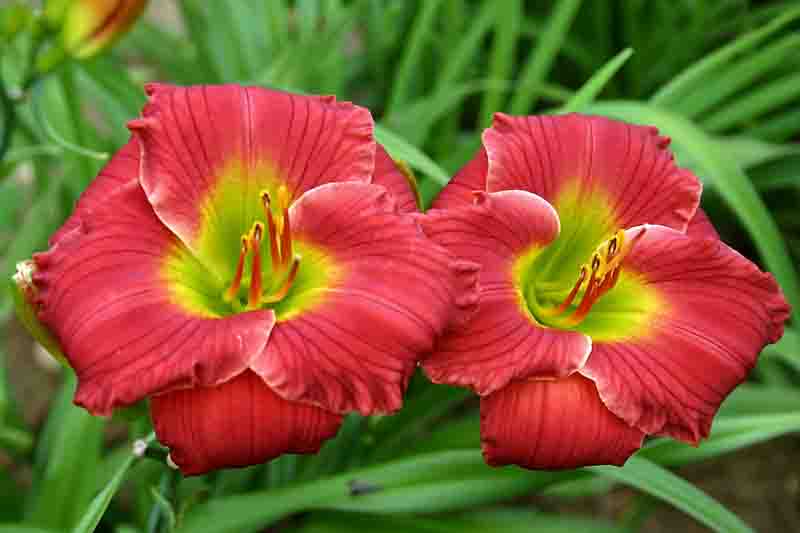
The American Daylily Society uses the designation Rebloomer (Re) for daylilies that bloom more than once during a single growing season.
That sounds simple, but rebloom can appear in different ways.
The important point is that rebloom refers to additional flowering scapes or flowering periods. It does not mean that one flower remains open longer.
Reblooming is not the same as long-lasting flowers. Most individual daylily blooms still last about one day. A reblooming cultivar extends the display by producing additional flowering growth.
This is probably the most important expectation to set when choosing a reblooming daylily.
A plant labeled “reblooming” should not automatically be interpreted as a daylily that flowers without interruption for months. Some cultivars produce a clear first display followed by another wave later. Others generate additional scapes in relatively quick succession, making the flowering period appear much more continuous.
Weather and location can alter the pattern further.
A cultivar that gives repeated scapes through a long, warm growing season may have little opportunity to repeat in a region where frost arrives soon after its primary bloom.
Think in flowering waves, not a permanent flower display. Rebloomers extend the season by adding new scapes and new bloom periods after the primary display.
Daylilies are regional performers, and rebloom is one of the characteristics most visibly affected by where they are grown.
A long growing season gives a cultivar more time after its first display to produce additional scapes, develop buds, and bring those buds into flower. A shorter season gives the same plant a much narrower window.
This is why reports about the same cultivar can sound contradictory. One gardener may describe months of repeated flowering, while another grows the cultivar successfully but sees only its primary bloom.
University of Minnesota Extension provides an especially useful example: it notes that reblooming cultivars generally are not successful as rebloomers in Minnesota because the growing season is too short.
| Situation | What You Might See | What It Means |
|---|---|---|
| Long warm growing season | Several additional scapes or flowering waves | The cultivar has more time to express its rebloom potential |
| Moderate growing season | Primary bloom plus one later repeat | Rebloom occurs, but for a shorter period |
| Short cool growing season | Good primary bloom but little or no repeat flowering | The cultivar may still be healthy; the season may simply be too short for reliable rebloom |
That is why local experience matters. When repeat flowering is a major reason for buying a cultivar, look for reports from gardeners, nurseries, or daylily societies in a climate similar to yours.
Gardenia’s rebloom rule: Compare rebloom performance regionally. A cultivar’s behavior in a long-season Southern garden should not automatically be used to predict its flowering in a short-season Northern garden.
Rebloom is also easy to confuse with bloom season.
Early, Midseason, and Late describe when a cultivar’s primary flowering occurs. Rebloom describes whether it produces another flowering period after that primary display.
A rebloomer therefore still has a primary bloom classification.
For example, one reblooming cultivar may begin Extra Early, another at Midseason, and another at Late Midseason. The word “reblooming” does not replace its normal position in the daylily season.
| Term | What It Describes | Example Question |
|---|---|---|
| Early / Midseason / Late | When the cultivar’s primary bloom occurs relative to the local daylily season | When will this cultivar first make its main display? |
| Rebloomer | Whether another flowering period occurs in the same season | Can it produce additional scapes after its primary bloom? |
| Extended bloom | How long an individual flower stays open | Does each flower remain open at least 16 hours? |
Gardenia groups the primary daylily season into Early, Midseason, and Late for practical garden planning. Explore Early-Blooming Daylilies, Midseason-Blooming Daylilies, and Late-Blooming Daylilies to build the primary season first.
Late blooming is not reblooming. A Late or Very Late daylily may flower only once, while an Extra Early or Midseason cultivar may bloom again later. Bloom season and rebloom are separate characteristics.
The best reblooming daylily is not necessarily the cultivar with the longest possible flowering claim. Start with plants adapted to your climate and garden, then consider primary bloom season, height, flower color, form, and how the cultivar fits the rest of your planting.
Gardenia’s collection includes reblooming cultivars across several different primary bloom periods, making it possible to combine repeat flowering with season-long succession.
Early and Extra Early rebloomers are especially useful because their first flowering occurs while much of the daylily season still lies ahead. In climates favorable to rebloom, that gives them a long potential window in which to produce additional scapes.
Reblooming cultivars whose primary flowering occurs around Early Midseason or Midseason can reinforce the main summer display and potentially add further color afterward.
Reblooming cultivars with later primary flowering can be useful where the goal is to maintain interest beyond peak daylily season. Their actual opportunity to repeat is especially dependent on the remaining length of the growing season.
Choose rebloomers across the primary season. An Extra Early rebloomer and a Midseason rebloomer do more for season-long color than several cultivars that all begin flowering at exactly the same time.
The cultivars below are selected for their reblooming capability. Compare flower color, height, bloom season, foliage habit, hardiness, and other characteristics to find those best suited to your garden.
| Hardiness |
3 - 9 |
|---|---|
| Heat Zones |
2 - 11 |
| Climate Zones | 2, 3, 4, 5, 6, 7, 8, 9, 10, 11, 12, 13, 14, 15, 16, 17, 18, 19, 20, 21, 22, 23, 24, H1, H2 |
| Plant Type | Perennials |
| Genus | Hemerocallis |
| Exposure | Full Sun, Partial Sun |
| Season of Interest | Summer (Early, Mid, Late), Fall |
| Maintenance | Low |
| Water Needs | Average |
| Soil Type | Chalk, Clay, Loam |
| Soil pH | Acid, Alkaline, Neutral |
| Soil Drainage | Moist but Well-Drained, Well-Drained |
| Characteristics | Fragrant, Plant of Merit, Showy |
| Tolerances | Drought, Rabbit |
| Attracts | Birds, Butterflies, Hummingbirds |
| Landscaping Ideas | Beds And Borders, Edging, Patio And Containers |
| Garden Styles | City and Courtyard, Informal and Cottage, Prairie and Meadow, Traditional Garden |
You cannot turn a once-blooming cultivar into a rebloomer through care alone. But good growing conditions help a genetically capable plant perform closer to its potential.
Daylilies flower best with at least about six hours of direct sunlight. Plants receiving less light may remain leafy and healthy-looking while producing fewer flower scapes.
Also reassess established gardens. Trees and shrubs that were small when a daylily was planted may eventually shade the bed enough to reduce flowering.
Daylilies tolerate drought, but surviving dry conditions and producing the best flowering performance are different things.
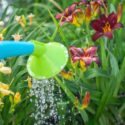
Consistent moisture is especially helpful during active growth, scape formation, bud development, and flowering. Water stress can limit the plant’s ability to sustain a strong display.
Do not routinely shear healthy green leaves after the first flowering period in an attempt to force rebloom. The foliage is still supporting the plant.
Remove completely dead or badly diseased foliage when appropriate, but leave healthy leaves to continue functioning.
See Gardenia’s When to Cut Back Daylilies for the difference between spent flowers, finished scapes, and useful green foliage.
A congested clump that has begun flowering less strongly may benefit from division, but reblooming daylilies do not need to be divided simply because a fixed number of years has passed.
Look for declining flowering, severe congestion, or a clump that has outgrown its allotted space.
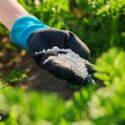
More fertilizer does not automatically mean more rebloom. Excessive feeding can encourage lush vegetative growth without solving the actual limiting factor.
A soil test is the best starting point when fertility is uncertain. Compost or other organic matter may also help maintain good soil structure and fertility.
Support rebloom rather than trying to force it. Genetics provides the capacity to rebloom. Sun, moisture, healthy foliage, adequate nutrition, and enough remaining growing season help the plant express that capacity.
Deadheading and rebloom are related much less directly than gardening advice sometimes suggests.
Removing spent flowers and unwanted seed pods can prevent the plant from investing resources in seed production and keeps the clump looking tidy. It is sensible garden maintenance, particularly when seed is not wanted.
But deadheading does not convert a non-reblooming cultivar into a reblooming one, and it should not be presented as a guarantee that additional scapes will appear.
Whether another flowering period develops is determined primarily by the cultivar’s reblooming ability interacting with climate, growing conditions, and season length.
Deadhead for plant appearance and to prevent unwanted seed production – not because cutting off one flower automatically creates another scape.
A missing second display does not necessarily mean the plant was mislabeled or that something is wrong.
| Possible Reason | What to Check | What It Means |
|---|---|---|
| Short growing season | How much warm growing weather remains after primary bloom? | There may not be enough time for another scape to develop and flower |
| Too little sun | Does the plant receive about six or more hours of direct sun? | Flower production may be reduced even if foliage looks healthy |
| Moisture stress | Has the plant been repeatedly dry during active growth? | The plant may survive but flower below its potential |
| Recent planting or division | Is the plant still establishing? | Flowering can improve after establishment |
| Declining or congested clump | Has flowering declined along with severe crowding? | Division may be useful if congestion is actually limiting performance |
| Regional performance | Does the cultivar rebloom reliably in comparable local gardens? | A strong rebloomer elsewhere may be an occasional or non-rebloomer in your climate |
For a broader flowering diagnosis, see Gardenia’s Why Are My Daylilies Not Blooming? 8 Causes and How to Fix Them.
Rebloomers are valuable, but the most dependable way to create a long daylily season is not to rely on rebloom alone.
Build the main flowering sequence first by combining cultivars whose primary bloom occurs at different times. Then add rebloomers across those windows.
Primary succession first → Rebloom second
Choose Early, Midseason, and Late cultivars to create a dependable primary flowering sequence. Then layer reblooming cultivars through that sequence to add potential repeat flowering without leaving the whole summer display dependent on a second bloom that may vary with climate.
This approach provides two layers of insurance:
For the complete strategy, see Gardenia’s How to Keep Daylilies Blooming Longer All Summer.
| If You Want… | Prioritize… | Remember… |
|---|---|---|
| The earliest possible start | Extra Early or Early rebloomers | Early primary bloom leaves more season available for potential repeat flowering |
| Strong midsummer color | Early Midseason and Midseason rebloomers | Combine them with other bloom windows rather than concentrating everything at peak season |
| Late-season color | Late and Very Late primary bloomers plus suitable rebloomers | A true Late bloomer may be more reliable than depending on an earlier cultivar to rebloom |
| The longest overall season | Primary succession + rebloom | Do not make one cultivar responsible for the entire season |
Gardenia’s shortcut: For dependable months of color, ask two questions: When does this cultivar flower the first time, and how reliably does it rebloom in my climate?
| Claim | Verdict | Better Explanation |
|---|---|---|
| “Reblooming means continuous flowers all summer.” | Not necessarily | Rebloom may occur as a later second display or several successive flowering periods. |
| “Deadheading makes any daylily rebloom.” | False | Deadheading does not create the genetic capacity for additional scapes. |
| “A rebloomer performs the same everywhere.” | False | Climate and season length strongly affect whether another flowering cycle can develop. |
| “Late-blooming and reblooming mean the same thing.” | False | Late describes primary bloom timing. Rebloom describes another flowering period. |
| “More fertilizer means more rebloom.” | False | Correct site conditions and cultivar potential matter more than indiscriminate feeding. |
A reblooming daylily produces more than one flowering period during a growing season. Some cultivars have a distinct primary display followed by another later in the season, while others may produce successive flowering periods relatively close together.
Not necessarily. Some rebloomers produce two distinct flowering periods, while others may generate additional scapes for a much longer interval. Performance depends on the cultivar, climate, growing conditions, and length of the growing season.
Rebloom refers to more than one flowering period during the season. Extended bloom describes an individual daylily flower that remains open for at least 16 hours. A cultivar can have either characteristic, both, or neither.
A Late daylily produces its primary flowers after most cultivars have finished. A reblooming daylily flowers more than once during the season. A cultivar can therefore be Late, reblooming, both, or neither.
A short growing season, insufficient sunlight, moisture stress, recent planting or division, poor plant vigor, or regional cultivar performance can limit rebloom. A reblooming label describes a cultivar’s capability, not a guarantee of identical performance in every garden.
Some grow perfectly well in cold climates but may not have enough growing season after their primary display to produce a reliable second flowering period. Local cultivar performance is therefore especially important when choosing rebloomers for short-season regions.
Deadheading removes spent flowers and can prevent unwanted seed development, but it does not make a genetically non-reblooming cultivar produce new flowering scapes. Rebloom depends primarily on cultivar characteristics interacting with climate and growing conditions.
If you do not want seed, removing developing pods prevents the plant from investing resources in seed production and keeps the plant tidy. However, seed-pod removal should not be treated as a guarantee of another flowering cycle.
No. Healthy green foliage should generally remain after flowering because it continues supporting the plant. Remove finished flower scapes when desired, but routine post-bloom shearing is not a reliable way to trigger rebloom.
They do not require a fundamentally different watering system, but adequate moisture supports active growth, scape formation, and flowering. Daylilies tolerate drought, yet repeated water stress can reduce flowering performance.
Gardenia’s collection includes Extra Early rebloomers such as ‘Happy Returns’, ‘Rosy Returns’, ‘Apricot Sparkles’, and ‘Free Wheelin’. Their early primary flowering leaves a relatively long portion of the season available for potential additional bloom.
Yes. ‘Stella de Oro’ is a well-known reblooming daylily. Its compact habit, numerous buds, and ability to produce additional flowering make it a popular choice for extended summer color, although performance still varies with climate and conditions.
Use primary bloom succession first: combine Early, Midseason, and Late cultivars so different plants take over as the season advances. Then add reblooming cultivars across those windows for extra flowering when conditions allow.
Reblooming daylilies can add weeks or even repeated waves of flowers to the summer garden, but the rebloom label should be understood correctly.
It means that the cultivar is capable of flowering more than once during a season. It does not mean every plant will bloom continuously until frost, nor does it guarantee identical performance in every region.
For the most dependable results, start with the cultivar, then consider climate, care, and season length.
Gardenia’s Rebloom Reality Check:
Cultivar → Climate → Care → Season Length
And when your goal is months of flowers, do not make rebloom carry the entire season. Build a dependable sequence of Early, Midseason, and Late cultivars first, then use rebloomers as an additional layer of color.
Updated: August 2026 • Reviewed by Gardenia Editors
Why this is a substantial improvement Your current page gives readers the ADS-style bloom categories and then immediately moves into the cultivar cards. The refresh changes the page from “here are reblooming plants” into an actual decision guide explaining what rebloom is, what it is not, why gardeners report different results, how t
123rf
| Hardiness |
3 - 9 |
|---|---|
| Heat Zones |
2 - 11 |
| Climate Zones | 2, 3, 4, 5, 6, 7, 8, 9, 10, 11, 12, 13, 14, 15, 16, 17, 18, 19, 20, 21, 22, 23, 24, H1, H2 |
| Plant Type | Perennials |
| Genus | Hemerocallis |
| Exposure | Full Sun, Partial Sun |
| Season of Interest | Summer (Early, Mid, Late), Fall |
| Maintenance | Low |
| Water Needs | Average |
| Soil Type | Chalk, Clay, Loam |
| Soil pH | Acid, Alkaline, Neutral |
| Soil Drainage | Moist but Well-Drained, Well-Drained |
| Characteristics | Fragrant, Plant of Merit, Showy |
| Tolerances | Drought, Rabbit |
| Attracts | Birds, Butterflies, Hummingbirds |
| Landscaping Ideas | Beds And Borders, Edging, Patio And Containers |
| Garden Styles | City and Courtyard, Informal and Cottage, Prairie and Meadow, Traditional Garden |
Create a membership account to save your garden designs and to view them on any device.
Becoming a contributing member of Gardenia is easy and can be done in just a few minutes. If you provide us with your name, email address and the payment of a modest $25 annual membership fee, you will become a full member, enabling you to design and save up to 25 of your garden design ideas.
Join now and start creating your dream garden!