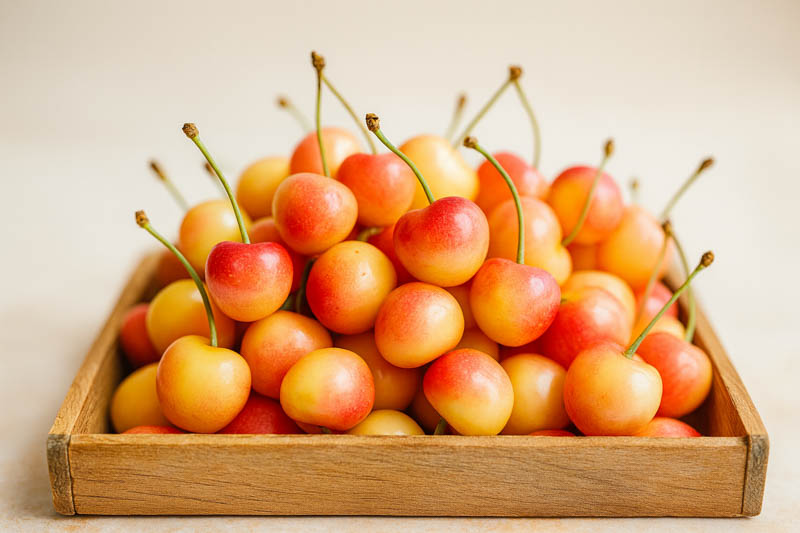
Sweet Cherry
Sweet cherries are the pop star of summer. A mature cherry tree can set thousands of glossy fruits, each formed from a single flower that was pollinated in spring. Many sweet cultivars need a partner, which is why variety choice and bloom timing matter. For a quick compare of flavors, seasons, and pollination needs, dip into this guide to the best sweet cherry varieties. Planning the planting bed is just as fun. Boost yields and attract helpful insects with thoughtful neighbors using these companion plant ideas.
Not all cherries taste the same, and not all are even the same species. Sweet dessert types shine fresh, while tart cherries concentrate into pie-perfect goodness. See why bakers love them in this primer on tart or sour cultivars. For a bigger picture of what’s what, from flowering ornamentals to pie heroes, skim the cherry types guide. Fun fact. Despite the similar name, black cherry is a North American native valued for timber and wildlife, and its fruit is often processed rather than eaten fresh.
Sweet cherries bring more than flavor. They deliver vitamin C, potassium, fiber, and polyphenols. Get the highlights in this nutrition overview. At the market, choose firm cherries with green stems, then refrigerate unwashed and rinse just before eating. If birds find your crop before you do, net trees as fruit colors. Kitchen tip. For cocktails and desserts, learn what really defines the garnish classic and how to craft your own with this guide to maraschino cherries.
Pet parent note. Keep pits, leaves, and stems away from animals. Read species specifics for cats and separate guidance for dogs. With the right site, smart companions, and a little seasonal care, your cherry tree can turn spring into confetti and summer into bowls of sun-sweet fruit.