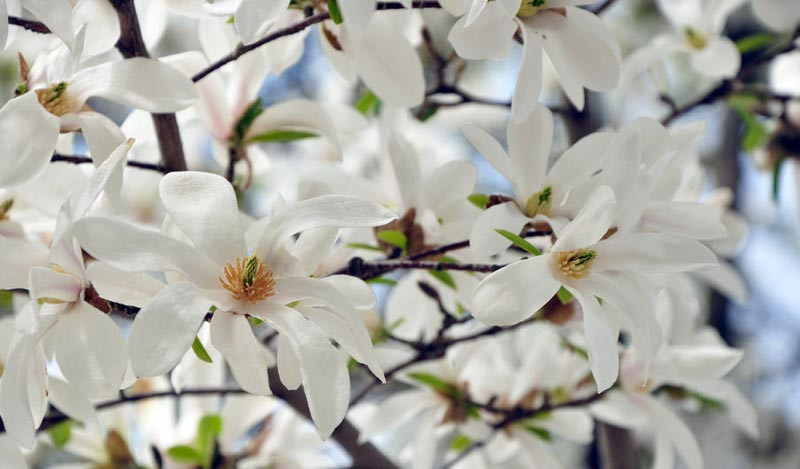
Star Magnolia
Magnolia belongs to the Magnoliaceae family, which includes several popular species, such as the Southern Magnolia (Magnolia grandiflora), Star Magnolia (Magnolia stellata), Saucer Magnolia (Magnolia × soulangeana), and Sweetbay Magnolia (Magnolia virginiana).
Meet the Star Magnolia, the magnolia tree that can’t wait for spring. While the garden is still snoozing, it throws open hundreds of starry magnolia flowers on bare branches—like fireworks, but scented. Native to Japan and sometimes nicknamed Japanese Magnolia, this compact beauty is tailor-made for small spaces and front-yard wow moments.
Earliest bloomer: Late winter to early spring, those ribbon-like tepals (often 20–40 per flower) unfurl in white or soft pink. Because leaves arrive later, every bloom is on full display.
Small but mighty: Typically 10–20 ft tall, it fits where larger magnolia trees won’t—courtyards, patios, and mixed borders.
Cold-tolerant star: More chill-proof than many magnolias, it’s a great choice for cooler regions looking for an early show.
Pollinator perk: Magnolias evolved with beetles, so your starry blossoms are a vital early buffet for beneficial insects.
Low-drama care: Give it sun to part shade, well-drained soil, and a cozy mulch blanket. Prune lightly after bloom, and you’re golden.
Design tip: Back your Star Magnolia with dark evergreens or brick so the petals glow. Underplant with early bulbs—daffodils, crocus, hyacinths—for a layered spring spectacle.
Choosing wisely? If you’re tight on space or love a tidy form, look for compact cultivars like ‘Royal Star’ or ‘Waterlily.’ Need ideas for petite spots? See pretty magnolias for small gardens, explore popular types of magnolia shrubs & trees, and brush up on success essentials with how to grow and care.
Bottom line: If you crave the first, most joyful burst of spring, the Star Magnolia delivers—fragrant, photogenic, and wonderfully manageable.