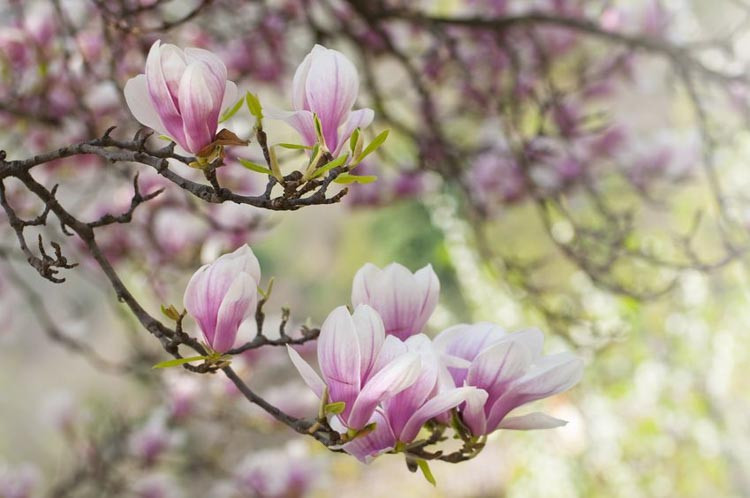
Saucer Magnolia
Magnolia belongs to the Magnoliaceae family, which includes several popular species, such as the Southern Magnolia (Magnolia grandiflora), Star Magnolia (Magnolia stellata), Saucer Magnolia (Magnolia × soulangeana), and Sweetbay Magnolia (Magnolia virginiana).
Meet the Saucer Magnolia, the drama queen of spring. This beloved magnolia tree blasts into bloom when the rest of the garden is still waking up, covering bare branches with oversized, goblet-shaped magnolia flowers in blush pinks and creamy whites. (Yes, it’s the one everybody stops to photograph.)
You may also hear people call it Japanese Magnolia—a common nickname for several early-blooming magnolias, even though this classic hybrid actually combines Chinese parentage: Magnolia denudata × M. liliiflora.
Prehistoric pedigree: Magnolias evolved before bees; their thick, waxy tepals handle beetle pollinators like champs.
Front-row spring: Flowers often open before leaves, so every bloom reads like a spotlight.
Color play: Petals are usually pink to purple outside and white inside—picture-perfect two-tone “saucers.”
Manageable size: Many stay 15–25 ft—big presence, small footprint—ideal for yards and courtyards.
Frost reality check: Late snaps can nip buds; choose slightly later-blooming cultivars or a protected site.
Design-wise, try one as a lawn focal point, or pair with spring bulbs for a “confetti” effect under the canopy. After the floral fireworks, you still get lush, mid-green leaves for summer shade and sculptural branching for winter interest—four-season charm in one tree.
Thinking small space or variety hunting? See Pretty Magnolias for Small Gardens and browse shapes, colors, and sizes in Popular Types of Magnolia Shrubs & Trees. Ready to plant like a pro? Bookmark Magnolia — How to Grow and Care with Success for soil, siting, watering, and pruning tips.
Bottom line: if you want instant spring theater with minimal fuss, the Saucer Magnolia delivers—every single year.