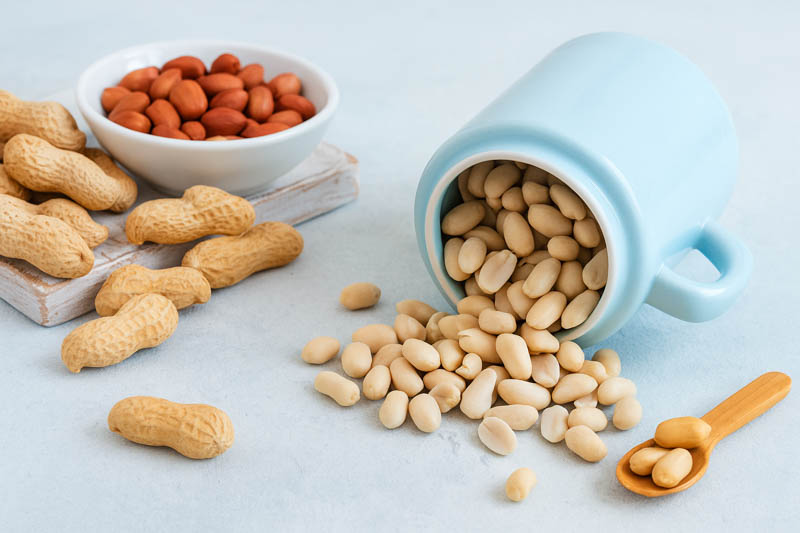
Peanuts
Think peanuts are just snack food? Think again—they’re full of surprises! For starters, peanuts aren’t actually nuts. They’re legumes, like beans, lentils, and chickpeas, and grow underground in little pods. Pretty wild for something we call a “nut,” right?
Despite their underground lifestyle, peanuts easily compete with true nuts like Almond (Prunus dulcis) and Cashew (Anacardium occidentale) when it comes to nutrition. They’re loaded with protein, healthy fats, and energy, making them a top pick for athletes, snackers, and late-night kitchen raiders alike.
Here’s another fun fact: Americans consume over 1.5 billion pounds of peanuts every year. That’s enough to make a mountain of peanut butter tall enough to rival Mount Everest—okay, maybe not quite, but still impressive!
Peanuts also have a rich cultural and agricultural history. Native to South America, they were embraced by Indigenous peoples long before they found their way into PB&J sandwiches. And did you know George Washington Carver developed over 300 uses for peanuts? From paint to paper to—yes—pancake flour!
While they’re often grouped with tree nuts like Pistachio (Pistacia vera) or Pecan (Carya illinoinensis), peanuts are in a world of their own. But they still stand proudly alongside health champs like Walnut (Juglans regia) and Brazil nut (Bertholletia excelsa).
Want to see how peanuts compare to other popular picks like Hazelnut (Corylus avellana), Macadamia (Macadamia integrifolia) or Pine nut (Pinus pinea, Pinus koraiensis)? Check out our full comparison here: Nuts with Benefits.
And yes—even the humble Chestnut (Castanea sativa, Castanea dentata) is worth a second look. Turns out, nuts (and legumes) are full of surprises!