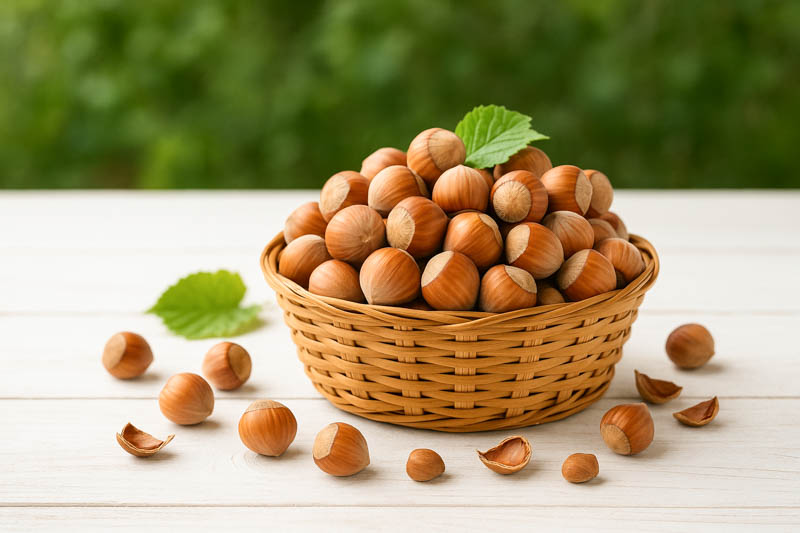
Hazelnut
Hazelnuts aren’t just for chocolate bars and spreads—they’ve got a fascinating backstory and plenty of quirks that make them even more lovable. Let’s crack into some fun facts about this mighty little nut!
Hazelnuts grow on compact, shrubby plants—perfect for small gardens or edible landscapes. Check out why they deserve a spot in your yard: Why This Nut Deserves a Spot in Your Yard.
The world’s top producer? Turkey! It supplies around 70% of the global hazelnut crop. Italy and the U.S. follow behind.
European hazelnut (Corylus avellana) is the classic species behind most commercial hazelnut goodies like hazelnut spread, coffee flavoring, and creamy chocolate.
Prefer something native? Meet the American hazelnut (Corylus americana) and Beaked hazelnut (Corylus cornuta)—hardier, wildlife-friendly options that thrive in North American woodlands.
Hazelnuts are self-incompatible, which means you’ll need more than one variety for pollination—and nuts!
They’ve been around for a while—hazelnuts were a key food for Mesolithic humans. Archaeological digs have unearthed shells over 9,000 years old.
Hazelnuts are full of healthy fats, fiber, and vitamin E. Bonus: they’re naturally gluten-free and perfect for plant-based diets.
You can roast them, grind them into flour, whip them into butter, or turn them into liqueur. Seriously versatile.
They pair perfectly with another nutty favorite. Curious? Explore their cousin in the tree world: All About Walnuts.