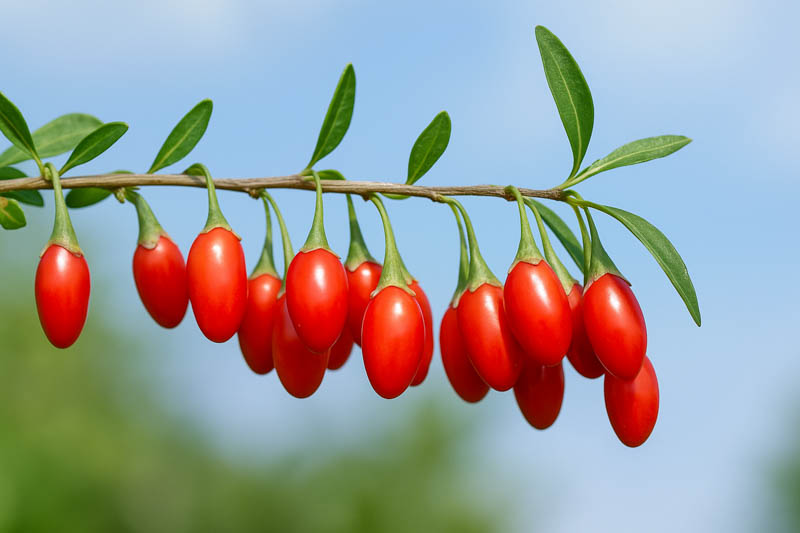
Goji Berry
Curious about goji berries? Grab a handful and nerd out with these snackable facts about the goji berry plant, the bright little fruit that powers trail mixes and cozy mugs of goji berry tea.
Two names, same snack – What are goji berries? They are the ripe fruit of Lycium barbarum and its cousin L. chinense. In English you will see goji and wolfberry used interchangeably.
Tomato cousin – Goji lives in the nightshade family with tomatoes and peppers. No wonder fresh fruit tastes a bit like tomato mixed with cranberry.
Self fertile – A single goji berry plant can set fruit, but two different plants nearby often give a bigger harvest.
Wave ripening – Goji berries do not ripen all at once. Expect several mini harvests from midsummer to frost.
Fresh vs dried – Fresh berries are juicy and mild. Dried goji berries are sweeter, chewier, and perfect for granola and baking.
Teacup magic – Drop a spoon of dried fruit into hot water for a ruby colored goji berry tea. The berries plump up and are tasty to eat after you sip.
Leaves are used too – In some cuisines young leaves go into soups or light infusions. Use correct ID and modest amounts.
Color that pops – The orange red hue comes from carotenoids like zeaxanthin. They also stain cutting boards, so line your prep area.
Easy to train – Growing goji berries is simple on a fence or two wires. Fan the canes out and tip prune for short fruiting spurs.
Cold hardy – Plants handle many winters in zones 5 to 9. New shoots bounce back in spring even after tip nips.
Bird approved – Late season berries bring in songbirds. Net a portion if you want to keep some for the pantry.
Legend and lore – Folklore links goji to longevity stories from China. Enjoy the taste first and treat the legends as fun history.
Pantry pro – Soak a handful in orange juice, whirl into smoothies, or stir into oatmeal for a bright, fruity lift.