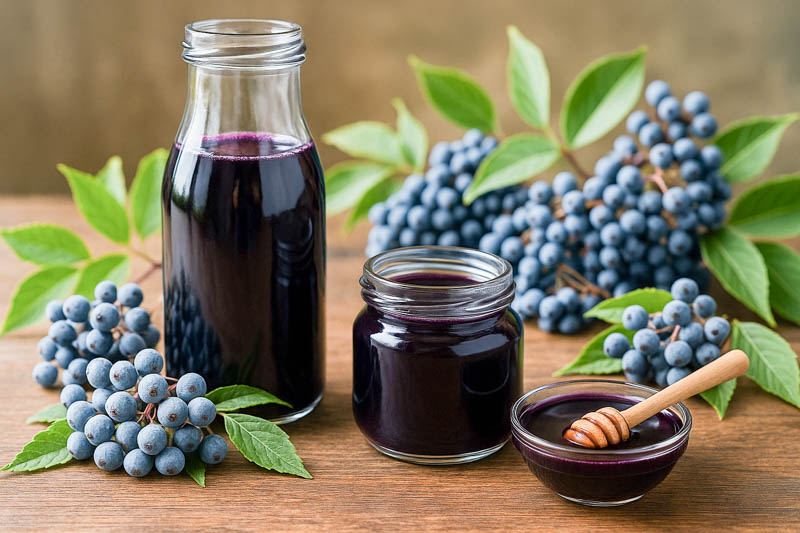
Elderberry
Meet elderberry, the shrub that throws a spring flower party and a late-summer berry bash. From bold foliage to bird-feeding clusters, here are fun, quick facts you can drop into any garden chat.
Double feature: Harvest fragrant blossoms in spring, then come back for fruit later. See the timing guide: Elderflower vs. Elderberry.
Two kitchen stars: American elderberry (S. canadensis) and European black elder (S. nigra) are the go-tos for syrups, teas, and jam (always cook the berries!).
Why “blue” elder? Blue elderberry (S. cerulea) looks frosty thanks to a natural waxy “bloom”—wipe it and the fruit is deep purple.
Wildlife VIP: Red elderberry (S. racemosa) is a bird magnet and a woodland beauty—grow it for habitat, not kitchen projects.
Garden glow-ups: Love moody foliage? Try black elder cultivars like ‘Black Beauty’ or finely cut ‘Black Lace’ for instant drama.
Edible blooms: The blossoms star in cordials and cocktails—peek at these ideas: Edible Flowers for Cocktails.
Bird-friendly hedges: Plant elder with other berrying shrubs to create a wildlife buffet: Shrubs that Attract Birds.
Bigger crops, simple rules: Full sun and steady moisture boost blooms and fruit. The genus overview has tips galore: Sambucus Guide.
Pruning made easy: Elders fruit best on 1–3-year canes. Each winter, remove a few oldest canes to invite youthful, productive growth.
Safety snapshot: Use the culinary species above, remove stems/leaves, and cook the ripe berries before eating. Flowers are for infusions—gentle handling keeps their perfume.
Whether you want syrup for pancakes, flowers for bubbly drinks, or a hedge that hums with birds, elderberry brings beauty and bounty with very little fuss.