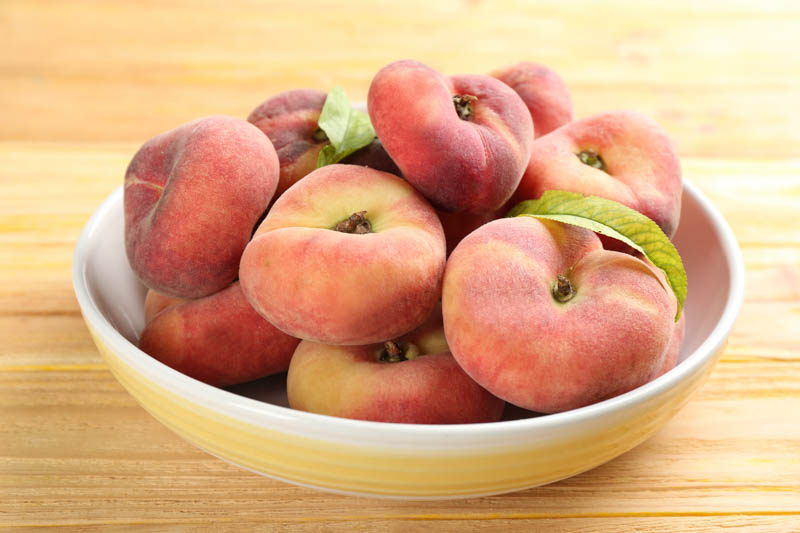
Donut Peach
Meet the playful peach that looks like a tiny UFO. The Donut Peach—also called Saturn, Doughnut, or flat peach—has a sweet, floral bite and a handy thumb-dimple for splitting halves right in the garden.
Same family, fun shape. Donut Peaches are still Prunus persica (peach). Curious about the broader plant? Visit Peach and its smooth-skinned twin, the Nectarine. For the species overview, see Prunus persica.
White vs. yellow flesh. Most Donut Peaches are white-fleshed—perfumed, super sweet, and low-acid. Yellow-fleshed flat peaches exist too, adding that lively tang for grilling and baked desserts. Explore dependable picks: White peaches and Yellow peaches.
Freestone or clingstone? Some flat peaches cling (ultra-juicy for fresh eating); others loosen at full ripeness for tidy slices. Check the tag if easy pitting matters to you.
Choosing a ripe beauty. Ignore blush. Follow your nose and press gently by the stem—slight give and fragrance mean go-time. If it’s shy, ripen on the counter in a single layer.
Origin story. Flat peaches trace back to China, where heirloom “pan tao” selections earned legend status long before farmers markets did.
Quick grower tips. Full sun, great drainage, and an open-center prune keep fruit big and flavorful. Match the tree’s chill hours to your winter using the Prunus persica guide, and supercharge the orchard with pollinator pals from Companions & ones to avoid.
Kitchen magic. Score an “X,” blanch 30 seconds, chill, and the skins slip like a charm. Halved freestones caramelize on the grill; white-fleshed slices shine in salads and quick jams.
Handle with care. These delicate drupes bruise easily—transport and store in a single layer.
Safety note. Enjoy the fruit, discard the pit. Peach seeds and wilted leaves contain compounds you don’t want in your diet (and they’re unsafe for pets).